No portrait yet
Putian Erotic
Putian in central coastal Fujian, China, including Xianyou County and Meizhou Island; diaspora communities in Singapore, Malaysia and Indonesia
Puxian Min, also called Hinghwa (Min branch of Sinitic, Sino-Tibetan); Standard Mandarin widely used
Chinese folk religion centered on Mazu and local deities, with Buddhism, Taoism and the Three-in-One Teaching; a notable Protestant minority
A Min-speaking subgroup of Han Chinese; Putian and Xianyou speech communities; overseas Henghua (Hinghwa) communities in Southeast Asia
About Putian People
What sets the Putian people apart is the way they speak. The old Xinghua prefecture sits on the central Fujian coast, between Fuzhou to the north and Quanzhou to the south. Over the centuries it developed its own speech, Puxian Min, which neither neighbor readily understands. Puxian Min has a hissing lateral sound, close to the Welsh ll, where Hokkien has a plain s, and the first consonant of a word can change depending on the word before it. Overseas, the same people call themselves Henghua or Hinghwa, the local way of saying Xinghua. That name still sets them apart from the Hokkien and Foochow communities they settled beside.
The homeland is compact: the city of Putian, Xianyou County inland, and offshore islands such as Meizhou. For generations, most people lived off rice paddies, lychee and longan orchards and fishing. In recent decades shoe factories and construction work have pulled much of the population into towns. Families once poured money into schooling, and the district became known for producing far more imperial examination graduates than its size would suggest.
Religion here is local and crowded. Meizhou Island is honored as the birthplace of Mazu, the sea goddess said to have been a fisherman's daughter named Lin Moniang in the tenth century. Her ancestral temple on the island draws pilgrims from Taiwan and across Southeast Asia. Putian also gave rise to the Three-in-One Teaching, which the sixteenth-century scholar Lin Zhao'en founded to blend Confucian, Buddhist and Taoist practice. Its halls still stand in villages at home and in Henghua neighborhoods abroad. Village temple festivals remain the main stage for Puxian opera, one of the oldest surviving forms of Chinese theater. A Protestant community that grew out of a nineteenth-century Methodist mission adds another layer.
History has left marks on the calendar. Raiders known as wokou sacked the prefectural city in 1562, and local tradition links the aftermath to an unusual New Year. Many families avoid visiting relatives on the second day of the lunar year and hold a second, bigger celebration on the fourth. On Meizhou, women still wear a sail-shaped bun and two-toned red and dark trousers for festivals, a style islanders connect with Mazu. Emigrants who left for Singapore, Malaysia and Indonesia around the turn of the twentieth century found work pulling rickshaws, then moved into the bicycle trade and later motor parts. Xinghua rice noodles traveled with them.
Related ethnic groups
Groups that share Putian's homeland, region, language, or religious tradition. These are likely candidates for comparative phenotype reference.
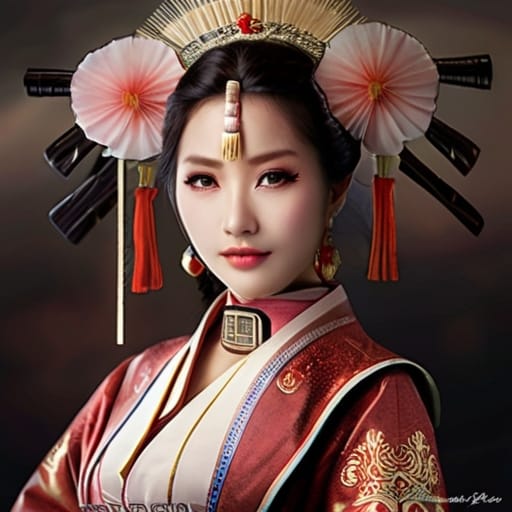
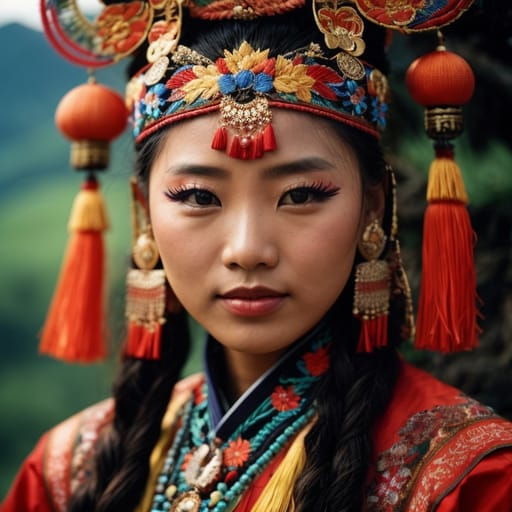
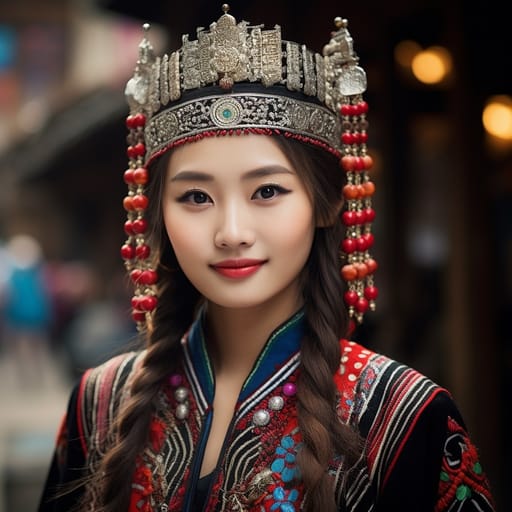
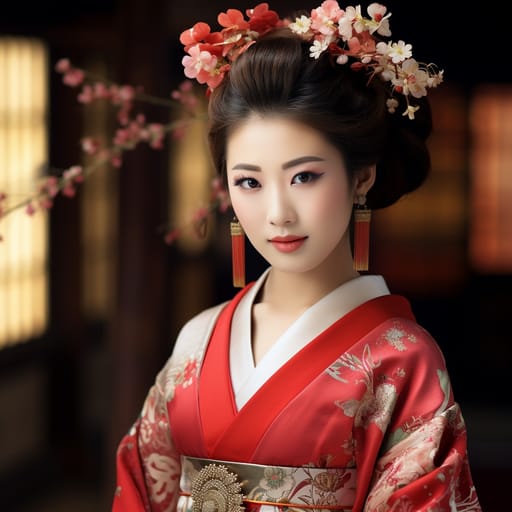
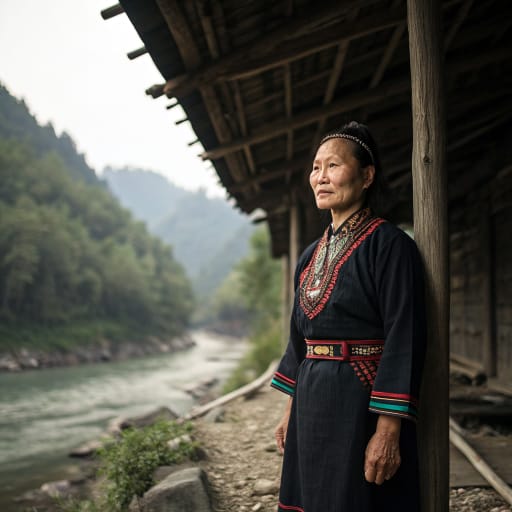
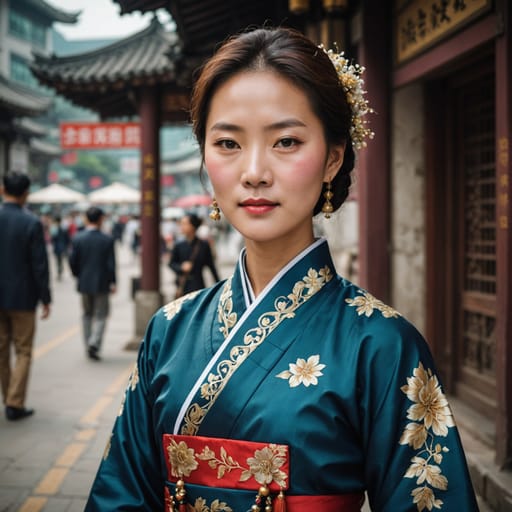
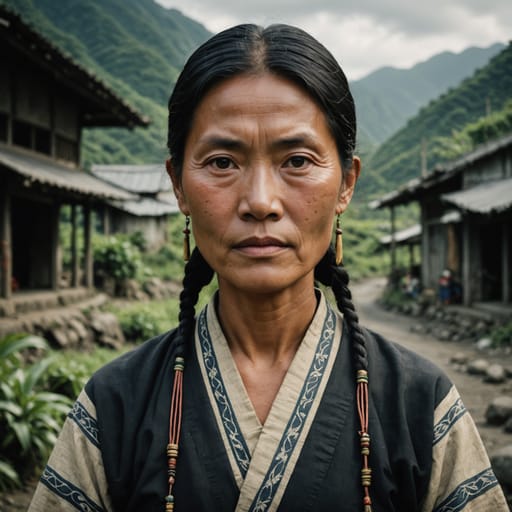
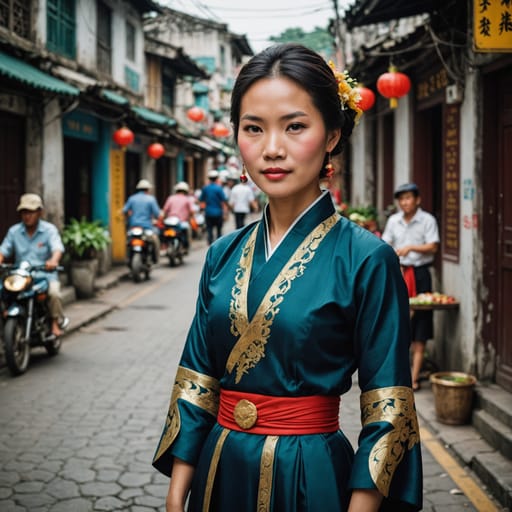
Typical Putian Phenotypes
Reference for AI generation: hair, eyes, skin, facial structure, build
Putian Body & Anatomy Reference
East Asian Sinitic / Mongoloid phenotype: anatomy reference for AI nude generation
Putian Boobs & Breasts
The typical Putian bust is small-to-medium cup, modest projection, in line with the wider East Asian Sinitic / Mongoloid pattern. Areolas usually fall in the 26-36mm range, with light-pink to medium-brown areolar pigmentation against the light-to-medium skin tone. Compared with the fuller South Asian or Levantine bust profile, Putian breasts sit forward and are generally firm and modestly projecting; smaller cup size than the South Asian or Western Asian average. A faithful AI render of Putian tits keeps that shape and areola size.
Putian Ass & Hips
Butt shape among Putian women: small-to-medium, modest projection, narrower hip profile, over narrower iliac crests, less gluteal-femoral fat deposition. This follows East Asian Sinitic / Mongoloid ancestry and looks quite unlike the fuller projected glutes of the West African or Polynesian phenotype. An accurate Putian ass in adult AI imagery keeps both the silhouette and the overall build (ectomorph-to-mesomorph, lean frame) instead of a generic average.
Putian Vagina & Pussy
Vulvar anatomy among Putian women: light-pink to medium-brown labial pigmentation, smaller labia minora. Pubic hair tends to be straight fine texture, sparser distribution than the South Asian norm, in the usual inverted-triangle pattern. Both follow East Asian Sinitic / Mongoloid pigmentation, which is why Putian pussy renders should not fall back on a pale, sparse Western template.
Putian Dicks & Penis
The Putian cock profile, from East Asian Sinitic / Mongoloid anthropometric data: regional mean ~11-12cm erect; moderate girth; light-brown shaft pigmentation. Pubic hair has a straight fine texture and forms the usual inverted-V pattern. Whether Putian men are circumcised follows religious and cultural practice rather than phenotype.
Putian Body, Curves & Build
Build and curves among Putian women follow the East Asian Sinitic / Mongoloid pattern: ectomorph-to-mesomorph, lean frame, mean adult female BMI 20-23. Proportions matter as much as skin tone, so Putian figures should keep their regional height and limb ratios.
Putian Skin Tone & Hair Texture
The Putian skin range is light to medium (Fitzpatrick II-IV), and hair tends to be straight 1A, fine-to-medium, predominantly black. That combination marks the East Asian Sinitic / Mongoloid phenotype, and skin tone is the trait AI generators most often get wrong for Putian women.
Explore phenotype categories
Structured taxonomy with peer-reviewed scales · 22 anatomical categories
Erotic Poses & Sex Positions
From the pose catalog: 219 named positions with reference skeletons
Frequently asked questions about Putian people
Where is the Putian homeland?
The Putian homeland is Putian in central coastal Fujian, China, including Xianyou County and Meizhou Island; diaspora communities in Singapore, Malaysia and Indonesia in East Asia.
What language do Putian people speak?
Putian people primarily speak Puxian Min, also called Hinghwa (Min branch of Sinitic, Sino-Tibetan); Standard Mandarin widely used.
What religion do Putian people practice?
The predominant religion among Putian people is Chinese folk religion centered on Mazu and local deities, with Buddhism, Taoism and the Three-in-One Teaching; a notable Protestant minority.






Make your own Putian images
Five a day, free, no credits to buy. The studio starts from this group's phenotype data, so you can set body type, pose and style and keep the traits accurate.
Start with Putian