Help us get this right
Does this portrait look right for Dukha?
Nobody has judged this one yet. You would be the first.
Dukha Erotic
Mountain taiga of Khövsgöl Province in northern Mongolia, along the border with the Tuva Republic of Russia, centered on Tsagaannuur district
Dukhan (Turkic, Sayan branch, closely related to Tuvan); Mongolian (Mongolic) is now spoken by nearly all
Shamanism, blended with Tibetan Buddhism
East Taiga and West Taiga herding communities; part of the wider Sayan Turkic reindeer cultures that include the Tozhu Tuvans and Tofalars
About Dukha People
An animal defines the Dukha. They are the only people in Mongolia who herd reindeer. They ride them through the larch forests of the far north, milk them, and move camp several times a year to follow the lichen the herds eat. Mongolians call them Tsaatan, roughly "the ones with reindeer," but their own name is Dukha. There are only a few hundred of them, and fewer still live in the taiga all year.
Their home is the mountain taiga of Khövsgöl Province, up against the Russian border. Families are split between the East Taiga and the West Taiga and keep ties to the district center at Tsagaannuur. In culture they look north. Their language is Turkic, from the Sayan branch and close to the Tuvan spoken across the border, which makes it an island in a country that speaks Mongolic languages. Nearly all Dukha now speak Mongolian, children go to school in it, and the old language is seriously endangered.
Borders shaped their modern history. Reindeer camps once moved freely across the ranges between Tuva and Mongolia. When Tuva came under Soviet control and the frontier closed, families on the southern side became Mongolian citizens and lost easy contact with relatives to the north. Socialist Mongolia put their herds into collectives and many Dukha to work at the state fishery on Tsagaan Nuur. After that system collapsed in 1990, the herds shrank from disease and inbreeding, and outside veterinary programs helped rebuild them. More recently, protected areas across the taiga have limited the hunting that used to fill out a diet built on reindeer milk, cheese and yogurt. Tourism brings in money, along with a steady flow of outsiders to camps that sit a long horseback ride from the nearest road.
Reindeer are rarely slaughtered, because a living animal is worth more for its milk and as a mount or pack animal. At its core, Dukha religion is shamanist, with a layer of the Tibetan Buddhism found across Mongolia. Shamans still lead rituals for healing and for the spirits of mountains, water and animals, a practice that outlasted pressure under socialism. Home is the ortz, a cone of poles once covered with birch bark or hides and now mostly with canvas. It looks more like a tipi than a Mongolian ger.
Related ethnic groups
Groups that share Dukha's homeland, region, language, or religious tradition. These are likely candidates for comparative phenotype reference.
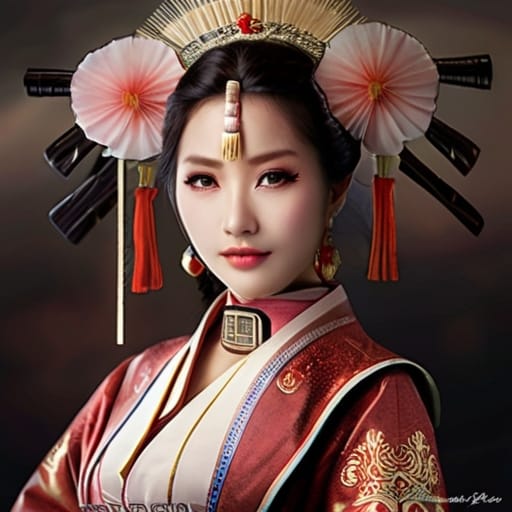
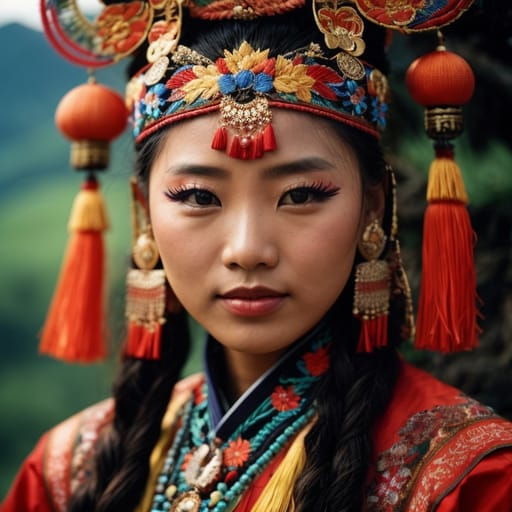
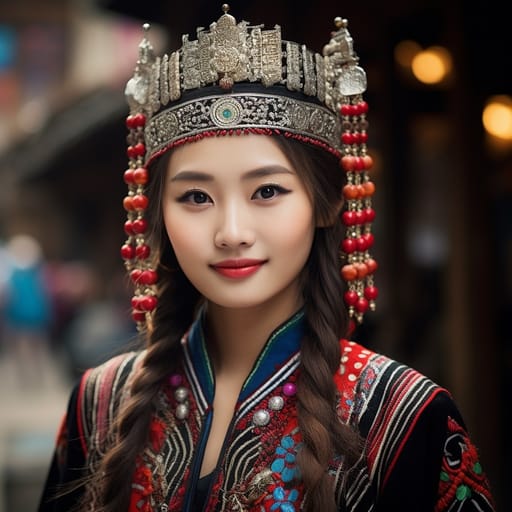
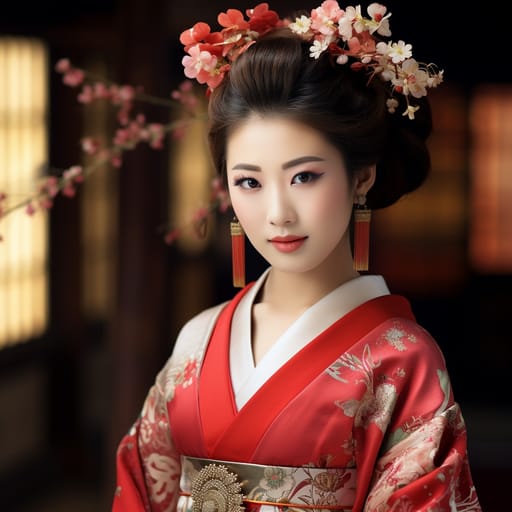
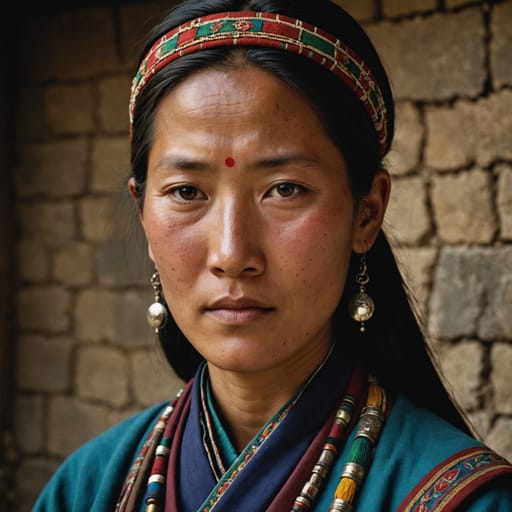
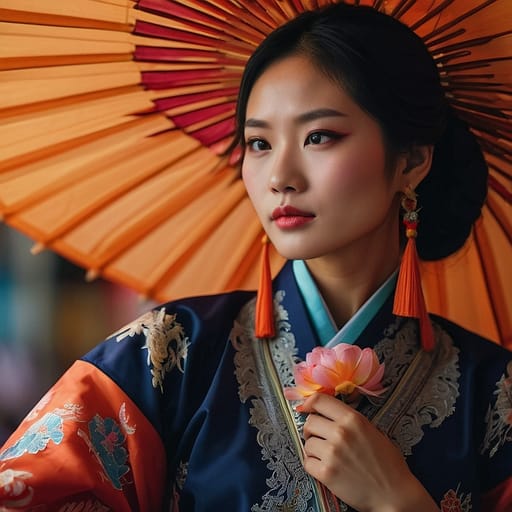
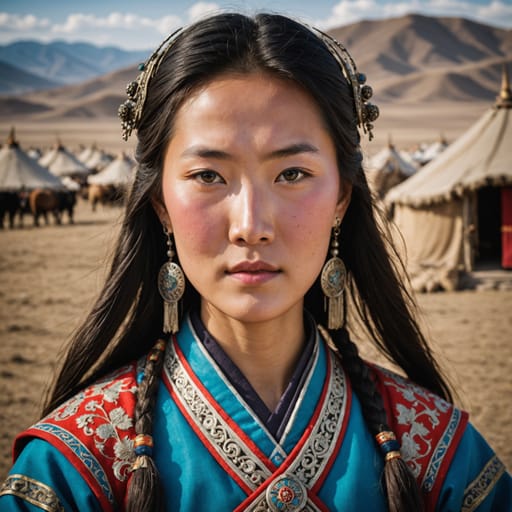
Typical Dukha Phenotypes
Reference for AI generation: hair, eyes, skin, facial structure, build
Dukha Body & Anatomy Reference
Per-feature anatomical profile for AI nude generation: East Asian Sinitic / Mongoloid phenotype
Dukha Boobs & Breasts
Bust reference for Dukha women: small-to-medium cup, modest projection, which is typical of East Asian Sinitic / Mongoloid ancestry. Areolas measure about 26-36mm across, with light-pink to medium-brown pigmentation. Body type (ectomorph-to-mesomorph, lean frame) shapes the bust as well, so Dukha tits are usually firm and modestly projecting; smaller cup size than the South Asian or Western Asian average. In AI imagery, keep the forward-set shape rather than drifting toward the fuller South Asian or Levantine bust profile.
Dukha Ass & Hips
The Dukha ass is typically small-to-medium, modest projection, narrower hip profile, which sets it apart from the fuller projected glutes of the West African or Polynesian phenotype. Underneath, the pelvis shows narrower iliac crests, less gluteal-femoral fat deposition, part of the East Asian Sinitic / Mongoloid skeletal pattern. For Dukha butt pics and AI renders, match that silhouette and the overall build (ectomorph-to-mesomorph, lean frame).
Dukha Vagina & Pussy
Dukha pussy and vulvar anatomy presents light-pink to medium-brown labial pigmentation, smaller labia minora, consistent with the East Asian Sinitic / Mongoloid phenotype's pigmentation pattern. Dukha pubic hair is typically straight fine texture, sparser distribution than the South Asian norm, in the inverted-triangle pattern. For anatomically accurate Dukha pussy renders the labial coloration should match the surrounding light to medium skin tone with a continuous gradient, and the hair should keep its straight fine texture.
Dukha Dicks & Penis
Dukha dicks follow the East Asian Sinitic / Mongoloid reference data: regional mean ~11-12cm erect; moderate girth; light-brown shaft pigmentation. Shaft color should track the light to medium skin tone with a smooth change toward the glans, and Dukha pubic hair keeps its straight fine texture.
Dukha Body, Curves & Build
Dukha body type and overall build presents as ectomorph-to-mesomorph, lean frame, with mean adult female BMI 20-23: the characteristic East Asian Sinitic / Mongoloid habitus. Dukha curves and proportions should keep the regional skeletal frame (height, shoulder-to-hip ratio, limb proportions) rather than a generic mesomorph default.
Dukha Skin Tone & Hair Texture
Dukha skin sits in the light to medium (Fitzpatrick II-IV) band. Hair is typically straight 1A, fine-to-medium, predominantly black, in keeping with the East Asian Sinitic / Mongoloid phenotype. In nude renders the skin should stay one even tone from face to body, and body, pubic and head hair should match.
Explore phenotype categories
Structured taxonomy with peer-reviewed scales · 22 anatomical categories
Erotic Poses & Sex Positions
From the pose catalog: 219 named positions with reference skeletons
Frequently asked questions about Dukha people
Where is the Dukha homeland?
The Dukha homeland is Mountain taiga of Khövsgöl Province in northern Mongolia, along the border with the Tuva Republic of Russia, centered on Tsagaannuur district in East Asia.
What language do Dukha people speak?
Dukha people primarily speak Dukhan (Turkic, Sayan branch, closely related to Tuvan); Mongolian (Mongolic) is now spoken by nearly all.
What religion do Dukha people practice?
The predominant religion among Dukha people is Shamanism, blended with Tibetan Buddhism.






Make your own Dukha images
Five a day, free, no credits to buy. The studio starts from this group's phenotype data, so you can set body type, pose and style and keep the traits accurate.
Start with Dukha