Help us get this right
Does this portrait look right for Kofun?
Nobody has judged this one yet. You would be the first.
Kofun Erotic
Kyushu, Shikoku and most of Honshu, with the political core in the Nara basin and Osaka plain, Japan
Early Japonic, ancestral to Old Japanese (Japonic); Chinese characters used for the few inscriptions
Ancestor and kami veneration centered on tomb ritual; Buddhism introduced from Baekje in the 6th century
Ancestral to the Yamato Japanese; Yamato court and regional clan (uji) elites, with continental immigrant lineages (toraijin) absorbed into the population
About Kofun People
The Kofun people lived across the Japanese archipelago from roughly the middle of the third century to the late sixth century CE, and most modern Japanese descend from them. The name is modern. It comes from the kofun, the earthen burial mounds that define the era, and Chinese chroniclers of the time simply called the islanders Wa. What marks the era off from the Yayoi period before it is a new way of ranking the dead. Local elites raised huge keyhole-shaped mounds for their chiefs, and the size of a tomb tracked the reach of the person inside it. The Daisen Kofun in Sakai, traditionally assigned to Emperor Nintoku, runs close to half a kilometer long. Thousands of mounds still sit among rice fields and suburbs, and the largest imperial ones remain under Imperial Household Agency control, closed to most excavation.
The mounds trace the rise of the Yamato polity, a coalition based in the Nara basin and on the Osaka plain. Its great kings, the ōkimi, drew regional lords into a ranked order of clans and hereditary titles. The islands were never cut off from the mainland. Iron, horses, stoneware kilns, weaving and new writing skills came across the strait from the Korean kingdoms, carried in large part by immigrant specialists remembered as toraijin. In the fifth century the Five Kings of Wa sent envoys to a southern Chinese court asking for titles, and an inscribed sword from the Inariyama mound in Saitama names a great king whose realm its owner claimed to help govern. A 2021 genomic study of Kofun-era remains found an East Asian ancestry component missing from earlier Jōmon and Yayoi samples. It also showed that people of this period were already genetically close to the Japanese of today.
Their language was an early form of Japonic, the ancestor of the Old Japanese written down in the eighth century, but they left almost nothing written in it. The few surviving inscriptions use Chinese characters, sometimes to sound out native names. Religion had no single name. Communities honored ancestors and local kami, buried the powerful with bronze mirrors, iron swords and comma-shaped magatama jewels, and ringed the great mounds with haniwa, hollow clay figures of houses, horses, warriors and shrine attendants. Mirror, sword and jewel remain the imperial regalia today. Buddhism arrived from the Korean kingdom of Baekje in the sixth century. As elites began spending their wealth on temples instead of tombs, the age of the great mounds closed.
Related ethnic groups
Groups that share Kofun's homeland, region, language, or religious tradition. These are likely candidates for comparative phenotype reference.
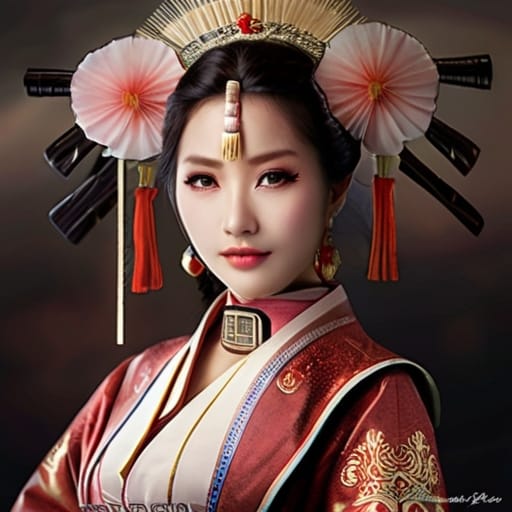
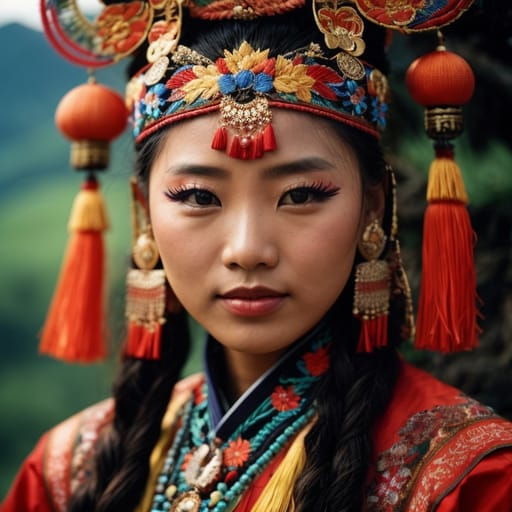
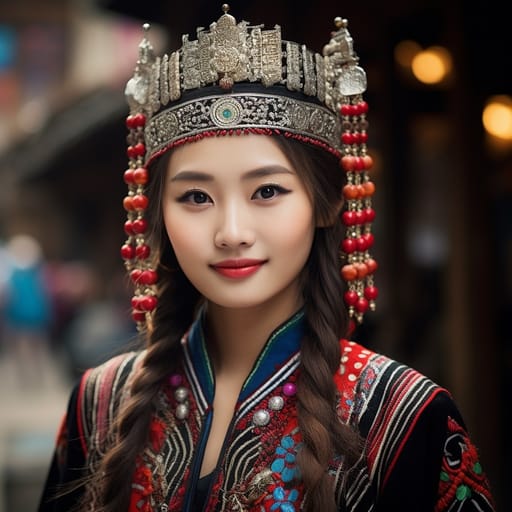
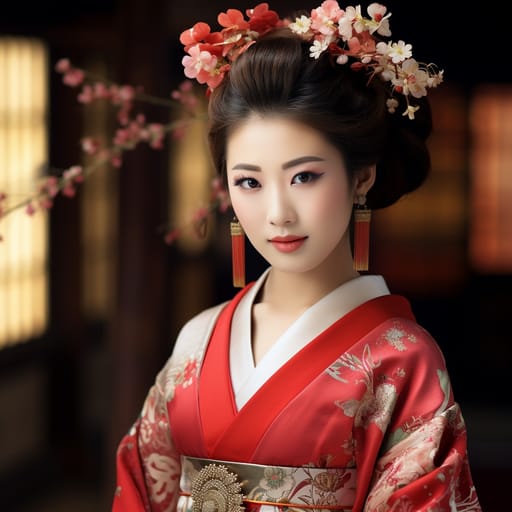
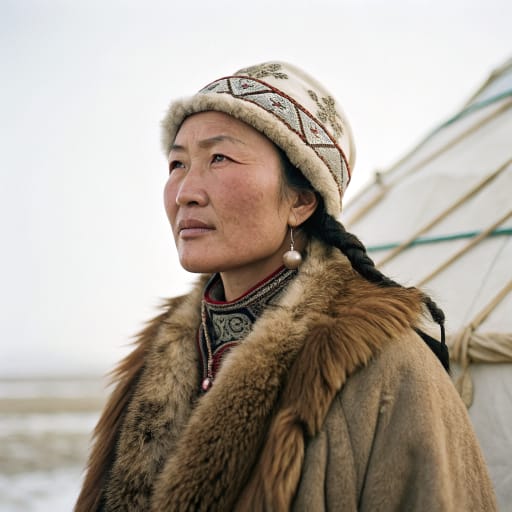
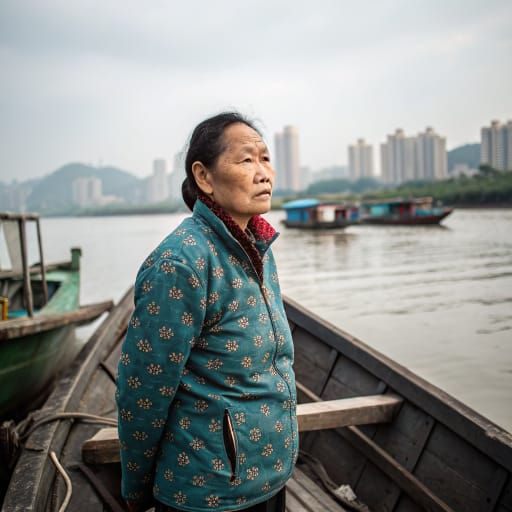
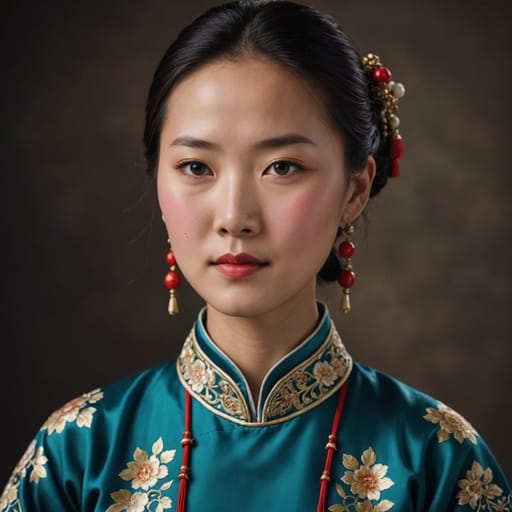
Typical Kofun Phenotypes
Reference for AI generation: hair, eyes, skin, facial structure, build
Kofun Body & Anatomy Reference
Anatomy by feature, East Asian Sinitic / Mongoloid phenotype
Kofun Boobs & Breasts
Bust reference for Kofun women: small-to-medium cup, modest projection, which is typical of East Asian Sinitic / Mongoloid ancestry. Areolas measure about 26-36mm across, with light-pink to medium-brown pigmentation. Body type (ectomorph-to-mesomorph, lean frame) shapes the bust as well, so Kofun tits are usually firm and modestly projecting; smaller cup size than the South Asian or Western Asian average. In AI imagery, keep the forward-set shape rather than drifting toward the fuller South Asian or Levantine bust profile.
Kofun Ass & Hips
The Kofun ass is typically small-to-medium, modest projection, narrower hip profile, which sets it apart from the fuller projected glutes of the West African or Polynesian phenotype. Underneath, the pelvis shows narrower iliac crests, less gluteal-femoral fat deposition, part of the East Asian Sinitic / Mongoloid skeletal pattern. For Kofun butt pics and AI renders, match that silhouette and the overall build (ectomorph-to-mesomorph, lean frame).
Kofun Vagina & Pussy
Kofun pussy and vulvar anatomy presents light-pink to medium-brown labial pigmentation, smaller labia minora, consistent with the East Asian Sinitic / Mongoloid phenotype's pigmentation pattern. Kofun pubic hair is typically straight fine texture, sparser distribution than the South Asian norm, in the inverted-triangle pattern. For anatomically accurate Kofun pussy renders the labial coloration should match the surrounding light to medium skin tone with a continuous gradient, and the hair should keep its straight fine texture.
Kofun Dicks & Penis
Kofun dicks follow the East Asian Sinitic / Mongoloid reference data: regional mean ~11-12cm erect; moderate girth; light-brown shaft pigmentation. Shaft color should track the light to medium skin tone with a smooth change toward the glans, and Kofun pubic hair keeps its straight fine texture.
Kofun Body, Curves & Build
Kofun body type and overall build presents as ectomorph-to-mesomorph, lean frame, with mean adult female BMI 20-23: the characteristic East Asian Sinitic / Mongoloid habitus. Kofun curves and proportions should keep the regional skeletal frame (height, shoulder-to-hip ratio, limb proportions) rather than a generic mesomorph default.
Kofun Skin Tone & Hair Texture
Kofun skin sits in the light to medium (Fitzpatrick II-IV) band. Hair is typically straight 1A, fine-to-medium, predominantly black, in keeping with the East Asian Sinitic / Mongoloid phenotype. In nude renders the skin should stay one even tone from face to body, and body, pubic and head hair should match.
Explore phenotype categories
Structured taxonomy with peer-reviewed scales · 22 anatomical categories
Erotic Poses & Sex Positions
From the pose catalog: 219 named positions with reference skeletons
Frequently asked questions about Kofun people
Where is the Kofun homeland?
The Kofun homeland is Kyushu, Shikoku and most of Honshu, with the political core in the Nara basin and Osaka plain, Japan in East Asia.
What language do Kofun people speak?
Kofun people primarily speak Early Japonic, ancestral to Old Japanese (Japonic); Chinese characters used for the few inscriptions.
What religion do Kofun people practice?
The predominant religion among Kofun people is Ancestor and kami veneration centered on tomb ritual; Buddhism introduced from Baekje in the 6th century.






Make your own Kofun images
Five a day, free, no credits to buy. The studio starts from this group's phenotype data, so you can set body type, pose and style and keep the traits accurate.
Start with Kofun