No portrait yet
Nakhi Erotic
Lijiang basin and the surrounding Hengduan Mountains of northwestern Yunnan, with communities in southwestern Sichuan, China
Naxi (Sino-Tibetan, Naic branch), with Mandarin Chinese widely spoken; Dongba pictographic and Geba syllabic scripts used by ritual priests
Dongba religion, layered with Tibetan Buddhism and Chinese popular religion
Officially includes the Na (Mosuo) of Lugu Lake in Yunnan; closest relatives are the other Naic-speaking peoples of the Yunnan-Sichuan border
About Nakhi People
The Nakhi are the people of the Lijiang basin, where the Jinsha river makes its first great bend beneath Jade Dragon Snow Mountain in northwestern Yunnan, with a spillover into southwestern Sichuan. Most outsiders meet them through a script. Dongba pictographs, small drawn figures on hand-copied paper, are often called the last pictographic writing still in working use, and the ritual books written in them earned a UNESCO Memory of the World listing in 2003. The script belongs to the Dongba priests, though, not to daily life. Ordinary Nakhi write Chinese and speak Naxi, a Sino-Tibetan language now usually given its own small Naic branch shared with the Na, or Mosuo, of Lugu Lake, whom the Chinese state counts as Nakhi in Yunnan. Tibetan lies to the north and Bai to the south, and Nakhi has taken from both while staying its own thing.
Religion is layered rather than chosen. The Dongba tradition is a priest's craft of chanting, offering, and exorcism, shaped partly by Tibetan Bon, and its chief concern is keeping peace with the Shu spirits who own the mountains, springs, and forests. Tibetan Buddhism and Chinese popular religion sit on top without any sense of contradiction. A household may call a Dongba for a funeral and also burn incense to Sanduo, the warrior-protector identified with the snow mountain itself, at his festival in the second lunar month. History turned on a few points. The Mu clan ruled Lijiang as hereditary chieftains under the Ming, took their Chinese surname from the first Ming emperor, and sent caravans north on the tea road to Tibet. In 1723 the Qing replaced them with appointed officials and imposed Confucian marriage rules on a people who had courted freely. The wave of double suicides by young couples that followed is still remembered in song, along with the belief that the mountain shelters lovers who died together. Lijiang's old town, rebuilt after the 1996 earthquake, became a World Heritage site and then a mass tourism engine that now employs a large share of Nakhi families.
The custom most visible on the street is the women's sheepskin cape stitched with seven embroidered discs, said to show her carrying the stars and moon on her back. It points to an old division of labor in which women ran the fields, markets, and shops while men studied, traded far from home, or played in the Dongjing orchestras that survive as Naxi ancient music. Older women still wear the cape every day. Younger Nakhi mostly do not, and Naxi is losing ground to Mandarin in town, though it holds firm in the river villages.
Related ethnic groups
Groups that share Nakhi's homeland, region, language, or religious tradition. These are likely candidates for comparative phenotype reference.
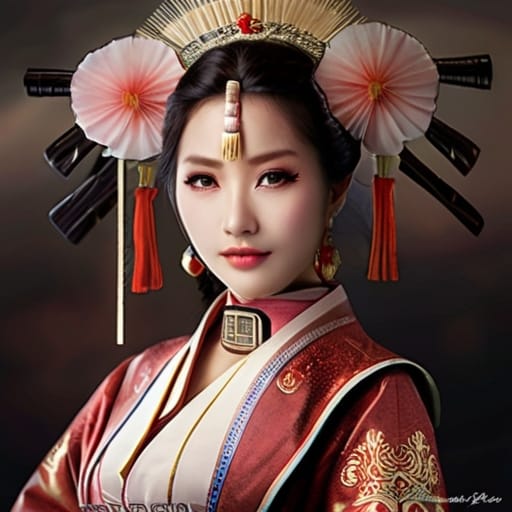
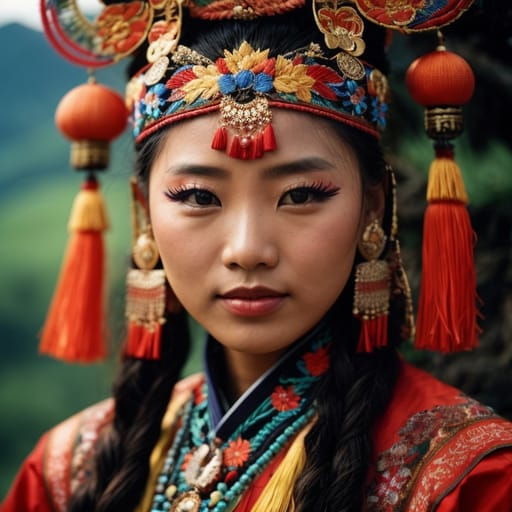
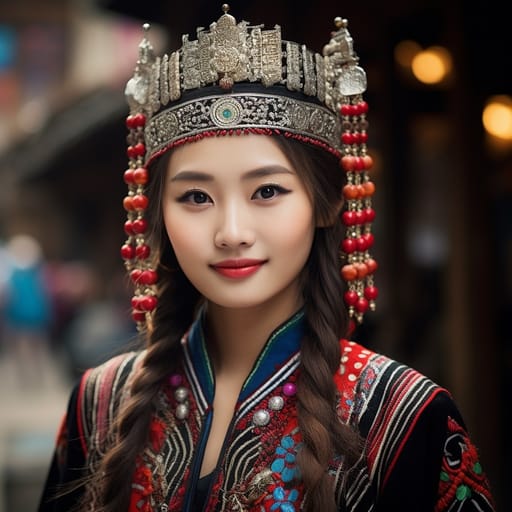
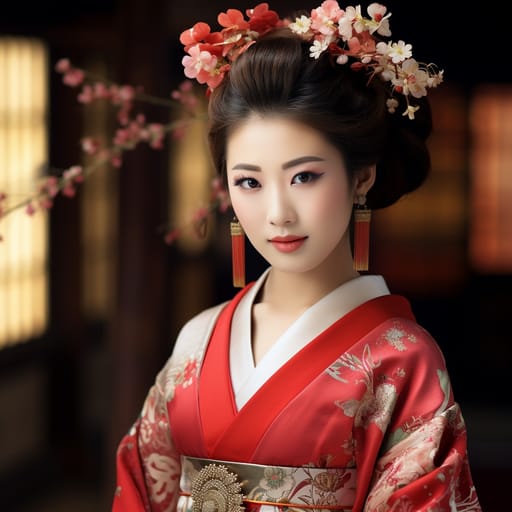
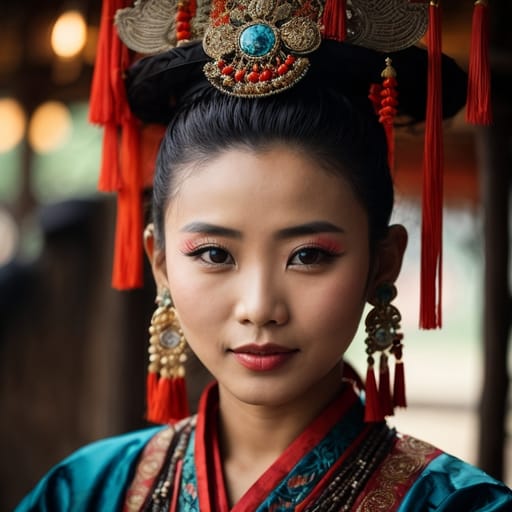
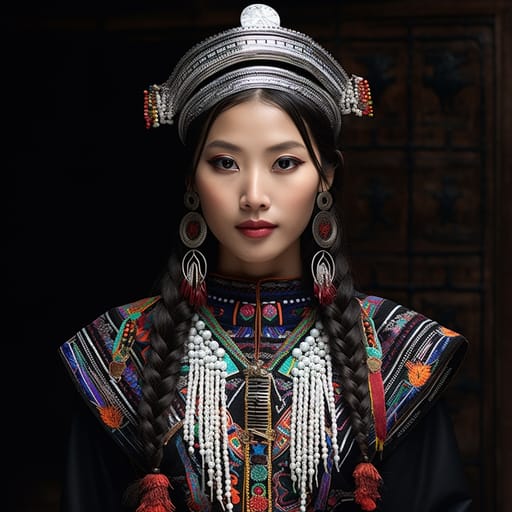
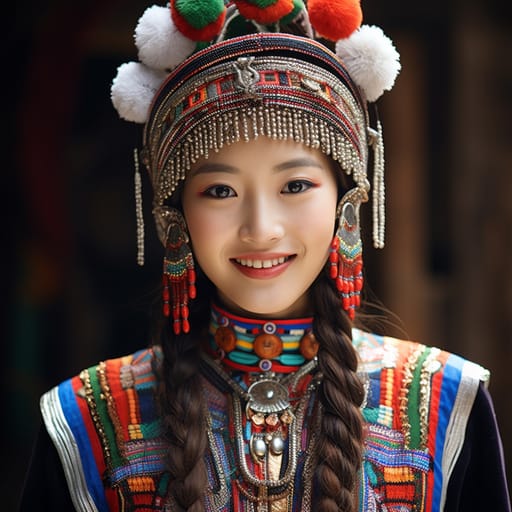
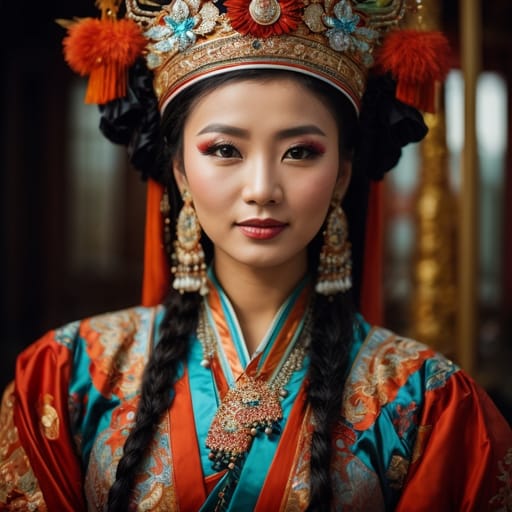
Typical Nakhi Phenotypes
Reference for AI generation: hair, eyes, skin, facial structure, build
Nakhi Body & Anatomy Reference
Anatomy by feature, East Asian Sinitic / Mongoloid phenotype
Nakhi Boobs & Breasts
The typical Nakhi bust is small-to-medium cup, modest projection, in line with the wider East Asian Sinitic / Mongoloid pattern. Areolas usually fall in the 26-36mm range, with light-pink to medium-brown areolar pigmentation against the light-to-medium skin tone. Compared with the fuller South Asian or Levantine bust profile, Nakhi breasts sit forward and are generally firm and modestly projecting; smaller cup size than the South Asian or Western Asian average. A faithful AI render of Nakhi tits keeps that shape and areola size.
Nakhi Ass & Hips
Butt shape among Nakhi women: small-to-medium, modest projection, narrower hip profile, over narrower iliac crests, less gluteal-femoral fat deposition. This follows East Asian Sinitic / Mongoloid ancestry and looks quite unlike the fuller projected glutes of the West African or Polynesian phenotype. An accurate Nakhi ass in adult AI imagery keeps both the silhouette and the overall build (ectomorph-to-mesomorph, lean frame) instead of a generic average.
Nakhi Vagina & Pussy
Vulvar anatomy among Nakhi women: light-pink to medium-brown labial pigmentation, smaller labia minora. Pubic hair tends to be straight fine texture, sparser distribution than the South Asian norm, in the usual inverted-triangle pattern. Both follow East Asian Sinitic / Mongoloid pigmentation, which is why Nakhi pussy renders should not fall back on a pale, sparse Western template.
Nakhi Dicks & Penis
The Nakhi cock profile, from East Asian Sinitic / Mongoloid anthropometric data: regional mean ~11-12cm erect; moderate girth; light-brown shaft pigmentation. Pubic hair has a straight fine texture and forms the usual inverted-V pattern. Whether Nakhi men are circumcised follows religious and cultural practice rather than phenotype.
Nakhi Body, Curves & Build
Build and curves among Nakhi women follow the East Asian Sinitic / Mongoloid pattern: ectomorph-to-mesomorph, lean frame, mean adult female BMI 20-23. Proportions matter as much as skin tone, so Nakhi figures should keep their regional height and limb ratios.
Nakhi Skin Tone & Hair Texture
The Nakhi skin range is light to medium (Fitzpatrick II-IV), and hair tends to be straight 1A, fine-to-medium, predominantly black. That combination marks the East Asian Sinitic / Mongoloid phenotype, and skin tone is the trait AI generators most often get wrong for Nakhi women.
Explore phenotype categories
Structured taxonomy with peer-reviewed scales · 22 anatomical categories
Erotic Poses & Sex Positions
From the pose catalog: 219 named positions with reference skeletons
Frequently asked questions about Nakhi people
Where is the Nakhi homeland?
The Nakhi homeland is Lijiang basin and the surrounding Hengduan Mountains of northwestern Yunnan, with communities in southwestern Sichuan, China in East Asia.
What language do Nakhi people speak?
Nakhi people primarily speak Naxi (Sino-Tibetan, Naic branch), with Mandarin Chinese widely spoken; Dongba pictographic and Geba syllabic scripts used by ritual priests.
What religion do Nakhi people practice?
The predominant religion among Nakhi people is Dongba religion, layered with Tibetan Buddhism and Chinese popular religion.






Make your own Nakhi images
Five a day, free, no credits to buy. The studio starts from this group's phenotype data, so you can set body type, pose and style and keep the traits accurate.
Start with Nakhi