No portrait yet
Zaiwa Erotic
Hill country of the Dehong Dai and Jingpo Autonomous Prefecture in western Yunnan, China, and Kachin State and northern Shan State, Myanmar
Zaiwa, also called Atsi (Sino-Tibetan, Burmish branch of Lolo-Burmese); many also speak Jingpho, Chinese or Burmese
Traditional nat spirit worship and ancestor veneration, alongside Baptist and Catholic Christianity, especially in Myanmar
A branch of the Jingpo nationality in China and of the Kachin peoples in Myanmar, alongside the Jingpho, Lashi, Maru and Bola
About Zaiwa People
The Zaiwa live in the hill country where western Yunnan meets northern Myanmar. Who they are rests on something outsiders find odd and they find ordinary. They count themselves part of the Jingpo, the people known across the border as the Kachin. They share Jingpo clan names, marriage rules, spirit beliefs and the great communal dances. Yet the language they speak at home is not Jingpho. Zaiwa belongs to the Burmish branch of Sino-Tibetan, so it is closer kin to Burmese and to the neighboring Lashi and Maru tongues than to Jingpho itself. Kinship, not grammar, decides who belongs here.
In China most Zaiwa live in the Dehong Dai and Jingpo Autonomous Prefecture, in and around Mangshi, Longchuan, Yingjiang and Ruili, and they make up the larger share of the officially recognized Jingpo nationality. In Myanmar, where Jingpho speakers call them Atsi, they live in Kachin State and northern Shan State. Most people speak more than one language: Zaiwa at home, Jingpho as the common tongue of Kachin society, and Chinese or Burmese for school and the market. A Latin-alphabet Zaiwa script was developed in China in the 1950s and is used in some bilingual classrooms and local publishing.
Social life runs on the mayu and dama system shared with other Kachin peoples. A lineage takes wives from one set of clans and gives its daughters to another, and those obligations flow in fixed directions for generations. Religion is divided. Many families in China keep up the old relationship with the nats, the spirits of sky, ancestors and household, and call on ritual specialists who recite origin stories at sacrifices. Across the border, Baptist and Catholic missions reshaped Kachin life through the twentieth century, and for many Atsi the church is now central to who they are.
The high point of the year is the spring gathering the Chinese call Munaozongge. The name joins the Jingpho word munau with the Zaiwa word zongge, and both name a great communal dance. Thousands of people move in winding lines around painted manau posts, following leaders in feathered headdresses, in patterns said to trace the ancestral migration. Women wear black jackets studded with silver discs over red woven skirts, and men carry the long knife that still marks a man at ceremonies. Recent history has been harder. Fighting resumed in Kachin State in 2011 and pushed Kachin families, Atsi among them, toward the Chinese border, straining kin ties that the frontier once barely touched.
Related ethnic groups
Groups that share Zaiwa's homeland, region, language, or religious tradition. These are likely candidates for comparative phenotype reference.
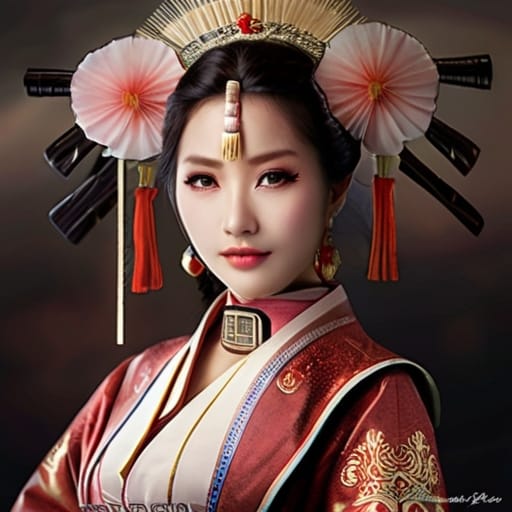
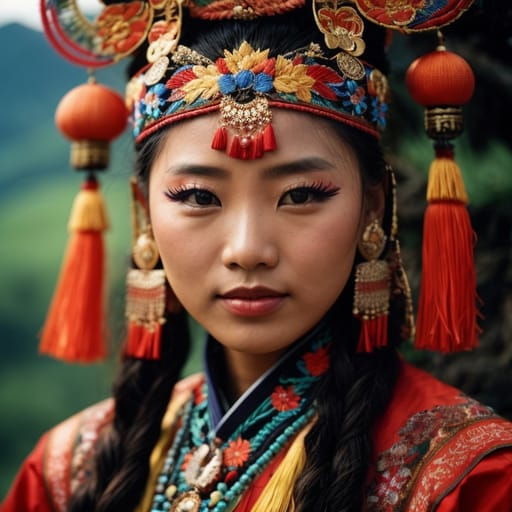
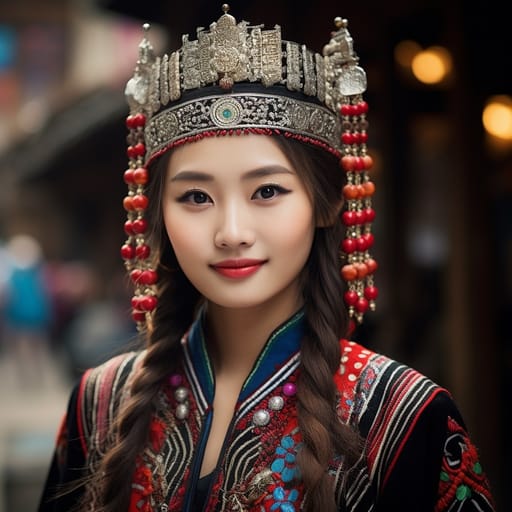
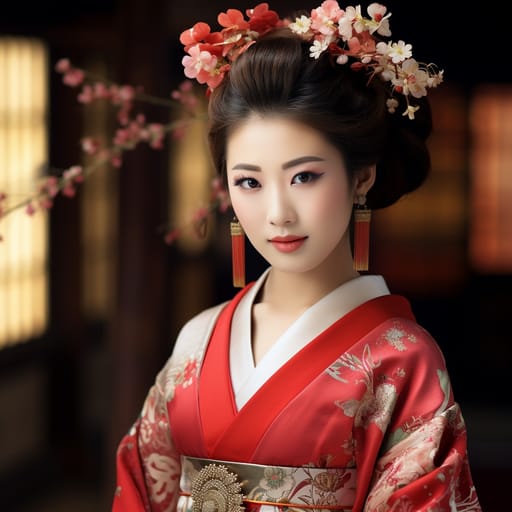
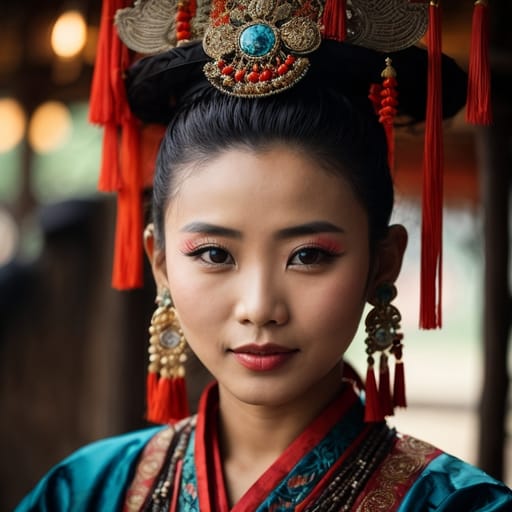
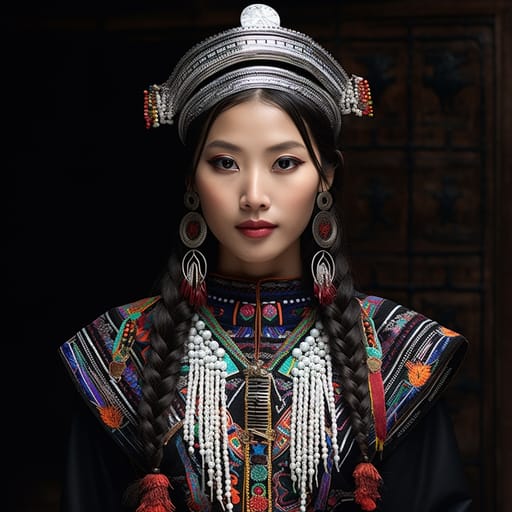
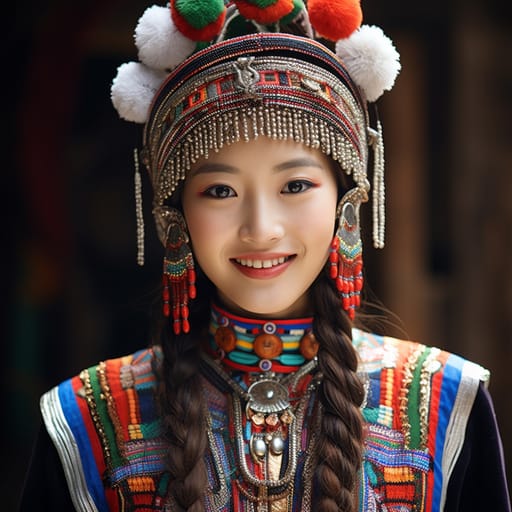
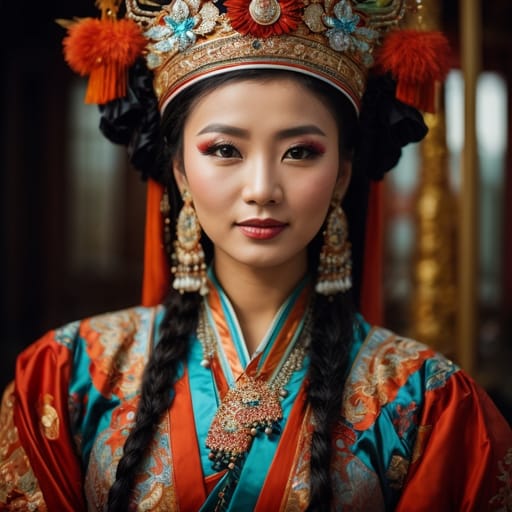
Typical Zaiwa Phenotypes
Reference for AI generation: hair, eyes, skin, facial structure, build
Zaiwa Body & Anatomy Reference
Anatomy by feature, East Asian Sinitic / Mongoloid phenotype
Zaiwa Boobs & Breasts
Zaiwa tits and boobs run small-to-medium cup, modest projection, the classic East Asian Sinitic / Mongoloid bust profile. Zaiwa nipples and areolas show light-pink to medium-brown areolar pigmentation against the light-to-medium skin tone, with areolar diameter typically in the 26-36mm range and forward-set positioning rather than the fuller South Asian or Levantine bust profile. Zaiwa breasts trend firm and modestly projecting; smaller cup size than the South Asian or Western Asian average, a function of the ectomorph-to-mesomorph, lean frame body habitus and the mean adult female BMI 20-23. For anatomically accurate AI-generated Zaiwa nudes the render preserves the small-to-medium cup, modest projection shape, 26-36mm areolas with light-pink to medium-brown pigmentation, and the torso proportions of the East Asian Sinitic / Mongoloid phenotype.
Zaiwa Ass & Hips
Zaiwa hips and butt usually read as small-to-medium, modest projection, narrower hip profile. The skeletal base is narrower iliac crests, less gluteal-femoral fat deposition, the East Asian Sinitic / Mongoloid pattern. Set against the fuller projected glutes of the West African or Polynesian phenotype, the difference is easy to see, and the hip-to-waist ratio is often what identifies Zaiwa women in photos.
Zaiwa Vagina & Pussy
Expect light-pink to medium-brown labial pigmentation, smaller labia minora on Zaiwa women, in keeping with East Asian Sinitic / Mongoloid ancestry. The pubic hair is straight fine texture, sparser distribution than the South Asian norm. Coloring should run evenly from the light to medium skin of the thighs to the labia, and Zaiwa nude imagery should keep the hair's straight fine texture.
Zaiwa Dicks & Penis
Zaiwa dick and penile anatomy in adult AI generation should anchor on the regional reference data: regional mean ~11-12cm erect, moderate girth, and light-brown shaft pigmentation. The Zaiwa cock profile reflects the East Asian Sinitic / Mongoloid population's anthropometric measurements. The shaft pigmentation should track the surrounding light to medium skin tone, and the pubic hair should keep its straight fine texture in the typical inverted-V escutcheon.
Zaiwa Body, Curves & Build
Zaiwa body type: ectomorph-to-mesomorph, lean frame, with mean adult female BMI 20-23. This is the typical East Asian Sinitic / Mongoloid build. Height range, shoulder-to-hip ratio and fat distribution all follow from it, which is what an accurate Zaiwa nude body should show.
Zaiwa Skin Tone & Hair Texture
Zaiwa skin tone falls in the light to medium (Fitzpatrick II-IV) band, the surface signal most often miscalibrated by generic AI nude generators. Zaiwa hair texture is typically straight 1A, fine-to-medium, predominantly black, characteristic of the East Asian Sinitic / Mongoloid phenotype. In Zaiwa nude renders the skin should hold that band consistently across the body.
Explore phenotype categories
Structured taxonomy with peer-reviewed scales · 22 anatomical categories
Erotic Poses & Sex Positions
From the pose catalog: 219 named positions with reference skeletons
Frequently asked questions about Zaiwa people
Where is the Zaiwa homeland?
The Zaiwa homeland is Hill country of the Dehong Dai and Jingpo Autonomous Prefecture in western Yunnan, China, and Kachin State and northern Shan State, Myanmar in East Asia.
What language do Zaiwa people speak?
Zaiwa people primarily speak Zaiwa, also called Atsi (Sino-Tibetan, Burmish branch of Lolo-Burmese); many also speak Jingpho, Chinese or Burmese.
What religion do Zaiwa people practice?
The predominant religion among Zaiwa people is Traditional nat spirit worship and ancestor veneration, alongside Baptist and Catholic Christianity, especially in Myanmar.






Make your own Zaiwa images
Five a day, free, no credits to buy. The studio starts from this group's phenotype data, so you can set body type, pose and style and keep the traits accurate.
Start with Zaiwa