Help us get this right
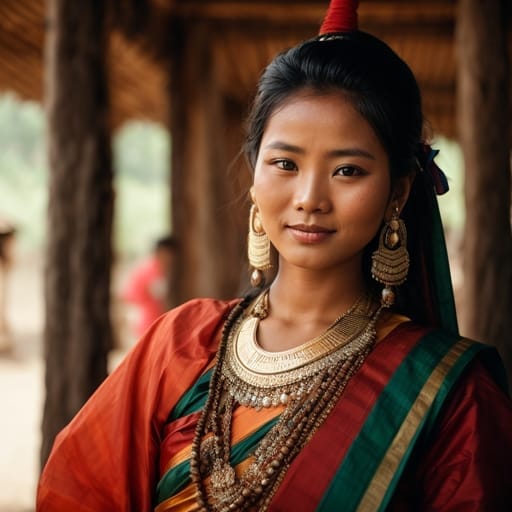
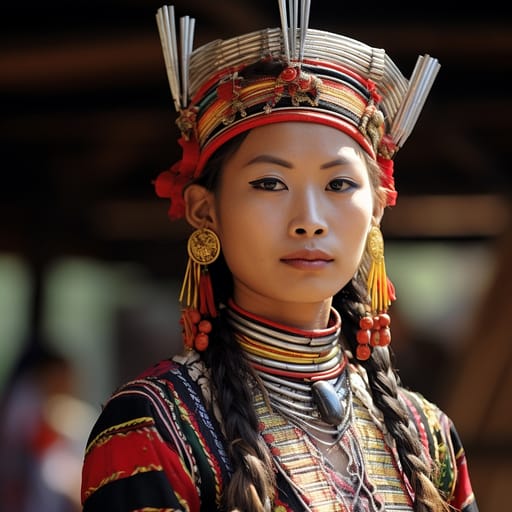
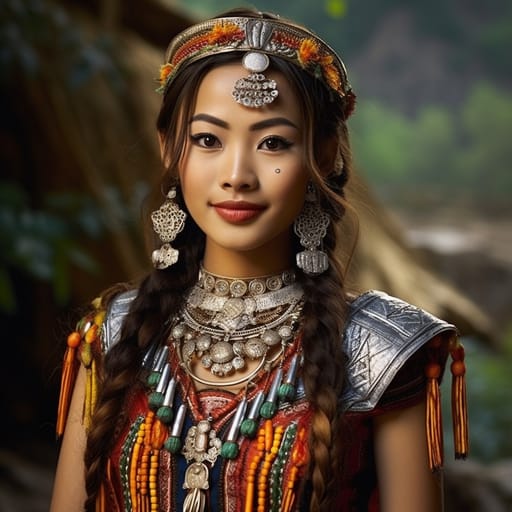
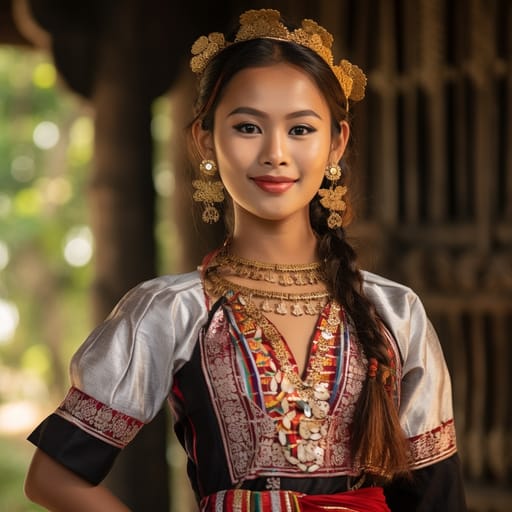
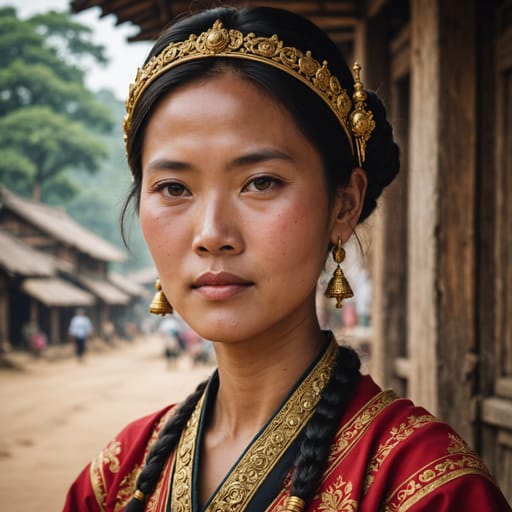
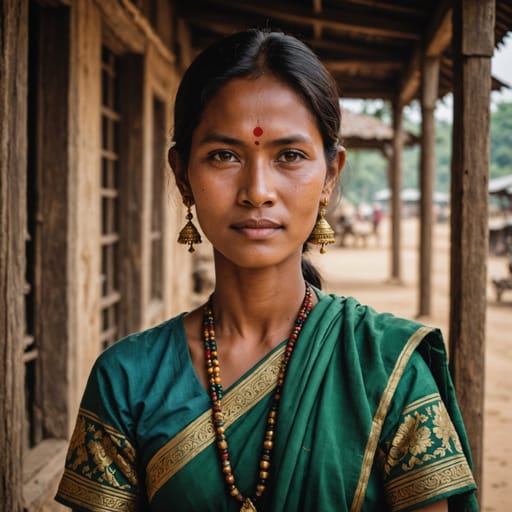
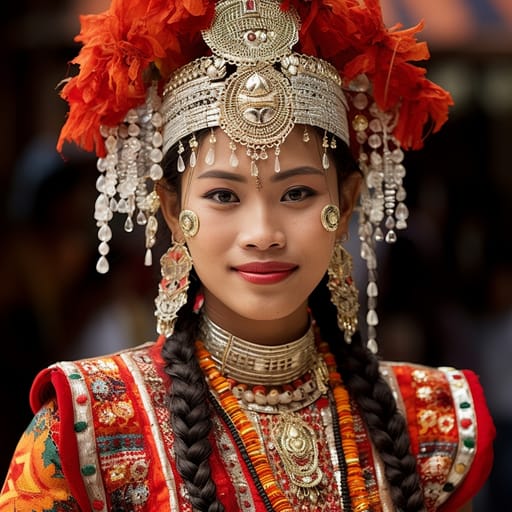
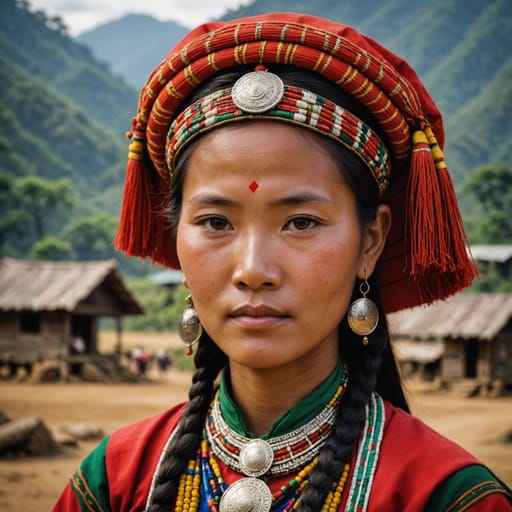
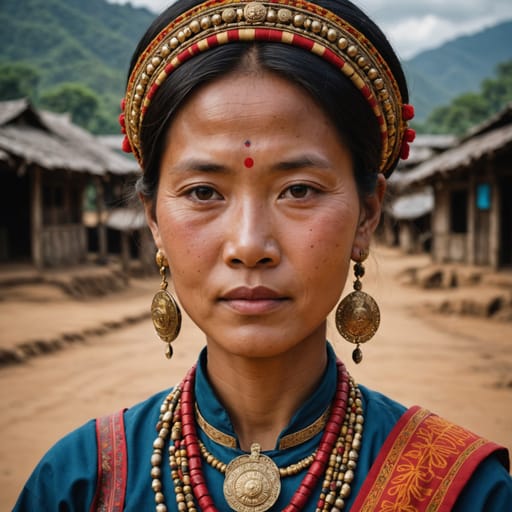
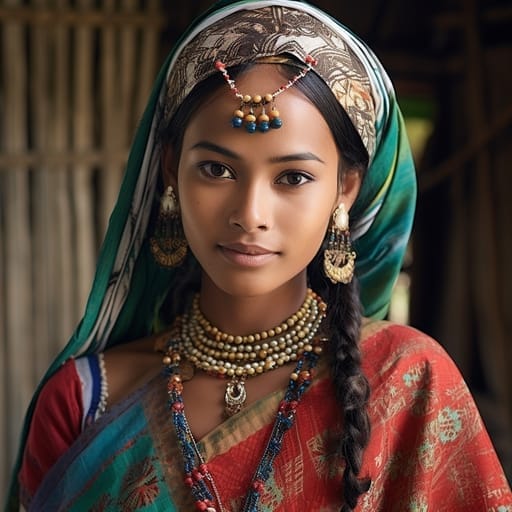
Does this portrait look right for Bamar?
Nobody has judged this one yet. You would be the first.

Myanmar
MMSoutheast Asia
Myanmar is home to 11 documented ethnic groups in Southeast Asia, led by Bamar (~68%), Shan (~9%), Karen (~7%), Rakhine (~4%). This page blends their phenotype and demographic data into one weighted reference: skin tone, facial features, hair texture and build, drawn from published census and ancestry sources.
Demographic Composition
Composition weights are derived from self-identification in published census and demographic surveys. Each row links to the source ethnic-group atlas page.
| Ethnic group | Weight | Source |
|---|---|---|
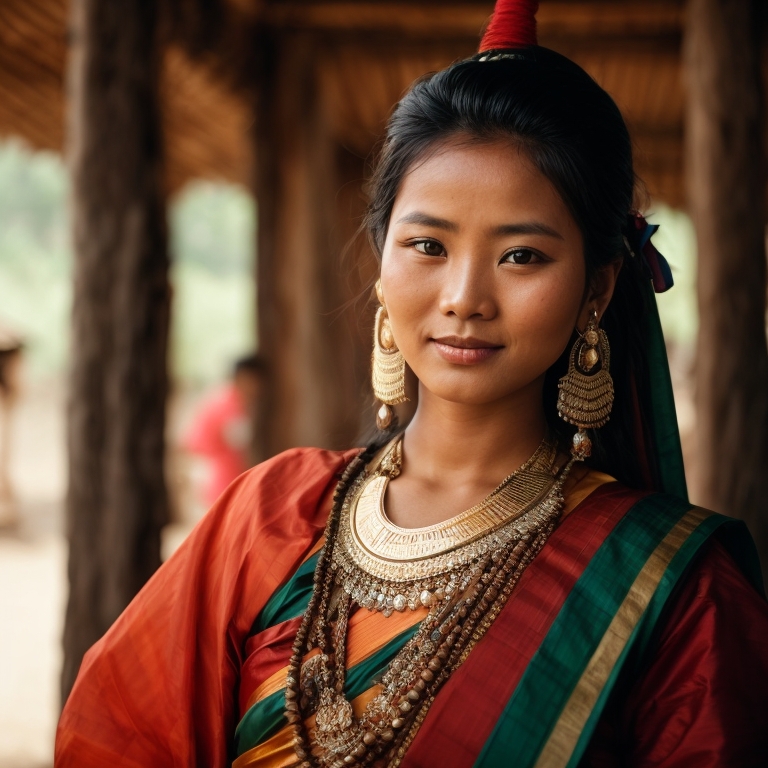 Bamar Bamar | 68.0% | Estimated from Myanmar 2014 Census plus subsequent demographic estimates; Myanmar's 2014 Census was the first comprehensive census in 30+ years but did not publicly release detailed ethnic-group enumeration. Bamar (Burman, ~68%) is the dominant ethnic group, concentrated in the Irrawaddy / Ayeyarwady River basin and the central plains. The Bamar are predominantly Theravada Buddhist and constitute the politically and culturally dominant national majority |
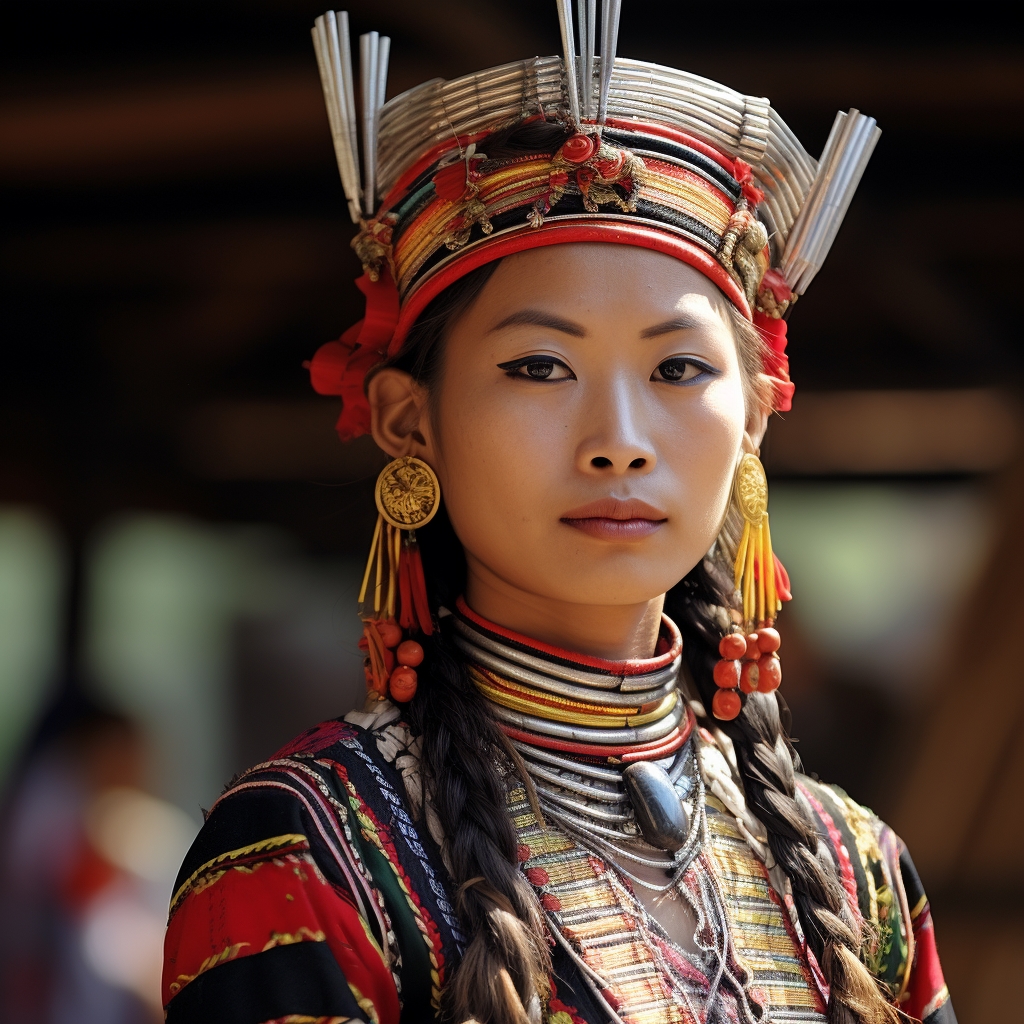 Shan Shan | 9.0% | Demographic estimates; Shan (~9%, ~5M+); concentrated in Shan State in eastern Myanmar. Tai-Kadai language family, related to Thai of Thailand and Lao of Laos. Predominantly Theravada Buddhist |
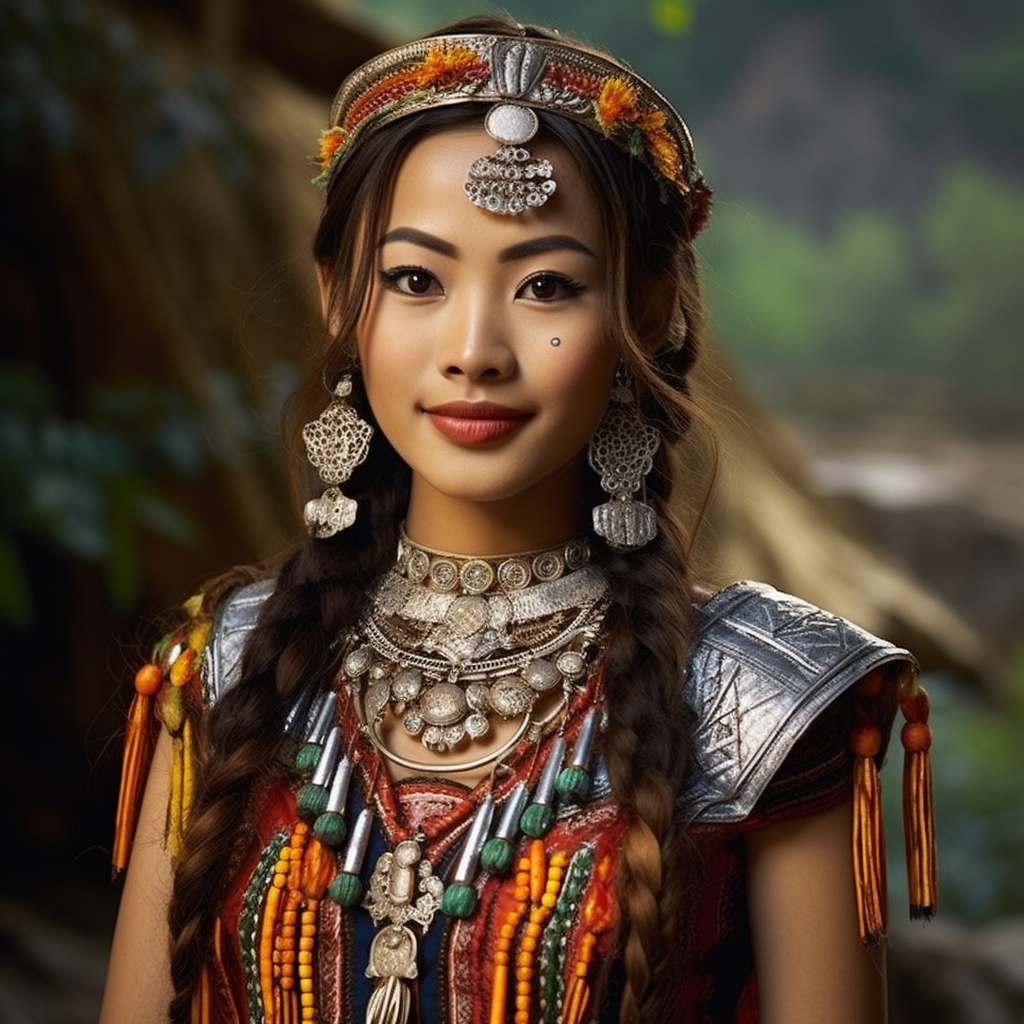 Karen Karen | 7.0% | Demographic estimates; Karen (~7%, ~3.5M+); concentrated in Karen / Kayin State plus parts of Mon State and Bago Region. Sino-Tibetan / Karen language family. Religious diversity: predominantly Theravada Buddhist with substantial Christian (Baptist) sub-population. Long-running Karen separatist insurgency since 1949 — the world's longest continuous civil war |
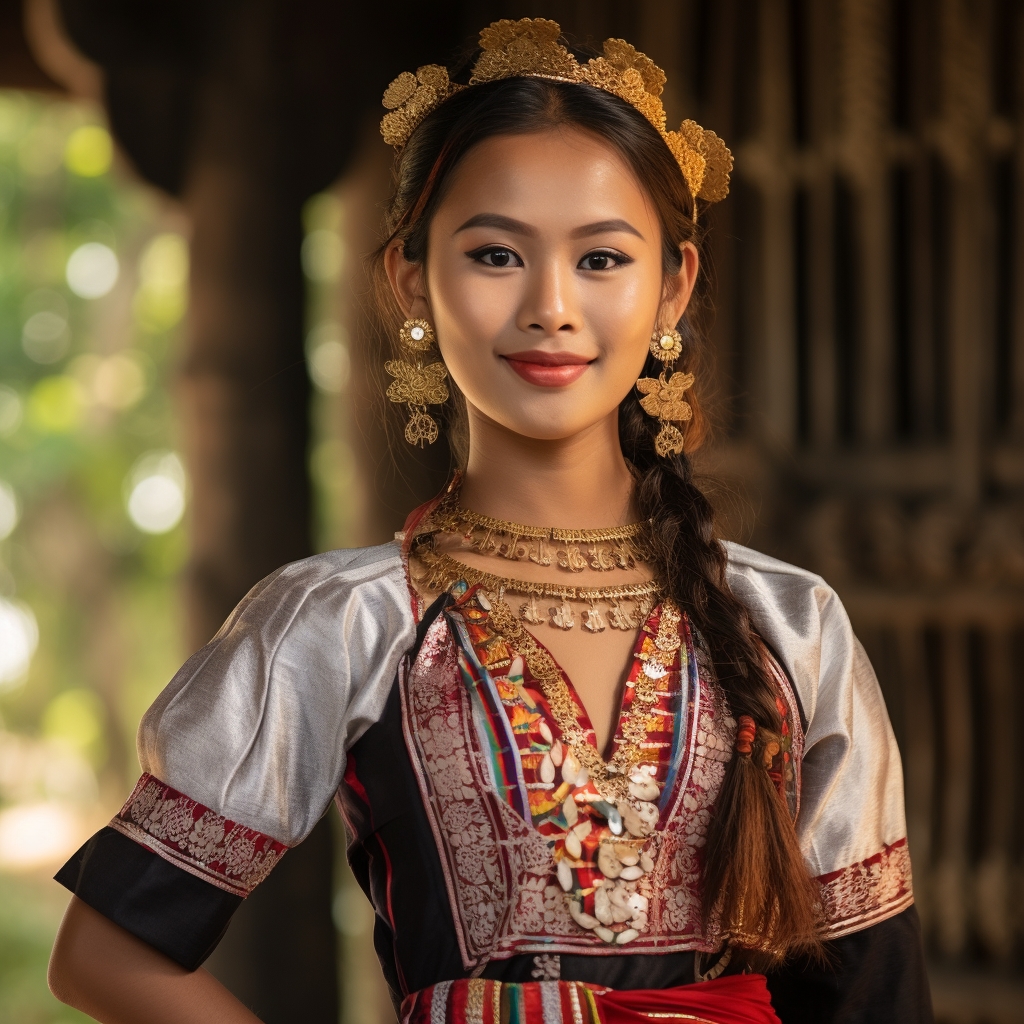 Rakhine Rakhine | 4.0% | Demographic estimates; Rakhine / Arakanese (~4%, ~2M+); concentrated in Rakhine State in western Myanmar. Sino-Tibetan / Tibeto-Burman language family, closely related to Bamar. Predominantly Theravada Buddhist |
 Myanmar Chinese Myanmar Chinese | 3.0% | Demographic estimates; Chinese-Myanmar / Sino-Burmese (~3%, ~1.5M+); concentrated in Yangon, Mandalay, and major cities, plus the substantial cross-border Chinese-Burmese populations of upper Myanmar (Kokang Chinese in Shan State near the Yunnan border are part of the so-called Kokang Special Region with substantial autonomous administration). Predominantly Yunnanese-source plus the 19th-c. Hokkien and Cantonese sub-populations |
 Myanmar Indian Myanmar Indian | 2.0% | Demographic estimates; Indian-Myanmar / Burmese Indian (~2%, ~1M+); concentrated in Yangon plus other major cities. Substantially reduced from earlier 20th-c. peaks (the post-1962 Ne Win-era nationalization expelled an estimated 300,000+ Indian-Myanmar residents) |
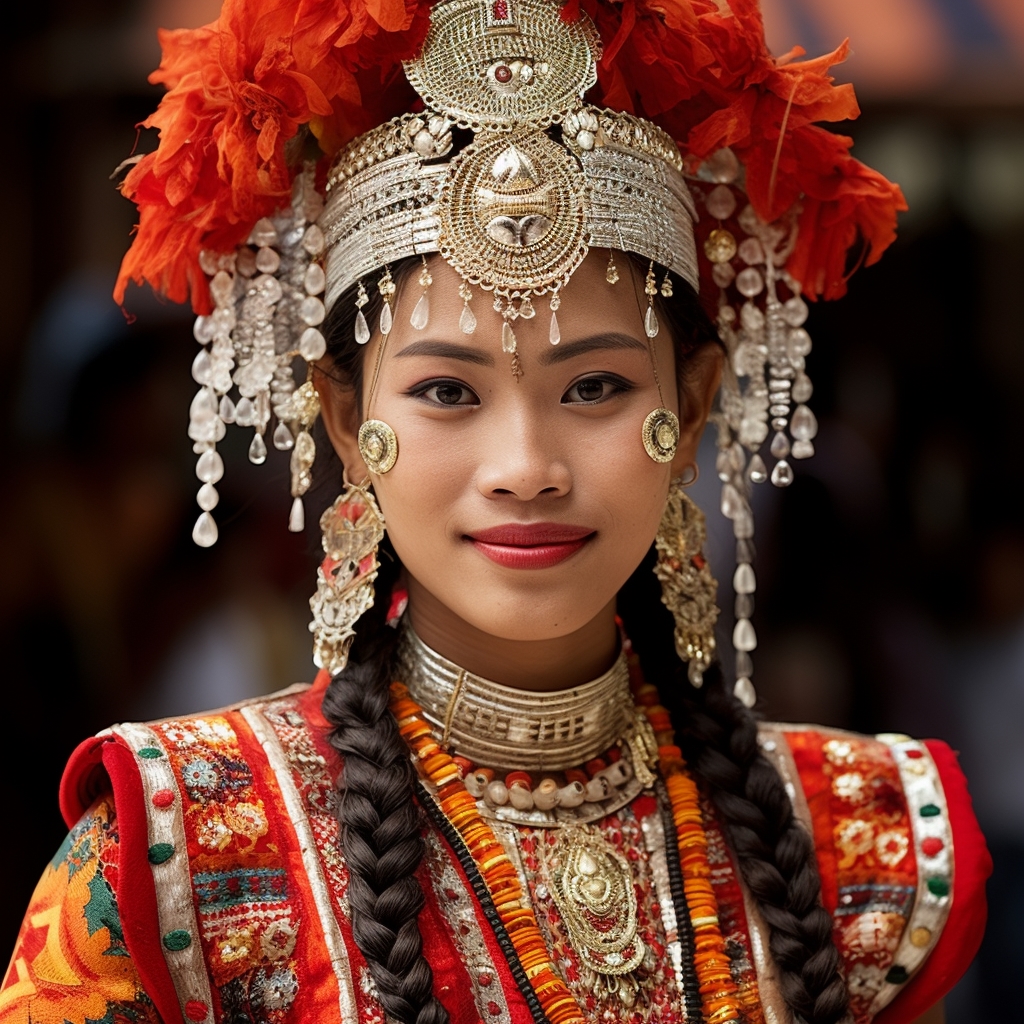 Mon Mon | 2.0% | Demographic estimates; Mon (~2%, ~1M+); concentrated in Mon State plus parts of Bago Region and Thaninthayi Region. Austroasiatic / Mon-Khmer language family. Predominantly Theravada Buddhist |
 Kachin Kachin | 1.5% | Demographic estimates; Kachin / Jingpho (~1.5%, ~750,000+); concentrated in Kachin State in northern Myanmar. Sino-Tibetan / Tibeto-Burman language family. Predominantly Christian (Baptist). Long-running Kachin separatist conflict — the Kachin Independence Organization (KIO) maintained ceasefire 1994-2011 and resumed armed conflict 2011-present |
 Chin Chin | 1.5% | Demographic estimates; Chin (~1.5%, ~750,000+); concentrated in Chin State in western Myanmar. Sino-Tibetan / Tibeto-Burman / Kuki-Chin language family. Predominantly Christian (Baptist). Cross-border population shared with Indian Mizoram and Manipur (the Indian Mizo and Kuki populations are closely related to Burmese Chin) |
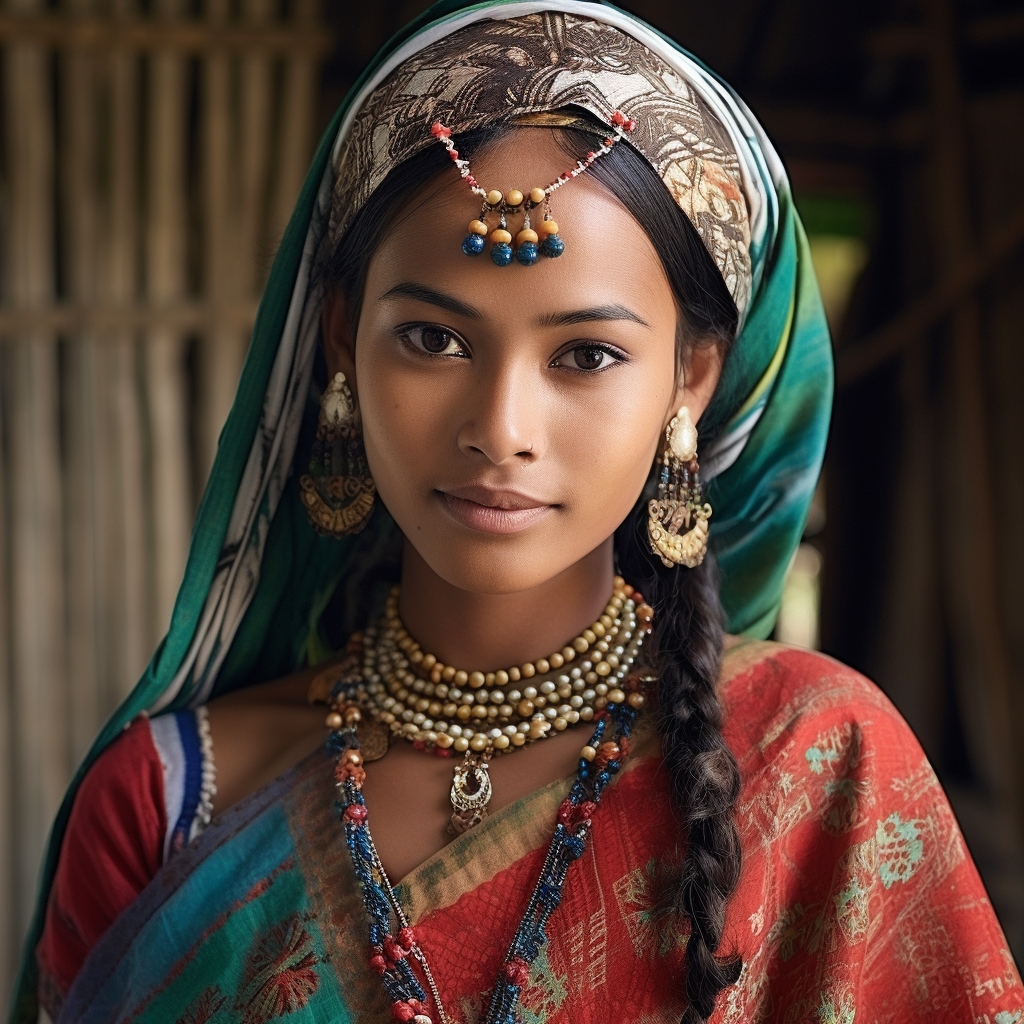 Rohingya Rohingya | 1.0% | Pre-2017 estimates; Rohingya pre-2017 was approximately 1.0-1.4 million in Rakhine State, but the August 2017 Myanmar military operation that the UN Independent International Fact-Finding Mission characterized as genocide expelled approximately 750,000 Rohingya to Bangladesh. Current Rohingya residents in Myanmar are estimated at approximately 600,000+, predominantly confined to internal-displacement camps with limited movement and citizenship-status rights |
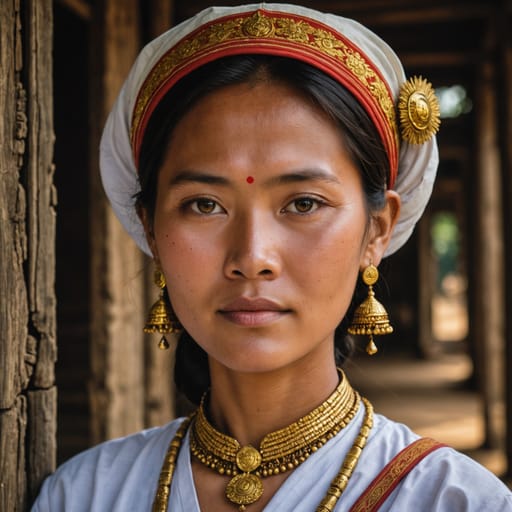 Myanmar Other Myanmar Other | 1.0% | Demographic estimates residual; includes Wa (the autonomous Wa Special Region in Shan State, with substantial autonomous-political-administration), Kayah / Karenni (Kayah State, distinct from but related to Karen), Naga (Sagaing Region), Lahu, Akha, Lisu, Palaung / Ta'ang, Pa'O, plus other smaller ethnic groups across Myanmar's officially-recognized 135 ethnic groups (the so-called 'national races' framework) |
Myanmar Phenotype Profile
Myanmar's population is dominated by the Bamar (Burman, ~68%) ethnic group with the substantial 134+ other ethnic groups comprising approximately 32% across the various ethnic states (Shan ~9%, Karen ~7%, Rakhine ~4%, Mon ~2%, Kachin ~1.5%, Chin ~1.5%, plus the Rohingya ~1% post-2017, the Chinese-Myanmar ~3%, the Indian-Myanmar ~2%, and other smaller groups ~1%). The country's demographic structure reflects approximately 2,000+ years of population processes including Tibeto-Burman migration from southern China (Yunnan) to the Irrawaddy basin, the various Indigenous Mon-Khmer (Mon, Wa) and Tai-Kadai (Shan) populations, the Sino-Tibetan / Tibeto-Burman ethnic minorities of the highland border regions, the British colonial period (1885-1948), and the post-1948 independence-era political dynamics including the 1962-2011 military rule and the post-2011 partial democratization followed by the 2021 military coup.
Genome-wide patterns place Bamar populations in a Tibeto-Burman / Southern East Asian cluster with substantial admixture from neighboring Mon-Khmer and Tai-Kadai source populations. Skin tone across the broader Burmese population spans Fitzpatrick III-V with IV the modal value nationally. Hair is uniformly straight (Andre Walker 1A-1B) and uniformly black or very dark brown across the broader population. Eye color is uniformly brown to dark brown. Facial features track Tibeto-Burman / Southeast Asian source populations across most ethnic groups, with the Rohingya showing characteristic Bengali / Eastern Indo-Aryan source-population features distinct from broader Burmese populations.
Myanmar has experienced approximately 75+ years of continuous internal armed conflict since the 1948 independence — multiple ongoing civil wars (Karen since 1949, Kachin since 1961, Shan, Wa, Chin, Rohingya genocide, plus others). The 2021 military coup against the elected civilian government has produced the post-2021 broader civil war with substantial demographic disruption, refugee outflow, and human-rights violations.
Myanmar Body & Anatomy Reference
Per-feature anatomical profile for AI nude generation: Southeast Asian Austronesian / Austroasiatic phenotype dominant in Myanmar
Myanmar Women: Boobs & Breasts
Myanmar women's tits and boobs reflect the small-to-medium cup, modest projection Southeast Asian Austronesian / Austroasiatic bust profile dominant in the Myanmar demographic composition. Myanmar nipples and areolas show medium-brown to dark-brown areolar pigmentation against the tan-to-medium-brown skin tone, with areolar diameter typically in the 26-38mm range, distinct from the the fuller South Asian or Polynesian bust. Myanmar breast morphology trends firm, modest projection, a function of the ectomorph, petite frame body habitus and mean adult female BMI 20-23. For anatomically-accurate AI-generated Myanmar nude women the render should preserve: small-to-medium cup, modest projection shape, 26-38mm areolas with regional pigmentation, and the torso proportions of the Southeast Asian Austronesian / Austroasiatic phenotype.
Myanmar Women: Ass & Hips
Myanmar women's ass and hip morphology presents as small-to-medium, modest projection, narrower hip profile, distinctly different from the fuller glutes of the Pacific Islander phenotype. Myanmar pelvic profile shows narrow-to-medium iliac crests, anchored in the Southeast Asian Austronesian / Austroasiatic skeletal pattern that dominates the Myanmar ethnic composition. Myanmar butt shots in adult AI imagery should render the small-to-medium, modest projection, narrower hip profile silhouette with the ectomorph, petite frame build and the gluteal-femoral fat distribution typical of the Southeast Asian Austronesian / Austroasiatic phenotype rather than defaulting to a globally-averaged shape that generic AI generators produce.
Myanmar Women: Vagina & Pussy
Myanmar women's pussy and vulvar anatomy presents medium-brown to dark-brown labial pigmentation, consistent with the Southeast Asian Austronesian / Austroasiatic phenotype's pigmentation pattern dominant in Myanmar. Myanmar pubic hair is typically straight-to-wavy fine-to-medium texture, distributed in the inverted-triangle pattern with regional-typical density. AI-generated Myanmar nude imagery should preserve the medium-brown to dark-brown labial pigmentation and the straight-to-wavy fine-to-medium texture hair texture rather than defaulting to a Western-European pink-and-sparse template. For anatomically-accurate Myanmar pussy renders the labial pigmentation should match the surrounding tan to medium-brown skin tone of the Southeast Asian Austronesian / Austroasiatic phenotype.
Myanmar Men: Dicks & Penis
Myanmar men's dick and penile anatomy in adult AI generation should anchor on the regional reference data: regional mean ~11cm erect, moderate girth, and medium-brown shaft pigmentation. Myanmar cock profile reflects the Southeast Asian Austronesian / Austroasiatic ancestral population's anthropometric measurements rather than a globally-averaged Western-pornography default. For anatomically-accurate Myanmar nude male imagery the shaft pigmentation should track the surrounding tan to medium-brown skin tone, with continuous glans-to-shaft pigmentation transition and the straight-to-wavy fine-to-medium texture pubic-hair texture distributed in the typical inverted-V escutcheon. Circumcision status across Myanmar men varies by religious and cultural tradition rather than ancestral phenotype.
Myanmar People: Body, Curves & Build
Myanmar body type and overall build presents as ectomorph, petite frame, with mean adult female BMI 20-23: the characteristic Southeast Asian Austronesian / Austroasiatic habitus dominant in the Myanmar demographic composition. Myanmar curves and proportions in adult AI imagery should preserve the regional skeletal frame (height, shoulder-to-hip ratio, limb proportions) rather than scaling to a Western-European mesomorph default. The Myanmar nude female form, when rendered with anatomical fidelity, shows the height range, frame width, and adipose distribution pattern typical of the Southeast Asian Austronesian / Austroasiatic phenotype. Generic AI image generators tend to collapse regional body types into a few default shapes; the Ethnic Erotic phenotype-anchored approach preserves the Myanmar build as its own reference category.
Myanmar People: Skin Tone & Hair Texture
Myanmar skin tone falls in the tan to medium-brown (Fitzpatrick III-V) band, the surface signal most often miscalibrated by generic AI nude generators trained on Western-photographic datasets. Myanmar hair texture is typically straight-to-wavy 1A-2A, dark-brown to black, characteristic of the Southeast Asian Austronesian / Austroasiatic phenotype. For anatomically-accurate Myanmar nude renders the skin should hold the Fitzpatrick band consistently across body surface rather than showing the lighter-than-face body shading that AI generators default to. Myanmar hair pigmentation and texture on body, pubic, and head should match across the figure rather than mixing textures (a common AI artefact).
A descriptive view, not a claim about individuals
This page shows a weighted aggregate of phenotype observations across the Myanmar population, based on demographic composition from published census and ancestry sources. Phenotypes within any country are far more varied than the aggregate suggests; this is a descriptive reference, not a deterministic claim about any individual. For source-level detail on individual ethnic groups, see the constituent atlas pages linked below.
Methodology Notes
Composition weights are derived from estimates based on the 2014 Myanmar Census (the first comprehensive Myanmar census in 30+ years) plus subsequent academic and international demographic estimates. The 2014 Census ethnicity tables have not been comprehensively publicly released. Caveats: (1) the Burmese state framework of 135 'national races' is widely criticized as arbitrary and exclusionary (notably excluding the Rohingya despite their long historical presence in Rakhine); (2) the Rohingya population in Myanmar has been substantially reduced through the 2017 genocide and continuing displacement; (3) the various ethnic-armed-conflict zones produce demographic data collection challenges; (4) the post-2021 military coup has further disrupted demographic data collection and population stability; (5) the Indian-Myanmar and Chinese-Myanmar populations have been substantially reduced from earlier 20th-c. peaks through nationalization-era expulsions and continuing emigration.
Primary Sources
- 1.Department of Population, Ministry of Labour, Immigration and Population, Myanmar. The 2014 Myanmar Population and Housing Census. Naypyidaw: DOP; 2015.
- 2.Smith M. Burma: Insurgency and the Politics of Ethnicity (2nd ed). Zed Books; 1999.
- 3.Independent International Fact-Finding Mission on Myanmar. Report of the detailed findings (A/HRC/39/CRP.2). Geneva: UN OHCHR; 2018.
- 4.Steinberg DI. Burma/Myanmar: What Everyone Needs to Know (3rd ed). Oxford University Press; 2021.
- 5.Cheesman N. Opposing the Rule of Law: How Myanmar's Courts Make Law and Order. Cambridge University Press; 2015.
Other countries in Southeast Asia
Aggregate phenotype references for neighbouring Southeast Asia nations, weighted by demographic composition.