Help us get this right
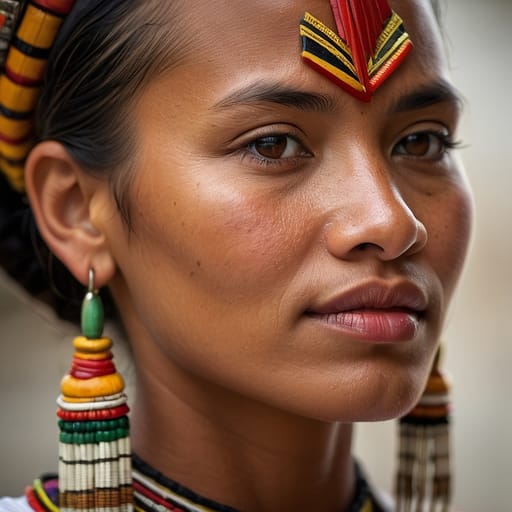
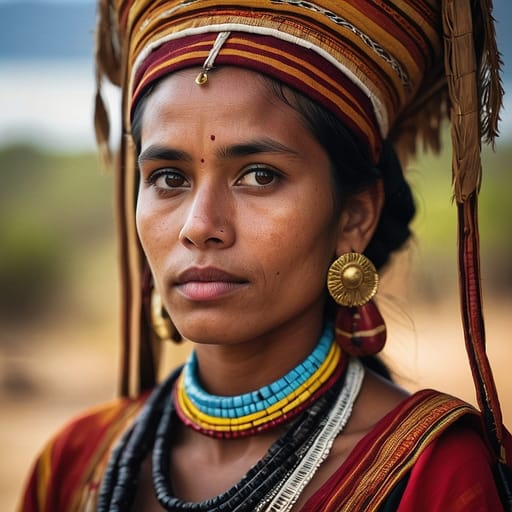
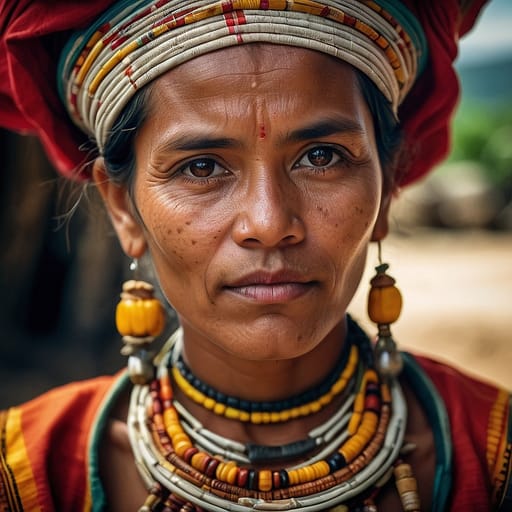
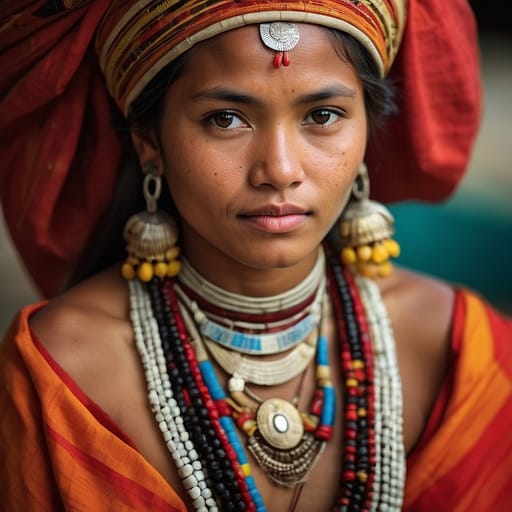
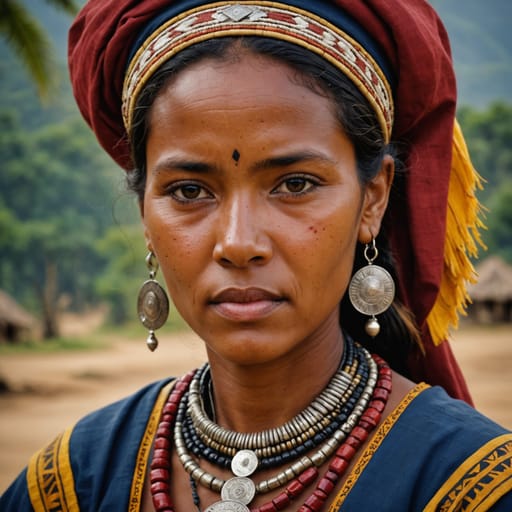
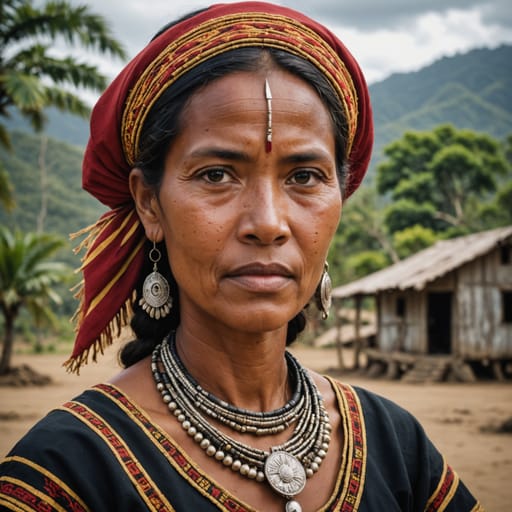
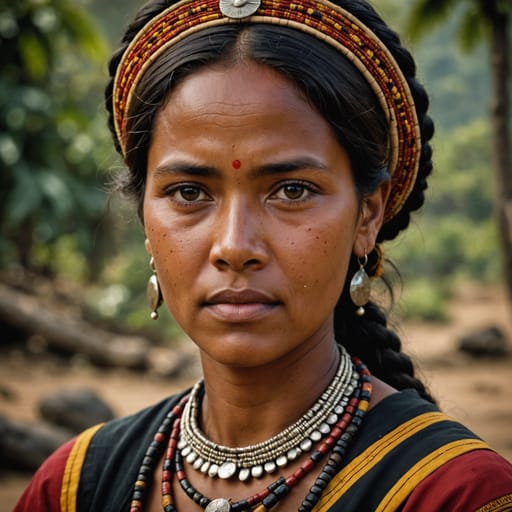
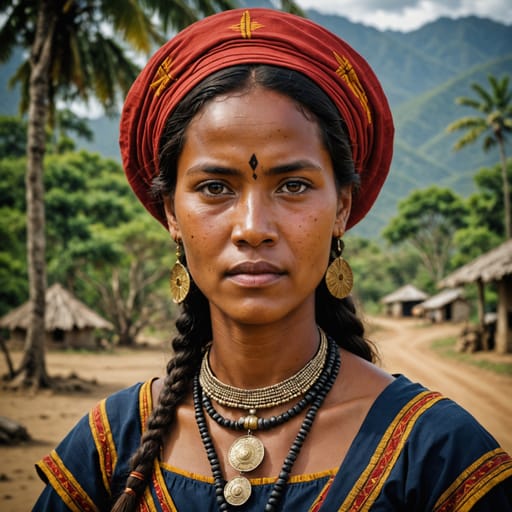
Does this portrait look right for Tetum?
One tap. It takes a second and it is recorded.
1 says it looks right, 0 say it looks off.


Timor-Leste
TLSoutheast Asia
Timor-Leste is home to 8 documented ethnic groups in Southeast Asia, led by Tetum (~35%), Timor Leste Other (~22%), Mambai (~13%), Makasae (~9%). This page blends their phenotype and demographic data into one weighted reference: skin tone, facial features, hair texture and build, drawn from published census and ancestry sources.
Demographic Composition
Composition weights are derived from self-identification in published census and demographic surveys. Each row links to the source ethnic-group atlas page.
| Ethnic group | Weight | Source |
|---|---|---|
 Tetum Tetum | 35.0% | Statistics Timor-Leste 2022 Census; Tetum (~35%, ~470,000+); the largest ethnic group, predominantly Catholic. Tetum is one of the two official languages of Timor-Leste alongside Portuguese. Cross-border population shared with the West-Timor / Indonesian Tetun community |
 Timor Leste Other Timor Leste Other | 21.5% | Timor-Leste 2022 Census residual; includes Galoli, Idate, Lakalei, Habun, Naueti, Waima'a, Midiki, Kawaimina, Atauran, Baikenu, plus other smaller ethnic groups. Also includes the small Chinese-Timorese, Portuguese-Timorese (the historically distinctive Eurasian community), and Indonesian-Timorese populations |
 Mambai Mambai | 13.0% | Timor-Leste 2022 Census, Mambai (~13%, ~175,000+); concentrated in central Timor-Leste highlands |
 Makasae Makasae | 9.0% | Timor-Leste 2022 Census, Makasae (~9%, ~120,000+); concentrated in eastern Timor-Leste (Baucau, Viqueque). Papuan / Trans-New-Guinea language family |
 Kemak Kemak | 6.0% | Timor-Leste 2022 Census, Kemak (~6%, ~80,000+); concentrated in central-northern Timor-Leste |
 Bunak Bunak | 6.0% | Timor-Leste 2022 Census, Bunak (~6%, ~80,000+); concentrated in central Timor-Leste highlands. Papuan / Trans-New-Guinea language family. Cross-border population with West Timor / Indonesia |
 Fataluku Fataluku | 6.0% | Timor-Leste 2022 Census, Fataluku (~6%, ~80,000+); concentrated in eastern Timor-Leste (Lautém District). Papuan / Trans-New-Guinea language family — distinct from the Austronesian-language majority of Timor-Leste |
 Tokodede Tokodede | 3.5% | Timor-Leste 2022 Census, Tokodede (~3.5%, ~46,000+); concentrated in northwestern Timor-Leste |
Timor-Leste Phenotype Profile
Timor-Leste's population reflects the country's geographic position in the Austronesian-Melanesian transition zone of eastern Indonesia and the broader Lesser Sunda Islands region. The country has a complex multi-ethnic structure with both Austronesian-language populations (Tetum ~35%, Mambai ~13%, Kemak ~6%, Tokodede ~3.5%, plus other smaller groups) and Papuan / Trans-New-Guinea-language populations (Makasae ~9%, Fataluku ~6%, Bunak ~6%, plus other groups) — the Papuan-language presence in Timor-Leste reflects deeper pre-Austronesian-expansion Papuan / Melanesian source-population presence in the eastern Indonesian archipelago. The country experienced approximately 25 years of Indonesian occupation (1975-1999) following the brief Portuguese decolonization period (1974-1975), with documented violence and demographic disruption — academic estimates place Timorese mortality from the Indonesian occupation period at 100,000-200,000 (approximately 15-25% of the pre-1975 Timorese population). The country gained independence in 2002 following the 1999 UN-supervised referendum.
Genome-wide patterns reflect the Austronesian-Melanesian mix: Western Austronesian-language Timorese populations cluster more closely with broader Eastern Indonesian Austronesian populations; Papuan-language Timorese populations cluster more closely with broader Papuan / Melanesian source populations.
Skin tone across the population spans Fitzpatrick III-VI with IV-V the modal value nationally. Hair texture spans Andre Walker 1A through 3A, with curly textures more common in Papuan-language sub-populations than in Austronesian-language populations. Hair color is uniformly black to very dark brown. Eye color is uniformly brown to dark brown. Facial features show characteristic features intermediate between Austronesian and Papuan / Melanesian source populations across the various ethnic groups. Build is intermediate; adult Timorese male mean stature is approximately 158-162 cm in 2010s-2020s cohorts (one of the shorter mean statures in Southeast Asia, attributed in part to ongoing nutritional issues following the post-1999 reconstruction period).
Timor-Leste Body & Anatomy Reference
Per-feature anatomical profile for AI nude generation: Southeast Asian Austronesian / Austroasiatic phenotype dominant in Timor-Leste
Timor-Leste Women: Boobs & Breasts
Timor-Leste women's tits and boobs reflect the small-to-medium cup, modest projection Southeast Asian Austronesian / Austroasiatic bust profile dominant in the Timor-Leste demographic composition. Timor-Leste nipples and areolas show medium-brown to dark-brown areolar pigmentation against the tan-to-medium-brown skin tone, with areolar diameter typically in the 26-38mm range, distinct from the the fuller South Asian or Polynesian bust. Timor-Leste breast morphology trends firm, modest projection, a function of the ectomorph, petite frame body habitus and mean adult female BMI 20-23. For anatomically-accurate AI-generated Timor-Leste nude women the render should preserve: small-to-medium cup, modest projection shape, 26-38mm areolas with regional pigmentation, and the torso proportions of the Southeast Asian Austronesian / Austroasiatic phenotype.
Timor-Leste Women: Ass & Hips
Timor-Leste women's ass and hip morphology presents as small-to-medium, modest projection, narrower hip profile, distinctly different from the fuller glutes of the Pacific Islander phenotype. Timor-Leste pelvic profile shows narrow-to-medium iliac crests, anchored in the Southeast Asian Austronesian / Austroasiatic skeletal pattern that dominates the Timor-Leste ethnic composition. Timor-Leste butt shots in adult AI imagery should render the small-to-medium, modest projection, narrower hip profile silhouette with the ectomorph, petite frame build and the gluteal-femoral fat distribution typical of the Southeast Asian Austronesian / Austroasiatic phenotype rather than defaulting to a globally-averaged shape that generic AI generators produce.
Timor-Leste Women: Vagina & Pussy
Timor-Leste women's pussy and vulvar anatomy presents medium-brown to dark-brown labial pigmentation, consistent with the Southeast Asian Austronesian / Austroasiatic phenotype's pigmentation pattern dominant in Timor-Leste. Timor-Leste pubic hair is typically straight-to-wavy fine-to-medium texture, distributed in the inverted-triangle pattern with regional-typical density. AI-generated Timor-Leste nude imagery should preserve the medium-brown to dark-brown labial pigmentation and the straight-to-wavy fine-to-medium texture hair texture rather than defaulting to a Western-European pink-and-sparse template. For anatomically-accurate Timor-Leste pussy renders the labial pigmentation should match the surrounding tan to medium-brown skin tone of the Southeast Asian Austronesian / Austroasiatic phenotype.
Timor-Leste Men: Dicks & Penis
Timor-Leste men's dick and penile anatomy in adult AI generation should anchor on the regional reference data: regional mean ~11cm erect, moderate girth, and medium-brown shaft pigmentation. Timor-Leste cock profile reflects the Southeast Asian Austronesian / Austroasiatic ancestral population's anthropometric measurements rather than a globally-averaged Western-pornography default. For anatomically-accurate Timor-Leste nude male imagery the shaft pigmentation should track the surrounding tan to medium-brown skin tone, with continuous glans-to-shaft pigmentation transition and the straight-to-wavy fine-to-medium texture pubic-hair texture distributed in the typical inverted-V escutcheon. Circumcision status across Timor-Leste men varies by religious and cultural tradition rather than ancestral phenotype.
Timor-Leste People: Body, Curves & Build
Timor-Leste body type and overall build presents as ectomorph, petite frame, with mean adult female BMI 20-23: the characteristic Southeast Asian Austronesian / Austroasiatic habitus dominant in the Timor-Leste demographic composition. Timor-Leste curves and proportions in adult AI imagery should preserve the regional skeletal frame (height, shoulder-to-hip ratio, limb proportions) rather than scaling to a Western-European mesomorph default. The Timor-Leste nude female form, when rendered with anatomical fidelity, shows the height range, frame width, and adipose distribution pattern typical of the Southeast Asian Austronesian / Austroasiatic phenotype. Generic AI image generators tend to collapse regional body types into a few default shapes; the Ethnic Erotic phenotype-anchored approach preserves the Timor-Leste build as its own reference category.
Timor-Leste People: Skin Tone & Hair Texture
Timor-Leste skin tone falls in the tan to medium-brown (Fitzpatrick III-V) band, the surface signal most often miscalibrated by generic AI nude generators trained on Western-photographic datasets. Timor-Leste hair texture is typically straight-to-wavy 1A-2A, dark-brown to black, characteristic of the Southeast Asian Austronesian / Austroasiatic phenotype. For anatomically-accurate Timor-Leste nude renders the skin should hold the Fitzpatrick band consistently across body surface rather than showing the lighter-than-face body shading that AI generators default to. Timor-Leste hair pigmentation and texture on body, pubic, and head should match across the figure rather than mixing textures (a common AI artefact).
A descriptive view, not a claim about individuals
This page shows a weighted aggregate of phenotype observations across the Timor-Leste population, based on demographic composition from published census and ancestry sources. Phenotypes within any country are far more varied than the aggregate suggests; this is a descriptive reference, not a deterministic claim about any individual. For source-level detail on individual ethnic groups, see the constituent atlas pages linked below.
Methodology Notes
Composition weights are derived from Statistics Timor-Leste 2022 Census, the most recent comprehensive Timor-Leste census. Caveats: (1) the Austronesian-vs-Papuan-language distinction is fundamental to Timor-Leste's ethnic-linguistic structure but is not always centered in Timorese national-political discourse; (2) the substantial Indonesian-occupation-era demographic disruption affects historical demographic comparisons; (3) the small Chinese-Timorese and Portuguese-Timorese communities have been substantially reduced from Portuguese colonial-era peaks through emigration during the Indonesian occupation period; (4) the post-2002 independence period has produced substantial demographic stabilization but the country remains among the smallest Southeast Asian populations.
Primary Sources
- 1.Statistics Timor-Leste. 2022 Population and Housing Census. Dili: STL; 2023.
- 2.Hägerdal H. Lords of the Land, Lords of the Sea: Conflict and Adaptation in Early Colonial Timor, 1600-1800. KITLV Press; 2012.
- 3.Gunn GC. Timor Loro Sae: 500 Years. Macau: Livros do Oriente; 1999.
- 4.Taylor JG. East Timor: The Price of Freedom. Zed Books; 1999.
- 5.Durand F. Timor-Leste: Country at the Crossroads of Asia and the Pacific (translated). Bangkok: IRASEC; 2009.
Other countries in Southeast Asia
Aggregate phenotype references for neighbouring Southeast Asia nations, weighted by demographic composition.