Help us get this right
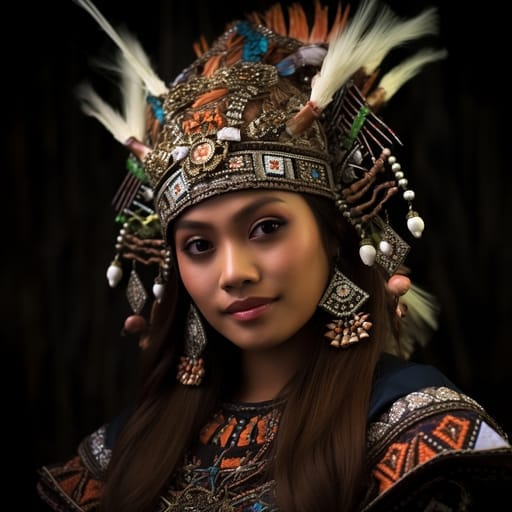
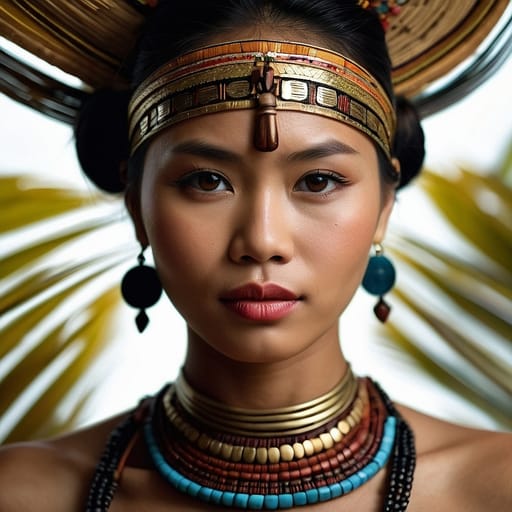
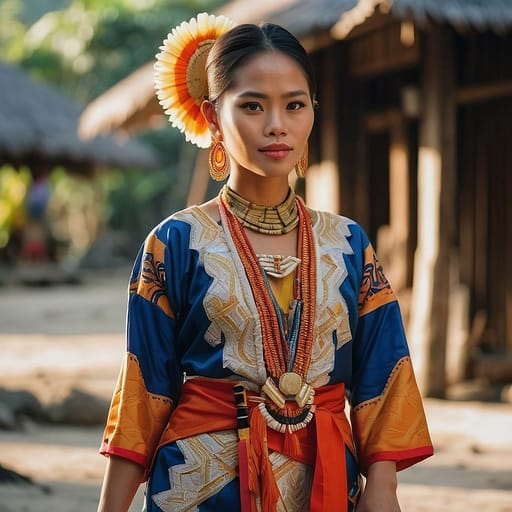
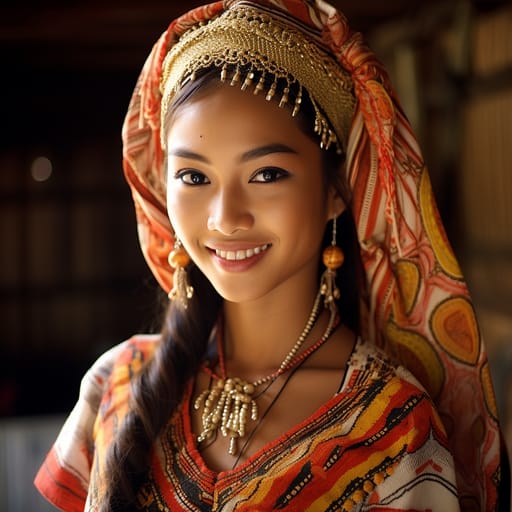
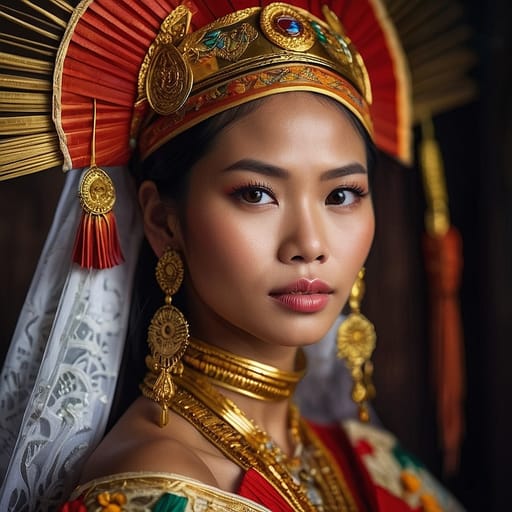
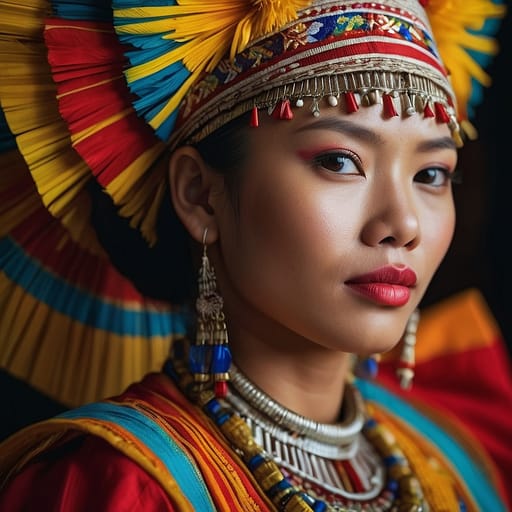
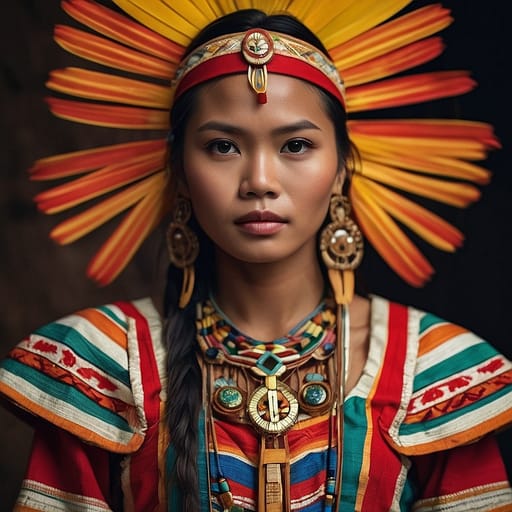
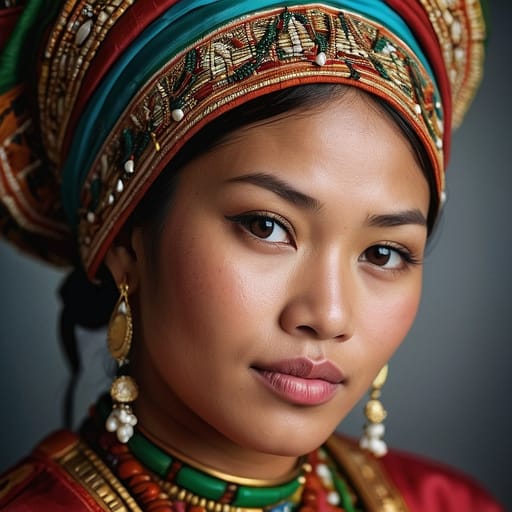
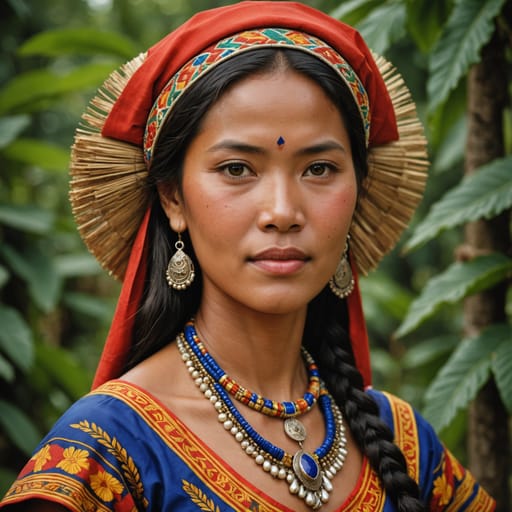
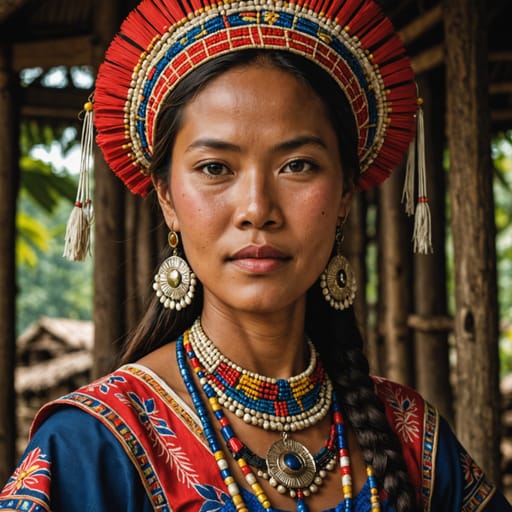
Does this portrait look right for Tagalog?
One tap. It takes a second and it is recorded.
1 says it looks right, 0 say it looks off.
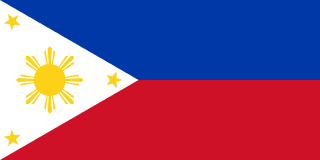

Philippines
PHSoutheast Asia
Philippines is home to 14 documented ethnic groups in Southeast Asia, led by Tagalog (~24%), Bisaya Binisaya (~12%), Cebuano (~9%), Ilocano (~9%). This page blends their phenotype and demographic data into one weighted reference: skin tone, facial features, hair texture and build, drawn from published census and ancestry sources.
Demographic Composition
Composition weights are derived from self-identification in published census and demographic surveys. Each row links to the source ethnic-group atlas page.
| Ethnic group | Weight | Source |
|---|---|---|
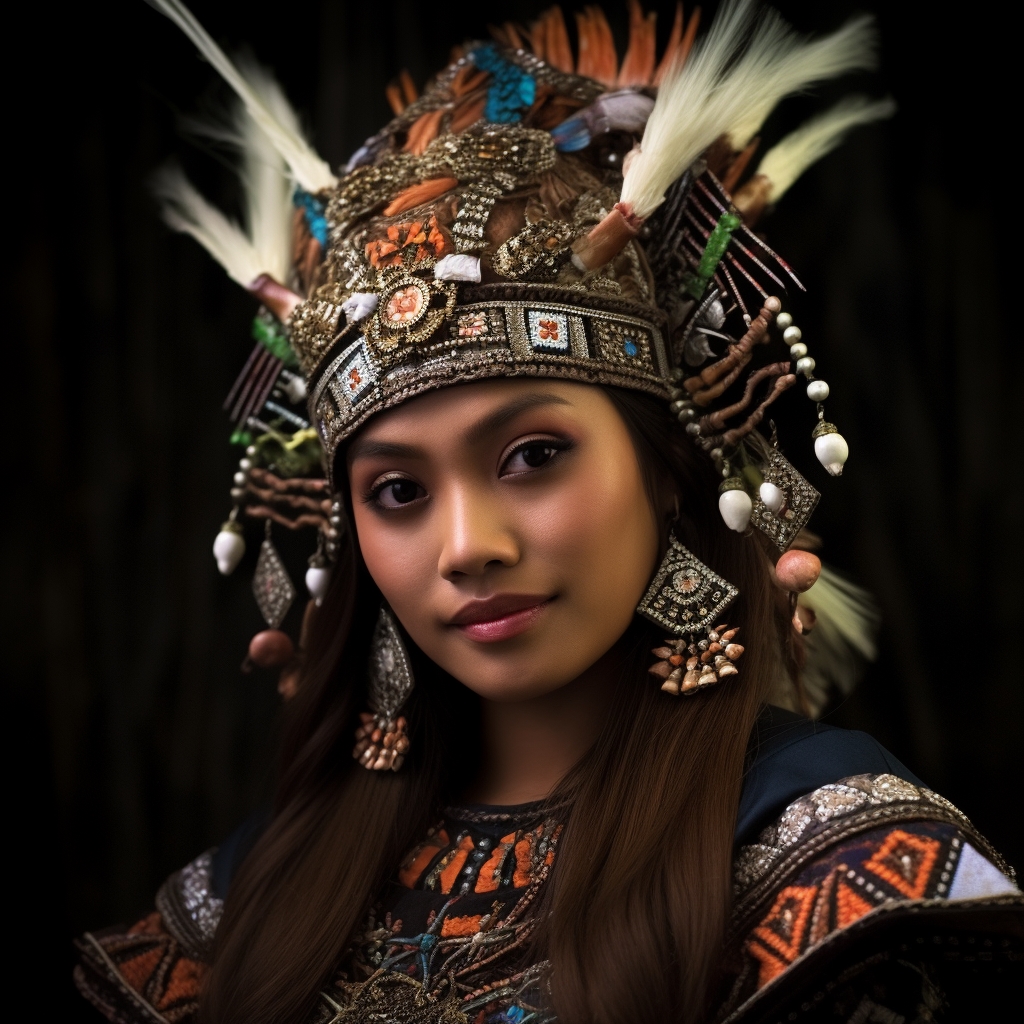 Tagalog Tagalog | 24.3% | Philippine Statistics Authority (PSA) 2020 Census ethnicity tabulation; Tagalog (~24.3%, ~26M+) is the largest single ethnic group, concentrated in Central Luzon (the National Capital Region / Metro Manila plus Bulacan, Pampanga, Bataan, Tarlac), Calabarzon (Cavite, Laguna, Batangas, Rizal, Quezon), and Mimaropa. The Tagalog language is the basis for Filipino, the national language of the Philippines |
 Bisaya Binisaya Bisaya Binisaya | 11.7% | PSA 2020 Census, Bisaya / Binisaya (~11.7%, ~12.7M+); the umbrella self-identification covering Cebuano, Hiligaynon, Waray, and broader Visayan-language sub-populations who self-identify as 'Bisaya' rather than the more specific sub-ethnic identification. Concentrated in the Visayan islands and Mindanao |
 Cebuano Cebuano | 9.4% | PSA 2020 Census, Cebuano (~9.4%, ~10.2M+); concentrated in Cebu plus parts of Bohol, Negros Oriental, Leyte, and the substantial Cebuano-language community of Mindanao (the post-1900s Cebuano-and-broader-Visayan migration to Mindanao for agricultural settlement) |
 Ilocano Ilocano | 9.2% | PSA 2020 Census, Ilocano (~9.2%, ~10M+); concentrated in Northern Luzon (Ilocos Norte, Ilocos Sur, La Union, Pangasinan, plus Cagayan Valley). The Ilocano language community has substantial diaspora populations in Hawaii (~25% of Hawaii's Filipino-American population is of Ilocano descent), the US mainland, Saudi Arabia, and elsewhere |
 Philippine Other Philippine Other | 8.7% | PSA 2020 Census residual; includes Zamboangueño / Chavacano speakers (the Spanish-creole-language community of Zamboanga and surrounding regions), Filipino-American mestizo populations (descendants of US colonial-era and continuing post-1946 Filipino-American admixture), recent immigrant populations (Korean-Filipino, Indian-Filipino, Japanese-Filipino, Arab-Filipino), the Sangguniang Negrito sub-populations (the various Aeta, Agta, Ati, Mamanwa, Atta, Iraya, Hanunuo Negrito groups partially documented under Philippine-Indigenous), plus other smaller groups |
 Hiligaynon Hiligaynon | 8.2% | PSA 2020 Census, Hiligaynon / Ilonggo (~8.2%, ~8.9M+); concentrated in Western Visayas (Iloilo, Negros Occidental, Capiz, Aklan) |
 Philippine Indigenous Philippine Indigenous | 7.2% | PSA 2020 Census Indigenous Peoples / Lumad and broader Indigenous Filipino population (~7.2% combined); the umbrella covers approximately 110+ Indigenous ethno-linguistic groups across the Philippines. Major sub-populations include the Cordillera Igorot peoples (Bontoc, Ifugao, Kalinga, Apayao, Kankanaey, Ibaloi, Tinguian — concentrated in the Northern Luzon mountain region), the Aeta / Negrito populations (concentrated in scattered communities across Luzon and the Visayas — the Indigenous foundational substrate of the Philippines, distinct from the Austronesian-Filipino majority), the Lumad of Mindanao (Manobo, Mandaya, Tboli, Bagobo, Mansaka, Subanon, Higaonon, Mamanwa, Manguangan, Ata, Bukidnon, plus other groups), the Mangyan of Mindoro (eight sub-groups), the Palawan Indigenous peoples (Tagbanwa, Pala'wan, Batak), plus other smaller groups |
 Moro Bangsamoro Moro Bangsamoro | 6.9% | PSA 2020 Census Bangsamoro / Moro Muslim Filipino populations (~6.9% combined); concentrated in the Bangsamoro Autonomous Region in Muslim Mindanao (BARMM, established 2019) plus surrounding Mindanao provinces. Includes Maranao, Maguindanao, Tausug, Yakan, Sama-Bajau Muslims, Sangil, Kalagan, Iranun, Palawani, Molbog, Jama Mapun, plus other Moro sub-groups |
 Bikol Bikol | 4.5% | PSA 2020 Census, Bikol (~4.5%, ~4.9M+); concentrated in the Bicol Region (Camarines Norte, Camarines Sur, Albay, Sorsogon, Catanduanes, Masbate) |
 Waray Waray | 3.8% | PSA 2020 Census, Waray (~3.8%, ~4.1M+); concentrated in Eastern Visayas (Samar, Leyte) |
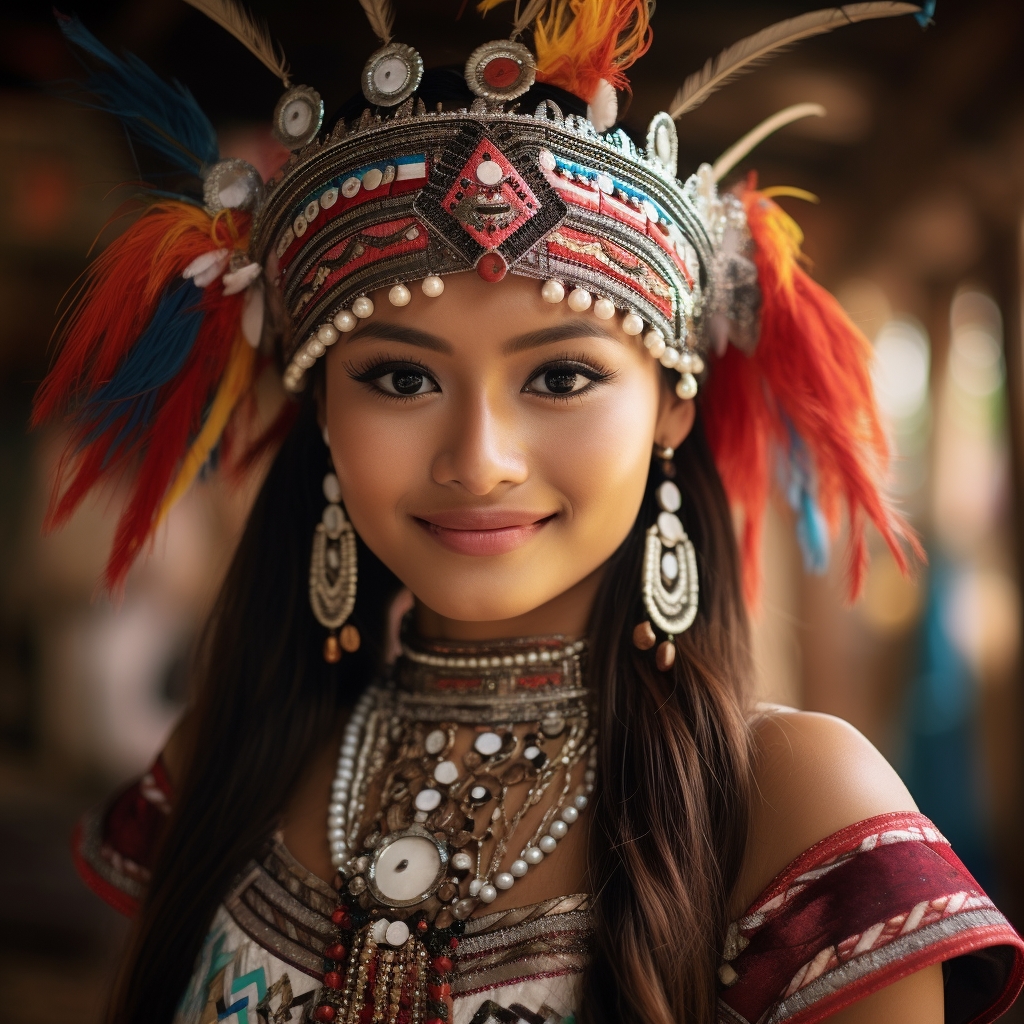 Kapampangan Kapampangan | 2.9% | PSA 2020 Census, Kapampangan (~2.9%, ~3.2M+); concentrated in Pampanga and Tarlac |
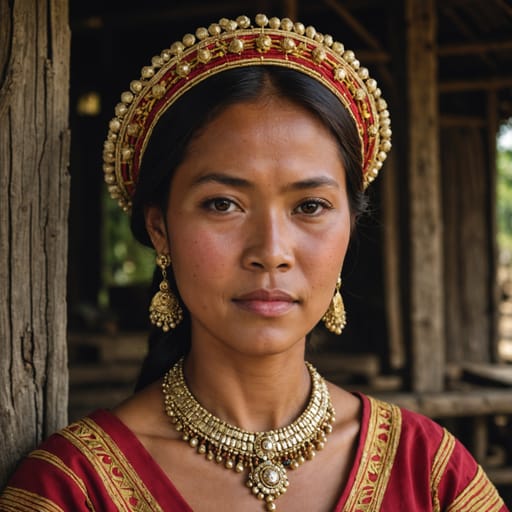 Pangasinan Pangasinan | 1.8% | PSA 2020 Census, Pangasinan (~1.8%, ~2M+); concentrated in Pangasinan Province |
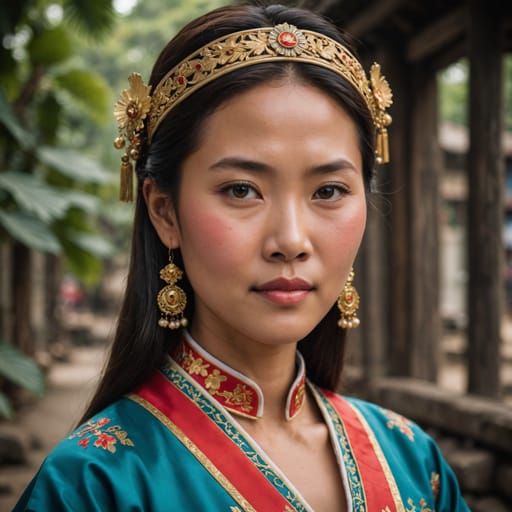 Chinese Filipino Chinese Filipino | 1.3% | PSA 2020 Census plus academic estimates; Chinese-Filipinos (Tsinoy / Tornatras) self-identified at ~1.3% (~1.4M+) but the broader Chinese-descended population including partial-Chinese ancestry individuals estimated at 4-5M+ (approximately 4-5% of total population). Concentrated in Metro Manila (Binondo Chinatown), Cebu, Iloilo, Davao, plus other major cities |
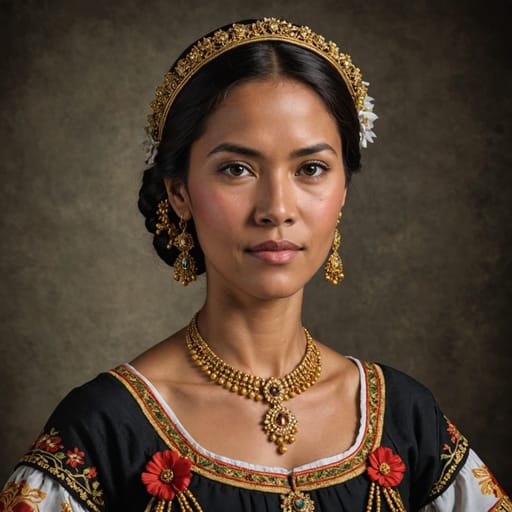 Spanish Filipino Spanish Filipino | 0.1% | PSA 2020 Census, Spanish-Filipino / Castilian-Filipino (~0.1%, ~110,000+); descendants of Spanish colonial-era settlers (1565-1898) plus subsequent Spanish-Filipino mestizo population. Most Spanish-Filipinos have substantial Filipino-Indigenous admixture; the strictly Spanish-descended population is small |
Philippines Phenotype Profile
Philippines has the third-largest Catholic-majority population in the world (~80% Catholic, the largest in Asia) and is among the most ethno-linguistically diverse countries in Southeast Asia — over 175 distinct languages spoken across approximately 110+ recognized ethno-linguistic groups. The country's demographic structure reflects approximately 50,000+ years of population processes: the foundational Pleistocene Negrito substrate (preserved most strongly in scattered Aeta / Negrito populations), the major Austronesian expansion from approximately 3000-1000 BCE that brought the bulk of contemporary Filipino languages and cultural traditions from Taiwan to the Philippines and onwards to Indonesia and the broader Pacific, the medieval Indian-Arab-Chinese trade-period influences (~10th-15th c. CE), the Spanish colonial period (1565-1898), the US colonial period (1898-1946), and the post-independence demographic dynamics.
The major umbrellas in the 2020 Census: Tagalog (~24%), Bisaya / Cebuano (~21% combined), Ilocano (~9%), Hiligaynon (~8%), Bikol (~5%), Waray (~4%), Kapampangan (~3%), Pangasinan (~2%) for the Christian Filipino majority; Moro / Bangsamoro Muslim Filipinos (~7%); Indigenous Filipinos (~7%); Chinese-Filipinos (~1%, with broader admixed populations larger); Spanish-Filipinos plus other smaller groups.
Genome-wide studies (HUGO Pan-Asian SNP Consortium 2009, plus subsequent Filipino-specific studies) document Philippine populations as carrying primarily Austronesian / Southeast Asian source ancestry with substantial East Asian (Han Chinese) admixture in the post-Spanish-colonial era plus the foundational Negrito substrate preserved in Aeta and other Indigenous populations. Spanish-colonial-era admixture (1565-1898) produced the substantial Spanish-Filipino mestizo population that continues to influence contemporary Filipino phenotype distributions, particularly in elite socio-economic strata.
Skin tone across the population spans Fitzpatrick III-VI with IV the modal value nationally — the broader Filipino majority (Tagalog, Cebuano, Ilocano, Hiligaynon, Waray, Bikol, Kapampangan, etc.) skews toward Fitzpatrick III-IV with characteristic Austronesian / Southeast Asian features; the Aeta / Negrito populations skew toward Fitzpatrick V-VI with curly to coily hair and characteristic Negrito source-population features; the Chinese-Filipino populations show characteristic East Asian features; the Spanish-Filipino mestizo populations show admixed Iberian-Filipino features. Hair texture is predominantly straight to wavy across the broader population with curly to coily textures concentrated in Aeta / Negrito populations. Hair color is uniformly black or very dark brown across the broader population. Eye color is predominantly brown to dark brown across the broader population with some hazel variants in Spanish-Filipino mestizo populations. Build is intermediate; adult Filipino male mean stature is approximately 163-166 cm in 2010s-2020s urban cohorts.
Philippines Body & Anatomy Reference
Per-feature anatomical profile for AI nude generation: Southeast Asian Austronesian / Austroasiatic phenotype dominant in Philippines
Philippines Women: Boobs & Breasts
Philippines women's tits and boobs reflect the small-to-medium cup, modest projection Southeast Asian Austronesian / Austroasiatic bust profile dominant in the Philippines demographic composition. Philippines nipples and areolas show medium-brown to dark-brown areolar pigmentation against the tan-to-medium-brown skin tone, with areolar diameter typically in the 26-38mm range, distinct from the the fuller South Asian or Polynesian bust. Philippines breast morphology trends firm, modest projection, a function of the ectomorph, petite frame body habitus and mean adult female BMI 20-23. For anatomically-accurate AI-generated Philippines nude women the render should preserve: small-to-medium cup, modest projection shape, 26-38mm areolas with regional pigmentation, and the torso proportions of the Southeast Asian Austronesian / Austroasiatic phenotype.
Philippines Women: Ass & Hips
Philippines women's ass and hip morphology presents as small-to-medium, modest projection, narrower hip profile, distinctly different from the fuller glutes of the Pacific Islander phenotype. Philippines pelvic profile shows narrow-to-medium iliac crests, anchored in the Southeast Asian Austronesian / Austroasiatic skeletal pattern that dominates the Philippines ethnic composition. Philippines butt shots in adult AI imagery should render the small-to-medium, modest projection, narrower hip profile silhouette with the ectomorph, petite frame build and the gluteal-femoral fat distribution typical of the Southeast Asian Austronesian / Austroasiatic phenotype rather than defaulting to a globally-averaged shape that generic AI generators produce.
Philippines Women: Vagina & Pussy
Philippines women's pussy and vulvar anatomy presents medium-brown to dark-brown labial pigmentation, consistent with the Southeast Asian Austronesian / Austroasiatic phenotype's pigmentation pattern dominant in Philippines. Philippines pubic hair is typically straight-to-wavy fine-to-medium texture, distributed in the inverted-triangle pattern with regional-typical density. AI-generated Philippines nude imagery should preserve the medium-brown to dark-brown labial pigmentation and the straight-to-wavy fine-to-medium texture hair texture rather than defaulting to a Western-European pink-and-sparse template. For anatomically-accurate Philippines pussy renders the labial pigmentation should match the surrounding tan to medium-brown skin tone of the Southeast Asian Austronesian / Austroasiatic phenotype.
Philippines Men: Dicks & Penis
Philippines men's dick and penile anatomy in adult AI generation should anchor on the regional reference data: regional mean ~11cm erect, moderate girth, and medium-brown shaft pigmentation. Philippines cock profile reflects the Southeast Asian Austronesian / Austroasiatic ancestral population's anthropometric measurements rather than a globally-averaged Western-pornography default. For anatomically-accurate Philippines nude male imagery the shaft pigmentation should track the surrounding tan to medium-brown skin tone, with continuous glans-to-shaft pigmentation transition and the straight-to-wavy fine-to-medium texture pubic-hair texture distributed in the typical inverted-V escutcheon. Circumcision status across Philippines men varies by religious and cultural tradition rather than ancestral phenotype.
Philippines People: Body, Curves & Build
Philippines body type and overall build presents as ectomorph, petite frame, with mean adult female BMI 20-23: the characteristic Southeast Asian Austronesian / Austroasiatic habitus dominant in the Philippines demographic composition. Philippines curves and proportions in adult AI imagery should preserve the regional skeletal frame (height, shoulder-to-hip ratio, limb proportions) rather than scaling to a Western-European mesomorph default. The Philippines nude female form, when rendered with anatomical fidelity, shows the height range, frame width, and adipose distribution pattern typical of the Southeast Asian Austronesian / Austroasiatic phenotype. Generic AI image generators tend to collapse regional body types into a few default shapes; the Ethnic Erotic phenotype-anchored approach preserves the Philippines build as its own reference category.
Philippines People: Skin Tone & Hair Texture
Philippines skin tone falls in the tan to medium-brown (Fitzpatrick III-V) band, the surface signal most often miscalibrated by generic AI nude generators trained on Western-photographic datasets. Philippines hair texture is typically straight-to-wavy 1A-2A, dark-brown to black, characteristic of the Southeast Asian Austronesian / Austroasiatic phenotype. For anatomically-accurate Philippines nude renders the skin should hold the Fitzpatrick band consistently across body surface rather than showing the lighter-than-face body shading that AI generators default to. Philippines hair pigmentation and texture on body, pubic, and head should match across the figure rather than mixing textures (a common AI artefact).
A descriptive view, not a claim about individuals
This page shows a weighted aggregate of phenotype observations across the Philippines population, based on demographic composition from published census and ancestry sources. Phenotypes within any country are far more varied than the aggregate suggests; this is a descriptive reference, not a deterministic claim about any individual. For source-level detail on individual ethnic groups, see the constituent atlas pages linked below.
Methodology Notes
Composition weights are derived from the Philippine Statistics Authority (PSA) 2020 Census ethnicity tabulation, the most recent comprehensive Philippine census. The PSA enumerates ethnic affiliation across approximately 110+ recognized ethno-linguistic groups. Caveats: (1) the Bisaya / Binisaya umbrella aggregates Cebuano, Hiligaynon, Waray, and broader Visayan-language sub-populations who self-identify as 'Bisaya' rather than the more specific sub-ethnic identification — the boundary between the 11.7% Bisaya umbrella and the separately-enumerated Cebuano (9.4%), Hiligaynon (8.2%), Waray (3.8%) is partially an artifact of self-identification rather than reflecting a 'genuine' larger Bisaya umbrella; (2) the Chinese-Filipino official self-identification share substantially undercounts the broader Chinese-descended population (estimated 4-5M+ when including partial-Chinese-ancestry individuals); (3) the Spanish-Filipino mestizo population is similarly substantially undercounted; (4) the Indigenous Filipino umbrella aggregates ~110 distinct ethno-linguistic groups with substantial phenotype heterogeneity — particularly the distinction between Cordilleran / Lumad / Mangyan Austronesian-source Indigenous Filipinos and the Aeta / Negrito phenotypically-distinctive populations; (5) the substantial Filipino-American and broader Overseas Filipino Workers (OFW) diaspora (~10M+ globally, the largest Filipino-American population in the United States plus substantial communities in Saudi Arabia, the UAE, Hong Kong, Singapore, Japan, Italy, the United Kingdom, Canada, Australia, etc.) is not captured in source-country composition.
Primary Sources
- 1.Philippine Statistics Authority (PSA). 2020 Census of Population and Housing: Final Reports. Manila: PSA; 2022.
- 2.HUGO Pan-Asian SNP Consortium. Mapping human genetic diversity in Asia. Science. 2009;326(5959):1541-1545.
- 3.Bellwood P. First Migrants: Ancient Migration in Global Perspective. Wiley-Blackwell; 2013.
- 4.Reid LA. The Languages of the Philippines: A Survey. In: SIL International Annual Report. Dallas: SIL; 2018.
- 5.Wernstedt FL, Spencer JE. The Philippine Island World: A Physical, Cultural, and Regional Geography. Berkeley: University of California Press; 1967.
Other countries in Southeast Asia
Aggregate phenotype references for neighbouring Southeast Asia nations, weighted by demographic composition.