Help us get this right
Does this portrait look right for Yakan?
One tap. It takes a second and it is recorded.
1 says it looks right, 0 say it looks off.
Yakan Erotic
Basilan (Philippines)
Austronesian / Malayo-Polynesian / Barito / Sama-Bajaw / Yakan
Islam / Sunni Islam
About Yakan People
The Yakan are the people of Basilan — the island that sits just off the southwestern tip of Mindanao, where the Sulu Sea narrows toward the Celebes. They are the only major ethnic group in the southern Philippines whose homeland is a single island rather than an archipelago or a stretch of coast, and that compactness shows in how tightly their identity is bound to interior upland life: most Yakan have historically lived not on Basilan's beaches but inland, farming rice, coconut, and cassava on the rolling country above the coast, while the Sama and Tausug worked the water around them.
Their language is a quiet outlier. Yakan belongs to the Sama–Bajaw branch of Austronesian, which links them genetically to the seafaring Sama peoples of the Sulu archipelago — yet the Yakan themselves are landsmen, and their speech has drifted far enough from coastal Sama that the two are not mutually intelligible. Linguists read this as the trace of a much older split: ancestors who came ashore, stayed, and let the sea-vocabulary fall away while neighboring branches kept it.
Yakan are Sunni Muslim, and have been since Islam reached the Sulu zone in roughly the fourteenth and fifteenth centuries. The faith is woven into the rhythm of village life rather than concentrated in formal institutions — prayer, fasting, and the life-cycle rites of birth, circumcision, marriage, and burial structure the calendar more visibly than mosque attendance does in some neighboring Muslim societies. Religious authority traditionally sits with the imam and the guru, the latter teaching Qur'anic recitation in the home.
What outsiders most often associate with the Yakan is their weaving. The tennun tradition produces densely patterned textiles in cotton and pineapple-leaf fiber, worked on backstrap looms, with geometric motifs that carry names and meanings rather than functioning as pure ornament — the bunga-sama, the kabban budi, the patterns reserved for wedding dress. The wedding itself is the great Yakan public ceremony: bride and groom appear with their faces painted in white dots and lines, a practice unusual in the wider Philippine Muslim world and tied to older notions of beauty, protection, and the formal display of the couple to the community.
The late twentieth century pushed many Yakan off Basilan. Decades of armed conflict in the southern Philippines displaced large numbers to Zamboanga City on the Mindanao mainland, where a Yakan weaving village has become the most visible face of the culture to outsiders — a community living in exile from its own island while keeping its loom-work intact.
Related ethnic groups
Groups that share Yakan's homeland, region, language, or religious tradition. These are likely candidates for comparative phenotype reference.
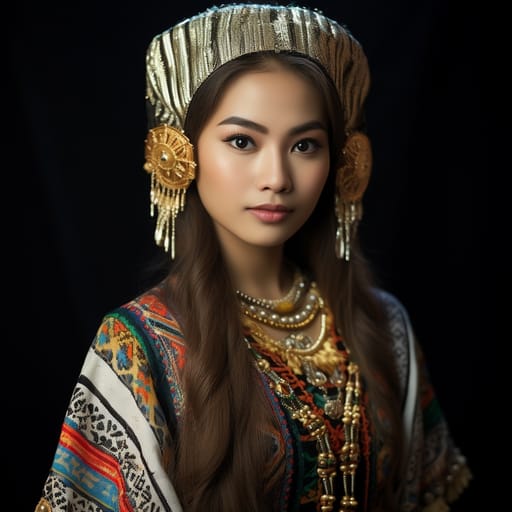
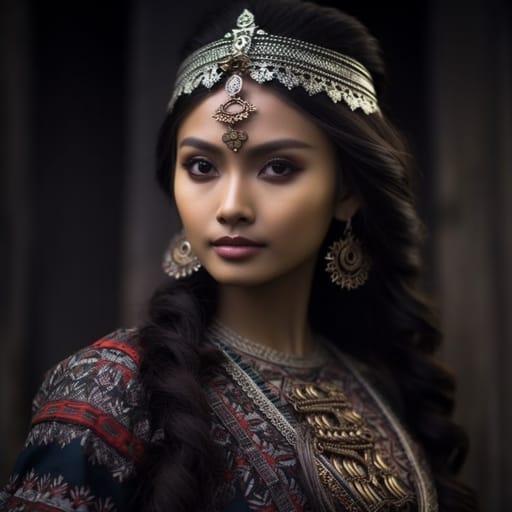
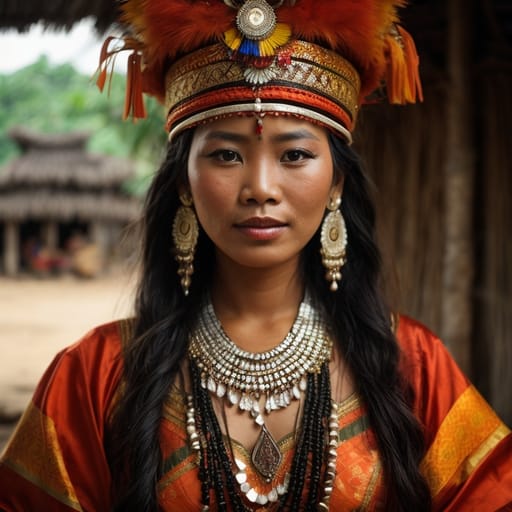
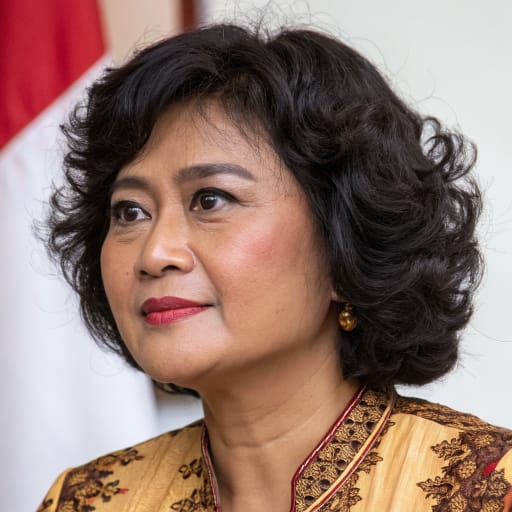
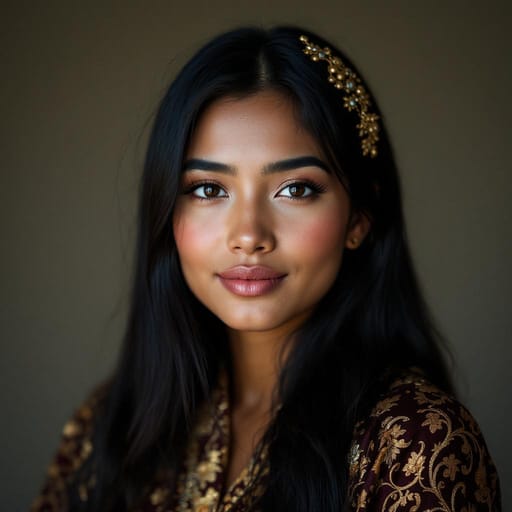
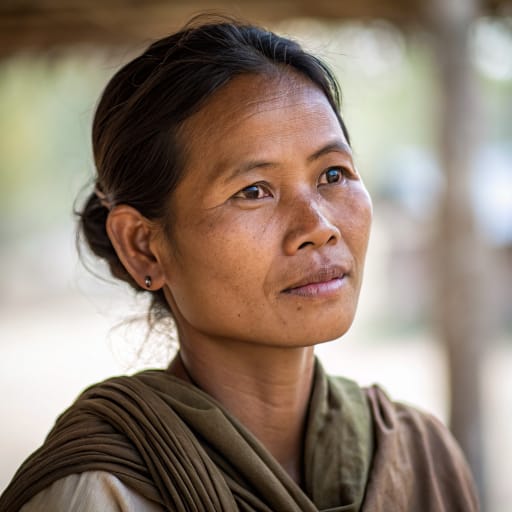
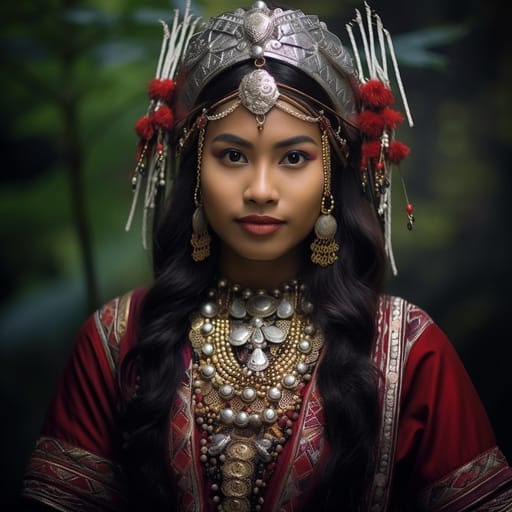
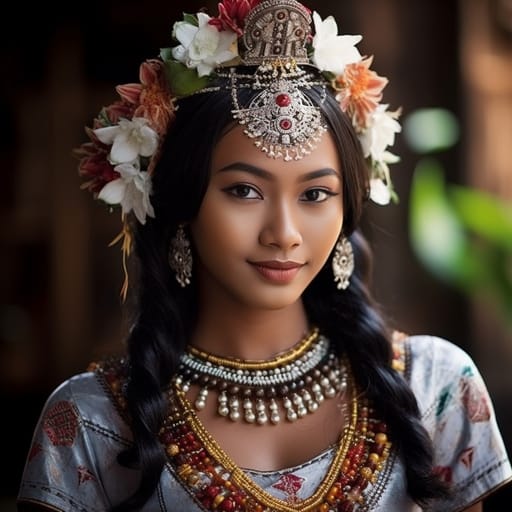
Typical Yakan Phenotypes
Reference for AI generation: hair, eyes, skin, facial structure, build
The Yakan are a small Sama–Bajaw–linked population native to Basilan, and their phenotype reads as a Southeast-Asian Austronesian baseline with stronger maritime-Sama and coastal-Mindanao influences than the highland Visayan groups to the north. The defining impression is finely built people with warm mid-brown skin, soft facial structure, and the slightly fuller lower face common across Sulu-archipelago Muslim populations.
Hair is near-universally black or very dark brown, straight to gently wavy, with a moderately fine shaft — true tight curl is uncommon. Greying tends to come late and stays salt-and-pepper rather than uniformly white. Eyes are dark brown to near-black; a soft epicanthic fold is the norm but it's lighter and less pronounced than in East Asian populations, often visible only at the inner corner. Eye shape leans almond, set fairly horizontally, with modest upper-lid exposure.
Skin sits in the Fitzpatrick III–IV range, warm olive-to-bronze with a yellow undertone rather than the redder undertone of more northern Filipino groups. Sun-worked fishermen and farmers darken into a deep tanned brown; women who stay indoors can read noticeably lighter, which is why the gradient within a single family is often wide. Noses are short with a low-to-medium bridge and a moderately broad, rounded tip, alar width medium — narrower than in Negrito-admixed populations, broader than in mainland Han phenotypes. Lips are medium-full with a defined cupid's bow, and the jaw is rounded rather than angular, giving a softer facial silhouette than the more squared faces of the Tausug.
Build is small-to-medium and lean. Men typically run 5'3"–5'6", women 4'10"–5'2", with narrow shoulders, slim hips, and low body fat sustained more by diet and activity than by frame. Even in middle age the population stays compact rather than heavy. Mujiv Hataman's broad, soft-featured face and warm mid-tone complexion is a fair anchor for the central Yakan look, though weavers from the interior often present a slightly finer-boned, lighter-skinned variant.
Yakan Body & Anatomy Reference
Southeast Asian Austronesian / Austroasiatic phenotype: anatomy reference for AI nude generation
Yakan Boobs & Breasts
Yakan tits and boobs run small-to-medium cup, modest projection, the classic Southeast Asian Austronesian / Austroasiatic bust profile. Yakan nipples and areolas show medium-brown to dark-brown areolar pigmentation against the tan-to-medium-brown skin tone, with areolar diameter typically in the 26-38mm range and forward-set positioning rather than the fuller South Asian or Polynesian bust. Yakan breasts trend firm, modest projection, a function of the ectomorph, petite frame body habitus and the mean adult female BMI 20-23. For anatomically accurate AI-generated Yakan nudes the render preserves the small-to-medium cup, modest projection shape, 26-38mm areolas with medium-brown to dark-brown pigmentation, and the torso proportions of the Southeast Asian Austronesian / Austroasiatic phenotype.
Yakan Ass & Hips
Yakan hips and butt usually read as small-to-medium, modest projection, narrower hip profile. The skeletal base is narrow-to-medium iliac crests, the Southeast Asian Austronesian / Austroasiatic pattern. Set against the fuller glutes of the Pacific Islander phenotype, the difference is easy to see, and the hip-to-waist ratio is often what identifies Yakan women in photos.
Yakan Vagina & Pussy
Expect medium-brown to dark-brown labial pigmentation on Yakan women, in keeping with Southeast Asian Austronesian / Austroasiatic ancestry. The pubic hair is straight-to-wavy fine-to-medium texture. Coloring should run evenly from the tan to medium-brown skin of the thighs to the labia, and Yakan nude imagery should keep the hair's straight-to-wavy fine-to-medium texture.
Yakan Dicks & Penis
Yakan dick and penile anatomy in adult AI generation should anchor on the regional reference data: regional mean ~11cm erect, moderate girth, and medium-brown shaft pigmentation. The Yakan cock profile reflects the Southeast Asian Austronesian / Austroasiatic population's anthropometric measurements. The shaft pigmentation should track the surrounding tan to medium-brown skin tone, and the pubic hair should keep its straight-to-wavy fine-to-medium texture in the typical inverted-V escutcheon.
Yakan Body, Curves & Build
Yakan body type: ectomorph, petite frame, with mean adult female BMI 20-23. This is the typical Southeast Asian Austronesian / Austroasiatic build. Height range, shoulder-to-hip ratio and fat distribution all follow from it, which is what an accurate Yakan nude body should show.
Yakan Skin Tone & Hair Texture
Yakan skin tone falls in the tan to medium-brown (Fitzpatrick III-V) band, the surface signal most often miscalibrated by generic AI nude generators. Yakan hair texture is typically straight-to-wavy 1A-2A, dark-brown to black, characteristic of the Southeast Asian Austronesian / Austroasiatic phenotype. In Yakan nude renders the skin should hold that band consistently across the body.
Data depth
53/100Coverage of image-grounded phenotype observations · drives AI generation diversity
- Sample size
- 3/40· 1 image
- Image quality
- 30/30· 100% high
- Confidence
- 20/20· mean 0.88
- Source diversity
- 0/10· wikipedia
- ·No image observations yet
- ·Wikipedia-only source, not population-representative
Explore phenotype categories
Structured taxonomy with peer-reviewed scales · 22 anatomical categories
Notable Yakan People
3 reference figures, sourced from Wikipedia
- Mujiv Hataman, The Governor of Basilan, and former governor of the Autonomous Region of Musl…
- Abu Yakan, Father of all Yakans.
- Isnilon Hapilon, a jihadist. He was killed in action during the Marawi Siege by the Filipino t…
Erotic Poses & Sex Positions
From the pose catalog: 219 named positions with reference skeletons
Frequently asked questions about Yakan people
Where is the Yakan homeland?
The Yakan homeland is Basilan (Philippines) in Southeast Asia.
What language do Yakan people speak?
Yakan people primarily speak Austronesian / Malayo-Polynesian / Barito / Sama-Bajaw / Yakan.
What religion do Yakan people practice?
The predominant religion among Yakan people is Islam / Sunni Islam.






Make your own Yakan images
Five a day, free, no credits to buy. The studio starts from this group's phenotype data, so you can set body type, pose and style and keep the traits accurate.
Start with Yakan