Help us get this right
Does this portrait look right for Mon?
Nobody has judged this one yet. You would be the first.
Mon Erotic
Mon State (Myanmar)
Buddhism / Theravada Buddhism
About Mon People
The Mon are one of mainland Southeast Asia's foundational peoples — the group that, more than any other, carried Theravada Buddhism, Indic script, and the literate court traditions of Pali learning into the lower Irrawaddy and Chao Phraya basins long before Burmese or Thai polities took shape. Their kingdoms at Thaton, Bago (Pegu), and Dvaravati seeded the religious and aesthetic vocabulary that later dynasties absorbed wholesale and still claim as their own. To meet the Mon today in their core homeland — Mon State, on the narrow Tenasserim coast between the Sittaung estuary and the Thai border — is to meet a people whose cultural fingerprints are everywhere in the region, often unattributed.
The language tells the longer story. Mon belongs to the Austroasiatic family, a deep-rooted lineage that also includes Khmer, Vietnamese, and the scattered Munda tongues of eastern India — meaning the Mon are linguistic cousins of peoples a thousand miles away, and only distant strangers to the Tibeto-Burman speakers who now surround them. Mon script, derived from a southern Brahmi prototype, was the direct parent of the Burmese alphabet; the Burmese borrowed the letters along with the religion. Spoken Mon survives in Mon State and in old émigré villages across central Thailand, where communities displaced by the wars of the 18th century kept their dialect, monastic lineage, and distinctive temple architecture intact for ten generations.
Theravada Buddhism among the Mon runs unusually deep — not as an overlay on older animism, but as the organizing logic of village life. The annual rhythm tracks ordination season, the rains retreat, and merit-making festivals tied to specific pagodas; the Kyaikhtiyo Golden Rock, perched on the Mon hills, is one of the holiest sites in the Theravada world and remains a Mon-tended pilgrimage centre. Mon monks were historically the reformers other Southeast Asian sanghas turned to when their own ordination lineages grew muddled, and that prestige still shapes how the community sees itself.
Politically, the modern Mon carry the memory of being the displaced founding civilization. The fall of Bago in 1757 to the Burmese king Alaungpaya scattered the Mon nobility and triggered the long migrations into Siam; the post-independence decades brought armed insurgency, ceasefires, and an unsettled accommodation with the central state. Mon nationalism today is quieter than it once was, but the language activism, monastic networks, and a flag flown at New Year keep the older self-understanding visible.
Related ethnic groups
Groups that share Mon's homeland, region, language, or religious tradition. These are likely candidates for comparative phenotype reference.
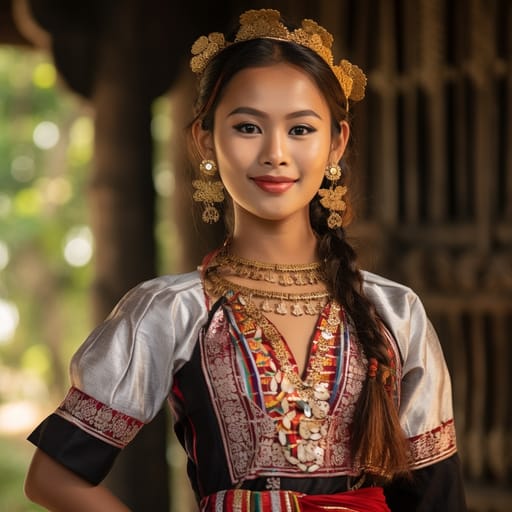
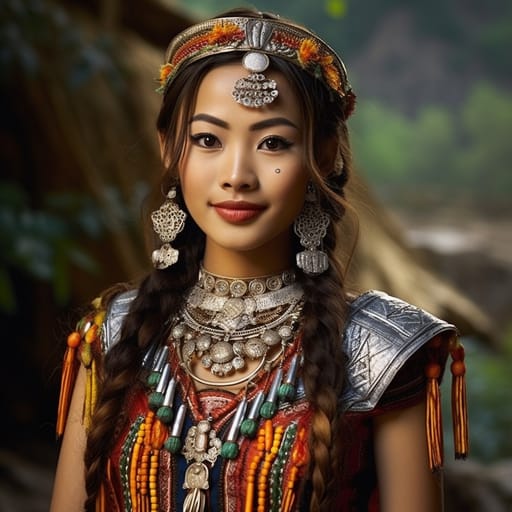
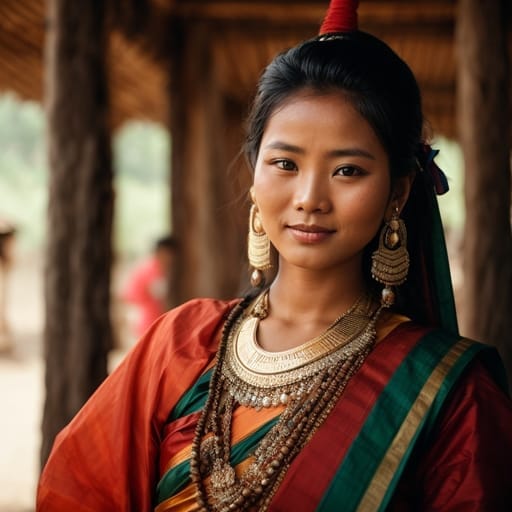
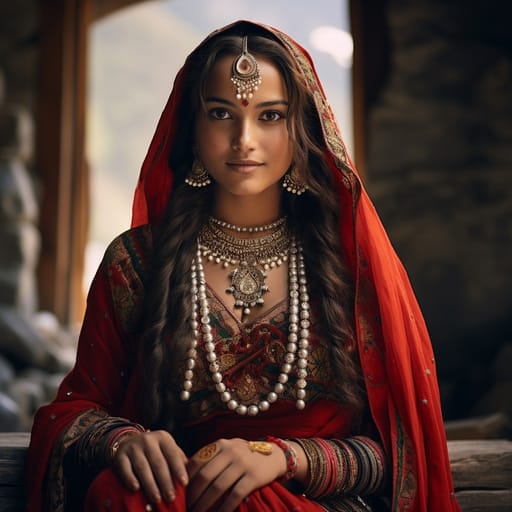
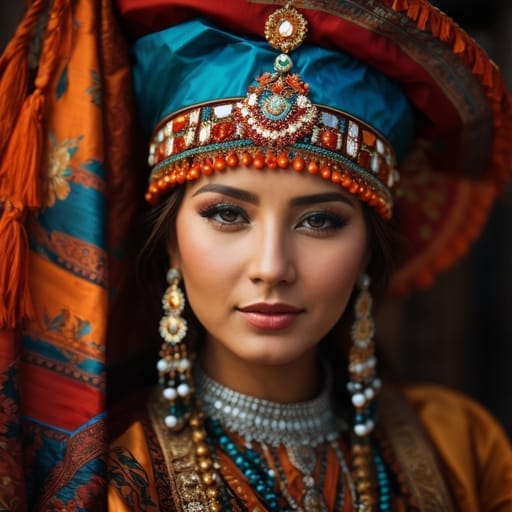
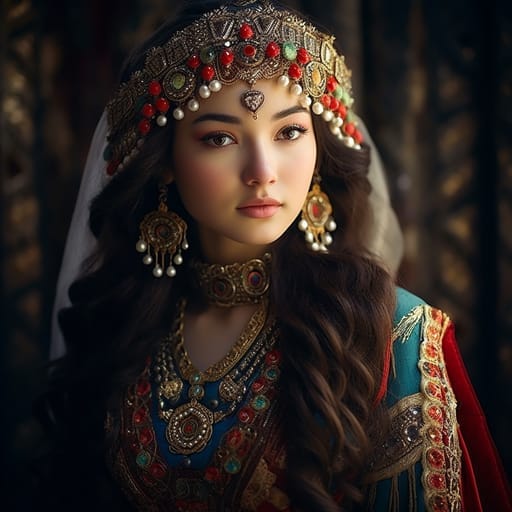
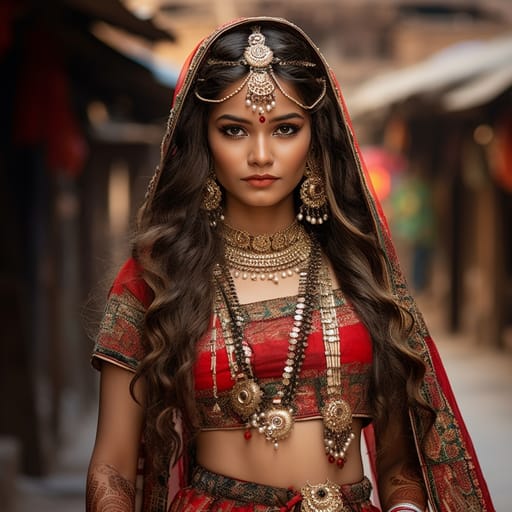
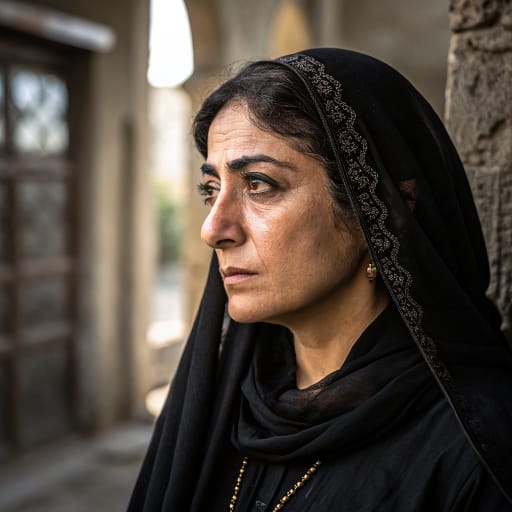
Geographic Distribution: Mon populations across 1 country
Each row is ranked by the group's share of that country's population, with the source citation drawn from published census and demographic surveys. Click through for the full per-country phenotype profile.
| Country | Share | Source |
|---|---|---|
| Myanmar | 2.0% | Demographic estimates; Mon (~2%, ~1M+); concentrated in Mon State plus parts of Bago Region and Thaninthayi Region. Austroasiatic / Mon-Khmer language family. Predominantly Theravada Buddhist |
Typical Mon Phenotypes
Reference for AI generation: hair, eyes, skin, facial structure, build
The Mon are a mainland Southeast Asian Austroasiatic population whose phenotype sits at the older substrate layer of the Burma–Thailand corridor — visibly distinct from the Sino-Tibetan Bamar majority that absorbed them, and closer in build and feature to Khmer and lowland Thai populations they're historically related to. The defining structural trait is moderation: features rarely run to extremes in any one direction, which is part of why Mon-descended figures populate so much of Thai and Burmese royal and entertainment iconography.
Hair is uniformly black to very dark brown, predominantly straight to gently wavy with medium-to-fine strand thickness — coarser, ropier textures are uncommon. Premature greying tends toward salt-and-pepper rather than full silver. Eyes are dark brown to near-black; epicanthic folds are present in the majority but typically softer and less pronounced than in northern East Asian populations, producing an almond shape with a visible upper lid crease in many individuals. Double eyelids occur at meaningful frequency, particularly in southern Mon populations bordering the Thai peninsula.
Skin spans Fitzpatrick III to V, centered on warm golden-brown and olive undertones. Rural and coastal Mon — historically fishers and rice cultivators in the Mon State lowlands — tend deeper, while urban and mixed-heritage Mon in Bangkok or Yangon trend lighter. Facial structure favors a softly oval to heart-shaped face, moderate cheekbones without the high prominence seen further north, a straight nose of medium bridge height with moderate alar width, and naturally full lips — fuller than typical Han Chinese, less everted than typical Khmer. Jawlines are usually rounded rather than angular.
Build is small-to-medium framed: men typically 162–170 cm, women 152–160 cm, with slender-to-athletic proportions, narrow shoulders, and a tendency toward lean torso fat distribution rather than hip or thigh deposition. Subgroup variation is modest — Burmese-side Mon read slightly darker and more Bamar-influenced; Thai-side descendants (a substantial component of central Thai ancestry, including the Chakri line through figures like Rama I) read lighter and more Tai-blended.
Data depth
0/100Coverage of image-grounded phenotype observations · drives AI generation diversity
- Sample size
- 0/40· 0 images
- Image quality
- 0/30· 0% high
- Confidence
- 0/20
- Source diversity
- 0/10
- ·No image observations yet
Explore phenotype categories
Structured taxonomy with peer-reviewed scales · 22 anatomical categories
Notable Mon People
23 reference figures, sourced from Wikipedia
- Shin Arahan, primate who spread Theravada Buddhism in Bagan Kingdom and mainland Southeast…
- Wareru, founder of the Hanthawaddy kingdom and Wareru Dhammathat, the oldest extant l…
- Shin Sawbu, the only female ruler in the recorded history of Burma (now Myanmar)
- Binnya Dala, Chief Minister-General responsible for the expansion of Toungoo Empire, the l…
- Osoet Pegua, an influential businesswoman in the Ayutthaya Kingdom in the mid-17th century
- Taksin, founder of the Thonburi dynasty of Siam
- Rama I, founder of the reigning Chakri dynasty of Siam (now Thailand)
- Amarindra, Queen consort of King Rama I and mother of King Rama II
- Chulalongkorn, the fifth monarch of Chakri dynasty who modernised Thailand
- Debsirindra, Queen consort of Rama IV and mother of Chulalongkorn (Rama V)
- Shaw Loo, the father of western medicine in Myanmar and the first Myanmar in the U.S
- Min Thu Wun, a pioneer of literary movement in the 1930s and father of President Htin Kyaw…
- Apasra Hongsakula, of Thailand, Miss Universe 1965
- Htoo Ein Thin, Myanmar pop singer
- Thongchai McIntyre, Thai singer and actor. Thailand's most famous superstar.
- Palmy, Thai pop singer
- Nandar Hlaing, Myanmar film actress
- Chintara Sukapatana, Thai film actress
- Natapohn Tameeruks, Thai film actress and model
- Srirasmi Suwadee, the third princess consort of then-Crown Prince Maha Vajiralongkorn (now Rama…
- Anand Panyarachun, Prime Minister of Thailand
- Myint Swe, Vice-President of Myanmar
- Thinzar Wint Kyaw, Myanmar film actress and model
Erotic Poses & Sex Positions
From the pose catalog: 219 named positions with reference skeletons
Frequently asked questions about Mon people
Where is the Mon homeland?
The Mon homeland is Mon State (Myanmar) in Southern Asia.
What countries do Mon people live in?
Mon populations are documented across 1 country: Myanmar.
What language do Mon people speak?
Mon people primarily speak Austroasiatic / Mon.
What religion do Mon people practice?
The predominant religion among Mon people is Buddhism / Theravada Buddhism.






Make your own Mon images
Five a day, free, no credits to buy. The studio starts from this group's phenotype data, so you can set body type, pose and style and keep the traits accurate.
Start with Mon