Help us get this right
Does this portrait look right for Rohingyas?
One tap. It takes a second and it is recorded.
0 say it looks right, 1 says it looks off.
Rohingyas Erotic
Also known as: Rohingya
Rakhine State (Myanmar)
Islam
About Rohingyas People
The Rohingya are a Muslim people of western Myanmar, concentrated in the northern townships of Rakhine State along the Bay of Bengal (Maungdaw, Buthidaung, and Rathedaung) pressed against the Bangladesh border by the Naf River. Their language, also called Rohingya, is Indo-Aryan and sits closer to the Chittagonian dialects spoken just across that river than to anything in the Tibeto-Burman family that dominates Myanmar. That linguistic kinship is not incidental. It places the Rohingya within the eastern edge of the South Asian Bengali-speaking world rather than within the Burmese-speaking Buddhist majority that surrounds them on the Myanmar side, and it is one of the recurring reasons hostile authorities have used to argue the group does not belong where it lives.
Their Islam is Sunni, of the Hanafi school, layered onto centuries of contact with the Bengal sultanate and the trading networks of the Bay. Mosques and madrasas are central to community life; women's dress is generally modest, often including the headscarf, though styles vary by household and generation. Marriage and inheritance follow Islamic norms, and Friday prayer organizes the rhythm of the week in a way that has remained intact even through displacement.
The decisive inflection point of recent Rohingya history is statelessness. The 1982 citizenship law in Myanmar did not list the Rohingya among recognized national races, leaving most without papers in the country where they were born. Cycles of military operations followed: major waves in 1978, 1991-92, 2012, and most severely in 2017, when a Myanmar military campaign drove roughly 700,000 people across the border into Cox's Bazar in Bangladesh. The camps there, particularly Kutupalong, are now among the largest refugee settlements in the world. Smaller diaspora communities live in Malaysia, Saudi Arabia, Pakistan, India, and increasingly the United States and Europe.
Inside that grim context, day-to-day Rohingya culture is recognizably its own. Cooking leans on rice, fish from the Bay and the rivers, dried-fish pastes, and chilies, closer to Chittagonian and coastal Bengali kitchens than to Burmese ones. Oral poetry, religious recitation, and a long tradition of folk song carry stories that written records, suppressed or destroyed, no longer hold. Rohingya was historically written in several scripts, including Arabic-based ones; a purpose-built script, Hanifi Rohingya, was developed in the twentieth century and is now used in literacy work both in the camps and abroad, a quiet, deliberate piece of nation-building by a people a state tried to erase.
Related ethnic groups
Groups that share Rohingyas's homeland, region, language, or religious tradition. These are likely candidates for comparative phenotype reference.
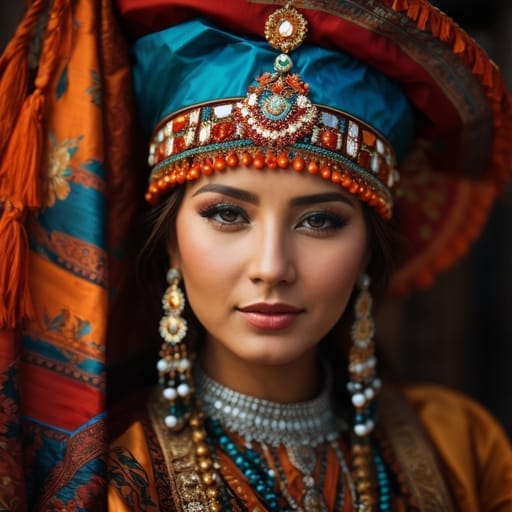
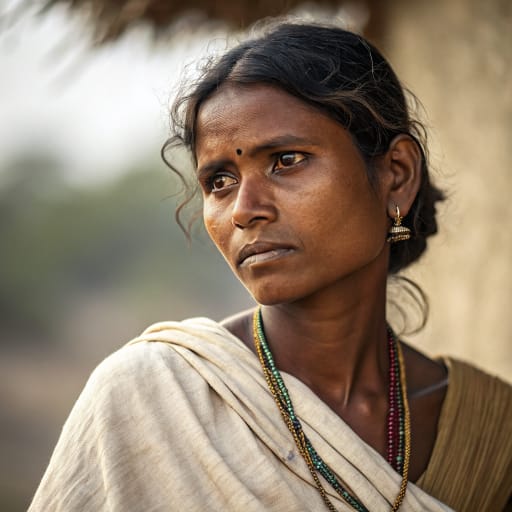
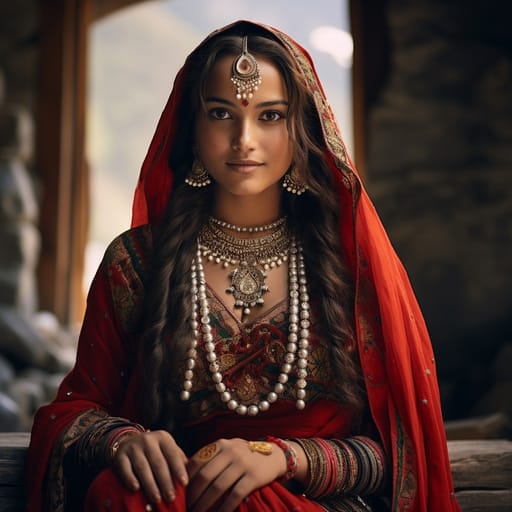
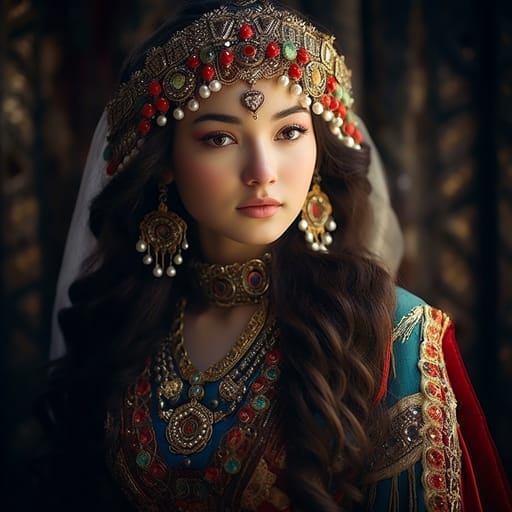
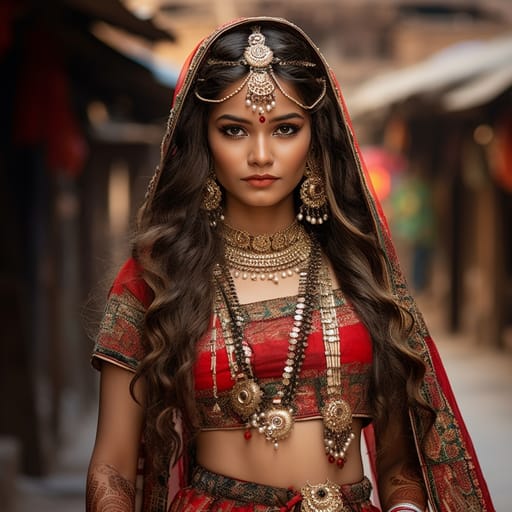
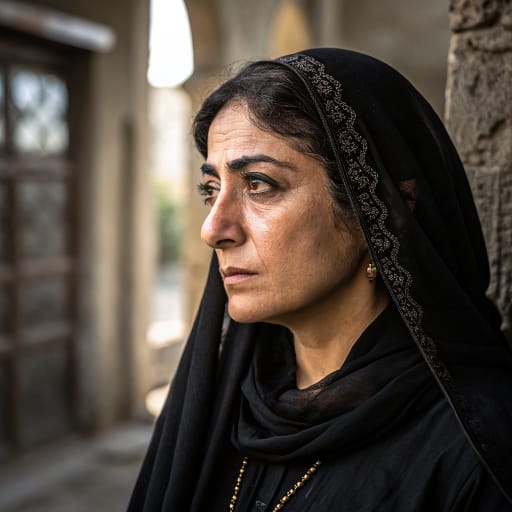
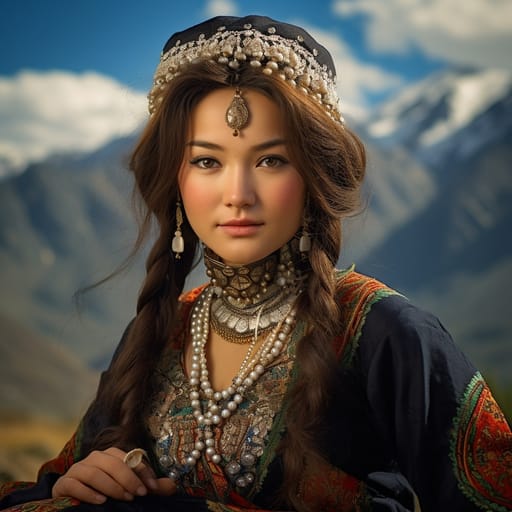
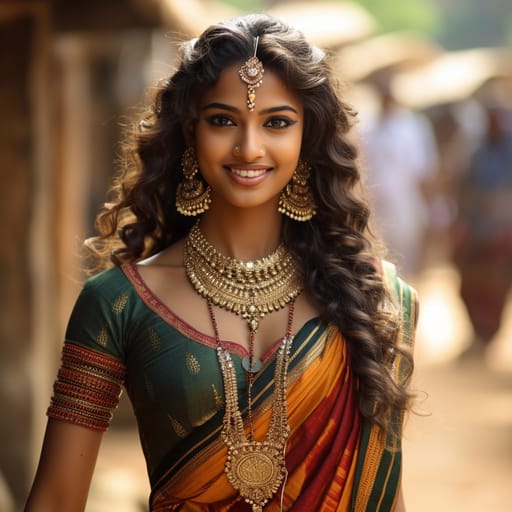
Typical Rohingyas Phenotypes
Reference for AI generation: hair, eyes, skin, facial structure, build
Rohingyas sit at a phenotypic crossroads: Indo-Aryan ancestry layered with deep Bengali admixture and centuries of contact with Arakanese and Burmese populations. The result is a face that reads as South Asian first, with subtle Southeast Asian inflection visible in a meaningful minority.
Hair is almost uniformly black or very dark brown, occasionally lightening to dark chestnut in childhood. Texture runs straight to gently wavy, with looser curl patterns less common than in populations further west in South Asia. Body and facial hair on men is moderate: fuller than among Burman or Rakhine neighbors, lighter than among Pashtuns or Punjabis. Eyes are overwhelmingly dark brown to near-black; lighter hazel or honey eyes appear but are rare. The eyelid is typically open and almond-shaped without an epicanthic fold, though a soft fold or mongoloid eye shape surfaces in perhaps 10-15% of individuals, reflecting historic contact with Arakanese populations.
Skin tone clusters in Fitzpatrick IV-V, ranging from wheatish olive to deep brown, with warm yellow-bronze undertones rather than the cooler reddish-brown common further west. Sun exposure in coastal Rakhine and the Cox's Bazar camps darkens exposed skin noticeably against unexposed areas. Noses are typically straight to slightly convex with medium bridges and moderate alar width, narrower than in Bengali populations to the north, broader than in Burmese populations to the east. Lips are medium-full, often with a defined cupid's bow. Cheekbones are moderately prominent, jaws tend toward oval rather than square, and the overall facial impression is softer and rounder than among northern South Asians.
Build is typically slight to medium. Men average around 163-167 cm, women 150-154 cm, shorter than Bengalis, comparable to Burmese. Frames are wiry and lean, with narrow shoulders and limited natural muscle bulk; women carry weight in the hips and lower body when nutrition allows. Decades of displacement and food insecurity have left many adults visibly underweight relative to their genetic potential.
Rohingyas Body & Anatomy Reference
Indo-Aryan / Dravidian South Asian phenotype: anatomy reference for AI nude generation
Rohingyas Boobs & Breasts
Rohingyas boobs follow the Indo-Aryan / Dravidian South Asian profile: medium-to-large cup, moderate-to-full projection. Areolar diameter is usually 32-46mm, and the coloring is medium-brown to dark-brown areolar pigmentation against the wheatish-to-brown skin tone. Breast shape tracks body composition (endomorph-to-mesomorph with fuller hip deposition, mean adult female BMI 22-25), so Rohingyas breasts tend to be full and soft, generally fuller than the East Asian norm. Expect a forward-set shape, not the smaller East Asian bust profile.
Rohingyas Ass & Hips
Rohingyas ass and hip morphology presents as medium-to-full, moderate-to-high projection, classic curvy hip profile, distinctly different from the slim hip profile of East Asian women. The Rohingyas pelvic profile shows medium-to-wide iliac crests, full gluteal-femoral fat distribution, anchored in the Indo-Aryan / Dravidian South Asian skeletal pattern. Rohingyas butt shots in adult AI imagery should render the medium-to-full, moderate-to-high projection, classic curvy hip profile silhouette with the overall build (endomorph-to-mesomorph with fuller hip deposition) and the fat distribution typical of the Indo-Aryan / Dravidian South Asian phenotype.
Rohingyas Vagina & Pussy
Rohingyas pussy anatomy typically shows medium-brown to dark-brown labial pigmentation, fuller labia minora projection. Pubic hair is usually straight-to-wavy coarse texture, dense distribution. In AI-generated Rohingyas nudes, labial color should blend into the wheatish to brown skin with a gradual transition, and the hair should keep its straight-to-wavy coarse texture.
Rohingyas Dicks & Penis
Penis reference for Rohingyas men: regional mean ~13cm erect, moderate girth. Coloring: medium-brown shaft pigmentation. An accurate Rohingyas cock in AI imagery matches the surrounding wheatish to brown skin rather than a generic porn default. Circumcision depends on religion and custom, not ancestry.
Rohingyas Body, Curves & Build
The Rohingyas figure is generally endomorph-to-mesomorph with fuller hip deposition, with mean adult female BMI 22-25, characteristic of Indo-Aryan / Dravidian South Asian ancestry. AI image tools tend to flatten regional body types into a few stock shapes; here the Rohingyas build is kept as its own reference.
Rohingyas Skin Tone & Hair Texture
Skin: wheatish to brown (Fitzpatrick III-V). Hair: straight-to-wavy 1A-2B, dense, dark-brown to black. Both are typical of Indo-Aryan / Dravidian South Asian ancestry. The most common mistake in AI nudes of Rohingyas women is a body rendered lighter than the face.
Data depth
0/100Coverage of image-grounded phenotype observations · drives AI generation diversity
- Sample size
- 0/40· 0 images
- Image quality
- 0/30· 0% high
- Confidence
- 0/20
- Source diversity
- 0/10
- ·No image observations yet
Explore phenotype categories
Structured taxonomy with peer-reviewed scales · 22 anatomical categories
Notable Rohingyas People
3 reference figures, sourced from Wikipedia
- Ataullah abu Ammar Jununi, leader of the Arakan Rohingya Salvation Army
- Sultan Mahmud, MP and Union minister
- Mohammad Hanif, creator of the Hanifi Rohingya script
Erotic Poses & Sex Positions
From the pose catalog: 219 named positions with reference skeletons
Frequently asked questions about Rohingyas people
Where is the Rohingyas homeland?
The Rohingyas homeland is Rakhine State (Myanmar) in Southern Asia.
What language do Rohingyas people speak?
Rohingyas people primarily speak Indo-European / Indo-Aryan / Rohingya.
What religion do Rohingyas people practice?
The predominant religion among Rohingyas people is Islam.
What does a typical Rohingyas woman look like?
Rohingya women typically have black or very dark brown hair, straight to gently wavy, and dark brown eyes, usually without an epicanthic fold. Skin falls in the Fitzpatrick IV to V range, from wheatish olive to deep brown with warm yellow-bronze undertones. Faces tend to be soft and oval, with a straight nose, medium-full lips and moderate cheekbones, and women average around 150 to 154 cm with a slight frame.
What are other names for Rohingyas people?
Rohingyas people are also known as Rohingya.






Make your own Rohingyas images
Five a day, free, no credits to buy. The studio starts from this group's phenotype data, so you can set body type, pose and style and keep the traits accurate.
Start with Rohingyas