No portrait yet
Kuraan Erotic
Northern and central Chad (Borkou, Ennedi, Kanem, Bahr el Gazel), with communities in eastern Niger, southern Libya and Sudan
Dazaga (Saharan); Chadian Arabic widely spoken as a second language
Sunni Islam
Daza branch of the Toubou peoples; clans include the Anakaza and Kreda; the Teda form the northern sister branch
About Kuraan People
Kuraan is the name Arabic speakers in Chad and Sudan give to the Daza, the larger southern branch of the Toubou peoples of the central Sahara. In Chad the word is usually written Gorane, and in everyday speech it often stretches to cover the Teda of the Tibesti mountains too. The people call themselves Dazagada. What holds them together is not a fixed territory. It is a shared language, a web of clans traced through the father's line, and long practice at living with very little water.
Their country starts at the edge of the Tibesti and runs through the palm oases of Borkou and the sandstone plateau of Ennedi, then south to the pastures of Kanem and Bahr el Gazel. There are also communities in Niger, Libya and Sudan. In the north, families tend date groves around towns like Faya and move camels and goats between wells. Farther south, cattle matter more. Their language, Dazaga, belongs to the Saharan family. It is close to the Teda language and more distantly related to Kanuri and Zaghawa. Many Kuraan also speak Chadian Arabic, the region's market language.
Islam here is Sunni and long established. In the late nineteenth century the Sanusi brotherhood built lodges in Borkou, and those lodges became centers of armed resistance to the French, who took the district in 1913. Clan custom runs alongside the faith. Feuds between lineages have long been ended with a blood price paid in camels, with elders working out the terms. Among the best known clans are the Anakaza of Borkou and the Kreda of Bahr el Gazel. Smiths and artisans, called Azza, form a separate group that marries only among itself and has traditionally been kept at a social distance, a pattern found across much of the Sahara.
Chad's modern politics runs straight through Kuraan country. Northerners were at the center of the civil wars of the 1970s and 1980s. Hissène Habré, an Anakaza born in Faya, ruled the country from 1982 until he was overthrown in 1990. He died in Senegal, where a special court backed by the African Union had convicted him in 2016 of crimes against humanity. Today many Kuraan live in N'Djamena and work in the army or in trade rather than herding, and they keep their clan ties in the city.
Related ethnic groups
Groups that share Kuraan's homeland, region, language, or religious tradition. These are likely candidates for comparative phenotype reference.
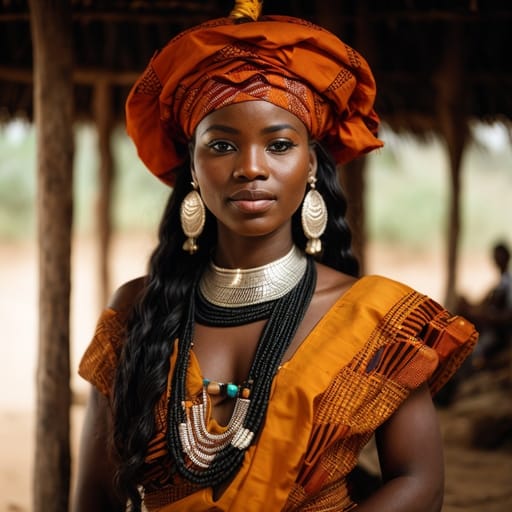
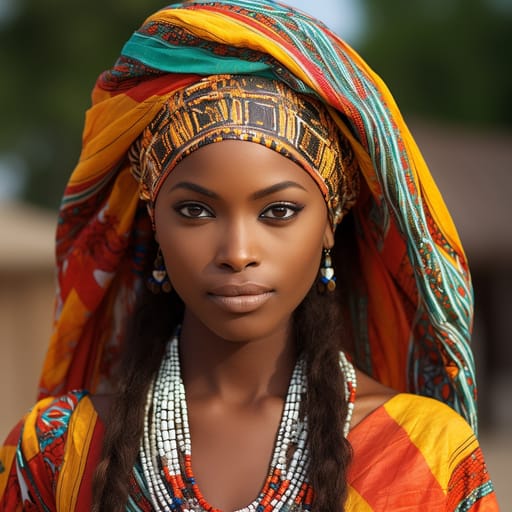
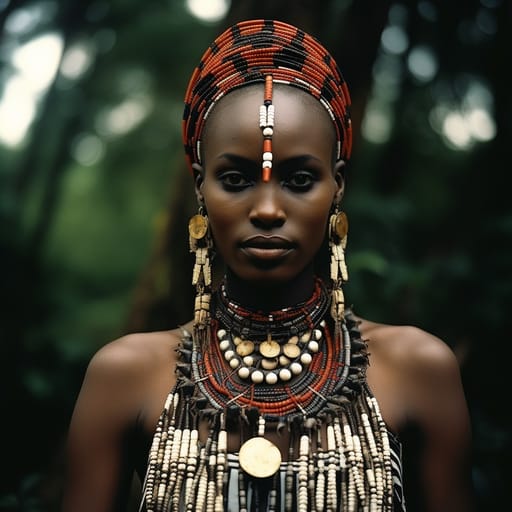
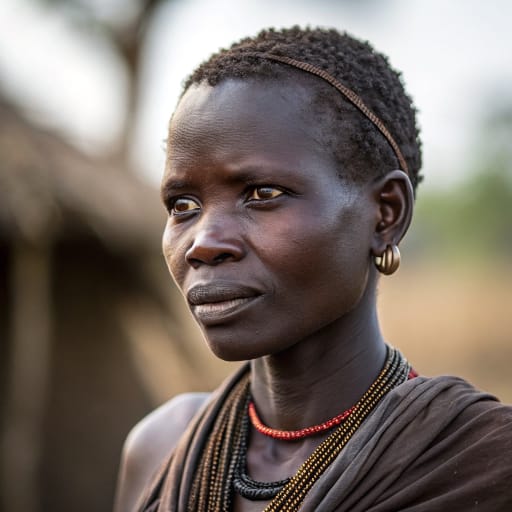
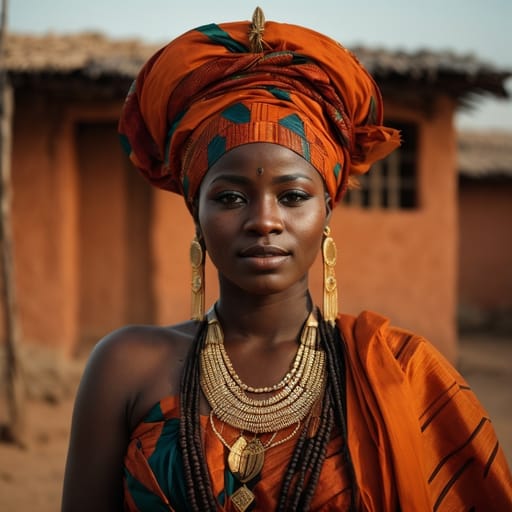
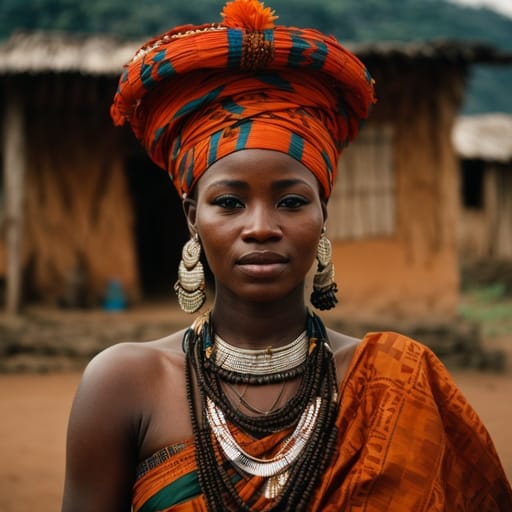
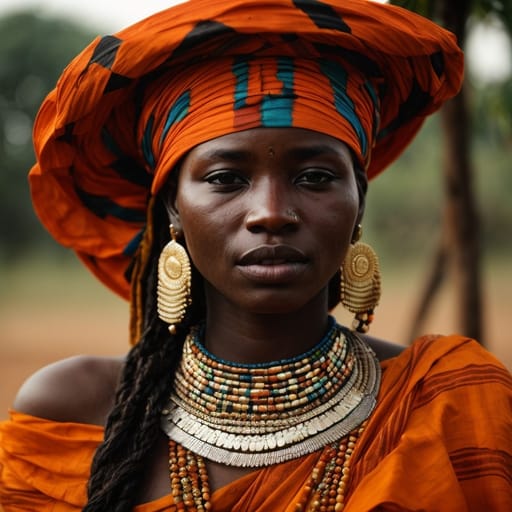
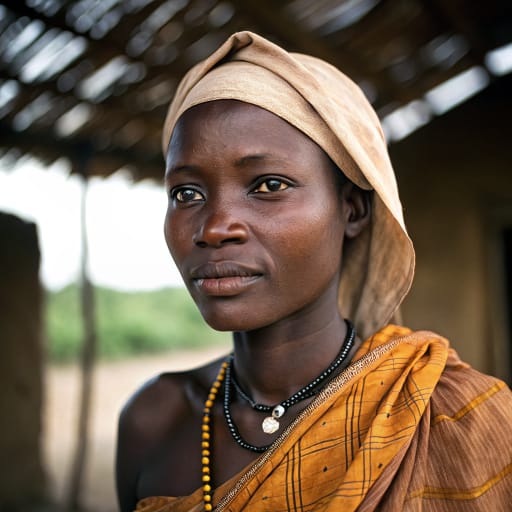
Typical Kuraan Phenotypes
Reference for AI generation: hair, eyes, skin, facial structure, build
Kuraan Body & Anatomy Reference
Bantu / Central African Niger-Congo phenotype: anatomy reference for AI nude generation
Kuraan Boobs & Breasts
Kuraan tits and boobs run medium-to-large cup, full, projecting, the classic Bantu / Central African Niger-Congo bust profile. Kuraan nipples and areolas show deep-brown areolar pigmentation against the deep-brown skin tone, with areolar diameter typically in the 32-48mm range and forward-set positioning rather than the smaller East African conical profile. Kuraan breasts trend fuller projection than East African; comparable to West African norm, a function of the mesomorph with strong gluteal-femoral fat deposition body habitus and the mean adult female BMI 23-26. For anatomically accurate AI-generated Kuraan nudes the render preserves the medium-to-large cup, full, projecting shape, 32-48mm areolas with deep-brown pigmentation, and the torso proportions of the Bantu / Central African Niger-Congo phenotype.
Kuraan Ass & Hips
Kuraan hips and butt usually read as full, projected, wide-set glutes. The skeletal base is broad iliac crests, gynoid pelvic pattern, the Bantu / Central African Niger-Congo pattern. Set against the slim narrow-hip Cushitic East African profile, the difference is easy to see, and the hip-to-waist ratio is often what identifies Kuraan women in photos.
Kuraan Vagina & Pussy
Expect deep-brown labial pigmentation, fuller labia minora on Kuraan women, in keeping with Bantu / Central African Niger-Congo ancestry. The pubic hair is tightly-coiled coarse texture, dense distribution. Coloring should run evenly from the deep-brown skin of the thighs to the labia, and Kuraan nude imagery should keep the hair's tightly-coiled coarse texture.
Kuraan Dicks & Penis
Kuraan dick and penile anatomy in adult AI generation should anchor on the regional reference data: regional mean ~14cm erect, above-average girth, and deep-brown shaft pigmentation. The Kuraan cock profile reflects the Bantu / Central African Niger-Congo population's anthropometric measurements. The shaft pigmentation should track the surrounding deep-brown skin tone, and the pubic hair should keep its tightly-coiled coarse texture in the typical inverted-V escutcheon.
Kuraan Body, Curves & Build
Kuraan body type: mesomorph with strong gluteal-femoral fat deposition, with mean adult female BMI 23-26. This is the typical Bantu / Central African Niger-Congo build. Height range, shoulder-to-hip ratio and fat distribution all follow from it, which is what an accurate Kuraan nude body should show.
Kuraan Skin Tone & Hair Texture
Kuraan skin tone falls in the deep-brown (Fitzpatrick VI) band, the surface signal most often miscalibrated by generic AI nude generators. Kuraan hair texture is typically tight 4A-4C coil, characteristic of the Bantu / Central African Niger-Congo phenotype. In Kuraan nude renders the skin should hold that band consistently across the body.
Explore phenotype categories
Structured taxonomy with peer-reviewed scales · 22 anatomical categories
Erotic Poses & Sex Positions
From the pose catalog: 219 named positions with reference skeletons
Frequently asked questions about Kuraan people
Where is the Kuraan homeland?
The Kuraan homeland is Northern and central Chad (Borkou, Ennedi, Kanem, Bahr el Gazel), with communities in eastern Niger, southern Libya and Sudan in Central Africa.
What language do Kuraan people speak?
Kuraan people primarily speak Dazaga (Saharan); Chadian Arabic widely spoken as a second language.
What religion do Kuraan people practice?
The predominant religion among Kuraan people is Sunni Islam.






Make your own Kuraan images
Five a day, free, no credits to buy. The studio starts from this group's phenotype data, so you can set body type, pose and style and keep the traits accurate.
Start with Kuraan