Help us get this right
Does this portrait look right for Lisi?
Nobody has judged this one yet. You would be the first.
Lisi Erotic
Around Lake Fitri in the Batha region of central Chad
Lisi, also called Naba (Central Sudanic, Bongo-Bagirmi branch); Chadian Arabic widely used as a second language
Sunni Islam
Bilala, Kuka and Medogo; linguistically part of the Bagirmi group of Bongo-Bagirmi (Central Sudanic)
About Lisi People
The Lisi are the Bilala, the Kuka and the Medogo, three closely related peoples of central Chad. They share a language and a homeland centered on Lake Fitri, in the Batha region. Each branch keeps its own name and its own sense of itself, but a common language and a shared past make the grouping more than a label given by outsiders.
That language is called Lisi or Naba. It belongs to the Bongo-Bagirmi branch of Central Sudanic, is related to Bagirmi, the language of the old kingdom to the southwest, and sits near the northern edge of its family's range. The area around it is linguistically crowded. Chadian Arabic is the language of trade and travel across the region, and many Lisi speak it. Chadic languages are spoken not far to the south, and Maban languages to the east. Sunni Islam has been part of Lisi life for centuries and sets the rhythm of the week and the year, from Friday prayers to the fast of Ramadan and the feast that ends it.
The Bilala carry the most history. Under the name Bulala they built a power base around Lake Fitri. In the 14th century they pushed into Kanem and forced the Sayfawa dynasty to leave its old heartland and rebuild in Bornu, west of Lake Chad. They held Kanem for more than a century, until a revived Bornu drove them back in the 1500s. That fight went on through the reign of Idris Alooma. Later, Fitri came under the influence of Wadai to the east. The sultanate based at Yao outlasted all of it. It still survives as a traditional authority, one of several old Sahelian royal houses that still matter locally inside the modern Chadian state.
Daily life follows the lake. Fitri is shallow and changeable: it swells after the rains and shrinks through the dry months. The people around it grow millet and sorghum along its edges, fish its open water and keep livestock. As the shoreline pulls back, new pasture draws herders from far beyond Batha. That makes the lake a meeting ground where farmers, fishers and herders have to work out who uses what, and when. The Lisi have been working out that arrangement for generations.
Related ethnic groups
Groups that share Lisi's homeland, region, language, or religious tradition. These are likely candidates for comparative phenotype reference.
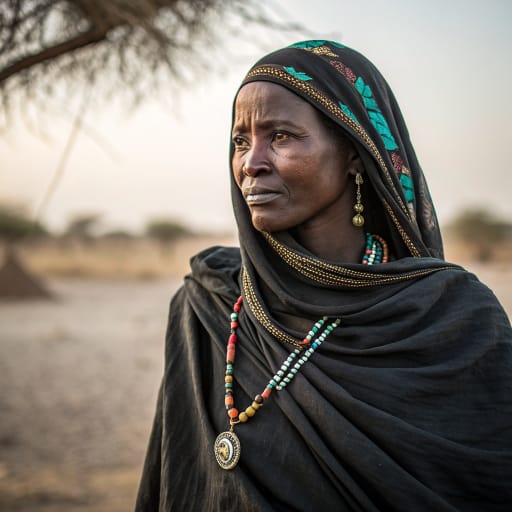
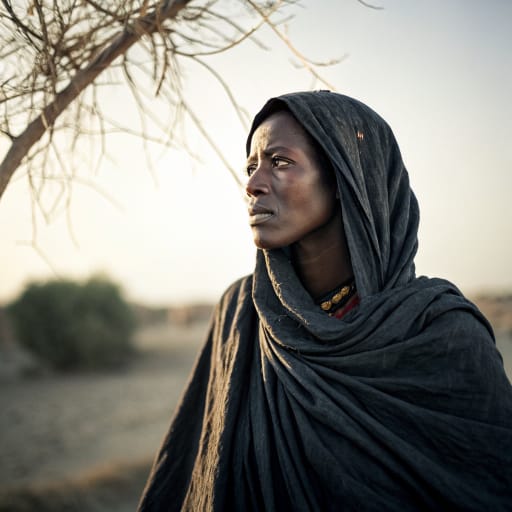
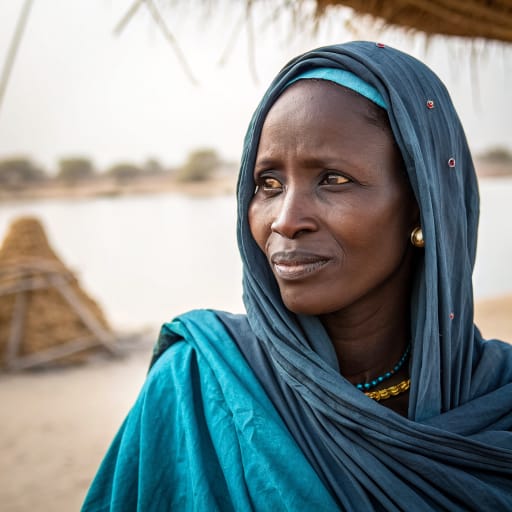
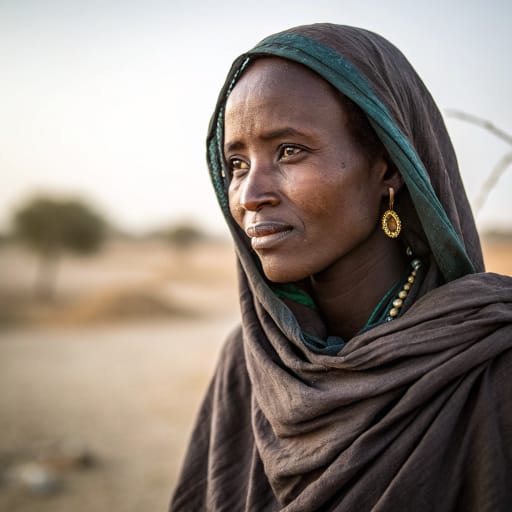
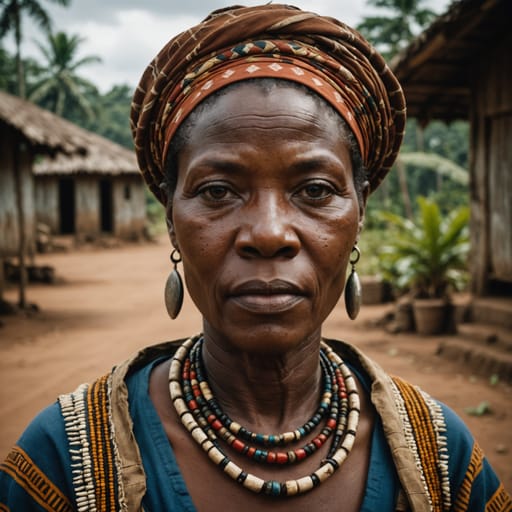
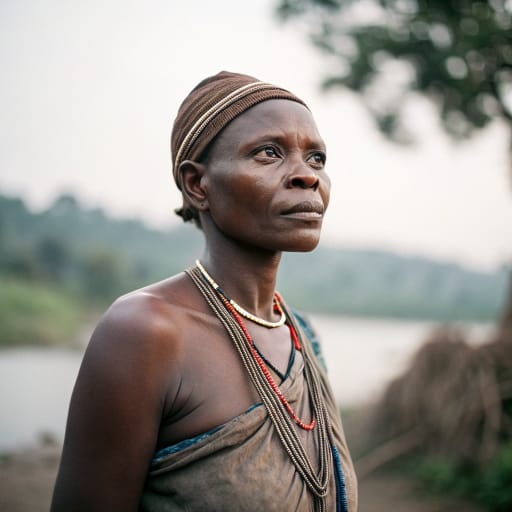
Typical Lisi Phenotypes
Reference for AI generation: hair, eyes, skin, facial structure, build
Lisi Body & Anatomy Reference
Anatomy by feature, Bantu / Central African Niger-Congo phenotype
Lisi Boobs & Breasts
The typical Lisi bust is medium-to-large cup, full, projecting, in line with the wider Bantu / Central African Niger-Congo pattern. Areolas usually fall in the 32-48mm range, with deep-brown areolar pigmentation against the deep-brown skin tone. Compared with the smaller East African conical profile, Lisi breasts sit forward and are generally fuller projection than East African; comparable to West African norm. A faithful AI render of Lisi tits keeps that shape and areola size.
Lisi Ass & Hips
Butt shape among Lisi women: full, projected, wide-set glutes, over broad iliac crests, gynoid pelvic pattern. This follows Bantu / Central African Niger-Congo ancestry and looks quite unlike the slim narrow-hip Cushitic East African profile. An accurate Lisi ass in adult AI imagery keeps both the silhouette and the overall build (mesomorph with strong gluteal-femoral fat deposition) instead of a generic average.
Lisi Vagina & Pussy
Vulvar anatomy among Lisi women: deep-brown labial pigmentation, fuller labia minora. Pubic hair tends to be tightly-coiled coarse texture, dense distribution, in the usual inverted-triangle pattern. Both follow Bantu / Central African Niger-Congo pigmentation, which is why Lisi pussy renders should not fall back on a pale, sparse Western template.
Lisi Dicks & Penis
The Lisi cock profile, from Bantu / Central African Niger-Congo anthropometric data: regional mean ~14cm erect; above-average girth; deep-brown shaft pigmentation. Pubic hair has a tightly-coiled coarse texture and forms the usual inverted-V pattern. Whether Lisi men are circumcised follows religious and cultural practice rather than phenotype.
Lisi Body, Curves & Build
Build and curves among Lisi women follow the Bantu / Central African Niger-Congo pattern: mesomorph with strong gluteal-femoral fat deposition, mean adult female BMI 23-26. Proportions matter as much as skin tone, so Lisi figures should keep their regional height and limb ratios.
Lisi Skin Tone & Hair Texture
The Lisi skin range is deep-brown (Fitzpatrick VI), and hair tends to be tight 4A-4C coil. That combination marks the Bantu / Central African Niger-Congo phenotype, and skin tone is the trait AI generators most often get wrong for Lisi women.
Explore phenotype categories
Structured taxonomy with peer-reviewed scales · 22 anatomical categories
Erotic Poses & Sex Positions
From the pose catalog: 219 named positions with reference skeletons
Frequently asked questions about Lisi people
Where is the Lisi homeland?
The Lisi homeland is Around Lake Fitri in the Batha region of central Chad in Central Africa.
What language do Lisi people speak?
Lisi people primarily speak Lisi, also called Naba (Central Sudanic, Bongo-Bagirmi branch); Chadian Arabic widely used as a second language.
What religion do Lisi people practice?
The predominant religion among Lisi people is Sunni Islam.






Make your own Lisi images
Five a day, free, no credits to buy. The studio starts from this group's phenotype data, so you can set body type, pose and style and keep the traits accurate.
Start with Lisi