Help us get this right
Does this portrait look right for Kanembu?
Nobody has judged this one yet. You would be the first.
Kanembu Erotic
Kanem and Lac provinces of western Chad, north and east of Lake Chad, with smaller communities in southeastern Niger
Kanembu (Saharan branch, Nilo-Saharan), closely related to Kanuri; Chadian Arabic widely used as a second language
Sunni Islam
Closely related to the Kanuri of Bornu; organized in clans, with the Haddad blacksmith and hunter caste living among them
About Kanembu People
The Kanembu are, in a sense, the people who stayed. In the late fourteenth century the rulers of the old Kanem empire were driven out of the country north and east of Lake Chad. They rebuilt their state in Bornu, and the families who went west with them mixed with local peoples and over generations became the Kanuri. Those who remained on the sandy plains of Kanem kept a name tied to the land itself. Today they live mostly in western Chad, in Kanem and Lac provinces, with smaller communities across the border in Niger.
Their language belongs to the Saharan branch usually placed within Nilo-Saharan. It sits so close to Kanuri that linguists still argue over whether to call it a separate language or a dialect. The Tubu herders to the north speak Daza and Teda, which are more distant relatives from the same branch. The Buduma of the lake islands speak a Chadic language with no close tie to Kanembu at all, and Chadian Arabic carries trade across the whole region. Islam came early. Kanem's kings converted in the eleventh century, among the first rulers south of the Sahara to do so. Sunni practice still sets the shape of the day, from Qur'anic lessons for children to the fast of Ramadan.
The imperial past still shows in how Kanembu society is organized. Clan membership matters, and the Alifa of Mao, a title rooted in the centuries when Bornu governed Kanem, remains the leading traditional authority. The Haddad live among the Kanembu and speak their language. They are blacksmiths and hunters who were long treated as a separate, lower-ranking caste. The nineteenth century brought raids by Awlad Sulayman Arabs moving down from Libya, and French conquest followed at the start of the twentieth.
Most Kanembu farm and keep livestock. In Kanem the dunes are broken by ouadis, hollows where groundwater lies close enough to the surface to grow dates, wheat and vegetables. Near Bol, families work polders reclaimed from the shallows of the lake. The most distinctive harvest belongs to women: dihé, a blue-green spirulina gathered from natron ponds. They drain it through sand, dry it into flat cakes and sell it in local markets as a base for sauces. In recent years the shrinking lake and the insurgency that reached Lac province in the 2010s have put pressure on both farming and travel.
Related ethnic groups
Groups that share Kanembu's homeland, region, language, or religious tradition. These are likely candidates for comparative phenotype reference.
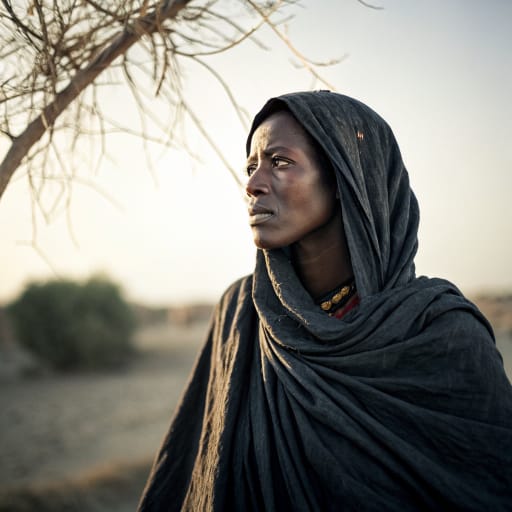
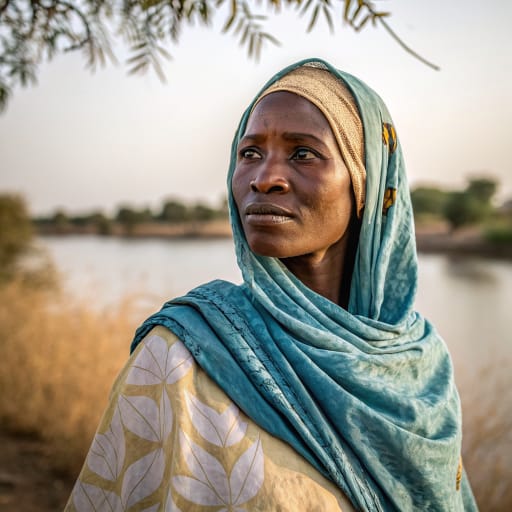
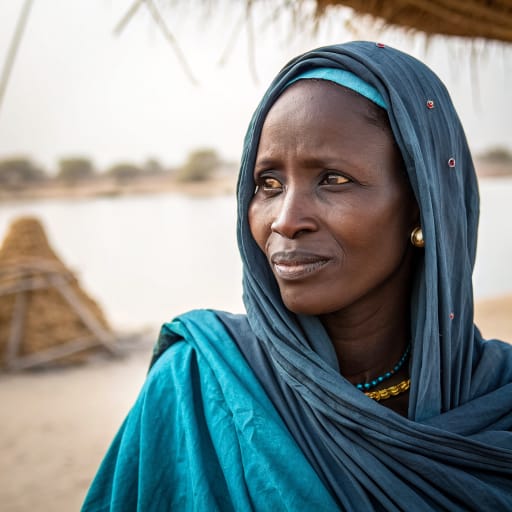
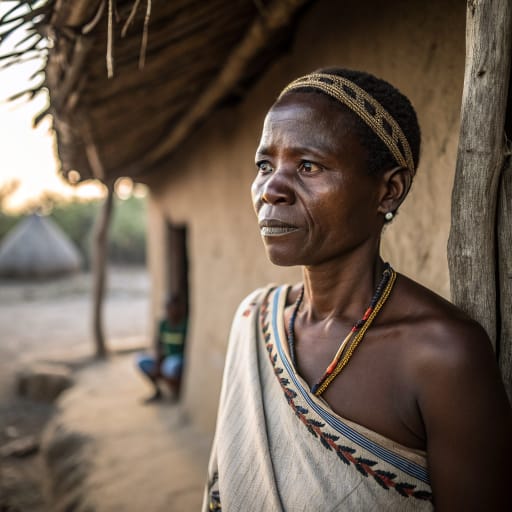
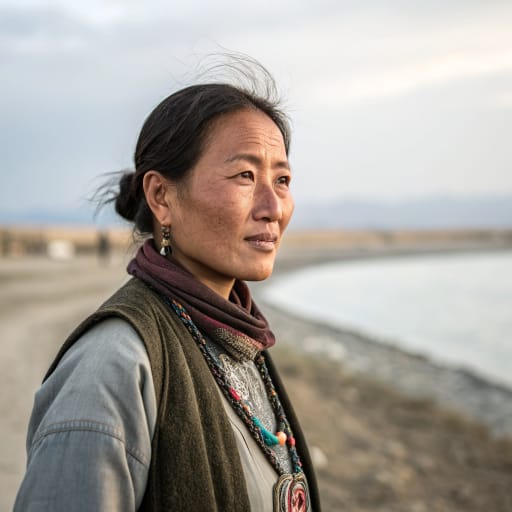
Typical Kanembu Phenotypes
Reference for AI generation: hair, eyes, skin, facial structure, build
Kanembu Body & Anatomy Reference
Bantu / Central African Niger-Congo phenotype: anatomy reference for AI nude generation
Kanembu Boobs & Breasts
The typical Kanembu bust is medium-to-large cup, full, projecting, in line with the wider Bantu / Central African Niger-Congo pattern. Areolas usually fall in the 32-48mm range, with deep-brown areolar pigmentation against the deep-brown skin tone. Compared with the smaller East African conical profile, Kanembu breasts sit forward and are generally fuller projection than East African; comparable to West African norm. A faithful AI render of Kanembu tits keeps that shape and areola size.
Kanembu Ass & Hips
Butt shape among Kanembu women: full, projected, wide-set glutes, over broad iliac crests, gynoid pelvic pattern. This follows Bantu / Central African Niger-Congo ancestry and looks quite unlike the slim narrow-hip Cushitic East African profile. An accurate Kanembu ass in adult AI imagery keeps both the silhouette and the overall build (mesomorph with strong gluteal-femoral fat deposition) instead of a generic average.
Kanembu Vagina & Pussy
Vulvar anatomy among Kanembu women: deep-brown labial pigmentation, fuller labia minora. Pubic hair tends to be tightly-coiled coarse texture, dense distribution, in the usual inverted-triangle pattern. Both follow Bantu / Central African Niger-Congo pigmentation, which is why Kanembu pussy renders should not fall back on a pale, sparse Western template.
Kanembu Dicks & Penis
The Kanembu cock profile, from Bantu / Central African Niger-Congo anthropometric data: regional mean ~14cm erect; above-average girth; deep-brown shaft pigmentation. Pubic hair has a tightly-coiled coarse texture and forms the usual inverted-V pattern. Whether Kanembu men are circumcised follows religious and cultural practice rather than phenotype.
Kanembu Body, Curves & Build
Build and curves among Kanembu women follow the Bantu / Central African Niger-Congo pattern: mesomorph with strong gluteal-femoral fat deposition, mean adult female BMI 23-26. Proportions matter as much as skin tone, so Kanembu figures should keep their regional height and limb ratios.
Kanembu Skin Tone & Hair Texture
The Kanembu skin range is deep-brown (Fitzpatrick VI), and hair tends to be tight 4A-4C coil. That combination marks the Bantu / Central African Niger-Congo phenotype, and skin tone is the trait AI generators most often get wrong for Kanembu women.
Explore phenotype categories
Structured taxonomy with peer-reviewed scales · 22 anatomical categories
Erotic Poses & Sex Positions
From the pose catalog: 219 named positions with reference skeletons
Frequently asked questions about Kanembu people
Where is the Kanembu homeland?
The Kanembu homeland is Kanem and Lac provinces of western Chad, north and east of Lake Chad, with smaller communities in southeastern Niger in Central Africa.
What language do Kanembu people speak?
Kanembu people primarily speak Kanembu (Saharan branch, Nilo-Saharan), closely related to Kanuri; Chadian Arabic widely used as a second language.
What religion do Kanembu people practice?
The predominant religion among Kanembu people is Sunni Islam.






Make your own Kanembu images
Five a day, free, no credits to buy. The studio starts from this group's phenotype data, so you can set body type, pose and style and keep the traits accurate.
Start with Kanembu