No portrait yet
Bwile Erotic
Northern end of Lake Mweru, around Chienge in Luapula Province, Zambia, and Pweto in Haut-Katanga, Democratic Republic of the Congo
Bwile (Bantu, Niger-Congo; Bemba group), with Bemba (Bantu) in Zambia and Swahili (Bantu) in the DRC as regional common languages
Mostly Christian (Catholic and Protestant), with continuing belief in ancestral spirits
Bantu people of the Lake Mweru and Luapula region, closely related to the Tabwa and Bemba; neighbors of the Shila and the Lunda of Kazembe
About Bwile People
The Bwile are a lake people split by a border. Their homeland wraps around the northern end of Lake Mweru, where the lake narrows toward the Luvua River outlet. Part of it lies around Chienge in Zambia's Luapula Province, and part lies around Pweto in Haut-Katanga province in the Democratic Republic of the Congo. They are a small people next to the large groups of the region, but the name, the language and the chiefs are their own. Bwile is a Bantu language of the Bemba group, closely related to Tabwa and Bemba. Most speakers also use a regional common language: Bemba on the Zambian side and Swahili on the Congolese side. Daily life depends on the lake and on farming. The fishery brings in bream and a small sardine-like fish that is dried, bagged and trucked to the mining towns of the copper belt in both countries, while cassava fields supply the staple food. As among many peoples of the Luapula valley and the Bemba plateau, descent has traditionally been traced through the mother's line, and clan membership shapes marriage and inheritance.
Most Bwile today are Christian, and both Catholic and Protestant churches are well established. Still, ancestral spirits and the chief's role over land and ritual carry weight in village life. The last two centuries have been hard on the Mweru country. In the nineteenth century it sat between the Lunda kingdom of Kazembe on the Luapula to the south and Swahili-Arab caravan traders pushing in from Lake Tanganyika to the east. Colonial boundary makers then ran the British and Belgian line straight through the lake. That left Bwile communities under two governments, each with its own official language and its own schools. The border mattered again in late 2000, when fighting in Congo's second war reached Pweto and thousands of people fled into Zambia. For collectors of African art, the name turns up on wooden figures and other carvings, often cataloged next to the Tabwa work they closely resemble. On the lakeshore itself, the more immediate worry is the decline of the fish stocks that most households depend on.
Related ethnic groups
Groups that share Bwile's homeland, region, language, or religious tradition. These are likely candidates for comparative phenotype reference.
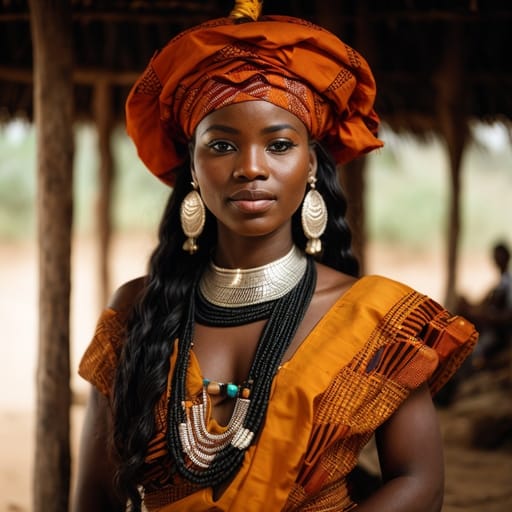
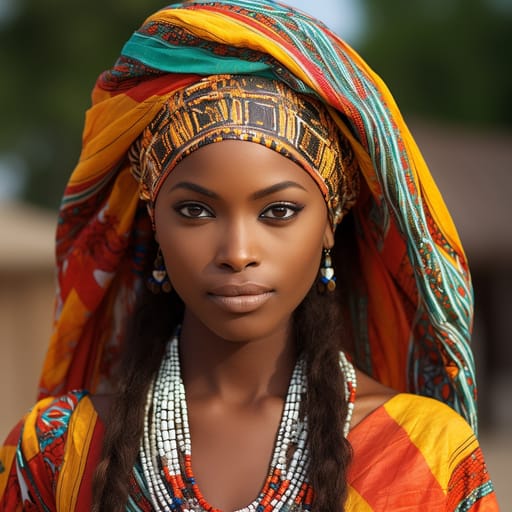
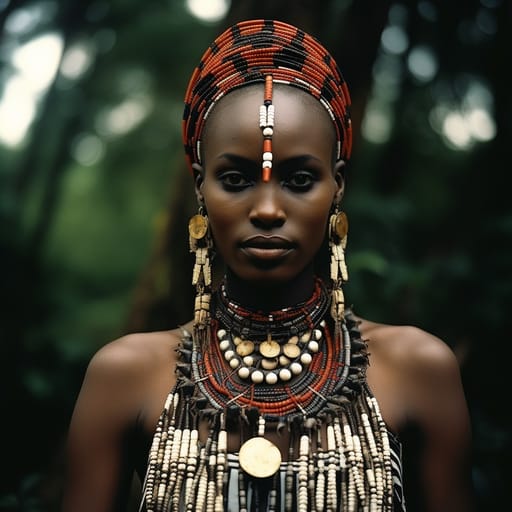
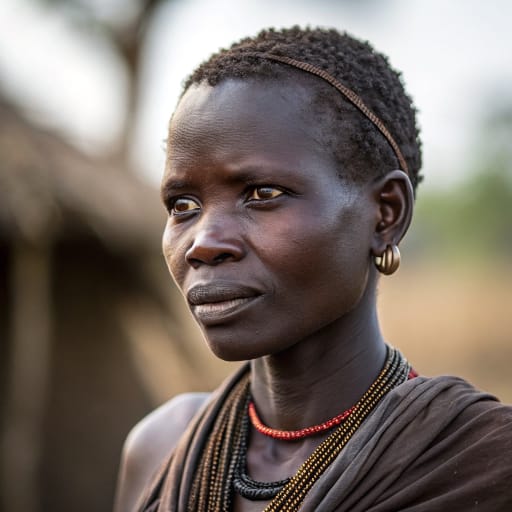
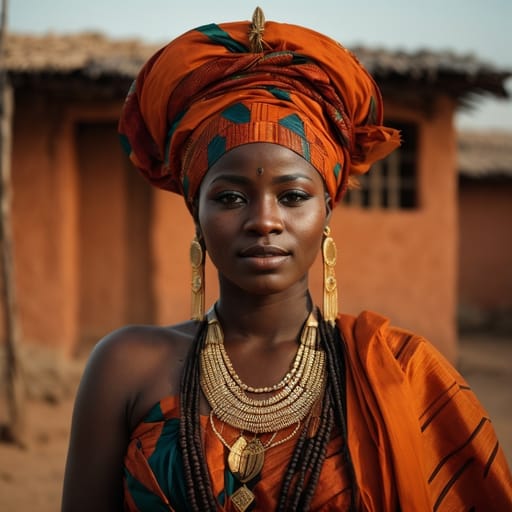
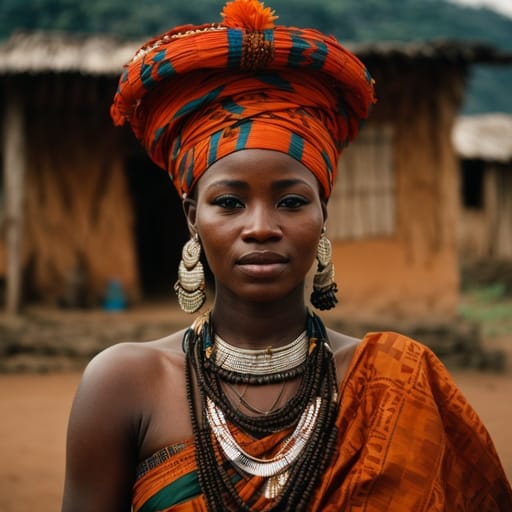
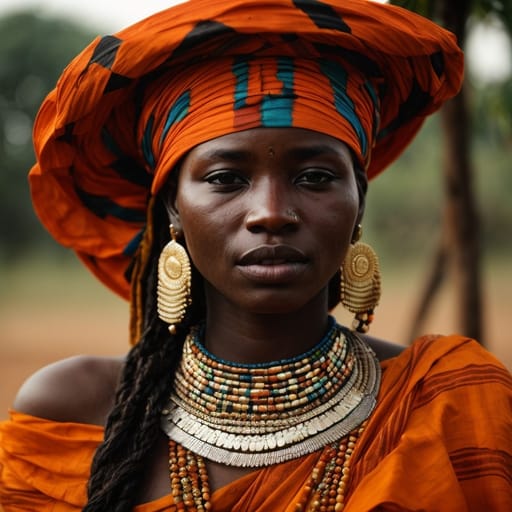
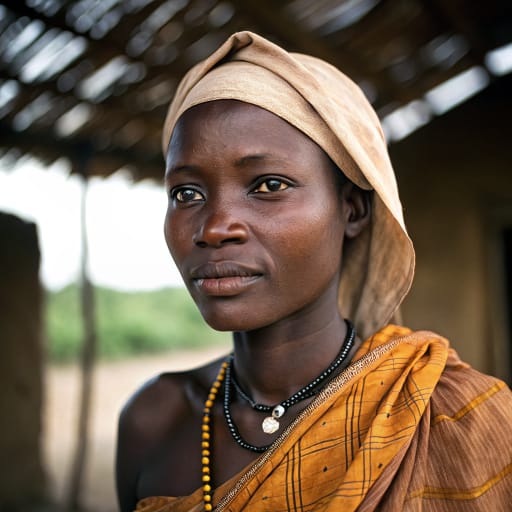
Typical Bwile Phenotypes
Reference for AI generation: hair, eyes, skin, facial structure, build
Bwile Body & Anatomy Reference
Anatomy by feature, Bantu / Central African Niger-Congo phenotype
Bwile Boobs & Breasts
The typical Bwile bust is medium-to-large cup, full, projecting, in line with the wider Bantu / Central African Niger-Congo pattern. Areolas usually fall in the 32-48mm range, with deep-brown areolar pigmentation against the deep-brown skin tone. Compared with the smaller East African conical profile, Bwile breasts sit forward and are generally fuller projection than East African; comparable to West African norm. A faithful AI render of Bwile tits keeps that shape and areola size.
Bwile Ass & Hips
Butt shape among Bwile women: full, projected, wide-set glutes, over broad iliac crests, gynoid pelvic pattern. This follows Bantu / Central African Niger-Congo ancestry and looks quite unlike the slim narrow-hip Cushitic East African profile. An accurate Bwile ass in adult AI imagery keeps both the silhouette and the overall build (mesomorph with strong gluteal-femoral fat deposition) instead of a generic average.
Bwile Vagina & Pussy
Vulvar anatomy among Bwile women: deep-brown labial pigmentation, fuller labia minora. Pubic hair tends to be tightly-coiled coarse texture, dense distribution, in the usual inverted-triangle pattern. Both follow Bantu / Central African Niger-Congo pigmentation, which is why Bwile pussy renders should not fall back on a pale, sparse Western template.
Bwile Dicks & Penis
The Bwile cock profile, from Bantu / Central African Niger-Congo anthropometric data: regional mean ~14cm erect; above-average girth; deep-brown shaft pigmentation. Pubic hair has a tightly-coiled coarse texture and forms the usual inverted-V pattern. Whether Bwile men are circumcised follows religious and cultural practice rather than phenotype.
Bwile Body, Curves & Build
Build and curves among Bwile women follow the Bantu / Central African Niger-Congo pattern: mesomorph with strong gluteal-femoral fat deposition, mean adult female BMI 23-26. Proportions matter as much as skin tone, so Bwile figures should keep their regional height and limb ratios.
Bwile Skin Tone & Hair Texture
The Bwile skin range is deep-brown (Fitzpatrick VI), and hair tends to be tight 4A-4C coil. That combination marks the Bantu / Central African Niger-Congo phenotype, and skin tone is the trait AI generators most often get wrong for Bwile women.
Explore phenotype categories
Structured taxonomy with peer-reviewed scales · 22 anatomical categories
Erotic Poses & Sex Positions
From the pose catalog: 219 named positions with reference skeletons
Frequently asked questions about Bwile people
Where is the Bwile homeland?
The Bwile homeland is Northern end of Lake Mweru, around Chienge in Luapula Province, Zambia, and Pweto in Haut-Katanga, Democratic Republic of the Congo in Central Africa.
What language do Bwile people speak?
Bwile people primarily speak Bwile (Bantu, Niger-Congo; Bemba group), with Bemba (Bantu) in Zambia and Swahili (Bantu) in the DRC as regional common languages.
What religion do Bwile people practice?
The predominant religion among Bwile people is Mostly Christian (Catholic and Protestant), with continuing belief in ancestral spirits.






Make your own Bwile images
Five a day, free, no credits to buy. The studio starts from this group's phenotype data, so you can set body type, pose and style and keep the traits accurate.
Start with Bwile