No portrait yet
Bangando Erotic
Southeastern Cameroon, in the forests of Boumba-et-Ngoko department (East Region), near the borders with the Central African Republic and the Republic of the Congo.
Bangando, also spelled Bangandu (Ubangian, Niger-Congo); French widely used as a second language.
Christianity, alongside older beliefs about ancestors and the forest.
Ubangian-speaking forest farmers of southeastern Cameroon, closely linked to neighboring Baka communities.
About Bangando People
The Bangando are forest farmers in southeastern Cameroon, and they are easiest to understand next to the people who share their forest. Their villages line the road that runs south through the Boumba-et-Ngoko department toward Moloundou, in the rainforest corner where Cameroon meets the Central African Republic and the Republic of the Congo. Baka communities live in the same forest, often at the edges of Bangando villages. The two peoples have been tied together for generations by trade, farm work and clan ties that cross the ethnic line. Each still has a firm sense of where one people ends and the other begins.
Language is one of the clearest markers. Bangando is an Ubangian language. That makes it unusual in a region where most neighboring farming peoples speak Bantu languages, and it is related to the language the Baka speak. French is used at school, at church and in dealings with the state.
The Bangando have not always lived here. Their own accounts place their origins farther north, toward the savanna, and describe a move south into the forest during the nineteenth century, when slave raiding was upending life across the region. Colonial rule brought new pressures: rubber collection under the Germans, then government orders that moved scattered hamlets onto the roads, where people could be counted, taxed and put to work. The roadside villages seen today owe a great deal to that period.
Daily life turns on fields of cassava and plantain, cocoa grown for cash, and hunting and fishing in the surrounding forest. People compete over that forest. Logging concessions cut through it, and protected areas such as Lobéké National Park limit where and how people may hunt, so the question of who can use the forest keeps coming back as a source of tension. Most villages have a church, but older beliefs about ancestors, the forest and hidden powers still shape how people explain illness, bad luck and sudden good fortune.
Related ethnic groups
Groups that share Bangando's homeland, region, language, or religious tradition. These are likely candidates for comparative phenotype reference.
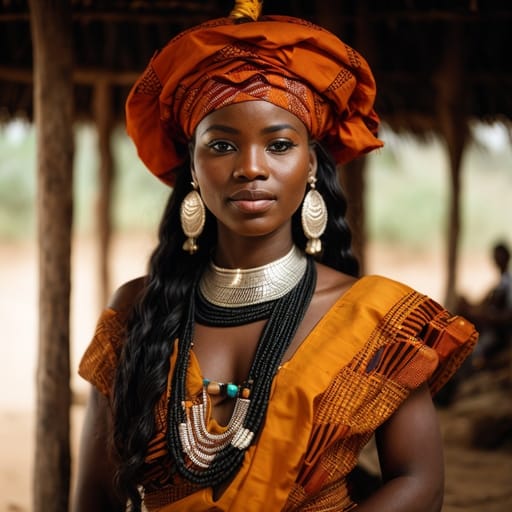
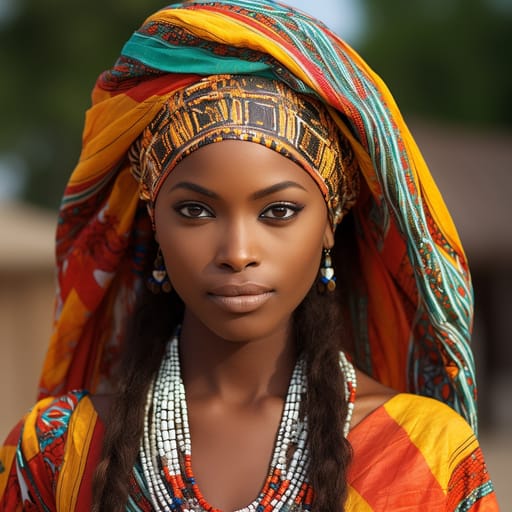
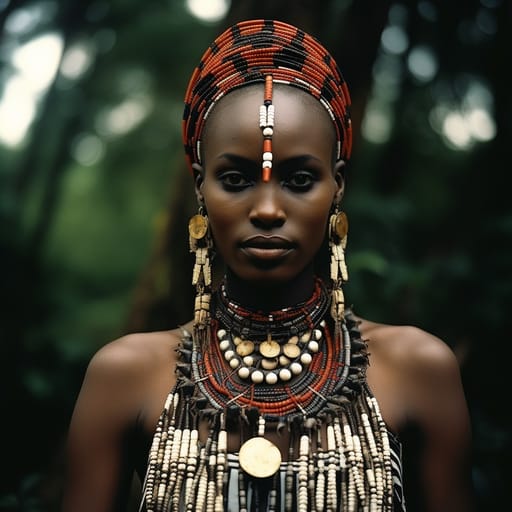
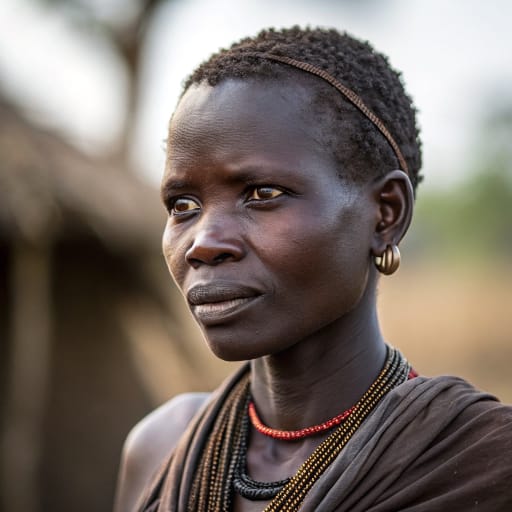
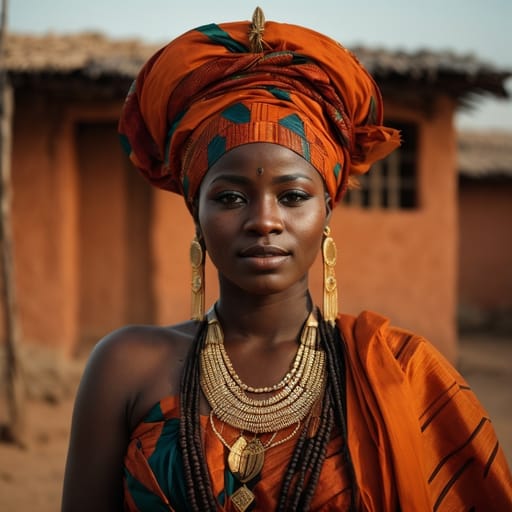
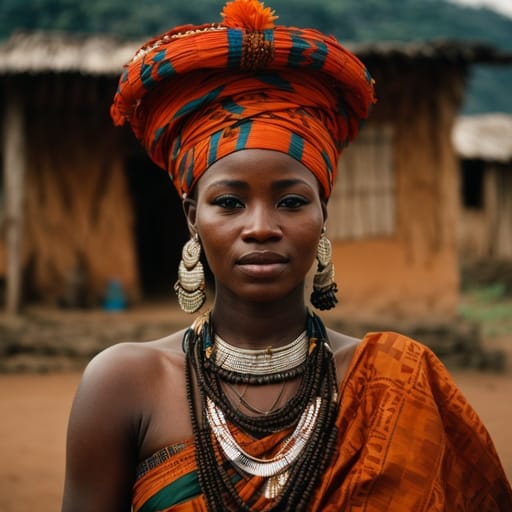
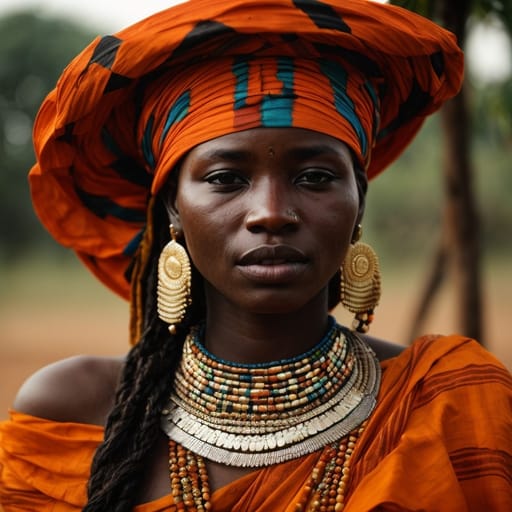
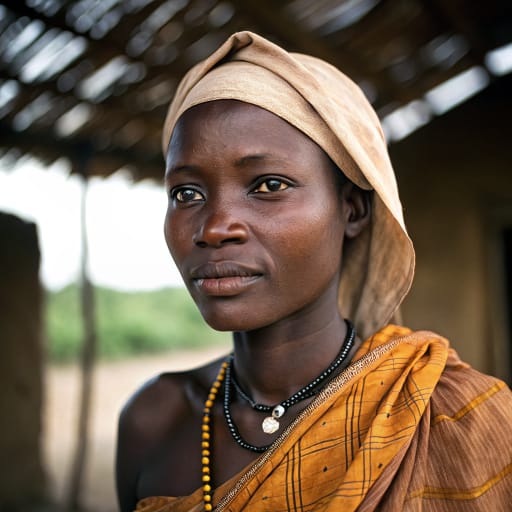
Typical Bangando Phenotypes
Reference for AI generation: hair, eyes, skin, facial structure, build
Bangando Body & Anatomy Reference
Per-feature anatomical profile for AI nude generation: Bantu / Central African Niger-Congo phenotype
Bangando Boobs & Breasts
Bangando boobs follow the Bantu / Central African Niger-Congo profile: medium-to-large cup, full, projecting. Areolar diameter is usually 32-48mm, and the coloring is deep-brown areolar pigmentation against the deep-brown skin tone. Breast shape tracks body composition (mesomorph with strong gluteal-femoral fat deposition, mean adult female BMI 23-26), so Bangando breasts tend to be fuller projection than East African; comparable to West African norm. Expect a forward-set shape, not the smaller East African conical profile.
Bangando Ass & Hips
Bangando ass and hip morphology presents as full, projected, wide-set glutes, distinctly different from the slim narrow-hip Cushitic East African profile. The Bangando pelvic profile shows broad iliac crests, gynoid pelvic pattern, anchored in the Bantu / Central African Niger-Congo skeletal pattern. Bangando butt shots in adult AI imagery should render the full, projected, wide-set glutes silhouette with the overall build (mesomorph with strong gluteal-femoral fat deposition) and the fat distribution typical of the Bantu / Central African Niger-Congo phenotype.
Bangando Vagina & Pussy
Bangando pussy anatomy typically shows deep-brown labial pigmentation, fuller labia minora. Pubic hair is usually tightly-coiled coarse texture, dense distribution. In AI-generated Bangando nudes, labial color should blend into the deep-brown skin with a gradual transition, and the hair should keep its tightly-coiled coarse texture.
Bangando Dicks & Penis
Penis reference for Bangando men: regional mean ~14cm erect, above-average girth. Coloring: deep-brown shaft pigmentation. An accurate Bangando cock in AI imagery matches the surrounding deep-brown skin rather than a generic porn default. Circumcision depends on religion and custom, not ancestry.
Bangando Body, Curves & Build
The Bangando figure is generally mesomorph with strong gluteal-femoral fat deposition, with mean adult female BMI 23-26, characteristic of Bantu / Central African Niger-Congo ancestry. AI image tools tend to flatten regional body types into a few stock shapes; here the Bangando build is kept as its own reference.
Bangando Skin Tone & Hair Texture
Skin: deep-brown (Fitzpatrick VI). Hair: tight 4A-4C coil. Both are typical of Bantu / Central African Niger-Congo ancestry. The most common mistake in AI nudes of Bangando women is a body rendered lighter than the face.
Explore phenotype categories
Structured taxonomy with peer-reviewed scales · 22 anatomical categories
Erotic Poses & Sex Positions
From the pose catalog: 219 named positions with reference skeletons
Frequently asked questions about Bangando people
Where is the Bangando homeland?
The Bangando homeland is Southeastern Cameroon, in the forests of Boumba-et-Ngoko department (East Region), near the borders with the Central African Republic and the Republic of the Congo. in Central Africa.
What language do Bangando people speak?
Bangando people primarily speak Bangando, also spelled Bangandu (Ubangian, Niger-Congo); French widely used as a second language..
What religion do Bangando people practice?
The predominant religion among Bangando people is Christianity, alongside older beliefs about ancestors and the forest..






Make your own Bangando images
Five a day, free, no credits to buy. The studio starts from this group's phenotype data, so you can set body type, pose and style and keep the traits accurate.
Start with Bangando