No portrait yet
Teda Erotic
The Tibesti Mountains of northern Chad and the surrounding desert, extending into southern Libya (Fezzan, Kufra) and northeastern Niger (Kaouar, Djado).
Tedaga (Saharan; closely related to Dazaga, more distantly to Kanuri), with Arabic widely used as a second language.
Sunni Islam (Maliki school), historically shaped by the Sanusi order.
Northern branch of the Toubou (Tebu), alongside the Daza; divided into clans such as the Tomagra, from which the Derde of Tibesti is chosen.
About Teda People
Ask a Teda where home is and the answer usually comes back to one place: the Tibesti, the volcanic massif that rises out of northern Chad and runs into Libya and Niger. The Teda are the northern branch of the people outsiders call Toubou or Tebu, a name often traced to a Kanuri phrase meaning people of Tu, Tu being the Tibesti itself. Their southern kin, the Daza, share much of the same history and social order. The Teda are the mountain and deep desert branch, living in wadis, oasis towns and palm groves from Bardaï and Zouar to the Kaouar oases of Niger and the Fezzan and Kufra regions of Libya.
Their language, Tedaga, belongs to the small Saharan family. Its nearest relative is Dazaga, and the two are close enough that some linguists treat them as dialects of a single Tebu language. Kanuri, spoken around Lake Chad, is a more distant cousin. Arabic and Tuareg are spoken all around them, and many Teda move easily between languages. Islam reached them through the caravan trade and the old states of Kanem and Bornu. It was strengthened in the nineteenth century, when the Sanusi brotherhood set up lodges along the desert routes. Today the Teda are Sunni Muslims, and their faith sets the rhythm of prayer, fasting and marriage. Older codes of honor and obligation between clans still carry real weight.
Social life runs through clans. Each clan holds rights to particular valleys, pastures and wells. A Teda may not marry into the clan of any of their four grandparents, a rule that spreads kinship across enormous distances and gives most people relatives in someone else's territory. Disputes have traditionally been settled by negotiation and compensation paid in camels, with feud as the fallback when talks fail. Above the clans of the Tibesti stands the Derde, a leader drawn from the Tomagra clan. His authority rests on arbitration rather than force, and the office lasted through colonial rule into independent Chad.
The Teda have long been hard to govern from far away. The French took years to bring the Tibesti under their administration. After independence, resentment of Chad's southern-led government fed a northern rebellion, and the Derde's own son, Goukouni Oueddei, went on to serve as president of Chad from 1979 to 1982. The Aouzou Strip dispute with Libya, the upheaval in southern Libya after 2011 and the gold rush that pulled miners into the mountains from 2012 have all passed through Teda country. Daily life, though, still turns on camels, goats, dates and the trade routes that have tied the mountains to the oases for centuries.
Related ethnic groups
Groups that share Teda's homeland, region, language, or religious tradition. These are likely candidates for comparative phenotype reference.
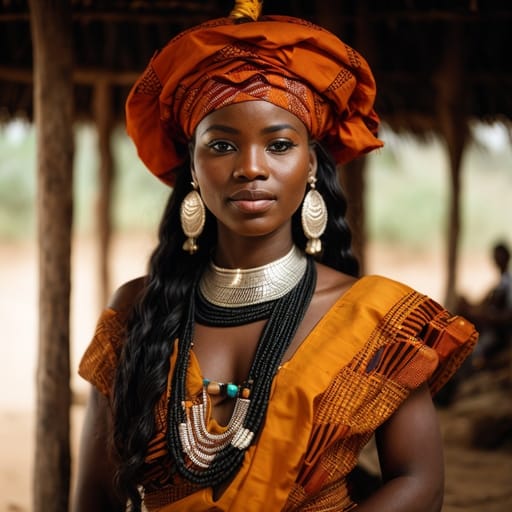
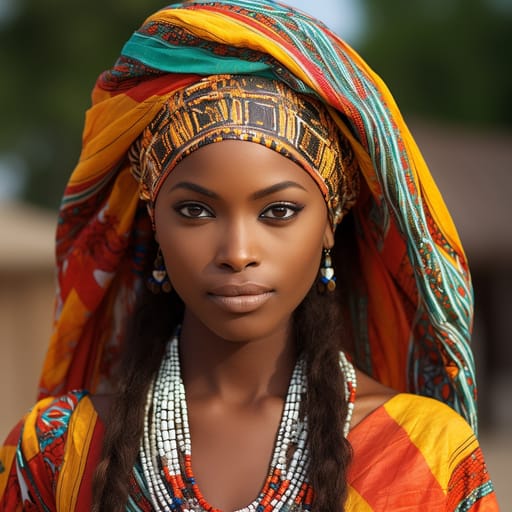
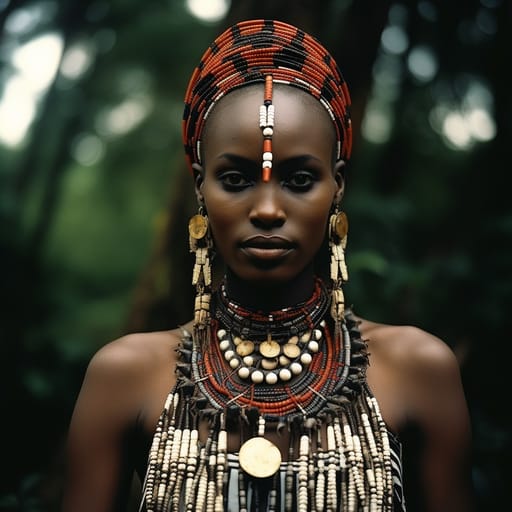
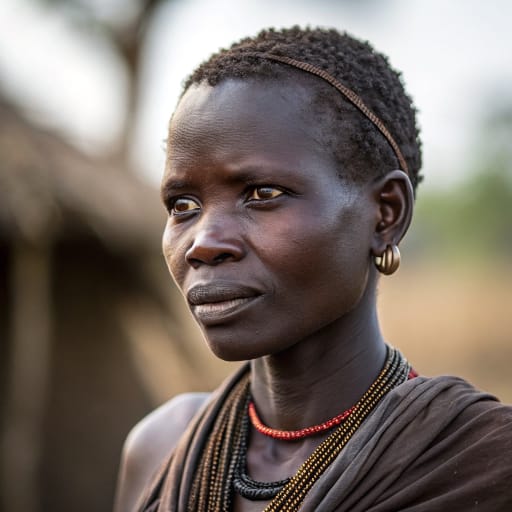
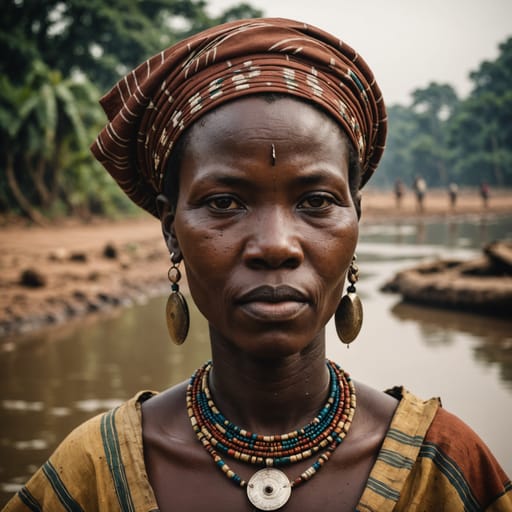
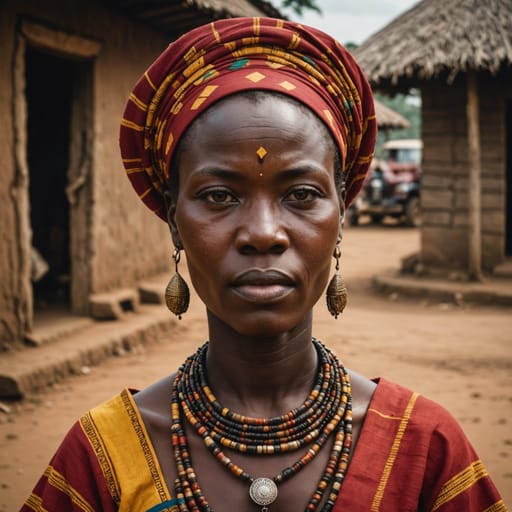
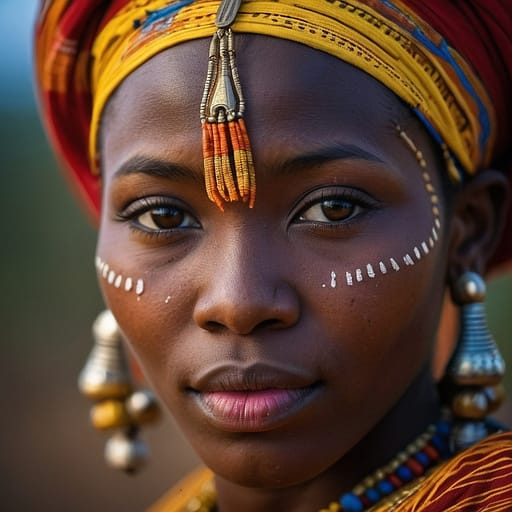
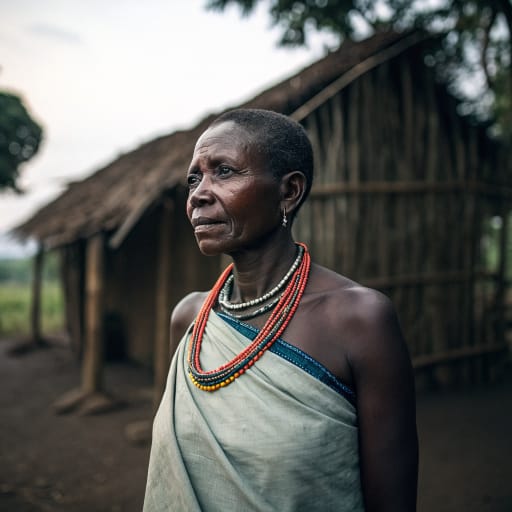
Typical Teda Phenotypes
Reference for AI generation: hair, eyes, skin, facial structure, build
Teda Body & Anatomy Reference
Bantu / Central African Niger-Congo phenotype: anatomy reference for AI nude generation
Teda Boobs & Breasts
Teda boobs follow the Bantu / Central African Niger-Congo profile: medium-to-large cup, full, projecting. Areolar diameter is usually 32-48mm, and the coloring is deep-brown areolar pigmentation against the deep-brown skin tone. Breast shape tracks body composition (mesomorph with strong gluteal-femoral fat deposition, mean adult female BMI 23-26), so Teda breasts tend to be fuller projection than East African; comparable to West African norm. Expect a forward-set shape, not the smaller East African conical profile.
Teda Ass & Hips
Teda ass and hip morphology presents as full, projected, wide-set glutes, distinctly different from the slim narrow-hip Cushitic East African profile. The Teda pelvic profile shows broad iliac crests, gynoid pelvic pattern, anchored in the Bantu / Central African Niger-Congo skeletal pattern. Teda butt shots in adult AI imagery should render the full, projected, wide-set glutes silhouette with the overall build (mesomorph with strong gluteal-femoral fat deposition) and the fat distribution typical of the Bantu / Central African Niger-Congo phenotype.
Teda Vagina & Pussy
Teda pussy anatomy typically shows deep-brown labial pigmentation, fuller labia minora. Pubic hair is usually tightly-coiled coarse texture, dense distribution. In AI-generated Teda nudes, labial color should blend into the deep-brown skin with a gradual transition, and the hair should keep its tightly-coiled coarse texture.
Teda Dicks & Penis
Penis reference for Teda men: regional mean ~14cm erect, above-average girth. Coloring: deep-brown shaft pigmentation. An accurate Teda cock in AI imagery matches the surrounding deep-brown skin rather than a generic porn default. Circumcision depends on religion and custom, not ancestry.
Teda Body, Curves & Build
The Teda figure is generally mesomorph with strong gluteal-femoral fat deposition, with mean adult female BMI 23-26, characteristic of Bantu / Central African Niger-Congo ancestry. AI image tools tend to flatten regional body types into a few stock shapes; here the Teda build is kept as its own reference.
Teda Skin Tone & Hair Texture
Skin: deep-brown (Fitzpatrick VI). Hair: tight 4A-4C coil. Both are typical of Bantu / Central African Niger-Congo ancestry. The most common mistake in AI nudes of Teda women is a body rendered lighter than the face.
Explore phenotype categories
Structured taxonomy with peer-reviewed scales · 22 anatomical categories
Erotic Poses & Sex Positions
From the pose catalog: 219 named positions with reference skeletons
Frequently asked questions about Teda people
Where is the Teda homeland?
The Teda homeland is The Tibesti Mountains of northern Chad and the surrounding desert, extending into southern Libya (Fezzan, Kufra) and northeastern Niger (Kaouar, Djado). in Central Africa.
What language do Teda people speak?
Teda people primarily speak Tedaga (Saharan; closely related to Dazaga, more distantly to Kanuri), with Arabic widely used as a second language..
What religion do Teda people practice?
The predominant religion among Teda people is Sunni Islam (Maliki school), historically shaped by the Sanusi order..






Make your own Teda images
Five a day, free, no credits to buy. The studio starts from this group's phenotype data, so you can set body type, pose and style and keep the traits accurate.
Start with Teda