Help us get this right
Does this portrait look right for Boma?
Nobody has judged this one yet. You would be the first.
Boma Erotic
Lower Kasai and Kwa river valleys in Mai-Ndombe Province, Democratic Republic of the Congo
Boma, also called Buma (Bantu, Niger-Congo); Lingala and French widely used as second languages
Christianity, mainly Roman Catholic and Protestant, alongside respect for ancestors and customary practice
Bantu peoples of the Kasai and Kwa basin; linguistically close to the Tiene and Yansi, with Teke and Sakata among their neighbors
About Boma People
The Boma are a Bantu-speaking people of the lower Kasai River in the Democratic Republic of the Congo, and the first thing to settle is who they are not. They are not the people of the port city of Boma, far downstream on the Congo estuary, although the shared name confuses maps and catalogs often. Boma country lies inland, in Mai-Ndombe Province, where the Kasai widens toward the Congo and takes the name Kwa for its last stretch. The land is a mix of savanna, forest and riverbank that floods with the seasons, and the Boma have always looked at it from the water.
Their language, also called Boma or Buma, belongs to a cluster of Bantu languages spoken between the Kasai and Lake Mai-Ndombe, and its closest relatives are the tongues of the neighboring Tiene and Yansi. Few outsiders learn it. In markets, on river boats and in church, people switch easily into Lingala, the working language of the river, while French belongs to schools and government offices.
The rivers shaped Boma history as much as their home. By the nineteenth century the Kasai and Kwa were busy trade routes, with canoes carrying ivory, captives and food down toward Malebo Pool, where Teke and Bobangi middlemen linked the interior to the Atlantic trade. That trade was taken over by King Leopold II's Congo Free State, and the Lake Leopold II district, today's Mai-Ndombe, became notorious under the Free State's brutal rubber regime. Catholic and Protestant missions came in the colonial decades that followed, and Christianity took firm root.
Daily life is rural and practical. Families farm cassava and other crops, fish the river and its backwaters, and sell what they can spare in the small river towns, while Kinshasa draws young people downstream for school and work. Going to church is a normal, public part of life. Ancestors are still remembered, elders still carry weight in family decisions, and funerals remain the gatherings that bring scattered relatives home. Customary chiefs keep a recognized role in land and local disputes within the Congolese administration. None of this makes the Boma unusual in the region, and that is part of the point: they are a small people with a language of their own, holding a stretch of river between larger neighbors.
Related ethnic groups
Groups that share Boma's homeland, region, language, or religious tradition. These are likely candidates for comparative phenotype reference.
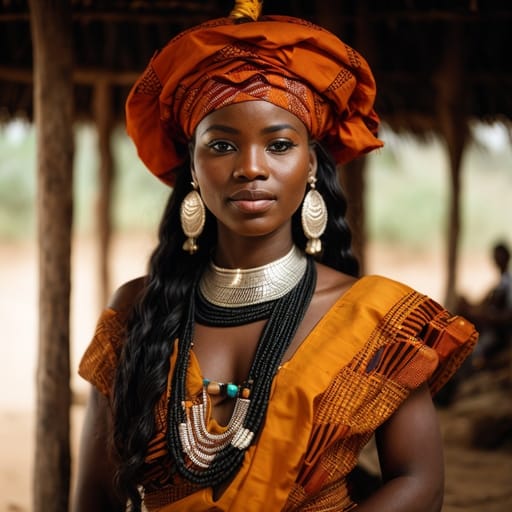
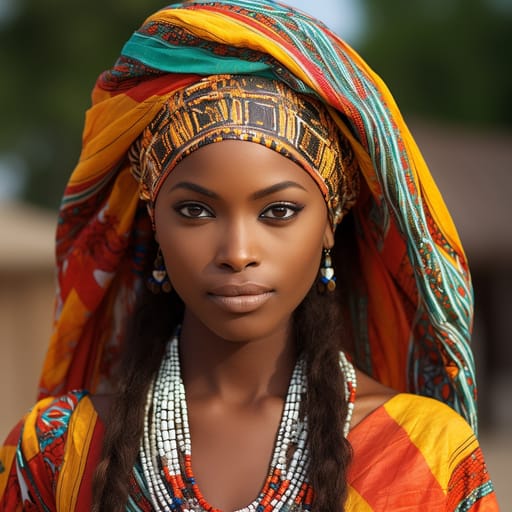
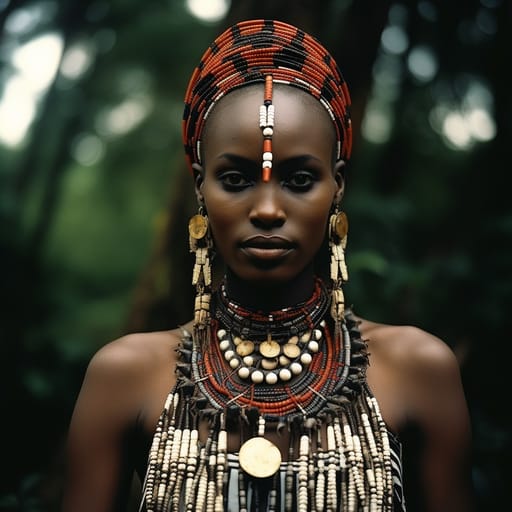
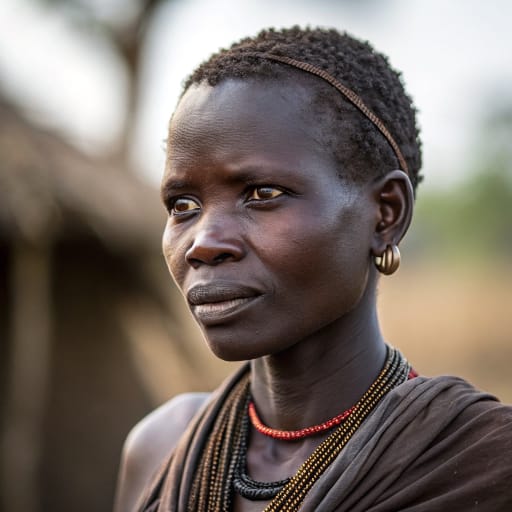
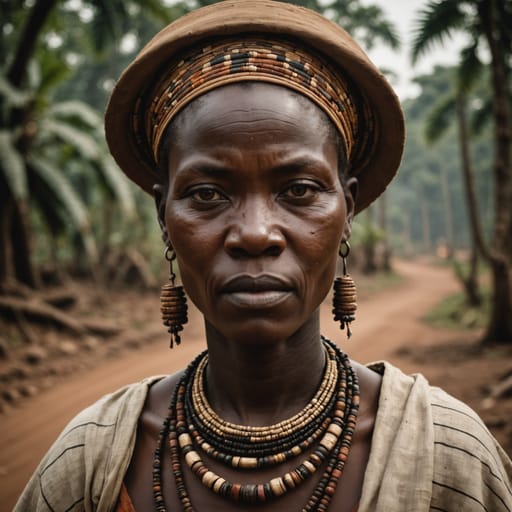
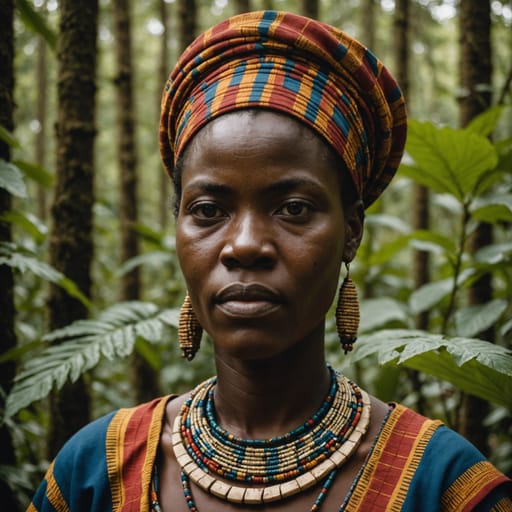
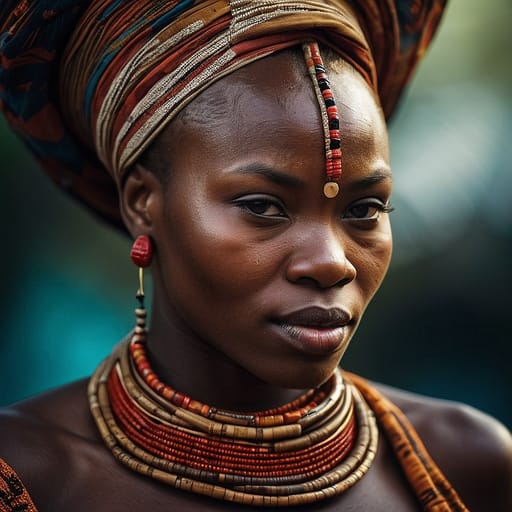
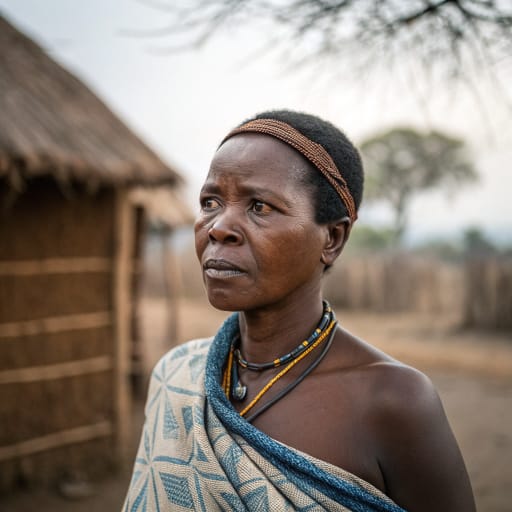
Typical Boma Phenotypes
Reference for AI generation: hair, eyes, skin, facial structure, build
Boma Body & Anatomy Reference
Bantu / Central African Niger-Congo phenotype: anatomy reference for AI nude generation
Boma Boobs & Breasts
Bust reference for Boma women: medium-to-large cup, full, projecting, which is typical of Bantu / Central African Niger-Congo ancestry. Areolas measure about 32-48mm across, with deep-brown pigmentation. Body type (mesomorph with strong gluteal-femoral fat deposition) shapes the bust as well, so Boma tits are usually fuller projection than East African; comparable to West African norm. In AI imagery, keep the forward-set shape rather than drifting toward the smaller East African conical profile.
Boma Ass & Hips
The Boma ass is typically full, projected, wide-set glutes, which sets it apart from the slim narrow-hip Cushitic East African profile. Underneath, the pelvis shows broad iliac crests, gynoid pelvic pattern, part of the Bantu / Central African Niger-Congo skeletal pattern. For Boma butt pics and AI renders, match that silhouette and the overall build (mesomorph with strong gluteal-femoral fat deposition).
Boma Vagina & Pussy
Boma pussy and vulvar anatomy presents deep-brown labial pigmentation, fuller labia minora, consistent with the Bantu / Central African Niger-Congo phenotype's pigmentation pattern. Boma pubic hair is typically tightly-coiled coarse texture, dense distribution, in the inverted-triangle pattern. For anatomically accurate Boma pussy renders the labial coloration should match the surrounding deep-brown skin tone with a continuous gradient, and the hair should keep its tightly-coiled coarse texture.
Boma Dicks & Penis
Boma dicks follow the Bantu / Central African Niger-Congo reference data: regional mean ~14cm erect; above-average girth; deep-brown shaft pigmentation. Shaft color should track the deep-brown skin tone with a smooth change toward the glans, and Boma pubic hair keeps its tightly-coiled coarse texture.
Boma Body, Curves & Build
Boma body type and overall build presents as mesomorph with strong gluteal-femoral fat deposition, with mean adult female BMI 23-26: the characteristic Bantu / Central African Niger-Congo habitus. Boma curves and proportions should keep the regional skeletal frame (height, shoulder-to-hip ratio, limb proportions) rather than a generic mesomorph default.
Boma Skin Tone & Hair Texture
Boma skin sits in the deep-brown (Fitzpatrick VI) band. Hair is typically tight 4A-4C coil, in keeping with the Bantu / Central African Niger-Congo phenotype. In nude renders the skin should stay one even tone from face to body, and body, pubic and head hair should match.
Explore phenotype categories
Structured taxonomy with peer-reviewed scales · 22 anatomical categories
Erotic Poses & Sex Positions
From the pose catalog: 219 named positions with reference skeletons
Frequently asked questions about Boma people
Where is the Boma homeland?
The Boma homeland is Lower Kasai and Kwa river valleys in Mai-Ndombe Province, Democratic Republic of the Congo in Central Africa.
What language do Boma people speak?
Boma people primarily speak Boma, also called Buma (Bantu, Niger-Congo); Lingala and French widely used as second languages.
What religion do Boma people practice?
The predominant religion among Boma people is Christianity, mainly Roman Catholic and Protestant, alongside respect for ancestors and customary practice.






Make your own Boma images
Five a day, free, no credits to buy. The studio starts from this group's phenotype data, so you can set body type, pose and style and keep the traits accurate.
Start with Boma