Help us get this right
Does this portrait look right for Hemba?
Nobody has judged this one yet. You would be the first.
Hemba Erotic
East of the Lualaba River in southeastern Democratic Republic of the Congo, mainly Tanganyika Province (formerly northern Katanga), around Kongolo
Hemba, or Kihemba (Niger-Congo, Bantu), closely related to Luba; Swahili and French also widely used
Christianity alongside continuing ancestor veneration and lineage shrine practices
Luba-related Bantu peoples of southeastern Congo; organized into clans and small chiefdoms such as the Niembo
About Hemba People
The Hemba are a Bantu-speaking people of southeastern Congo. Most outsiders first meet them through one kind of object: the singiti, a carved wooden ancestor figure that stands with its hands on its belly, its eyes half closed and its face so calm it seems still. That fame is real but lopsided. At home the figures were never decoration. Each one stood for a named ancestor, usually a chief or the founder of a family line. The family kept the figure in a shrine house, brought it offerings and spoke to it. Keeping it showed their claim to land and authority passed down from that ancestor.
Hemba country lies east of the Lualaba, the upper stretch of the Congo River. It sits in the northern part of the old Katanga region, now Tanganyika Province, and Kongolo is its best-known town. Most Hemba live in farming villages. Their language, Kihemba, is a Bantu language closely related to Luba, which is spoken by their larger neighbors to the southwest. Swahili, left behind by the old caravan trade, is the common language of the region, and French is used in school and government.
The Hemba never became one kingdom. They lived in clans and small chiefdoms, such as the Niembo, and the powerful Luba state to the southwest had a strong influence on them without taking them over. The late nineteenth century brought Swahili-speaking traders and slave raiders along the Lualaba. Belgian colonial rule and Christian missions followed. Most Hemba today are Christian, but going to church has not replaced respect for the ancestors. The two exist side by side.
Funerals show that most clearly. In some communities a masked dancer appears wearing the so'o, a mask that is part human and part chimpanzee. It is a creature from the wild, and it both frightens and amuses the mourners as the dead are sent off. The singiti themselves have had a harder century. From the 1970s on, large numbers of old figures left Hemba villages for foreign art dealers. Many of the finest now stand in museums and private collections in Europe and North America, far from the houses where they once received offerings and were called by name.
Related ethnic groups
Groups that share Hemba's homeland, region, language, or religious tradition. These are likely candidates for comparative phenotype reference.
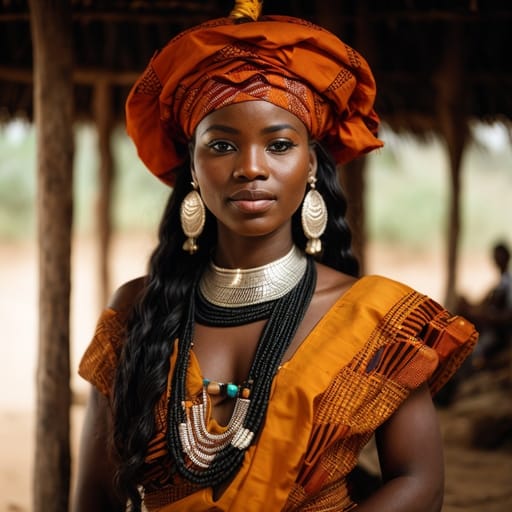
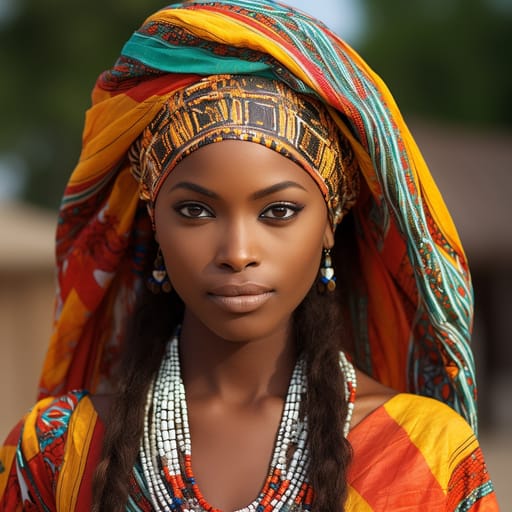
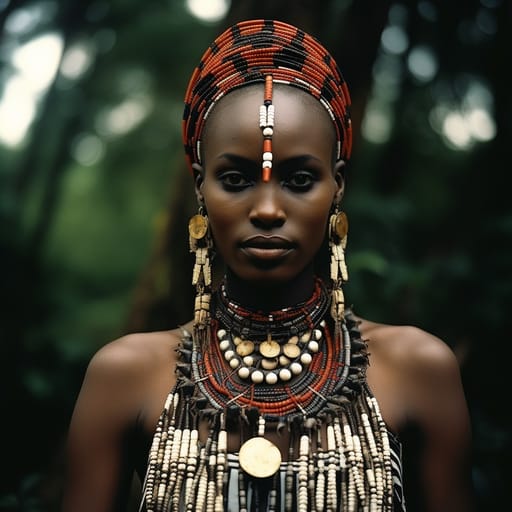
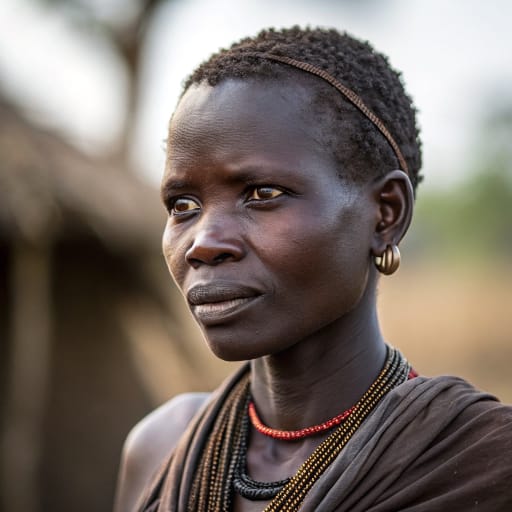
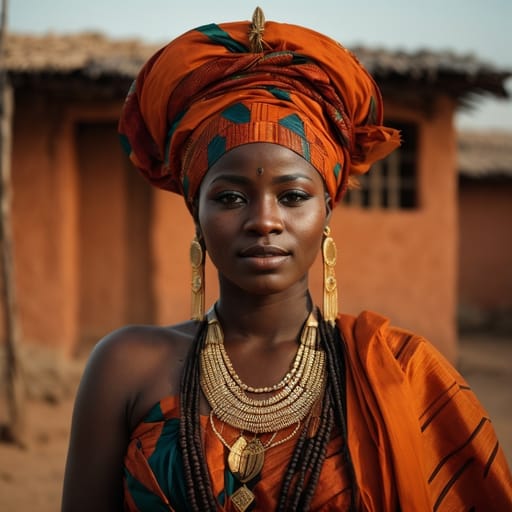
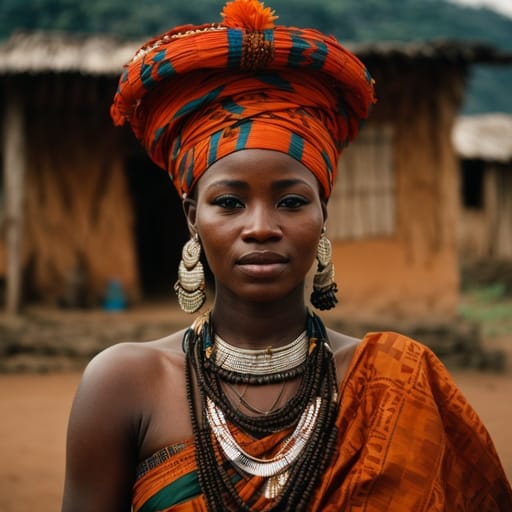
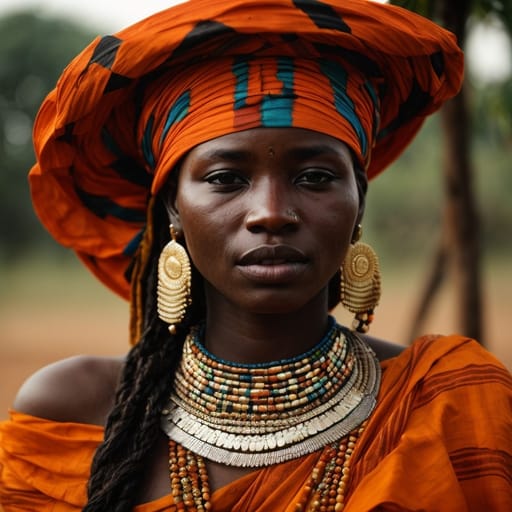
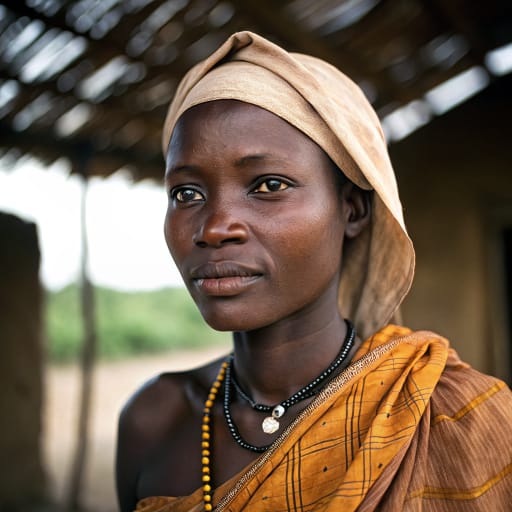
Typical Hemba Phenotypes
Reference for AI generation: hair, eyes, skin, facial structure, build
Hemba Body & Anatomy Reference
Bantu / Central African Niger-Congo phenotype: anatomy reference for AI nude generation
Hemba Boobs & Breasts
Bust reference for Hemba women: medium-to-large cup, full, projecting, which is typical of Bantu / Central African Niger-Congo ancestry. Areolas measure about 32-48mm across, with deep-brown pigmentation. Body type (mesomorph with strong gluteal-femoral fat deposition) shapes the bust as well, so Hemba tits are usually fuller projection than East African; comparable to West African norm. In AI imagery, keep the forward-set shape rather than drifting toward the smaller East African conical profile.
Hemba Ass & Hips
The Hemba ass is typically full, projected, wide-set glutes, which sets it apart from the slim narrow-hip Cushitic East African profile. Underneath, the pelvis shows broad iliac crests, gynoid pelvic pattern, part of the Bantu / Central African Niger-Congo skeletal pattern. For Hemba butt pics and AI renders, match that silhouette and the overall build (mesomorph with strong gluteal-femoral fat deposition).
Hemba Vagina & Pussy
Hemba pussy and vulvar anatomy presents deep-brown labial pigmentation, fuller labia minora, consistent with the Bantu / Central African Niger-Congo phenotype's pigmentation pattern. Hemba pubic hair is typically tightly-coiled coarse texture, dense distribution, in the inverted-triangle pattern. For anatomically accurate Hemba pussy renders the labial coloration should match the surrounding deep-brown skin tone with a continuous gradient, and the hair should keep its tightly-coiled coarse texture.
Hemba Dicks & Penis
Hemba dicks follow the Bantu / Central African Niger-Congo reference data: regional mean ~14cm erect; above-average girth; deep-brown shaft pigmentation. Shaft color should track the deep-brown skin tone with a smooth change toward the glans, and Hemba pubic hair keeps its tightly-coiled coarse texture.
Hemba Body, Curves & Build
Hemba body type and overall build presents as mesomorph with strong gluteal-femoral fat deposition, with mean adult female BMI 23-26: the characteristic Bantu / Central African Niger-Congo habitus. Hemba curves and proportions should keep the regional skeletal frame (height, shoulder-to-hip ratio, limb proportions) rather than a generic mesomorph default.
Hemba Skin Tone & Hair Texture
Hemba skin sits in the deep-brown (Fitzpatrick VI) band. Hair is typically tight 4A-4C coil, in keeping with the Bantu / Central African Niger-Congo phenotype. In nude renders the skin should stay one even tone from face to body, and body, pubic and head hair should match.
Explore phenotype categories
Structured taxonomy with peer-reviewed scales · 22 anatomical categories
Erotic Poses & Sex Positions
From the pose catalog: 219 named positions with reference skeletons
Frequently asked questions about Hemba people
Where is the Hemba homeland?
The Hemba homeland is East of the Lualaba River in southeastern Democratic Republic of the Congo, mainly Tanganyika Province (formerly northern Katanga), around Kongolo in Central Africa.
What language do Hemba people speak?
Hemba people primarily speak Hemba, or Kihemba (Niger-Congo, Bantu), closely related to Luba; Swahili and French also widely used.
What religion do Hemba people practice?
The predominant religion among Hemba people is Christianity alongside continuing ancestor veneration and lineage shrine practices.






Make your own Hemba images
Five a day, free, no credits to buy. The studio starts from this group's phenotype data, so you can set body type, pose and style and keep the traits accurate.
Start with Hemba