No portrait yet
Nzime Erotic
Rainforest of the Haut-Nyong department in Cameroon's East Region, around Lomié and Messamena, near the Dja Faunal Reserve
Koonzime (Niger-Congo, Bantu, Makaa-Njem group); French widely used
Mostly Christian, Catholic and Protestant, with traditional beliefs about ancestors and sorcery still influential
Makaa-Njem cluster of forest Bantu peoples, closely related to the Makaa, Njem, Byep, Kol and Mpiemo
About Nzime People
The Nzime are a Bantu-speaking farming people of Cameroon's East Region, living in the rainforest of the Haut-Nyong around Lomié and Messamena. They never formed a kingdom or a state. What makes them a people is the Koonzime language, a set of clans that trace descent through the male line, and a long tie to a stretch of forest that now borders the Dja Faunal Reserve, one of the largest protected rainforests in Africa. Their villages line the red laterite roads. That layout dates mostly to colonial rule, when officials moved scattered forest settlements onto routes they could patrol, count and tax.
Koonzime belongs to the Makaa-Njem branch of Bantu, and it is surrounded by close relatives: Makaa to the north, Njem farther south, and Byep, Kol and Mpiemo in the same family. In practice many Nzime move between Koonzime, a neighboring language or two, and French, which is the language of school, church and government.
Daily life depends on the farm and the forest. Households clear plots for cassava, plantains and groundnuts, grow cocoa for cash, and still hunt, trap and fish. Near the reserve, hunting for bushmeat now runs up against conservation rules, and logging concessions have reshaped large parts of the land. The Nzime also share this country with the Baka, forest hunter-gatherers whose camps and settlements sit alongside Nzime villages. The relationship is old and tangled. For generations Baka labor in Nzime fields was traded for food, goods and protection, on terms that mostly favored the farmers. Disputes have grown sharper as Baka families settle for good along the roads, send their children to school and press their own claims to land.
Christian missions reached the area during colonial rule, and most Nzime today are Catholic or Protestant. Going to church has not pushed out older ways of explaining the world. Ideas about ancestors, the power of the forest and the hidden work of sorcery still come up when people talk about illness, bad luck or a neighbor's sudden good fortune. Those ideas sit alongside Sunday services, and few people see a contradiction.
Related ethnic groups
Groups that share Nzime's homeland, region, language, or religious tradition. These are likely candidates for comparative phenotype reference.
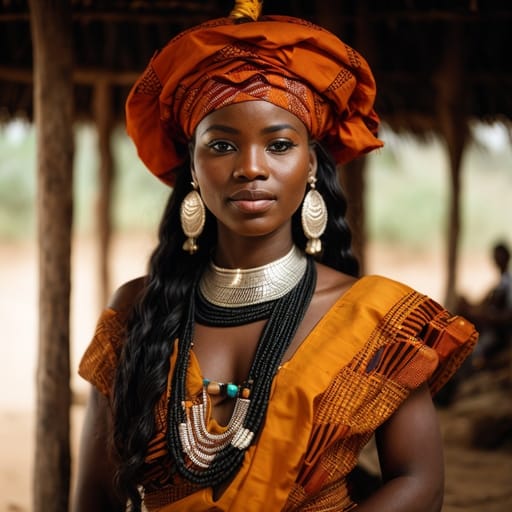
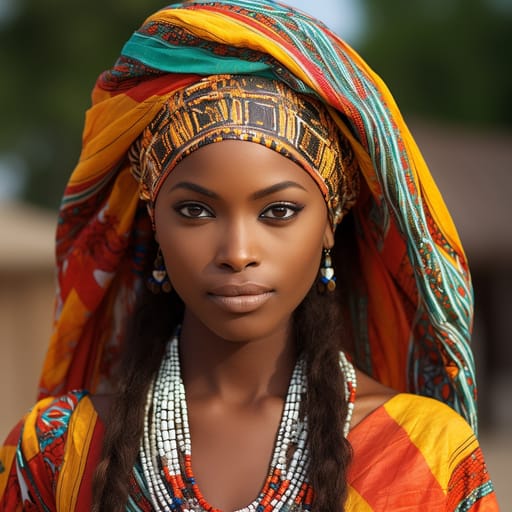
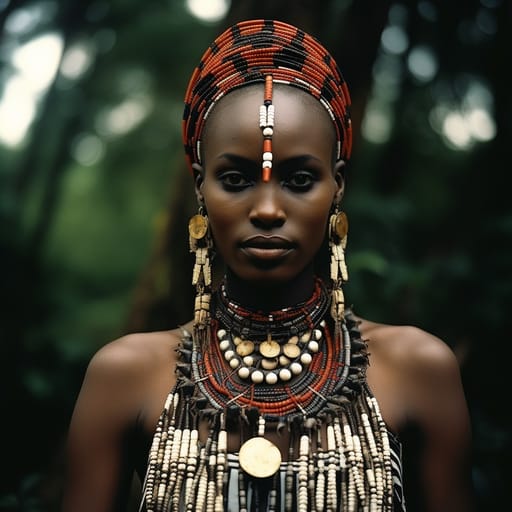
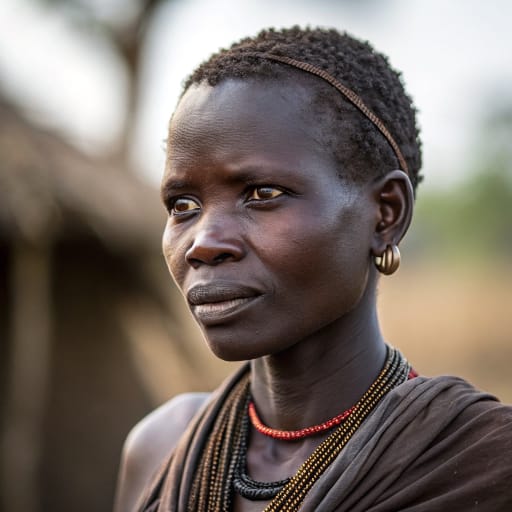
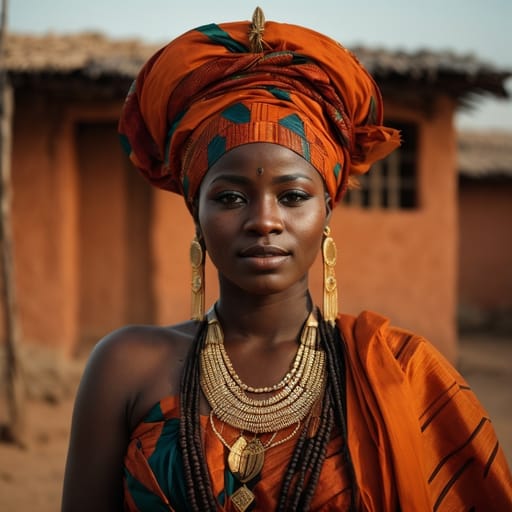
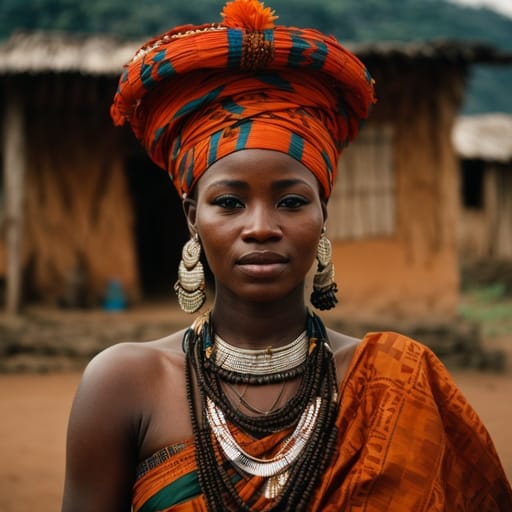
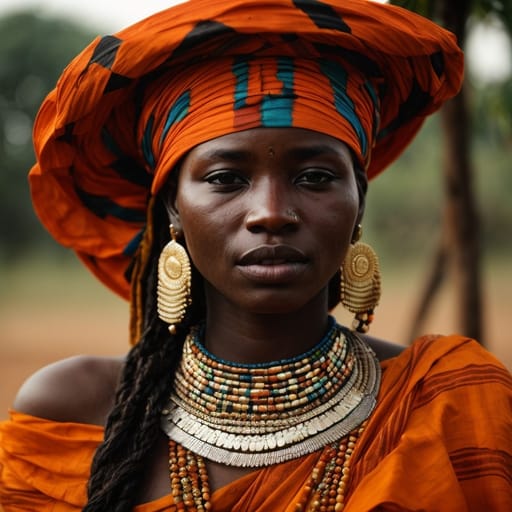
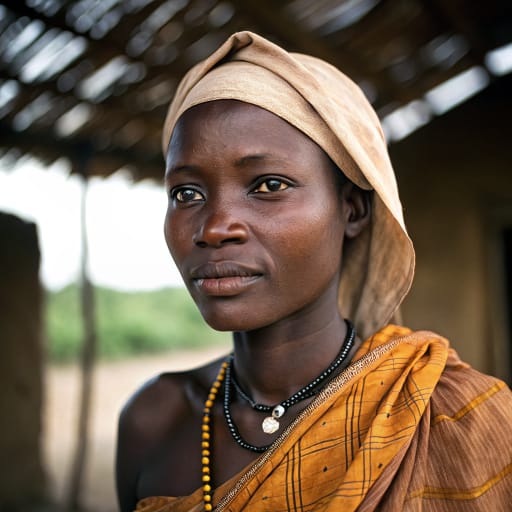
Typical Nzime Phenotypes
Reference for AI generation: hair, eyes, skin, facial structure, build
Nzime Body & Anatomy Reference
Anatomy by feature, Bantu / Central African Niger-Congo phenotype
Nzime Boobs & Breasts
The typical Nzime bust is medium-to-large cup, full, projecting, in line with the wider Bantu / Central African Niger-Congo pattern. Areolas usually fall in the 32-48mm range, with deep-brown areolar pigmentation against the deep-brown skin tone. Compared with the smaller East African conical profile, Nzime breasts sit forward and are generally fuller projection than East African; comparable to West African norm. A faithful AI render of Nzime tits keeps that shape and areola size.
Nzime Ass & Hips
Butt shape among Nzime women: full, projected, wide-set glutes, over broad iliac crests, gynoid pelvic pattern. This follows Bantu / Central African Niger-Congo ancestry and looks quite unlike the slim narrow-hip Cushitic East African profile. An accurate Nzime ass in adult AI imagery keeps both the silhouette and the overall build (mesomorph with strong gluteal-femoral fat deposition) instead of a generic average.
Nzime Vagina & Pussy
Vulvar anatomy among Nzime women: deep-brown labial pigmentation, fuller labia minora. Pubic hair tends to be tightly-coiled coarse texture, dense distribution, in the usual inverted-triangle pattern. Both follow Bantu / Central African Niger-Congo pigmentation, which is why Nzime pussy renders should not fall back on a pale, sparse Western template.
Nzime Dicks & Penis
The Nzime cock profile, from Bantu / Central African Niger-Congo anthropometric data: regional mean ~14cm erect; above-average girth; deep-brown shaft pigmentation. Pubic hair has a tightly-coiled coarse texture and forms the usual inverted-V pattern. Whether Nzime men are circumcised follows religious and cultural practice rather than phenotype.
Nzime Body, Curves & Build
Build and curves among Nzime women follow the Bantu / Central African Niger-Congo pattern: mesomorph with strong gluteal-femoral fat deposition, mean adult female BMI 23-26. Proportions matter as much as skin tone, so Nzime figures should keep their regional height and limb ratios.
Nzime Skin Tone & Hair Texture
The Nzime skin range is deep-brown (Fitzpatrick VI), and hair tends to be tight 4A-4C coil. That combination marks the Bantu / Central African Niger-Congo phenotype, and skin tone is the trait AI generators most often get wrong for Nzime women.
Explore phenotype categories
Structured taxonomy with peer-reviewed scales · 22 anatomical categories
Erotic Poses & Sex Positions
From the pose catalog: 219 named positions with reference skeletons
Frequently asked questions about Nzime people
Where is the Nzime homeland?
The Nzime homeland is Rainforest of the Haut-Nyong department in Cameroon's East Region, around Lomié and Messamena, near the Dja Faunal Reserve in Central Africa.
What language do Nzime people speak?
Nzime people primarily speak Koonzime (Niger-Congo, Bantu, Makaa-Njem group); French widely used.
What religion do Nzime people practice?
The predominant religion among Nzime people is Mostly Christian, Catholic and Protestant, with traditional beliefs about ancestors and sorcery still influential.






Make your own Nzime images
Five a day, free, no credits to buy. The studio starts from this group's phenotype data, so you can set body type, pose and style and keep the traits accurate.
Start with Nzime