Help us get this right
Does this portrait look right for Mbole?
Nobody has judged this one yet. You would be the first.
Mbole Erotic
Equatorial forest of Tshopo province, northeastern Democratic Republic of the Congo, around the Lomami River and toward the Lualaba, near Kisangani.
Mbole (Bantu, Niger-Congo; Mbole-Enya group), with Swahili, Lingala and French as wider languages.
Mainly Christian, alongside ancestral beliefs and the legacy of the Lilwa society.
Forest Bantu people of the upper Congo basin; linguistically related to the Lengola, Metoko and Enya.
About Mbole People
People who know the Mbole from outside their villages usually know them for a hanged man. The carved figures called ofika have slumped shoulders, dangling bent legs and hollowed, whitened faces. Each one stood for a person executed on the orders of Lilwa, the society that governed moral and legal life in Mbole communities. Collectors and museums prize them today. Their first audience was young initiates, who were shown the figures as a blunt lesson in what happens to those who break the rules.
The Mbole are a Bantu people of the equatorial forest in the northeastern Democratic Republic of the Congo. They live in Tshopo province, around the Lomami River and east toward the Lualaba, the name for the Congo above Kisangani. It is river and forest country. Most households still live from cassava and plantain fields, fishing and hunting, and Kisangani is the nearest city and market.
Their language, also called Mbole, sits in a small Bantu cluster with Lengola, Metoko and Enya. Enya is the language of the fishing people at the Boyoma Falls by Kisangani. Beyond the village, Swahili and Lingala handle trade and dealings with outsiders, and French handles the paperwork. Most Mbole are Christian now, yet older ideas about ancestors, sorcery and the authority of elders have outlasted conversion.
Lilwa was far more than a men's association. It took boys through initiation into adulthood, taught the obligations that bound kin and neighbors, and sat as a court for the gravest offenses, such as murder, sorcery or revealing the society's secrets. Its elders could order death by hanging. Afterward an ofika was carved, kept out of sight and brought out during initiation, so the condemned kept teaching long after death.
History pressed in from outside. In the late nineteenth century the Lomami country lay on the edge of the Swahili-Arab frontier of ivory trading and slave raiding. It then passed under the Congo Free State and Belgian colonial rule, which took away Lilwa's power to execute. Many ofika left the forest in those decades. The Mbole remain a farming and fishing people on their own ground, while the figures carved to warn their sons stand in museum cases far from the setting that gave them meaning.
Related ethnic groups
Groups that share Mbole's homeland, region, language, or religious tradition. These are likely candidates for comparative phenotype reference.
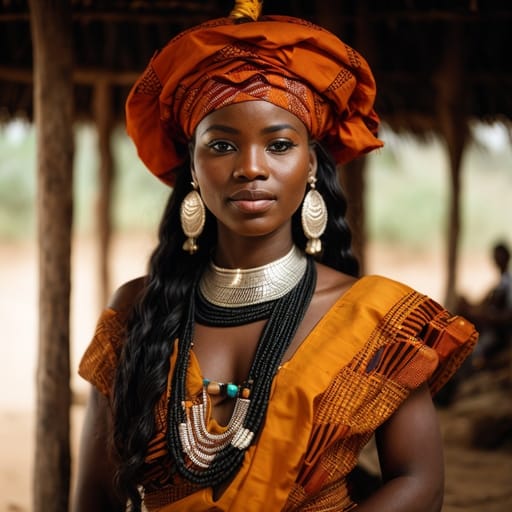
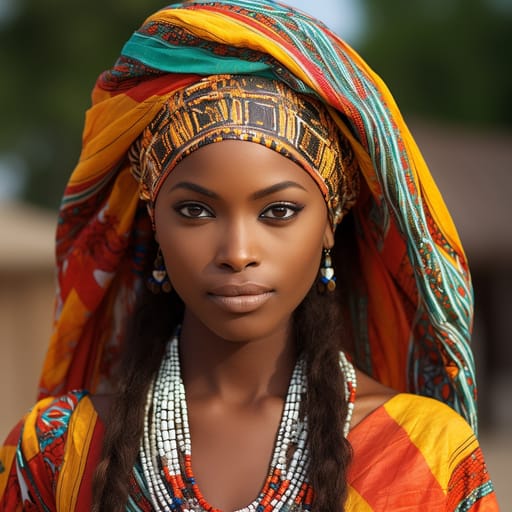
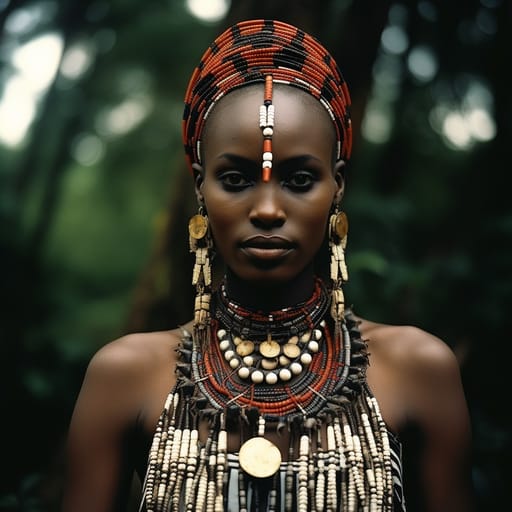
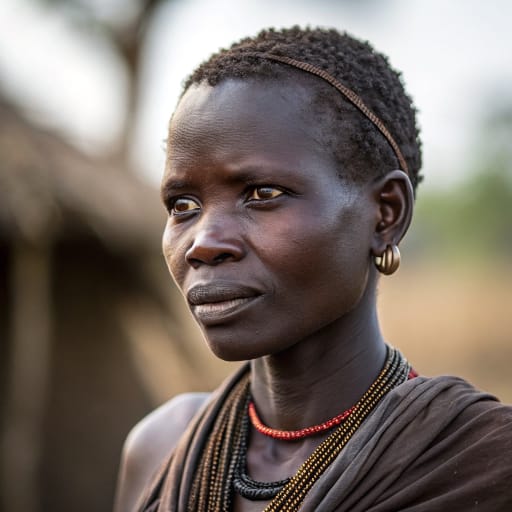
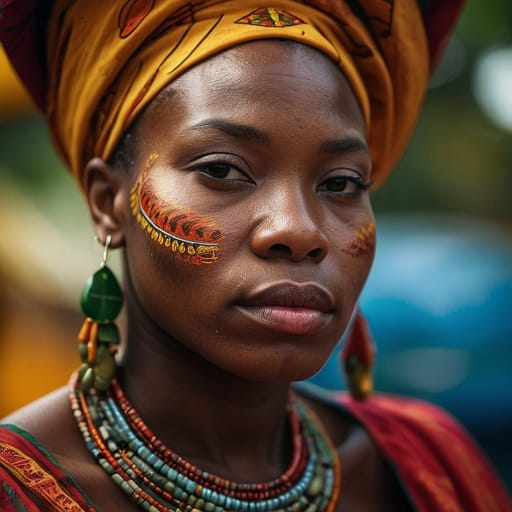
Typical Mbole Phenotypes
Reference for AI generation: hair, eyes, skin, facial structure, build
Mbole Body & Anatomy Reference
Per-feature anatomical profile for AI nude generation: Bantu / Central African Niger-Congo phenotype
Mbole Boobs & Breasts
Bust reference for Mbole women: medium-to-large cup, full, projecting, which is typical of Bantu / Central African Niger-Congo ancestry. Areolas measure about 32-48mm across, with deep-brown pigmentation. Body type (mesomorph with strong gluteal-femoral fat deposition) shapes the bust as well, so Mbole tits are usually fuller projection than East African; comparable to West African norm. In AI imagery, keep the forward-set shape rather than drifting toward the smaller East African conical profile.
Mbole Ass & Hips
The Mbole ass is typically full, projected, wide-set glutes, which sets it apart from the slim narrow-hip Cushitic East African profile. Underneath, the pelvis shows broad iliac crests, gynoid pelvic pattern, part of the Bantu / Central African Niger-Congo skeletal pattern. For Mbole butt pics and AI renders, match that silhouette and the overall build (mesomorph with strong gluteal-femoral fat deposition).
Mbole Vagina & Pussy
Mbole pussy and vulvar anatomy presents deep-brown labial pigmentation, fuller labia minora, consistent with the Bantu / Central African Niger-Congo phenotype's pigmentation pattern. Mbole pubic hair is typically tightly-coiled coarse texture, dense distribution, in the inverted-triangle pattern. For anatomically accurate Mbole pussy renders the labial coloration should match the surrounding deep-brown skin tone with a continuous gradient, and the hair should keep its tightly-coiled coarse texture.
Mbole Dicks & Penis
Mbole dicks follow the Bantu / Central African Niger-Congo reference data: regional mean ~14cm erect; above-average girth; deep-brown shaft pigmentation. Shaft color should track the deep-brown skin tone with a smooth change toward the glans, and Mbole pubic hair keeps its tightly-coiled coarse texture.
Mbole Body, Curves & Build
Mbole body type and overall build presents as mesomorph with strong gluteal-femoral fat deposition, with mean adult female BMI 23-26: the characteristic Bantu / Central African Niger-Congo habitus. Mbole curves and proportions should keep the regional skeletal frame (height, shoulder-to-hip ratio, limb proportions) rather than a generic mesomorph default.
Mbole Skin Tone & Hair Texture
Mbole skin sits in the deep-brown (Fitzpatrick VI) band. Hair is typically tight 4A-4C coil, in keeping with the Bantu / Central African Niger-Congo phenotype. In nude renders the skin should stay one even tone from face to body, and body, pubic and head hair should match.
Explore phenotype categories
Structured taxonomy with peer-reviewed scales · 22 anatomical categories
Erotic Poses & Sex Positions
From the pose catalog: 219 named positions with reference skeletons
Frequently asked questions about Mbole people
Where is the Mbole homeland?
The Mbole homeland is Equatorial forest of Tshopo province, northeastern Democratic Republic of the Congo, around the Lomami River and toward the Lualaba, near Kisangani. in Central Africa.
What language do Mbole people speak?
Mbole people primarily speak Mbole (Bantu, Niger-Congo; Mbole-Enya group), with Swahili, Lingala and French as wider languages..
What religion do Mbole people practice?
The predominant religion among Mbole people is Mainly Christian, alongside ancestral beliefs and the legacy of the Lilwa society..






Make your own Mbole images
Five a day, free, no credits to buy. The studio starts from this group's phenotype data, so you can set body type, pose and style and keep the traits accurate.
Start with Mbole