Help us get this right
Does this portrait look right for Mararit?
Nobody has judged this one yet. You would be the first.
Mararit Erotic
Eastern Chad, mainly the Wadi Fira region around Am Zoer, with a smaller population across the border in Darfur, Sudan.
Mararit, autonym Ibiri (Taman, Eastern Sudanic, Nilo-Saharan); Chadian Arabic as the common second language.
Sunni Islam.
Part of the Taman-speaking cluster with the Tama, Sungor (Assangori) and Erenga. Two varieties: Ibiri, spoken by the majority, and Abu Sharib (Abou Charib), sometimes counted as a separate people.
About Mararit People
The Mararit are a small farming people of the Chad and Sudan borderland, and the clearest thing that marks them off is their speech. They call themselves Ibiri, and their language, Mararit, is one of a handful of Taman languages spoken in the dry country east of Abéché. The Tama, Sungor and Erenga next door speak its sister tongues: close enough that the family resemblance is plain, different enough that everyone knows where one people stops and the next begins. Most linguists place Taman in the Eastern Sudanic branch of Nilo-Saharan, which makes Mararit a far cousin of the Nubian languages on the Nile and no relation at all to the Arabic that surrounds it. In practice nearly everyone is bilingual. Chadian Arabic does the work at market, on the road and with officials. Mararit stays in the household and the village, which is how a language with only tens of thousands of speakers has held on.
Their home ground is in Chad's Wadi Fira region, around Am Zoer, with a smaller population across the line in Darfur. The Abu Sharib, written Abou Charib on the Chadian side, speak a distinct variety and are counted by some as a Mararit branch and by others as a people of their own. Life runs on the Sahelian calendar: a short rainy season for millet and sorghum, a long dry one, and cattle, goats and sheep to spread the risk when the rains fail. The Mararit are Sunni Muslims, like nearly all their neighbors, and Islam sets the rhythm of the day and the year, from prayer and Ramadan to the way marriages and namings are conducted.
History here has mostly been made by bigger powers. For centuries this was the eastern march of the Wadai sultanate, facing the rival sultanate of Darfur, and the small peoples in between answered to whoever held the upper hand. France took Wadai in 1909, and the border later drawn between French Chad and Anglo-Egyptian Sudan ran through the Taman-speaking country, leaving relatives on opposite sides of an international line. That line has mattered a great deal since 2003. The war in Darfur pushed refugees west into this region, armed groups crossed in both directions, and the fighting that broke out in Sudan in 2023 sent another wave. The Mararit are rarely named in the news reports, but they live in the place those reports describe, farming land that has had to absorb a great many people with very little help.
Related ethnic groups
Groups that share Mararit's homeland, region, language, or religious tradition. These are likely candidates for comparative phenotype reference.
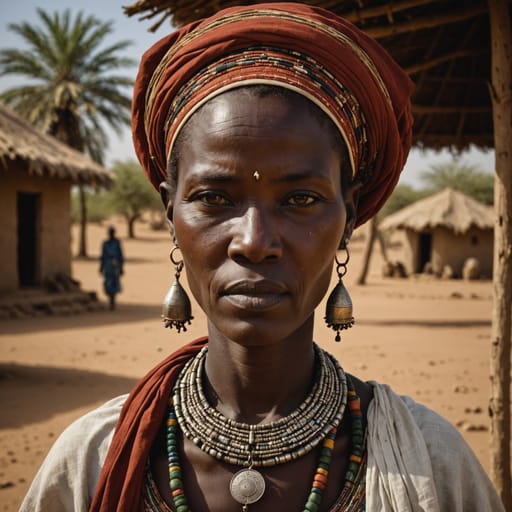
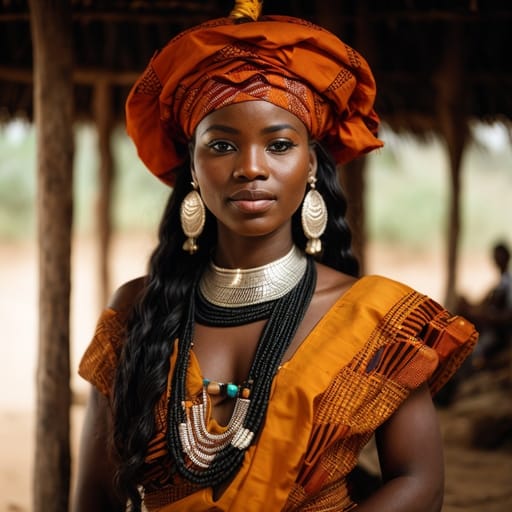
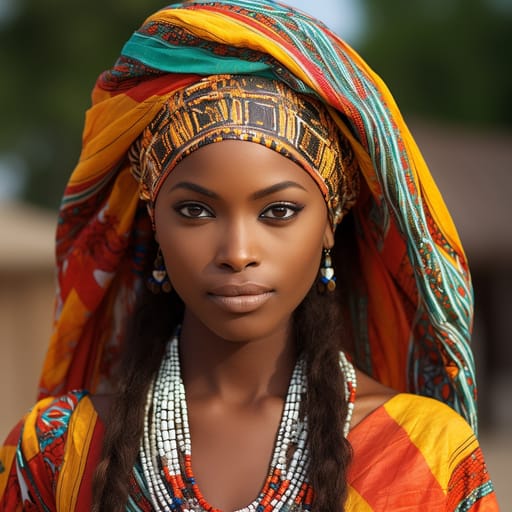
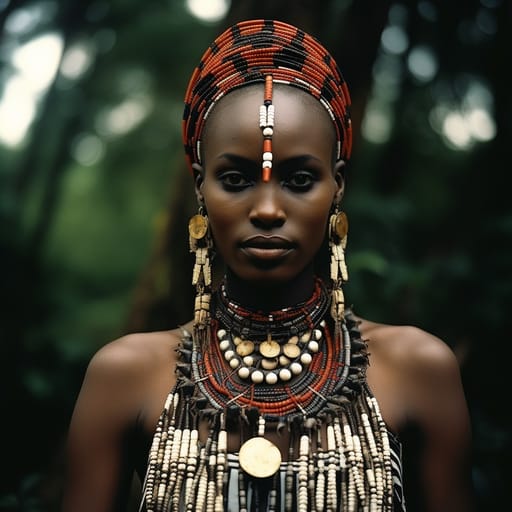
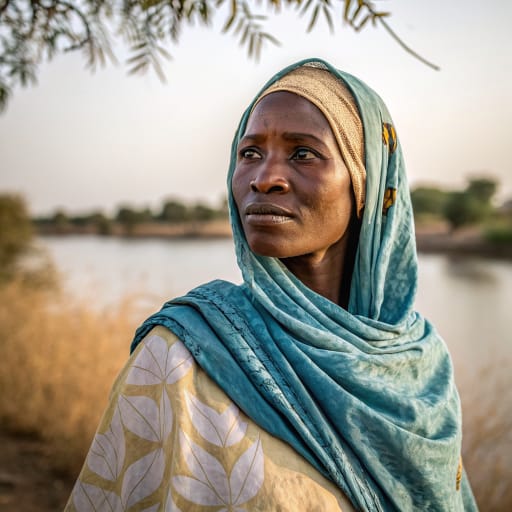
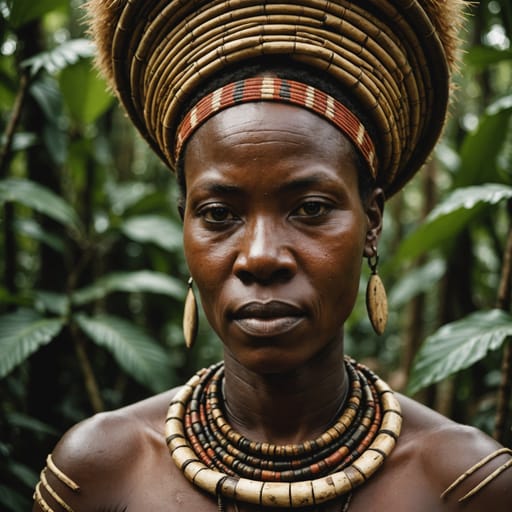
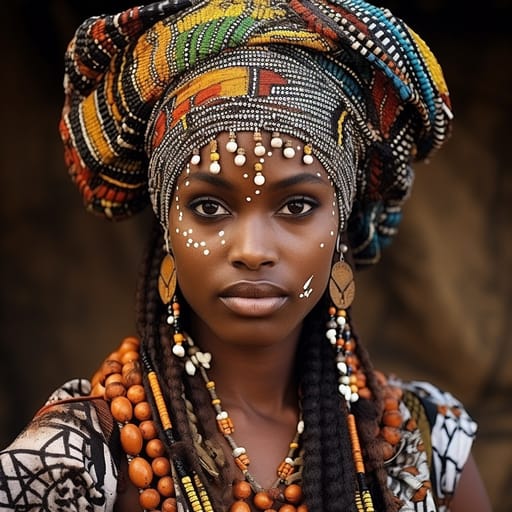
Typical Mararit Phenotypes
Reference for AI generation: hair, eyes, skin, facial structure, build
Mararit Body & Anatomy Reference
Anatomy by feature, Bantu / Central African Niger-Congo phenotype
Mararit Boobs & Breasts
Mararit boobs follow the Bantu / Central African Niger-Congo profile: medium-to-large cup, full, projecting. Areolar diameter is usually 32-48mm, and the coloring is deep-brown areolar pigmentation against the deep-brown skin tone. Breast shape tracks body composition (mesomorph with strong gluteal-femoral fat deposition, mean adult female BMI 23-26), so Mararit breasts tend to be fuller projection than East African; comparable to West African norm. Expect a forward-set shape, not the smaller East African conical profile.
Mararit Ass & Hips
Mararit ass and hip morphology presents as full, projected, wide-set glutes, distinctly different from the slim narrow-hip Cushitic East African profile. The Mararit pelvic profile shows broad iliac crests, gynoid pelvic pattern, anchored in the Bantu / Central African Niger-Congo skeletal pattern. Mararit butt shots in adult AI imagery should render the full, projected, wide-set glutes silhouette with the overall build (mesomorph with strong gluteal-femoral fat deposition) and the fat distribution typical of the Bantu / Central African Niger-Congo phenotype.
Mararit Vagina & Pussy
Mararit pussy anatomy typically shows deep-brown labial pigmentation, fuller labia minora. Pubic hair is usually tightly-coiled coarse texture, dense distribution. In AI-generated Mararit nudes, labial color should blend into the deep-brown skin with a gradual transition, and the hair should keep its tightly-coiled coarse texture.
Mararit Dicks & Penis
Penis reference for Mararit men: regional mean ~14cm erect, above-average girth. Coloring: deep-brown shaft pigmentation. An accurate Mararit cock in AI imagery matches the surrounding deep-brown skin rather than a generic porn default. Circumcision depends on religion and custom, not ancestry.
Mararit Body, Curves & Build
The Mararit figure is generally mesomorph with strong gluteal-femoral fat deposition, with mean adult female BMI 23-26, characteristic of Bantu / Central African Niger-Congo ancestry. AI image tools tend to flatten regional body types into a few stock shapes; here the Mararit build is kept as its own reference.
Mararit Skin Tone & Hair Texture
Skin: deep-brown (Fitzpatrick VI). Hair: tight 4A-4C coil. Both are typical of Bantu / Central African Niger-Congo ancestry. The most common mistake in AI nudes of Mararit women is a body rendered lighter than the face.
Explore phenotype categories
Structured taxonomy with peer-reviewed scales · 22 anatomical categories
Erotic Poses & Sex Positions
From the pose catalog: 219 named positions with reference skeletons
Frequently asked questions about Mararit people
Where is the Mararit homeland?
The Mararit homeland is Eastern Chad, mainly the Wadi Fira region around Am Zoer, with a smaller population across the border in Darfur, Sudan. in Central Africa.
What language do Mararit people speak?
Mararit people primarily speak Mararit, autonym Ibiri (Taman, Eastern Sudanic, Nilo-Saharan); Chadian Arabic as the common second language..
What religion do Mararit people practice?
The predominant religion among Mararit people is Sunni Islam..






Make your own Mararit images
Five a day, free, no credits to buy. The studio starts from this group's phenotype data, so you can set body type, pose and style and keep the traits accurate.
Start with Mararit