Help us get this right
Does this portrait look right for Bongo?
Nobody has judged this one yet. You would be the first.
Bongo Erotic
Rainforest of central and southern Gabon, especially Ngounié and Ogooué-Lolo provinces
Bantu languages of their farming neighbors, varying by community, such as Tsogo, Nzebi and Punu (Niger-Congo, Bantu)
Indigenous religion of ancestors and forest spirits, with iboga initiation tied to Bwiti; some Christian influence
One of Gabon's forest forager peoples, grouped with the Baka and Bakoya among Central Africa's so-called Pygmies; each community speaks the language of its Bantu neighbors
About Bongo People
Bwiti, the initiatory religion found across much of Gabon, has its own origin story, and the Bongo stand at the start of it. Tradition credits these forest people, also called Babongo, with first discovering iboga, the bitter root at the center of Bwiti ritual, and passing that knowledge to the farming peoples around them. That reputation defines them in Gabonese eyes: they are the ones who knew the forest first. Outsiders usually file them under Central Africa's so-called Pygmies, a label many find loaded, but the Bongo are a people in their own right, historically hunters and gatherers of the equatorial interior.
Their home is the rainforest of central and southern Gabon, especially Ngounié and Ogooué-Lolo provinces. Bongo communities speak the Bantu languages of the farmers they live beside, so one settlement talks in a Tsogo variety and another in Nzebi or Punu. That borrowing mirrors a long and uneven partnership. The Bongo supplied game, honey, forest medicine and labor in exchange for iron, cultivated food and later trade goods. They were usually treated as the junior party, even though their neighbors relied on what they knew.
Religion is where that reliance shows most. Bwiti congregations elsewhere in Gabon, among the Mitsogo, Fang and others, generally honor the forest peoples as its source, and people still seek out Bongo healers for their command of plants and spirits. Among the Bongo themselves, initiation with iboga is an ordeal of music, dance and visions in which the initiate is said to meet the ancestors. Ancestors and forest spirits are the main presences in Bongo belief, and ritual is how the living stay on good terms with both.
The twentieth century drew the Bongo out of the deep forest. French colonial administrators, and then the independent Gabonese state, pushed scattered camps to regroup in roadside villages within reach of schools, clinics and tax collectors. Most Bongo now live in permanent settlements. They keep gardens, work for logging companies or neighboring farmers, and walk into the forest to hunt and gather rather than living inside it. Logging concessions and protected areas have both changed what that walk yields. Missionary Christianity has arrived as well, usually alongside older practice rather than in place of it.
What endures is the reputation. As Bwiti draws urban Gabonese and foreign visitors, the Bongo remain the reference point for where the root came from. They are also among the most marginalized citizens of the country whose best-known ritual they are credited with starting.
Related ethnic groups
Groups that share Bongo's homeland, region, language, or religious tradition. These are likely candidates for comparative phenotype reference.
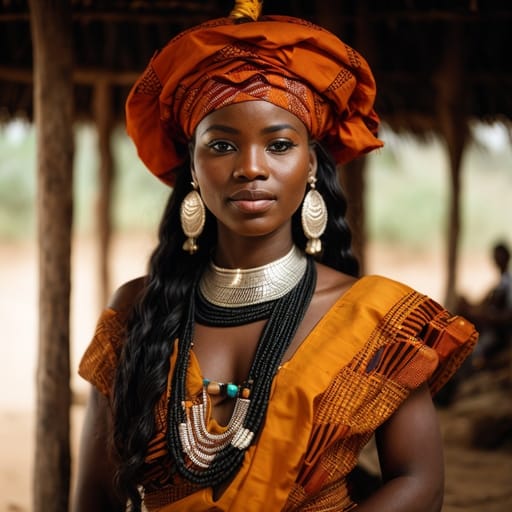
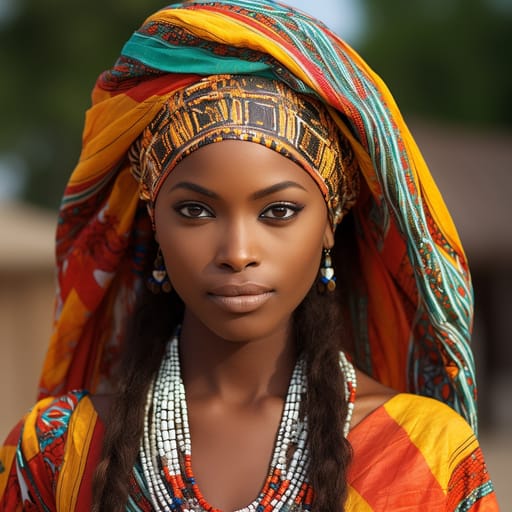
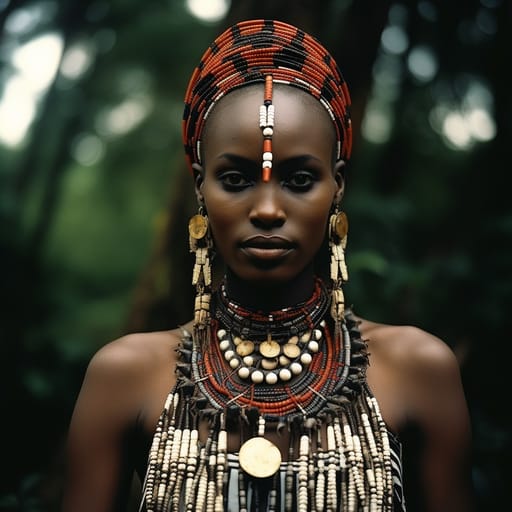
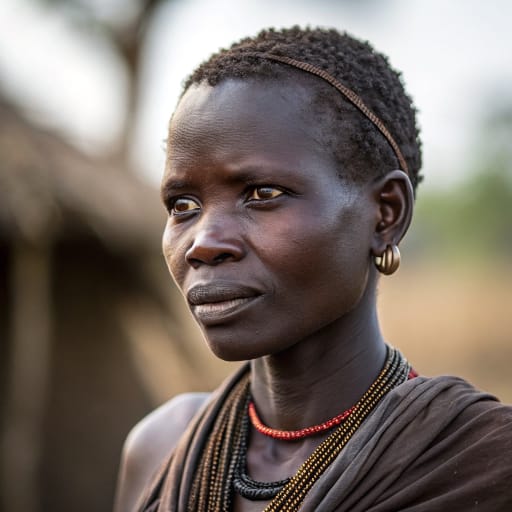
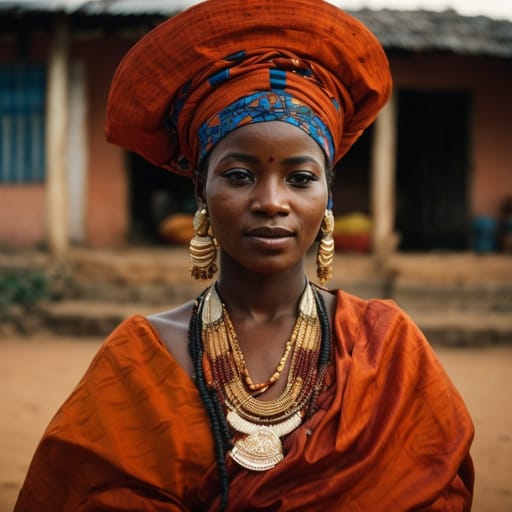
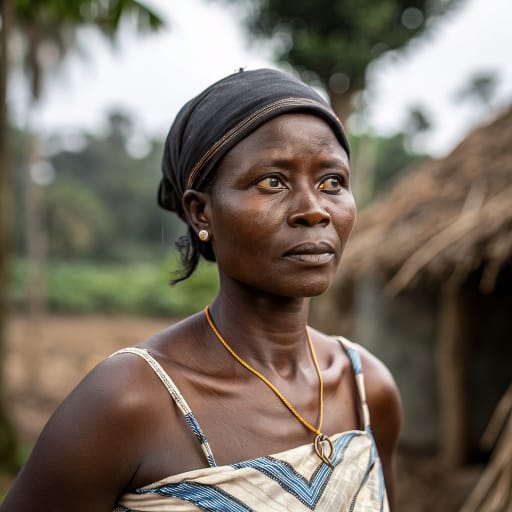
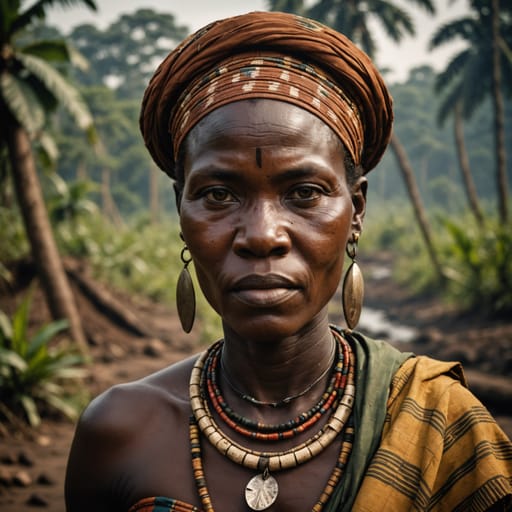
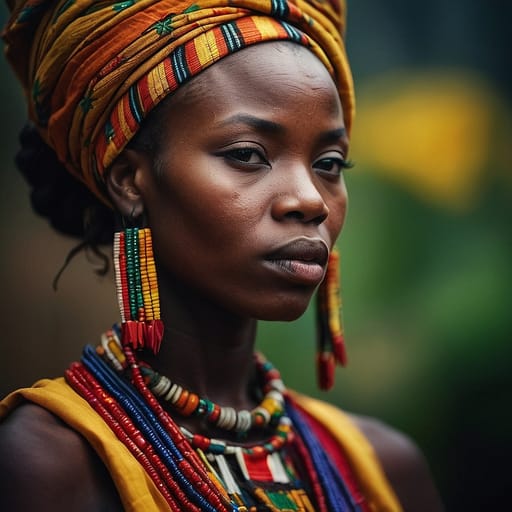
Typical Bongo Phenotypes
Reference for AI generation: hair, eyes, skin, facial structure, build
Bongo Body & Anatomy Reference
Bantu / Central African Niger-Congo phenotype: anatomy reference for AI nude generation
Bongo Boobs & Breasts
The typical Bongo bust is medium-to-large cup, full, projecting, in line with the wider Bantu / Central African Niger-Congo pattern. Areolas usually fall in the 32-48mm range, with deep-brown areolar pigmentation against the deep-brown skin tone. Compared with the smaller East African conical profile, Bongo breasts sit forward and are generally fuller projection than East African; comparable to West African norm. A faithful AI render of Bongo tits keeps that shape and areola size.
Bongo Ass & Hips
Butt shape among Bongo women: full, projected, wide-set glutes, over broad iliac crests, gynoid pelvic pattern. This follows Bantu / Central African Niger-Congo ancestry and looks quite unlike the slim narrow-hip Cushitic East African profile. An accurate Bongo ass in adult AI imagery keeps both the silhouette and the overall build (mesomorph with strong gluteal-femoral fat deposition) instead of a generic average.
Bongo Vagina & Pussy
Vulvar anatomy among Bongo women: deep-brown labial pigmentation, fuller labia minora. Pubic hair tends to be tightly-coiled coarse texture, dense distribution, in the usual inverted-triangle pattern. Both follow Bantu / Central African Niger-Congo pigmentation, which is why Bongo pussy renders should not fall back on a pale, sparse Western template.
Bongo Dicks & Penis
The Bongo cock profile, from Bantu / Central African Niger-Congo anthropometric data: regional mean ~14cm erect; above-average girth; deep-brown shaft pigmentation. Pubic hair has a tightly-coiled coarse texture and forms the usual inverted-V pattern. Whether Bongo men are circumcised follows religious and cultural practice rather than phenotype.
Bongo Body, Curves & Build
Build and curves among Bongo women follow the Bantu / Central African Niger-Congo pattern: mesomorph with strong gluteal-femoral fat deposition, mean adult female BMI 23-26. Proportions matter as much as skin tone, so Bongo figures should keep their regional height and limb ratios.
Bongo Skin Tone & Hair Texture
The Bongo skin range is deep-brown (Fitzpatrick VI), and hair tends to be tight 4A-4C coil. That combination marks the Bantu / Central African Niger-Congo phenotype, and skin tone is the trait AI generators most often get wrong for Bongo women.
Explore phenotype categories
Structured taxonomy with peer-reviewed scales · 22 anatomical categories
Erotic Poses & Sex Positions
From the pose catalog: 219 named positions with reference skeletons
Frequently asked questions about Bongo people
Where is the Bongo homeland?
The Bongo homeland is Rainforest of central and southern Gabon, especially Ngounié and Ogooué-Lolo provinces in Central Africa.
What language do Bongo people speak?
Bongo people primarily speak Bantu languages of their farming neighbors, varying by community, such as Tsogo, Nzebi and Punu (Niger-Congo, Bantu).
What religion do Bongo people practice?
The predominant religion among Bongo people is Indigenous religion of ancestors and forest spirits, with iboga initiation tied to Bwiti; some Christian influence.






Make your own Bongo images
Five a day, free, no credits to buy. The studio starts from this group's phenotype data, so you can set body type, pose and style and keep the traits accurate.
Start with Bongo