No portrait yet
Mbama Erotic
Haut-Ogooué province in southeastern Gabon, especially the country around Franceville, and neighboring areas of the Republic of the Congo.
Mbama, also called Lembaama or Obamba (Bantu, Niger-Congo; Mbete group, Guthrie B.62), with French widely spoken
Mostly Christian, alongside ancestral practice and initiation societies such as Ndjobi.
Part of the Mbete (Guthrie B.60) cluster of Bantu peoples, closely related to the Mbede (Mbete) and Ndumu of the Gabon and Congo borderlands.
About Mbama People
Ask about the Mbama in Franceville and you will probably hear another name first: Obamba, the form used in everyday Gabonese French and on official forms. Under either name, they are a Bantu-speaking people of the upper Ogooué basin. They live in Haut-Ogooué province in southeastern Gabon and across the nearby border in the Republic of the Congo. Their country is a patchwork of forest and open grassland on high plateaus, cut by rivers such as the Mpassa. It is a crossroads where several small peoples share the same towns, markets and roads, and the Mbama keep their identity mostly through language, kinship and ritual.
Their language, Lembaama, belongs to the Mbete cluster of Bantu languages, which linguists label Guthrie group B.60. Its closest relatives are spoken by immediate neighbors such as the Mbede and the Ndumu. The Teke to the south and east speak a language from a different branch, even though the two peoples live side by side. French is the language of school, church and government, and most Mbama move between the two languages without much thought.
Outside pressure came early. Pierre Savorgnan de Brazza founded Franceville in 1880 as a French post meant to link the Ogooué to the Congo River system, and the colonial trade, missions and labor demands that followed reached deep into the surrounding villages. In the twentieth century the province became a mining zone, with manganese at Moanda and uranium at Mounana. Haut-Ogooué later took on national weight as the home province of Omar Bongo and his son Ali, who between them ruled Gabon from 1967 to 2023.
Most Mbama today are Christian, and church life is part of the ordinary week, but it has not replaced older duties to the ancestors. The best known of the region's initiation societies is Ndjobi, a men's association rooted in the Haut-Ogooué borderlands that became tangled up with national politics during the Bongo years. Outsiders are more likely to meet the Mbama name through art. Reliquary guardian figures covered in brass and copper, made to sit on top of containers holding the bones of honored ancestors, appear in Western museum catalogs under labels such as Kota-Obamba. The name has traveled far from the plateaus where those figures once stood guard.
Related ethnic groups
Groups that share Mbama's homeland, region, language, or religious tradition. These are likely candidates for comparative phenotype reference.
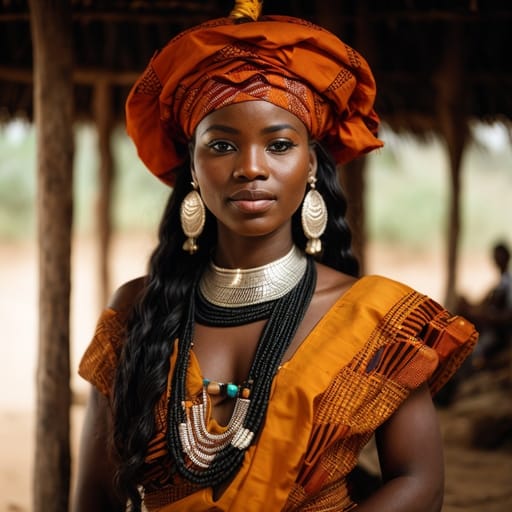
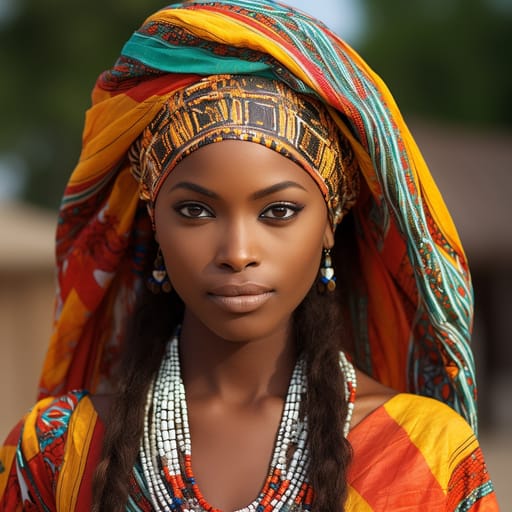
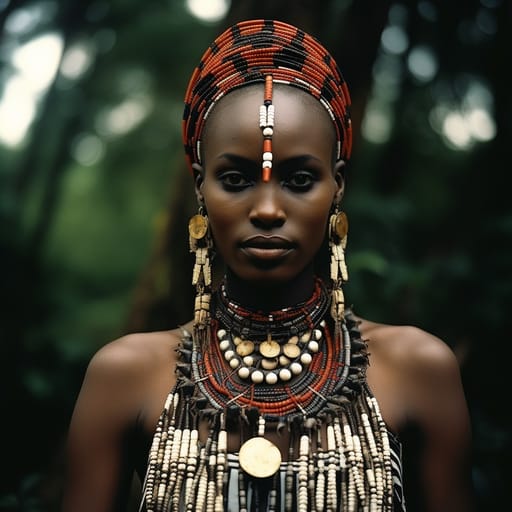
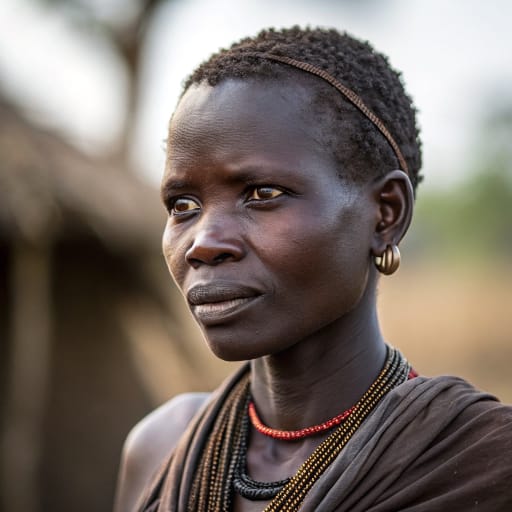
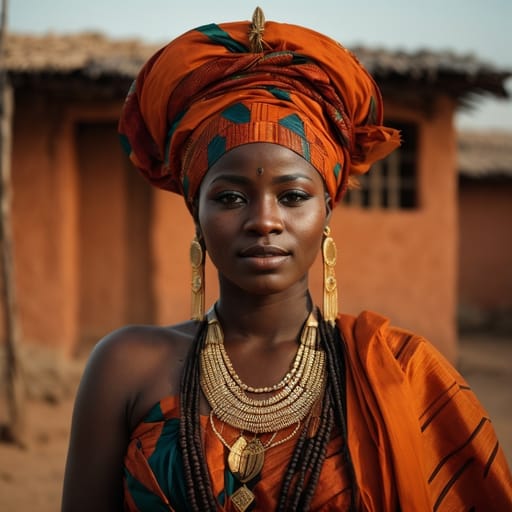
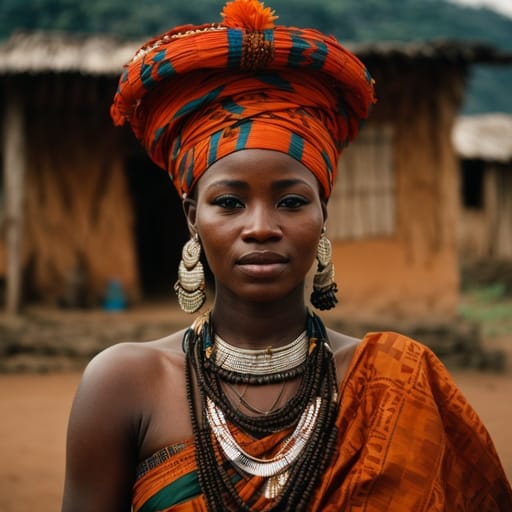
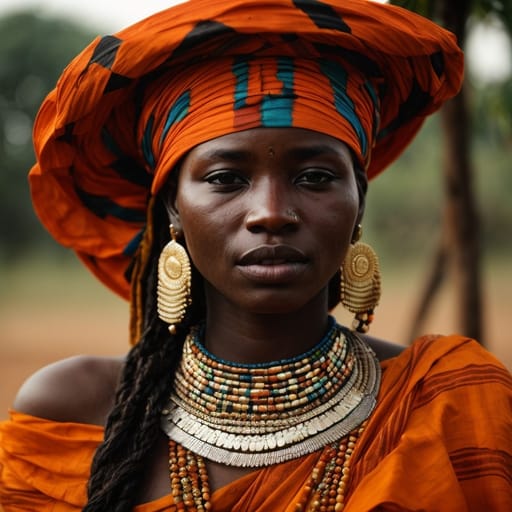
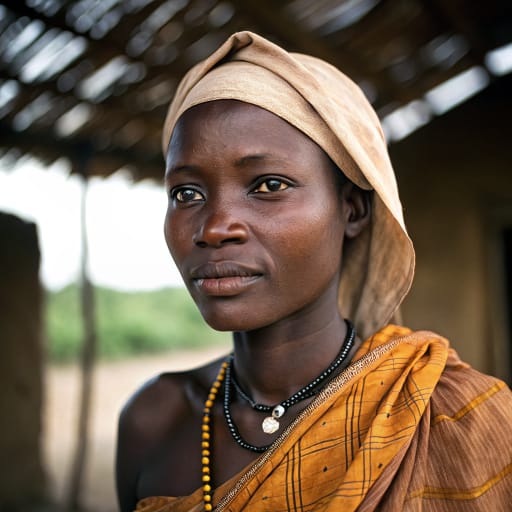
Typical Mbama Phenotypes
Reference for AI generation: hair, eyes, skin, facial structure, build
Mbama Body & Anatomy Reference
Anatomy by feature, Bantu / Central African Niger-Congo phenotype
Mbama Boobs & Breasts
Mbama tits and boobs run medium-to-large cup, full, projecting, the classic Bantu / Central African Niger-Congo bust profile. Mbama nipples and areolas show deep-brown areolar pigmentation against the deep-brown skin tone, with areolar diameter typically in the 32-48mm range and forward-set positioning rather than the smaller East African conical profile. Mbama breasts trend fuller projection than East African; comparable to West African norm, a function of the mesomorph with strong gluteal-femoral fat deposition body habitus and the mean adult female BMI 23-26. For anatomically accurate AI-generated Mbama nudes the render preserves the medium-to-large cup, full, projecting shape, 32-48mm areolas with deep-brown pigmentation, and the torso proportions of the Bantu / Central African Niger-Congo phenotype.
Mbama Ass & Hips
Mbama hips and butt usually read as full, projected, wide-set glutes. The skeletal base is broad iliac crests, gynoid pelvic pattern, the Bantu / Central African Niger-Congo pattern. Set against the slim narrow-hip Cushitic East African profile, the difference is easy to see, and the hip-to-waist ratio is often what identifies Mbama women in photos.
Mbama Vagina & Pussy
Expect deep-brown labial pigmentation, fuller labia minora on Mbama women, in keeping with Bantu / Central African Niger-Congo ancestry. The pubic hair is tightly-coiled coarse texture, dense distribution. Coloring should run evenly from the deep-brown skin of the thighs to the labia, and Mbama nude imagery should keep the hair's tightly-coiled coarse texture.
Mbama Dicks & Penis
Mbama dick and penile anatomy in adult AI generation should anchor on the regional reference data: regional mean ~14cm erect, above-average girth, and deep-brown shaft pigmentation. The Mbama cock profile reflects the Bantu / Central African Niger-Congo population's anthropometric measurements. The shaft pigmentation should track the surrounding deep-brown skin tone, and the pubic hair should keep its tightly-coiled coarse texture in the typical inverted-V escutcheon.
Mbama Body, Curves & Build
Mbama body type: mesomorph with strong gluteal-femoral fat deposition, with mean adult female BMI 23-26. This is the typical Bantu / Central African Niger-Congo build. Height range, shoulder-to-hip ratio and fat distribution all follow from it, which is what an accurate Mbama nude body should show.
Mbama Skin Tone & Hair Texture
Mbama skin tone falls in the deep-brown (Fitzpatrick VI) band, the surface signal most often miscalibrated by generic AI nude generators. Mbama hair texture is typically tight 4A-4C coil, characteristic of the Bantu / Central African Niger-Congo phenotype. In Mbama nude renders the skin should hold that band consistently across the body.
Explore phenotype categories
Structured taxonomy with peer-reviewed scales · 22 anatomical categories
Erotic Poses & Sex Positions
From the pose catalog: 219 named positions with reference skeletons
Frequently asked questions about Mbama people
Where is the Mbama homeland?
The Mbama homeland is Haut-Ogooué province in southeastern Gabon, especially the country around Franceville, and neighboring areas of the Republic of the Congo. in Central Africa.
What language do Mbama people speak?
Mbama people primarily speak Mbama, also called Lembaama or Obamba (Bantu, Niger-Congo; Mbete group, Guthrie B.62), with French widely spoken.
What religion do Mbama people practice?
The predominant religion among Mbama people is Mostly Christian, alongside ancestral practice and initiation societies such as Ndjobi..






Make your own Mbama images
Five a day, free, no credits to buy. The studio starts from this group's phenotype data, so you can set body type, pose and style and keep the traits accurate.
Start with Mbama