No portrait yet
Nzakara Erotic
Southeastern Central African Republic, in Mbomou prefecture around Bangassou and Rafaï, along the Mbomou River border with the Democratic Republic of the Congo
Nzakara (Zande group, Ubangian, Niger-Congo); Sango and French also widely used
Mostly Christian, largely Catholic and Protestant, alongside older beliefs about sorcery, divination and misfortune
Close relatives of the Zande; historically ruled by the Bandia clan, whose states included the sultanates of Bangassou and Rafaï
About Nzakara People
The Nzakara are a people of the Mbomou, the river that runs along the southeastern edge of the Central African Republic. Their villages sit in the savanna and the strips of riverside forest around Bangassou and Rafaï. What holds them together as a group is a shared language, a long memory of kings and a history lived where trade routes and conquest states met, and later colonial borders too. The Mbomou itself became one of those borders in the 1890s. France and King Leopold's Congo Free State agreed to split the region along the river, which put the Democratic Republic of the Congo on the far bank.
Nzakara belongs to the Zande group of Ubangian languages. It is a close relative of Zande, which is spoken by a much larger population to the east. Sango, the national language, is widely spoken alongside it, and French is used in school and government. The link to the Zande goes deeper than vocabulary. Before colonial rule, the Nzakara were governed by the Bandia, a ruling clan that built kingdoms in the region and took up the language of the people it ruled. The Avungara ruling clan did the same among the Zande. The best-known Bandia ruler, Sultan Bangassou, traded in the late nineteenth century with ivory and slave dealers from the Sudanese north, and later with European agents. The town that grew around his court still bears his name.
Court life left a lasting mark on the arts. Harpists played a five-string harp to accompany sung poetry. Ethnomusicologists have studied Nzakara harp music, and so have mathematicians, because its short patterns repeat, overlap and shift in regular ways. In the mid-twentieth century, French researchers also recorded Nzakara oracles and ordeals, which people used to find the causes of illness, death and bad luck.
Today most Nzakara are Christian, mainly Catholic and Protestant, and Bangassou is the seat of a Catholic diocese. Older ideas about sorcery and misfortune have not gone away. Life is mostly rural, built on farming, fishing and trade along the river. The southeast has been hit hard in recent decades. Lord's Resistance Army raids reached the region, and the country's civil war came to Bangassou in 2017, when fighting drove thousands of residents across the Mbomou into Congo.
Related ethnic groups
Groups that share Nzakara's homeland, region, language, or religious tradition. These are likely candidates for comparative phenotype reference.
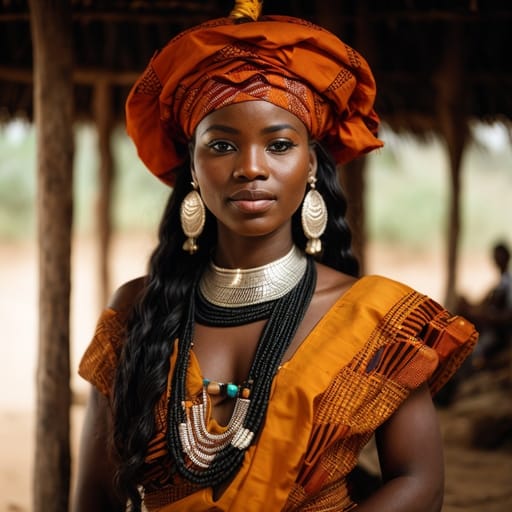
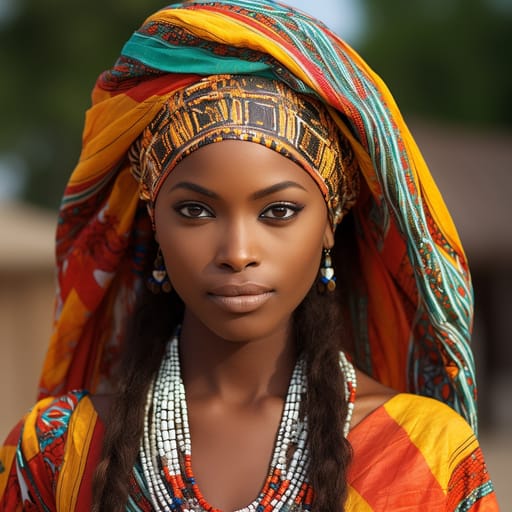
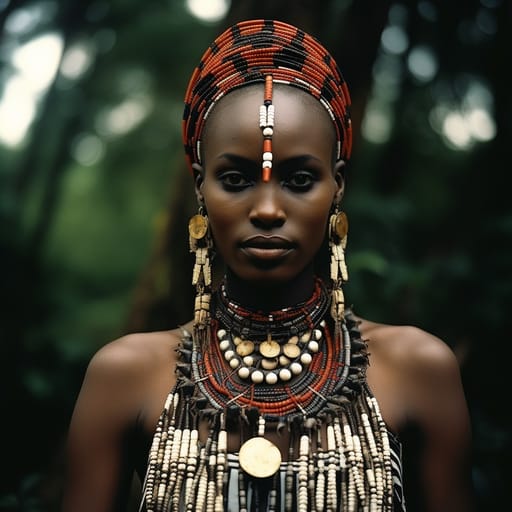
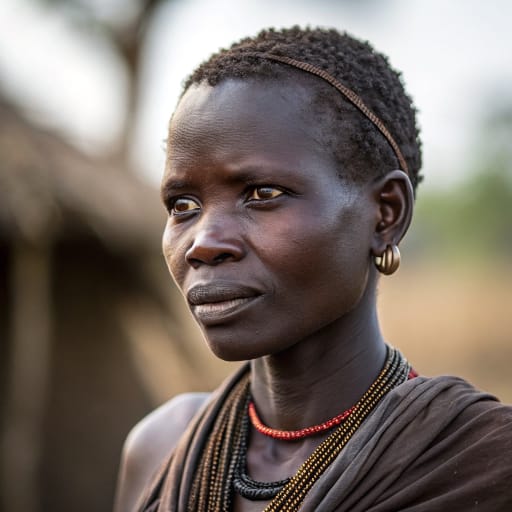
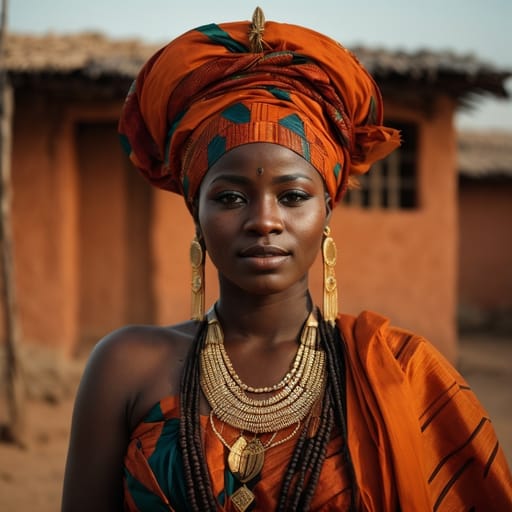
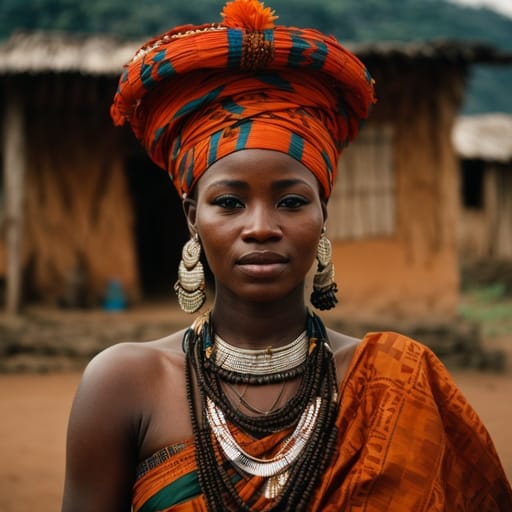
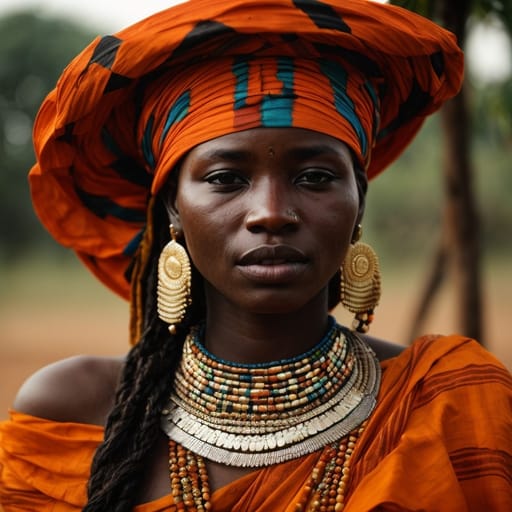
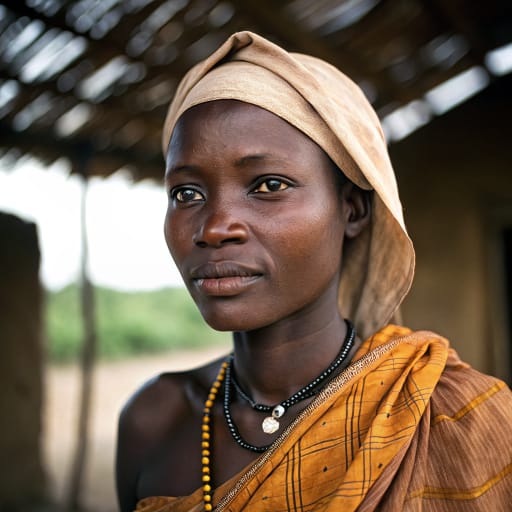
Typical Nzakara Phenotypes
Reference for AI generation: hair, eyes, skin, facial structure, build
Nzakara Body & Anatomy Reference
Per-feature anatomical profile for AI nude generation: Bantu / Central African Niger-Congo phenotype
Nzakara Boobs & Breasts
Nzakara boobs follow the Bantu / Central African Niger-Congo profile: medium-to-large cup, full, projecting. Areolar diameter is usually 32-48mm, and the coloring is deep-brown areolar pigmentation against the deep-brown skin tone. Breast shape tracks body composition (mesomorph with strong gluteal-femoral fat deposition, mean adult female BMI 23-26), so Nzakara breasts tend to be fuller projection than East African; comparable to West African norm. Expect a forward-set shape, not the smaller East African conical profile.
Nzakara Ass & Hips
Nzakara ass and hip morphology presents as full, projected, wide-set glutes, distinctly different from the slim narrow-hip Cushitic East African profile. The Nzakara pelvic profile shows broad iliac crests, gynoid pelvic pattern, anchored in the Bantu / Central African Niger-Congo skeletal pattern. Nzakara butt shots in adult AI imagery should render the full, projected, wide-set glutes silhouette with the overall build (mesomorph with strong gluteal-femoral fat deposition) and the fat distribution typical of the Bantu / Central African Niger-Congo phenotype.
Nzakara Vagina & Pussy
Nzakara pussy anatomy typically shows deep-brown labial pigmentation, fuller labia minora. Pubic hair is usually tightly-coiled coarse texture, dense distribution. In AI-generated Nzakara nudes, labial color should blend into the deep-brown skin with a gradual transition, and the hair should keep its tightly-coiled coarse texture.
Nzakara Dicks & Penis
Penis reference for Nzakara men: regional mean ~14cm erect, above-average girth. Coloring: deep-brown shaft pigmentation. An accurate Nzakara cock in AI imagery matches the surrounding deep-brown skin rather than a generic porn default. Circumcision depends on religion and custom, not ancestry.
Nzakara Body, Curves & Build
The Nzakara figure is generally mesomorph with strong gluteal-femoral fat deposition, with mean adult female BMI 23-26, characteristic of Bantu / Central African Niger-Congo ancestry. AI image tools tend to flatten regional body types into a few stock shapes; here the Nzakara build is kept as its own reference.
Nzakara Skin Tone & Hair Texture
Skin: deep-brown (Fitzpatrick VI). Hair: tight 4A-4C coil. Both are typical of Bantu / Central African Niger-Congo ancestry. The most common mistake in AI nudes of Nzakara women is a body rendered lighter than the face.
Explore phenotype categories
Structured taxonomy with peer-reviewed scales · 22 anatomical categories
Erotic Poses & Sex Positions
From the pose catalog: 219 named positions with reference skeletons
Frequently asked questions about Nzakara people
Where is the Nzakara homeland?
The Nzakara homeland is Southeastern Central African Republic, in Mbomou prefecture around Bangassou and Rafaï, along the Mbomou River border with the Democratic Republic of the Congo in Central Africa.
What language do Nzakara people speak?
Nzakara people primarily speak Nzakara (Zande group, Ubangian, Niger-Congo); Sango and French also widely used.
What religion do Nzakara people practice?
The predominant religion among Nzakara people is Mostly Christian, largely Catholic and Protestant, alongside older beliefs about sorcery, divination and misfortune.






Make your own Nzakara images
Five a day, free, no credits to buy. The studio starts from this group's phenotype data, so you can set body type, pose and style and keep the traits accurate.
Start with Nzakara