No portrait yet
Jeju Erotic
Jeju Island and nearby islets such as Udo and Marado, off the southern coast of South Korea; a long-established community in Osaka, Japan
Jejueo (Koreanic), critically endangered and often classed as a Korean dialect; Korean (Koreanic) is spoken by nearly all
Jeju shamanism built around village shrines and shimbang-led gut rites, alongside Buddhism, Christianity and Confucian ancestor rites; many are unaffiliated
A regional island people within the Koreans, descended from the population of the Tamna kingdom; includes a Zainichi Korean community of Jeju origin in Osaka
About Jeju People
The Jeju are the people of Korea's largest island, a volcanic mass of basalt and wind off the peninsula's southern coast, and they have long thought of themselves as islanders first. Their origin story skips the mainland entirely: three founding ancestors, forebears of the Go, Yang and Bu clans, rose out of the ground at Samseonghyeol, a site still honored in Jeju City. The language keeps the same distance. Jejueo belongs to the Koreanic family, but most mainland Koreans can't understand it, because it holds onto words and grammar that faded from standard Korean long ago. Official Korea long treated it as a dialect. Many linguists now call it a separate language, and UNESCO lists it as critically endangered, with fluent speakers mostly elderly. History pushed the island around. It was the kingdom of Tamna until the Goryeo court absorbed it in the twelfth century. Mongol rulers later ran it as horse pasture, and the Joseon dynasty used it for exile, then barred islanders from leaving for nearly two centuries. The sharpest modern wound is the April 3 Incident: a 1948 uprising brought a counterinsurgency campaign that dragged on until 1954 and killed an estimated 14,000 to 30,000 people, most of them civilians. The subject was close to forbidden for decades, and a South Korean president apologized only in 2003. Many who escaped went to Osaka, joining a Jeju community rooted there since the 1920s, whose descendants remain a recognizable part of the city's Korean neighborhoods.
Jeju calls itself the island of eighteen thousand gods, and it means it. Many villages keep a shrine, often little more than a stone enclosure beside an old tree, and shimbang, the island's shamans, still lead gut rites for fishing households and the dead. The Chilmeoridang Yeongdeung Gut, held in the second lunar month to welcome and send off the wind goddess, is on UNESCO's intangible heritage list. Buddhism, Christianity and Confucian ancestor rites run alongside all of it. The islanders outsiders know best are the haenyeo, women who free-dive without breathing gear for abalone, conch, sea urchin and seaweed, many of them still working in their seventies and eighties. The whistling breath they let out when they surface, the sumbisori, carries along the coast, and their diving culture joined the same UNESCO list in 2016. An old saying holds that Jeju has plenty of wind, stones and women, and no thieves, beggars or gates. In place of gates, households set wooden poles across stone posts, the jeongnang, and the number of poles told neighbors how long the family would be away.
Related ethnic groups
Groups that share Jeju's homeland, region, language, or religious tradition. These are likely candidates for comparative phenotype reference.
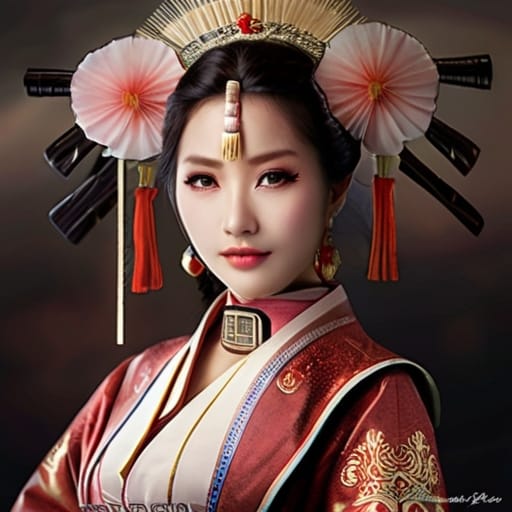
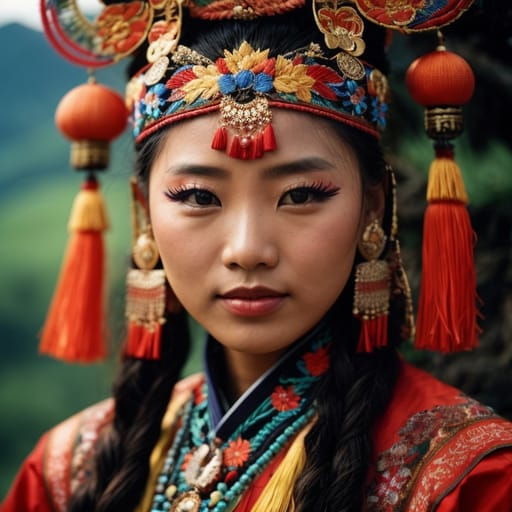
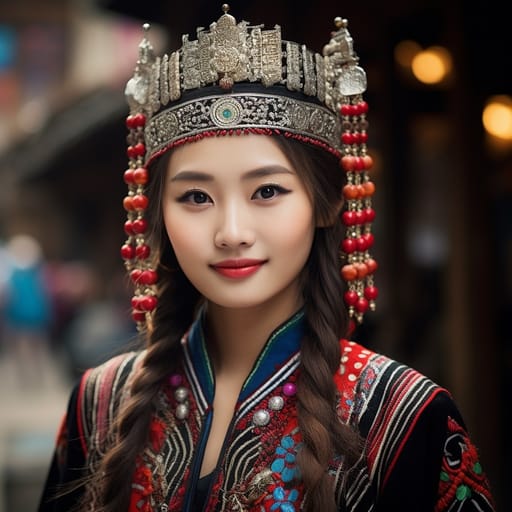
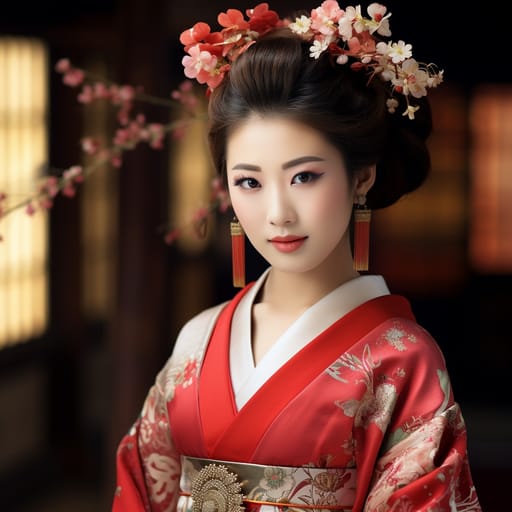
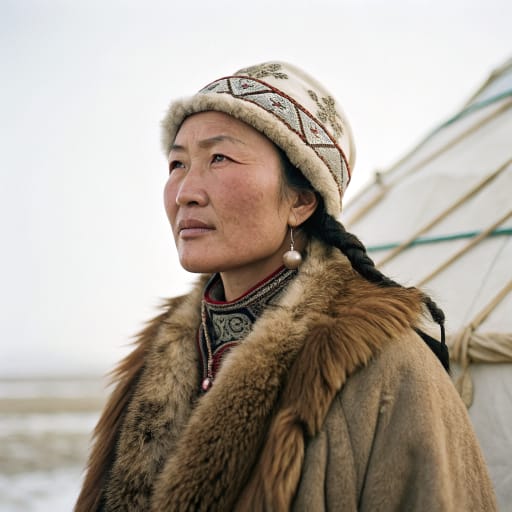
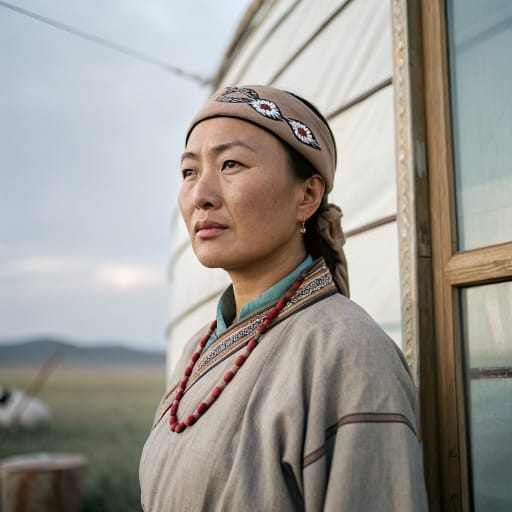
Typical Jeju Phenotypes
Reference for AI generation: hair, eyes, skin, facial structure, build
Jeju Body & Anatomy Reference
Anatomy by feature, East Asian Sinitic / Mongoloid phenotype
Jeju Boobs & Breasts
Jeju boobs follow the East Asian Sinitic / Mongoloid profile: small-to-medium cup, modest projection. Areolar diameter is usually 26-36mm, and the coloring is light-pink to medium-brown areolar pigmentation against the light-to-medium skin tone. Breast shape tracks body composition (ectomorph-to-mesomorph, lean frame, mean adult female BMI 20-23), so Jeju breasts tend to be firm and modestly projecting; smaller cup size than the South Asian or Western Asian average. Expect a forward-set shape, not the fuller South Asian or Levantine bust profile.
Jeju Ass & Hips
Jeju ass and hip morphology presents as small-to-medium, modest projection, narrower hip profile, distinctly different from the fuller projected glutes of the West African or Polynesian phenotype. The Jeju pelvic profile shows narrower iliac crests, less gluteal-femoral fat deposition, anchored in the East Asian Sinitic / Mongoloid skeletal pattern. Jeju butt shots in adult AI imagery should render the small-to-medium, modest projection, narrower hip profile silhouette with the overall build (ectomorph-to-mesomorph, lean frame) and the fat distribution typical of the East Asian Sinitic / Mongoloid phenotype.
Jeju Vagina & Pussy
Jeju pussy anatomy typically shows light-pink to medium-brown labial pigmentation, smaller labia minora. Pubic hair is usually straight fine texture, sparser distribution than the South Asian norm. In AI-generated Jeju nudes, labial color should blend into the light to medium skin with a gradual transition, and the hair should keep its straight fine texture.
Jeju Dicks & Penis
Penis reference for Jeju men: regional mean ~11-12cm erect, moderate girth. Coloring: light-brown shaft pigmentation. An accurate Jeju cock in AI imagery matches the surrounding light to medium skin rather than a generic porn default. Circumcision depends on religion and custom, not ancestry.
Jeju Body, Curves & Build
The Jeju figure is generally ectomorph-to-mesomorph, lean frame, with mean adult female BMI 20-23, characteristic of East Asian Sinitic / Mongoloid ancestry. AI image tools tend to flatten regional body types into a few stock shapes; here the Jeju build is kept as its own reference.
Jeju Skin Tone & Hair Texture
Skin: light to medium (Fitzpatrick II-IV). Hair: straight 1A, fine-to-medium, predominantly black. Both are typical of East Asian Sinitic / Mongoloid ancestry. The most common mistake in AI nudes of Jeju women is a body rendered lighter than the face.
Explore phenotype categories
Structured taxonomy with peer-reviewed scales · 22 anatomical categories
Erotic Poses & Sex Positions
From the pose catalog: 219 named positions with reference skeletons
Frequently asked questions about Jeju people
Where is the Jeju homeland?
The Jeju homeland is Jeju Island and nearby islets such as Udo and Marado, off the southern coast of South Korea; a long-established community in Osaka, Japan in East Asia.
What language do Jeju people speak?
Jeju people primarily speak Jejueo (Koreanic), critically endangered and often classed as a Korean dialect; Korean (Koreanic) is spoken by nearly all.
What religion do Jeju people practice?
The predominant religion among Jeju people is Jeju shamanism built around village shrines and shimbang-led gut rites, alongside Buddhism, Christianity and Confucian ancestor rites; many are unaffiliated.






Make your own Jeju images
Five a day, free, no credits to buy. The studio starts from this group's phenotype data, so you can set body type, pose and style and keep the traits accurate.
Start with Jeju