Help us get this right
Does this portrait look right for Himba?
One tap. It takes a second and it is recorded.
4 say it looks right, 2 say it looks off.
Himba Erotic
Kunene Region (Kaokoveld), northwestern Namibia, and southern Angola
OtjiHimba (Herero dialect; Bantu, Niger-Congo)
Traditional animism (ancestor veneration)
Related to Herero; includes Tjimba
About Himba People
The Himba (OvaHimba) are a semi-nomadic pastoralist people of the Kunene Region in northwestern Namibia, with related communities across the Cunene River in southern Angola. They number roughly 20,000 to 50,000 and speak OtjiHimba, a dialect of the Herero language within the Bantu branch of the Niger-Congo family. The Himba descend from Herero-speaking herders who remained in the arid Kaokoveld while other Herero migrated south, preserving an older pastoral way of life.
Society and subsistence
Himba economy centers on cattle, goats, and sheep, with cattle serving as the primary measure of wealth and status while daily milk and meat come largely from goats. Homesteads consist of cone-shaped huts of saplings, mud, and dung arranged around a livestock enclosure and a sacred ancestral fire, the okuruwo, which links the living to the ancestors and to the high god Mukuru. Society is organized through a distinctive double-descent system, in which individuals belong simultaneously to a patriclan (oruzo) and a matriclan (eanda), each governing different rights and inheritances. Herding and long dry-season migrations in search of pasture fall largely to men and boys, while women manage the homestead, milk livestock, gather firewood and water, and perform the elaborate body care for which the group is known.
Appearance and adornment
The Himba are best recognized by otjize, a paste of butterfat, red ochre, and aromatic resin that women apply daily to their skin and hair, producing a deep reddish sheen that guards against sun and insects and embodies local ideals of beauty. Hair is dressed into thick braids and plaits stiffened with otjize and, for married women, crowned with a headpiece of tanned goatskin called the erembe. Ornaments of iron, shell, and leather signal age, marital status, and childbearing, and both sexes traditionally wear skirts or aprons of goat or calf skin. Because water is scarce, women cleanse with daily smoke baths of aromatic herbs rather than bathing, renewing the otjize covering rather than washing it away. This regimen, together with the copper-toned skin it produces, has made the Himba one of the most visually documented peoples of southern Africa.
Related ethnic groups
Groups that share Himba's homeland, region, language, or religious tradition. These are likely candidates for comparative phenotype reference.
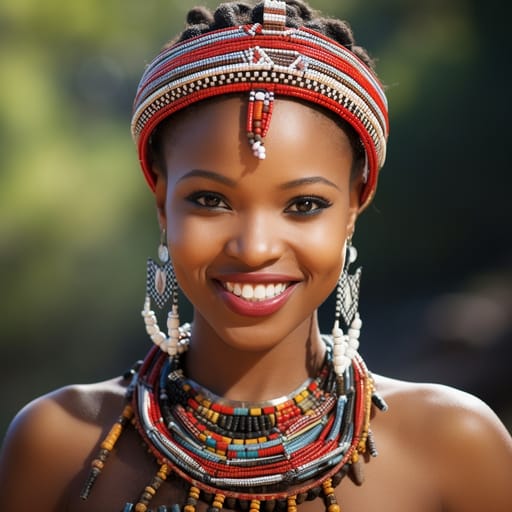
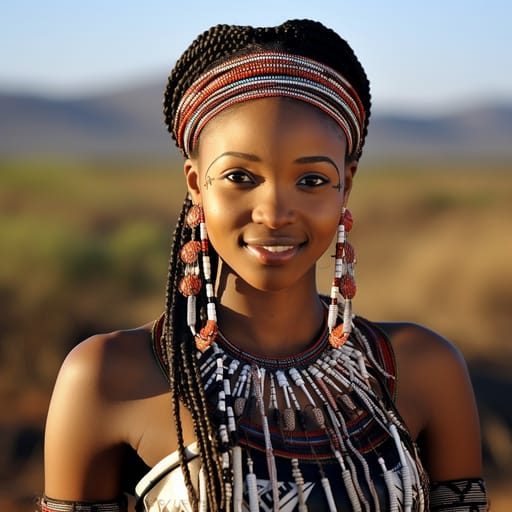
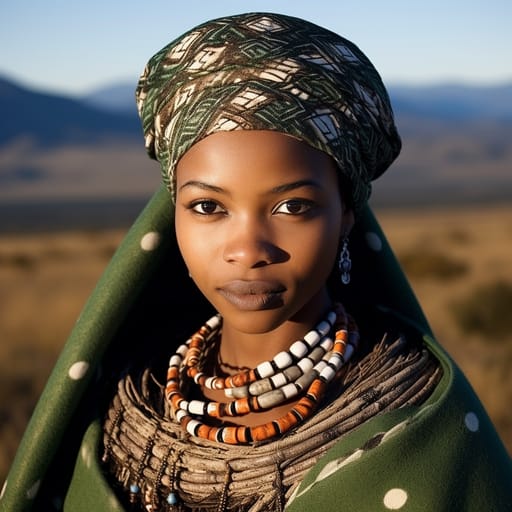
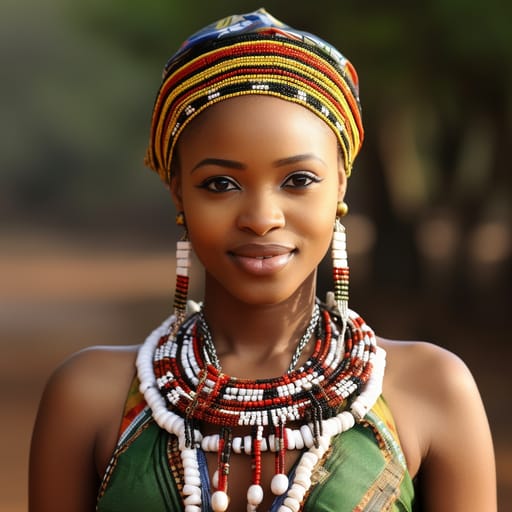
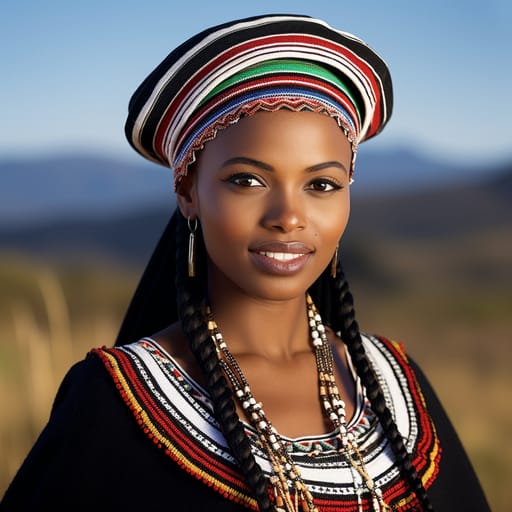

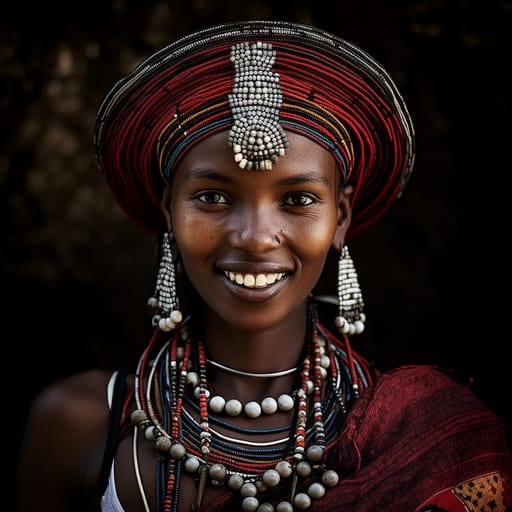
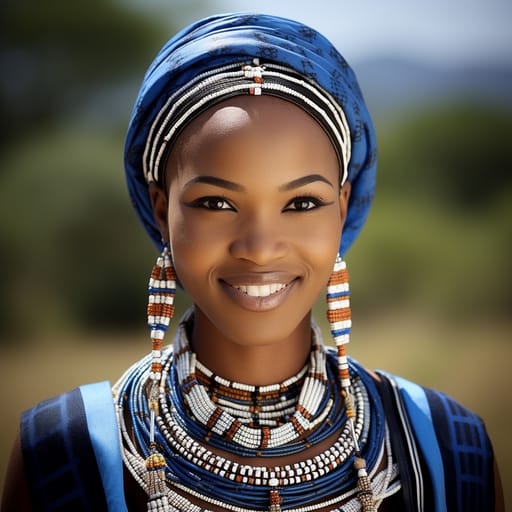
Typical Himba Phenotypes
Reference for AI generation: hair, eyes, skin, facial structure, build
Himba Body & Anatomy Reference
Anatomy by feature, Bantu / Khoisan Southern African phenotype
Himba Boobs & Breasts
Bust reference for Himba women: medium cup, full but moderate projection, which is typical of Bantu / Khoisan Southern African ancestry. Areolas measure about 30-44mm across, with medium-brown to deep-brown pigmentation. Body type (mesomorph; Khoisan-descended sub-populations show distinctive steatopygic fat deposition) shapes the bust as well, so Himba tits are usually moderately full; less projecting than West African norm. In AI imagery, keep the forward-set shape rather than drifting toward the heavier West African bust.
Himba Ass & Hips
The Himba ass is typically the distinctive Khoisan-influenced steatopygic profile in some sub-populations (San, Khoekhoe); broader gluteal projection in Bantu-speaking groups, which sets it apart from the slim Cushitic East African profile. Underneath, the pelvis shows wide iliac crests with notable lordosis in Khoisan-descended sub-populations, part of the Bantu / Khoisan Southern African skeletal pattern. For Himba butt pics and AI renders, match that silhouette and the overall build (mesomorph; Khoisan-descended sub-populations show distinctive steatopygic fat deposition).
Himba Vagina & Pussy
Himba pussy and vulvar anatomy presents deep-brown labial pigmentation; the elongated labia minora documented in some Khoisan-descended populations, consistent with the Bantu / Khoisan Southern African phenotype's pigmentation pattern. Himba pubic hair is typically tightly-coiled coarse texture, in the inverted-triangle pattern. For anatomically accurate Himba pussy renders the labial coloration should match the surrounding medium-brown to deep-brown skin tone with a continuous gradient, and the hair should keep its tightly-coiled coarse texture.
Himba Dicks & Penis
Himba dicks follow the Bantu / Khoisan Southern African reference data: regional mean ~14cm erect; moderate-to-above-average girth; deep-brown shaft pigmentation. Shaft color should track the medium-brown to deep-brown skin tone with a smooth change toward the glans, and Himba pubic hair keeps its tightly-coiled coarse texture.
Himba Body, Curves & Build
Himba body type and overall build presents as mesomorph; Khoisan-descended sub-populations show distinctive steatopygic fat deposition, with mean adult female BMI 24-28: the characteristic Bantu / Khoisan Southern African habitus. Himba curves and proportions should keep the regional skeletal frame (height, shoulder-to-hip ratio, limb proportions) rather than a generic mesomorph default.
Himba Skin Tone & Hair Texture
Himba skin sits in the medium-brown to deep-brown (Fitzpatrick V-VI); lighter in Khoisan-descended populations band. Hair is typically tightly-coiled 4A-4C; the distinctive 'peppercorn' tight-spiral texture in Khoisan-descended populations, in keeping with the Bantu / Khoisan Southern African phenotype. In nude renders the skin should stay one even tone from face to body, and body, pubic and head hair should match.
Explore phenotype categories
Structured taxonomy with peer-reviewed scales · 22 anatomical categories
Notable Himba People
1 reference figure, sourced from Wikipedia
- Vipuakuje Muharukua, member of Namibia's Parliament
Erotic Poses & Sex Positions
From the pose catalog: 219 named positions with reference skeletons
Frequently asked questions about Himba people
Where is the Himba homeland?
The Himba homeland is Kunene Region (Kaokoveld), northwestern Namibia, and southern Angola in Southern Africa.
What language do Himba people speak?
Himba people primarily speak OtjiHimba (Herero dialect; Bantu, Niger-Congo).
What religion do Himba people practice?
The predominant religion among Himba people is Traditional animism (ancestor veneration).
What does a typical Himba woman look like?
Himba women are known for a deep reddish-brown skin sheen from otjize, a daily paste of red ochre and butterfat that also coats their long braids and plaits. Married women wear a goatskin erembe headdress with copper, iron and shell jewelry, giving skin and hair a uniform red tone.






Make your own Himba images
Five a day, free, no credits to buy. The studio starts from this group's phenotype data, so you can set body type, pose and style and keep the traits accurate.
Start with Himba