Help us get this right
Does this portrait look right for Bhaca?
Nobody has judged this one yet. You would be the first.
Bhaca Erotic
Mount Frere (KwaBhaca) and surrounding uplands of the Eastern Cape, in the former Transkei, and the Umzimkhulu area of southern KwaZulu-Natal, South Africa
isiBhaca (Nguni, Bantu, Niger-Congo), usually classed as a dialect of Xhosa with features shared with Swati; standard Xhosa and Zulu widely spoken
Mostly Christian, mission and independent churches, alongside ancestor veneration and consultation of diviners and herbalists
Nguni branch of the Southern Bantu; grouped with the Xhosa-speaking peoples of the former Transkei, beside the Mpondo, Xesibe and Hlubi
About Bhaca People
The Bhaca are a people shaped by flight. In the 1820s, as Shaka's Zulu state expanded, a following gathered around the chief Madzikane and moved south out of what is now KwaZulu-Natal, taking in scattered clans along the way. Their name is commonly traced to a verb meaning to hide, and the memory of those years still sits inside it. After decades of hard fighting and shifting alliances with neighbors, the Mpondo among them, they settled in the grassy uplands of the Eastern Cape. The town of Mount Frere is known in isiXhosa as KwaBhaca, the place of the Bhaca, and Bhaca communities also live around Umzimkhulu, across the provincial line. Their land came under the Cape Colony in the late nineteenth century and later fell inside the Transkei homeland. Like the rest of that region, it sent generation after generation of men to the mines and the cities for wage work.
What sets them apart from the Xhosa-speaking peoples around them is, above all, the way they speak. IsiBhaca is a Nguni variety usually classed as a dialect of Xhosa, yet it has features that tie it to Swati, a trace of the founders' origins farther north. Standard Xhosa is the language of local schools and offices, and Zulu is close at hand, so the home dialect holds its ground against both. At one time Bhaca could also be recognized on sight: thin facial scars cut in childhood served as a mark of belonging, a custom seen far less today.
Religious life follows a pattern common across the region. Most Bhaca belong to Christian churches, both mission-founded and independent, while duties to the ancestors remain part of ordinary family business. Livestock is slaughtered at key moments in a life, and diviners and herbalists are consulted when illness or misfortune seems to have a cause beyond the body. The chiefly line descended from Madzikane is still a focus of identity. The Bhaca are also the subject of a detailed mid-century ethnography, W. D. Hammond-Tooke's Bhaca Society, which recorded homestead life, kinship and ritual in the Transkeian uplands at a time when much of it was still practiced in its older form.
Related ethnic groups
Groups that share Bhaca's homeland, region, language, or religious tradition. These are likely candidates for comparative phenotype reference.
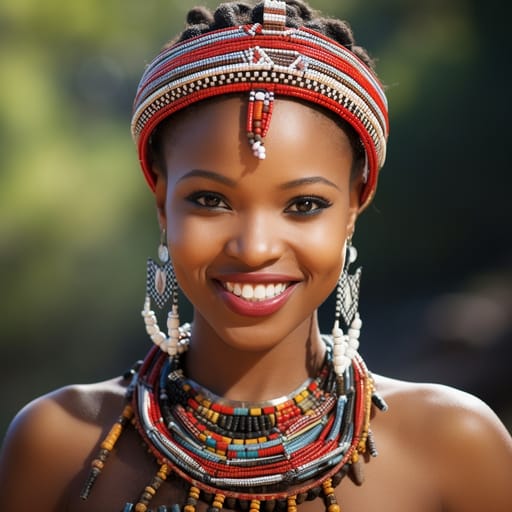
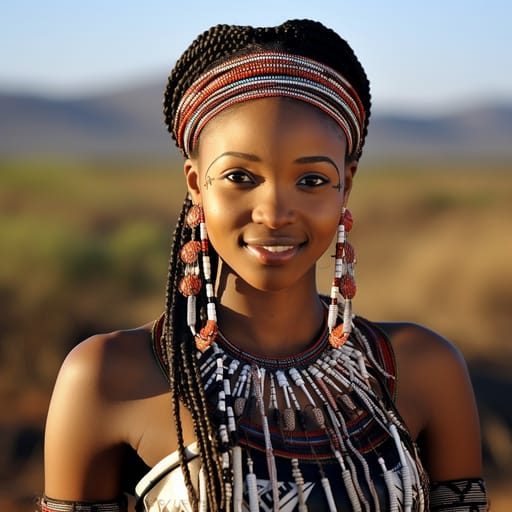
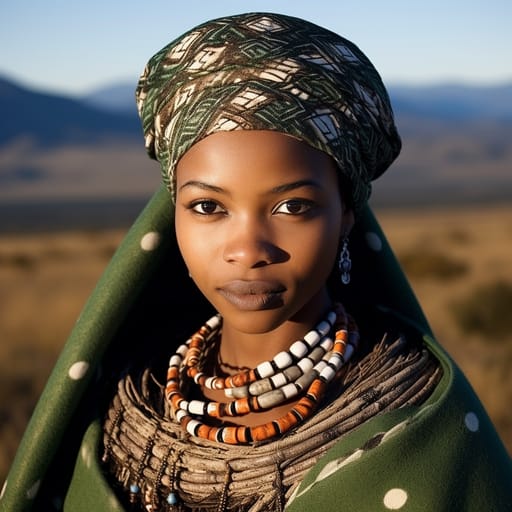
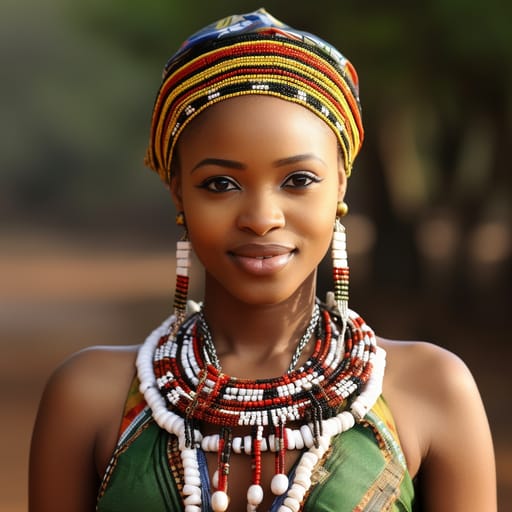
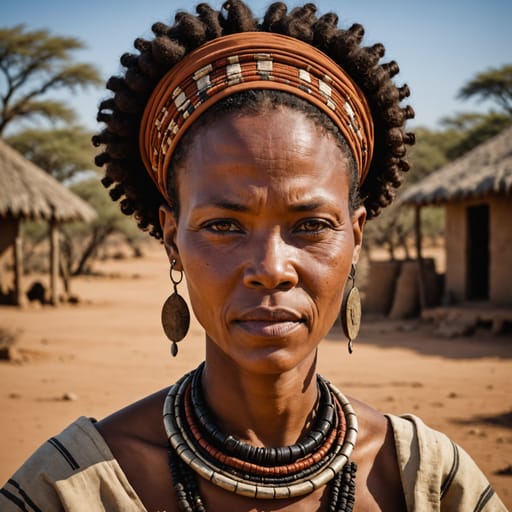
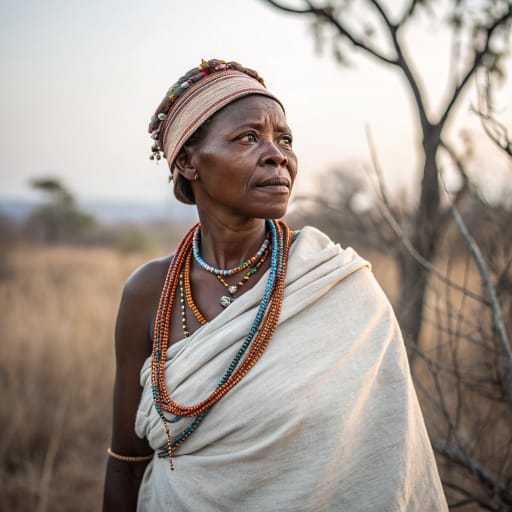
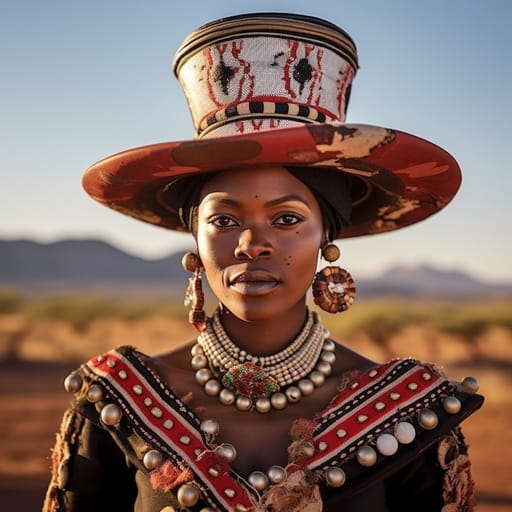
Typical Bhaca Phenotypes
Reference for AI generation: hair, eyes, skin, facial structure, build
Bhaca Body & Anatomy Reference
Per-feature anatomical profile for AI nude generation: Bantu / Khoisan Southern African phenotype
Bhaca Boobs & Breasts
The typical Bhaca bust is medium cup, full but moderate projection, in line with the wider Bantu / Khoisan Southern African pattern. Areolas usually fall in the 30-44mm range, with medium-brown to deep-brown areolar pigmentation. Compared with the heavier West African bust, Bhaca breasts sit forward and are generally moderately full; less projecting than West African norm. A faithful AI render of Bhaca tits keeps that shape and areola size.
Bhaca Ass & Hips
Butt shape among Bhaca women: the distinctive Khoisan-influenced steatopygic profile in some sub-populations (San, Khoekhoe); broader gluteal projection in Bantu-speaking groups, over wide iliac crests with notable lordosis in Khoisan-descended sub-populations. This follows Bantu / Khoisan Southern African ancestry and looks quite unlike the slim Cushitic East African profile. An accurate Bhaca ass in adult AI imagery keeps both the silhouette and the overall build (mesomorph; Khoisan-descended sub-populations show distinctive steatopygic fat deposition) instead of a generic average.
Bhaca Vagina & Pussy
Vulvar anatomy among Bhaca women: deep-brown labial pigmentation; the elongated labia minora documented in some Khoisan-descended populations. Pubic hair tends to be tightly-coiled coarse texture, in the usual inverted-triangle pattern. Both follow Bantu / Khoisan Southern African pigmentation, which is why Bhaca pussy renders should not fall back on a pale, sparse Western template.
Bhaca Dicks & Penis
The Bhaca cock profile, from Bantu / Khoisan Southern African anthropometric data: regional mean ~14cm erect; moderate-to-above-average girth; deep-brown shaft pigmentation. Pubic hair has a tightly-coiled coarse texture and forms the usual inverted-V pattern. Whether Bhaca men are circumcised follows religious and cultural practice rather than phenotype.
Bhaca Body, Curves & Build
Build and curves among Bhaca women follow the Bantu / Khoisan Southern African pattern: mesomorph; Khoisan-descended sub-populations show distinctive steatopygic fat deposition, mean adult female BMI 24-28. Proportions matter as much as skin tone, so Bhaca figures should keep their regional height and limb ratios.
Bhaca Skin Tone & Hair Texture
The Bhaca skin range is medium-brown to deep-brown (Fitzpatrick V-VI); lighter in Khoisan-descended populations, and hair tends to be tightly-coiled 4A-4C; the distinctive 'peppercorn' tight-spiral texture in Khoisan-descended populations. That combination marks the Bantu / Khoisan Southern African phenotype, and skin tone is the trait AI generators most often get wrong for Bhaca women.
Explore phenotype categories
Structured taxonomy with peer-reviewed scales · 22 anatomical categories
Erotic Poses & Sex Positions
From the pose catalog: 219 named positions with reference skeletons
Frequently asked questions about Bhaca people
Where is the Bhaca homeland?
The Bhaca homeland is Mount Frere (KwaBhaca) and surrounding uplands of the Eastern Cape, in the former Transkei, and the Umzimkhulu area of southern KwaZulu-Natal, South Africa in Southern Africa.
What language do Bhaca people speak?
Bhaca people primarily speak isiBhaca (Nguni, Bantu, Niger-Congo), usually classed as a dialect of Xhosa with features shared with Swati; standard Xhosa and Zulu widely spoken.
What religion do Bhaca people practice?
The predominant religion among Bhaca people is Mostly Christian, mission and independent churches, alongside ancestor veneration and consultation of diviners and herbalists.






Make your own Bhaca images
Five a day, free, no credits to buy. The studio starts from this group's phenotype data, so you can set body type, pose and style and keep the traits accurate.
Start with Bhaca