Help us get this right
Does this portrait look right for Bakoena?
One tap. It takes a second and it is recorded.
1 says it looks right, 0 say it looks off.
Bakoena Erotic
Lesotho, Botswana (Kweneng District, around Molepolole) and South Africa's Free State and North West provinces
Sesotho and Setswana (Sotho-Tswana, Bantu, Niger-Congo)
Mainly Christian (Catholic, Protestant and independent churches), alongside ancestor veneration (balimo, badimo)
A Sotho-Tswana clan with the crocodile totem. Branches include the Bamokoteli and Bamonaheng of Lesotho, the Bakwena of Kweneng in Botswana and the Bakwena ba Mogopa of South Africa
About Bakoena People
The Bakoena are the people of the crocodile. Kwena means crocodile in both Sesotho and Setswana, and the clan carries the animal as its totem, the badge Sotho-Tswana people have long used to place one another. In the old idiom for clan loyalty, a person is asked what they dance, and a Kwena answers the crocodile. By custom the animal is respected rather than hunted. The emblem links communities in Lesotho, Botswana and South Africa. They speak related languages of the Sotho-Tswana branch, answer to separate chiefs and live under different flags. The Kwena count as one of the senior Sotho-Tswana lines. In Botswana, oral history says the Bangwato and Bangwaketse broke away from the Kwena house to found kingdoms of their own. The Bakwena who stayed hold Kweneng District, with Molepolole as their seat. Their best-known ruler there is Sechele I, whom David Livingstone baptized in 1848, the one convert the missionary is remembered for. Sechele later fell out with the mission church over his marriages but kept preaching on his own terms. In 1852 he stood against a Boer commando at Dimawe.
In Lesotho the clan's weight is political. Moshoeshoe I built the Basotho nation out of refugees and broken chiefdoms during the wars of the early nineteenth century. He came from the Bamokoteli, a junior branch of the Bakoena, and his descendants still hold the throne. That is why a crocodile sits on the shield in Lesotho's coat of arms. Moshoeshoe also welcomed French Protestant missionaries in 1833. Christianity, Catholic and Protestant alike, now shapes much of Sunday life in the mountains and lowlands. Regard for the ancestors, balimo in Sesotho and badimo in Setswana, runs alongside the churches. It shows up at funerals and weddings, and in slaughtering an animal to mark a family occasion. Kwena branches also keep their own chieftaincies in South Africa's Free State and North West. Among them are the Bakwena ba Mogopa, whose removal from their land by the apartheid government in 1984 is still remembered. Most Bakoena today live ordinary rural and town lives as Basotho, Batswana or South Africans first. The crocodile comes up mainly in clan praises and in working out who is related to whom.
Related ethnic groups
Groups that share Bakoena's homeland, region, language, or religious tradition. These are likely candidates for comparative phenotype reference.
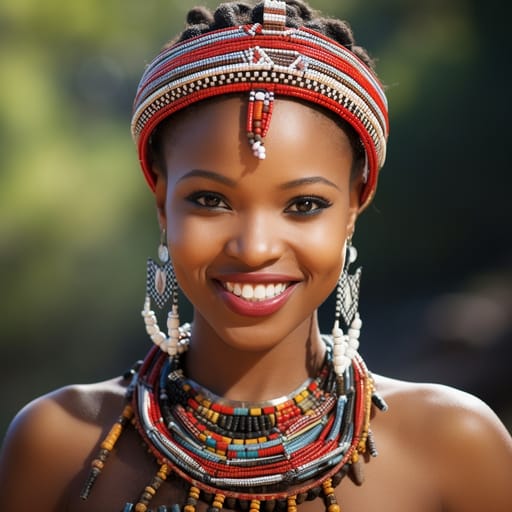
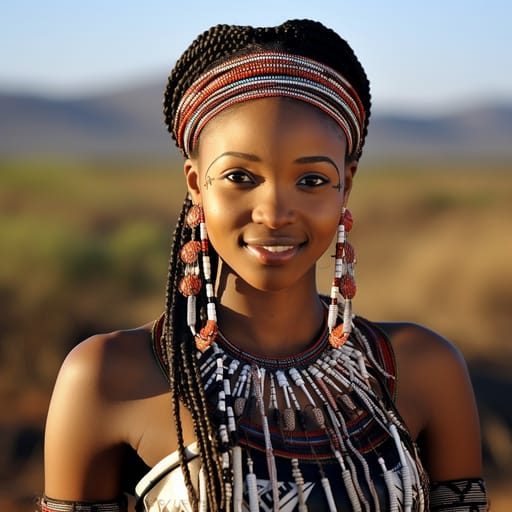
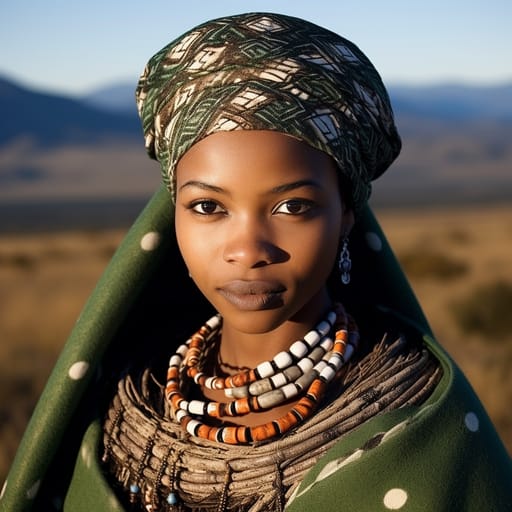
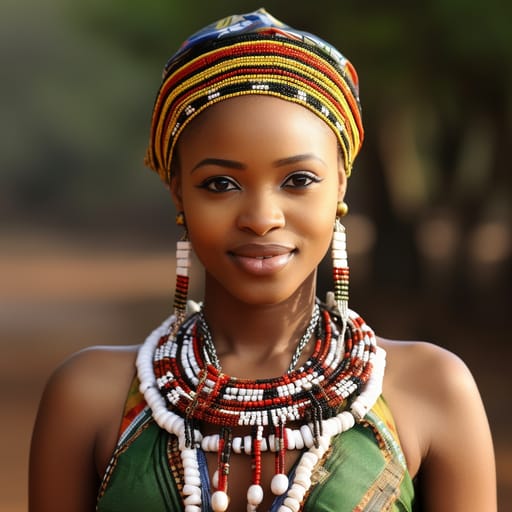
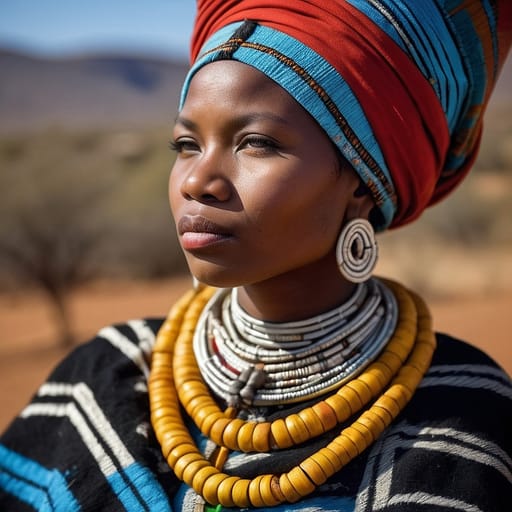
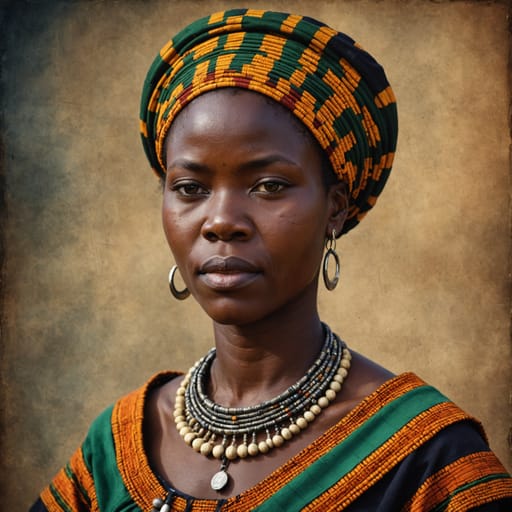
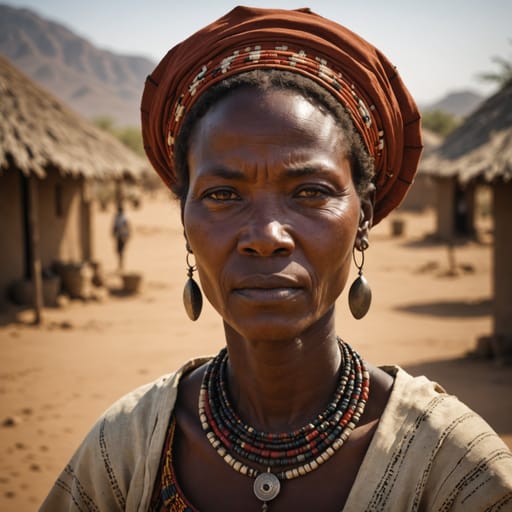
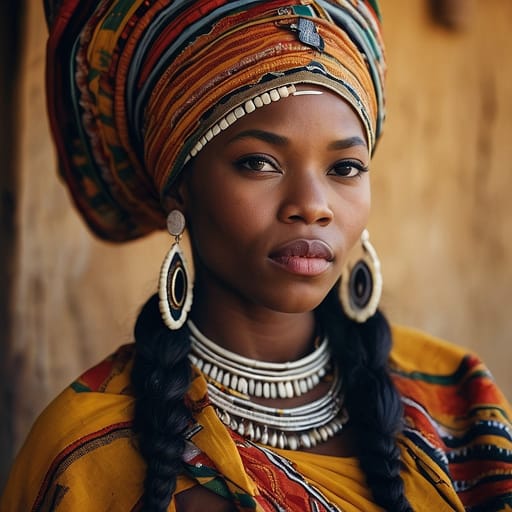
Typical Bakoena Phenotypes
Reference for AI generation: hair, eyes, skin, facial structure, build
Bakoena Body & Anatomy Reference
Anatomy by feature, Bantu / Khoisan Southern African phenotype
Bakoena Boobs & Breasts
Bust reference for Bakoena women: medium cup, full but moderate projection, which is typical of Bantu / Khoisan Southern African ancestry. Areolas measure about 30-44mm across, with medium-brown to deep-brown pigmentation. Body type (mesomorph; Khoisan-descended sub-populations show distinctive steatopygic fat deposition) shapes the bust as well, so Bakoena tits are usually moderately full; less projecting than West African norm. In AI imagery, keep the forward-set shape rather than drifting toward the heavier West African bust.
Bakoena Ass & Hips
The Bakoena ass is typically the distinctive Khoisan-influenced steatopygic profile in some sub-populations (San, Khoekhoe); broader gluteal projection in Bantu-speaking groups, which sets it apart from the slim Cushitic East African profile. Underneath, the pelvis shows wide iliac crests with notable lordosis in Khoisan-descended sub-populations, part of the Bantu / Khoisan Southern African skeletal pattern. For Bakoena butt pics and AI renders, match that silhouette and the overall build (mesomorph; Khoisan-descended sub-populations show distinctive steatopygic fat deposition).
Bakoena Vagina & Pussy
Bakoena pussy and vulvar anatomy presents deep-brown labial pigmentation; the elongated labia minora documented in some Khoisan-descended populations, consistent with the Bantu / Khoisan Southern African phenotype's pigmentation pattern. Bakoena pubic hair is typically tightly-coiled coarse texture, in the inverted-triangle pattern. For anatomically accurate Bakoena pussy renders the labial coloration should match the surrounding medium-brown to deep-brown skin tone with a continuous gradient, and the hair should keep its tightly-coiled coarse texture.
Bakoena Dicks & Penis
Bakoena dicks follow the Bantu / Khoisan Southern African reference data: regional mean ~14cm erect; moderate-to-above-average girth; deep-brown shaft pigmentation. Shaft color should track the medium-brown to deep-brown skin tone with a smooth change toward the glans, and Bakoena pubic hair keeps its tightly-coiled coarse texture.
Bakoena Body, Curves & Build
Bakoena body type and overall build presents as mesomorph; Khoisan-descended sub-populations show distinctive steatopygic fat deposition, with mean adult female BMI 24-28: the characteristic Bantu / Khoisan Southern African habitus. Bakoena curves and proportions should keep the regional skeletal frame (height, shoulder-to-hip ratio, limb proportions) rather than a generic mesomorph default.
Bakoena Skin Tone & Hair Texture
Bakoena skin sits in the medium-brown to deep-brown (Fitzpatrick V-VI); lighter in Khoisan-descended populations band. Hair is typically tightly-coiled 4A-4C; the distinctive 'peppercorn' tight-spiral texture in Khoisan-descended populations, in keeping with the Bantu / Khoisan Southern African phenotype. In nude renders the skin should stay one even tone from face to body, and body, pubic and head hair should match.
Explore phenotype categories
Structured taxonomy with peer-reviewed scales · 22 anatomical categories
Erotic Poses & Sex Positions
From the pose catalog: 219 named positions with reference skeletons
Frequently asked questions about Bakoena people
Where is the Bakoena homeland?
The Bakoena homeland is Lesotho, Botswana (Kweneng District, around Molepolole) and South Africa's Free State and North West provinces in Southern Africa.
What language do Bakoena people speak?
Bakoena people primarily speak Sesotho and Setswana (Sotho-Tswana, Bantu, Niger-Congo).
What religion do Bakoena people practice?
The predominant religion among Bakoena people is Mainly Christian (Catholic, Protestant and independent churches), alongside ancestor veneration (balimo, badimo).






Make your own Bakoena images
Five a day, free, no credits to buy. The studio starts from this group's phenotype data, so you can set body type, pose and style and keep the traits accurate.
Start with Bakoena