Help us get this right
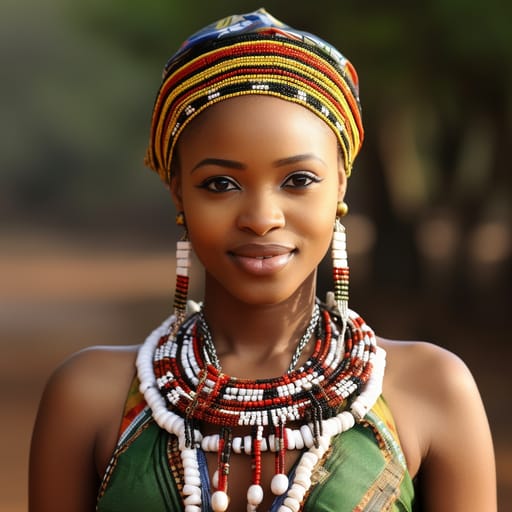
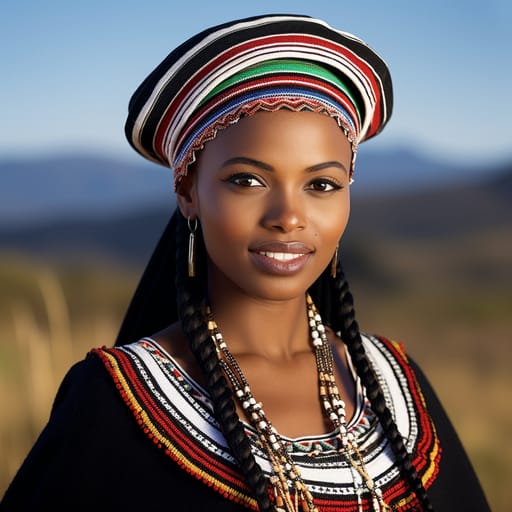
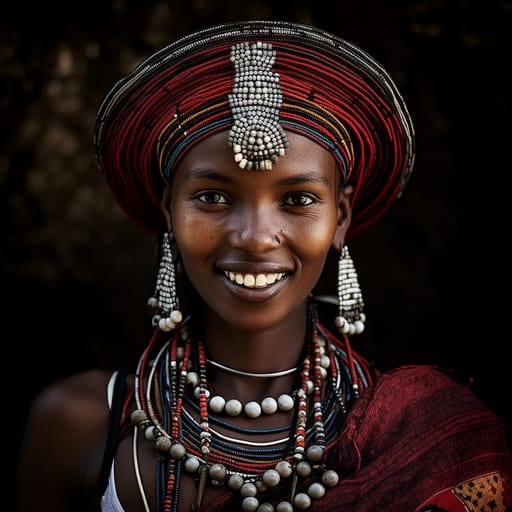
Does this portrait look right for Bemba?
One tap. It takes a second and it is recorded.
2 say it looks right, 0 say it looks off.
Bemba Erotic
Zambia (Northern, Luapula, and Copperbelt Provinces), Katanga Province (Democratic Republic of the Congo)
Christianity / Protestantism
About Bemba People
The Bemba are a matrilineal people whose center of gravity lies on the high, thin-soiled plateau between Lake Bangweulu and Lake Tanganyika in northern Zambia, with a sizable presence across the border in the Katanga copper belt of the DRC. Their identity is bound up with a founding story of migration from the Luba kingdom in the west, and with the paramount chieftaincy of the Chitimukulu, which still anchors a layered system of senior chiefs and clan-based titles. Among Zambian peoples they are numerically and politically prominent — Bemba, in its various forms, functions as a lingua franca across the Copperbelt, and a wider cluster of related groups (Bisa, Lala, Aushi, Chishinga, among others) is sometimes spoken of together as Bemba-speaking peoples, even though they remain distinct.
The land they occupy is not generous. Soils leach quickly under heavy rains, and the agricultural answer the Bemba developed — chitemene, a long-fallow system in which woodland branches are lopped, stacked, and burned to fertilize a garden of finger millet — shaped settlement patterns, gender roles, and the rhythm of the year for generations. Colonial agronomists tried repeatedly to suppress it; Bemba farmers, working land that responded to little else, kept it alive in modified forms. Cassava has since taken on a larger role, particularly in the wetter Luapula floodplains, where fishing rather than shifting cultivation defines daily life.
Descent runs through the mother, and a man traditionally moves to his wife's village at marriage and works for her relatives before establishing his own household — an arrangement that gives senior women, and maternal uncles, real weight in family decisions. The girls' initiation rite known as chisungu, documented in detail by the anthropologist Audrey Richards in the 1930s, is one of the more carefully studied female coming-of-age ceremonies in Africa; it survives, in adapted forms, in many communities today. Most Bemba are Christian, predominantly Protestant with a strong Catholic minority from the early White Fathers missions around Kasama, and the churches sit comfortably alongside an older substrate of ancestor veneration and respect for the spirits of the land.
Politically, Bemba speakers have been central to Zambian public life since independence, supplying presidents, union leaders, and much of the workforce that built the copper-mining economy on which the country still partly depends.
Related ethnic groups
Groups that share Bemba's homeland, region, language, or religious tradition. These are likely candidates for comparative phenotype reference.

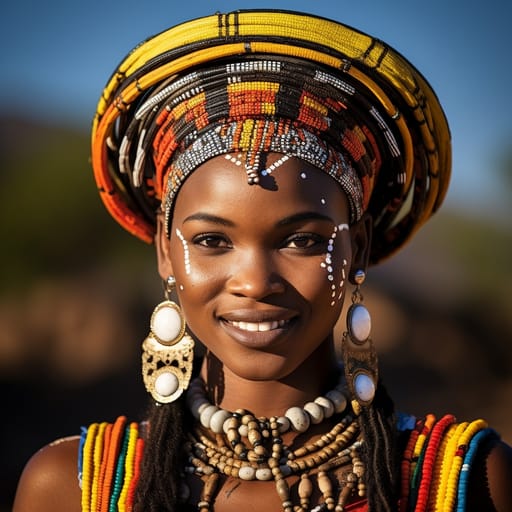
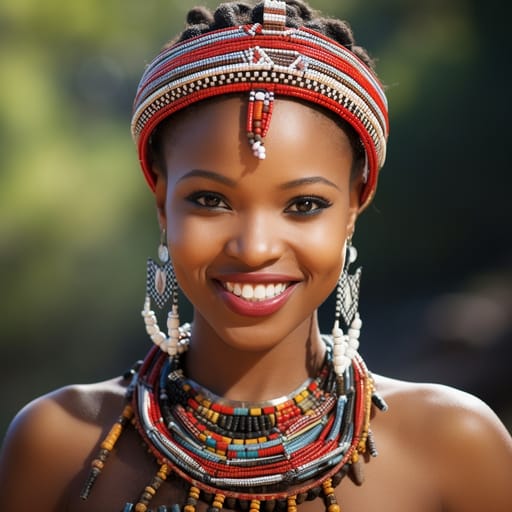
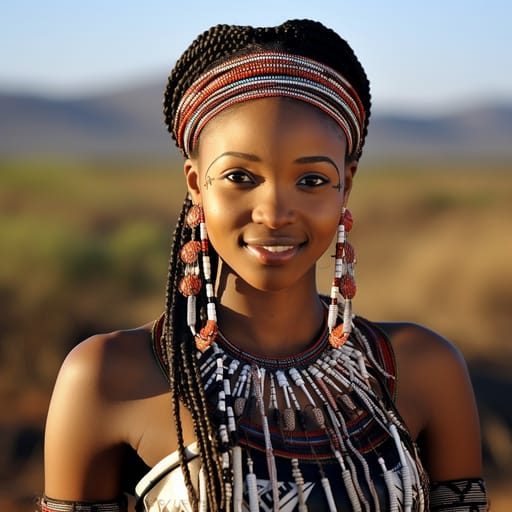
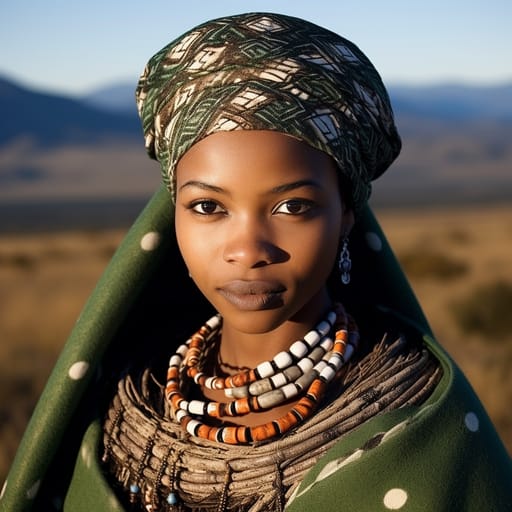
Geographic Distribution: Bemba populations across 1 country
Each row is ranked by the group's share of that country's population, with the source citation drawn from published census and demographic surveys. Click through for the full per-country phenotype profile.
| Country | Share | Source |
|---|---|---|
| Zambia | 21.0% | Zambia 2022 Census; Bemba (~21%, ~4.4M+ of ~21M+ total). Bantu source population, predominantly Northern, Luapula, Muchinga, and Copperbelt provinces. The largest single ethnic group |
Typical Bemba Phenotypes
Reference for AI generation: hair, eyes, skin, facial structure, build
The Bemba phenotype reads as classic Bantu-Central African with the build characteristics of the broader Luba-related cluster from which they migrated south. Skin tones cluster firmly in Fitzpatrick VI — deep brown to near-black with cool, slightly blue-undertoned darkness rather than the warm reddish-brown common further west. Sun-protected areas (inner arms, torso) often retain a faint plum cast that's visible in good light. Lighter complexions in the Copperbelt mining towns frequently reflect mixed Lozi, Lunda, or coloured ancestry rather than Bemba phenotype proper.
Hair is tightly coiled Type 4B–4C, dense and low-luster, with the small-diameter spring pattern typical of Bantu speakers across the Congo basin. Natural variation toward looser 4A coil exists but is uncommon. Eyes run dark brown to nearly black; the epicanthic fold is absent, the palpebral fissure is wide and slightly almond-shaped, and the sclera tends toward a clean white that contrasts strongly against the surrounding skin. Brow ridges are modest, lashes thick.
Facial structure is the most diagnostic register. Bemba faces tend toward broad mid-faces with prominent malar bones, full rounded cheeks, and a relatively short philtrum. Noses are platyrrhine — low to medium bridge, broad alar base, rounded tip — though slightly narrower than coastal West African averages. Lips are full on both upper and lower, with a defined cupid's bow and notable eversion. Jaws are squared in men and softly rounded in women; prognathism is mild but visible in profile.
Build trends tall and gracile rather than stocky. Adult men commonly reach 175–183 cm, women 165–172 cm, with long limbs, narrow hips, and lean musculature in rural populations; urban Copperbelt residents show heavier mid-body composition consistent with sedentary diets. Women carry pronounced gluteofemoral fat distribution with comparatively narrow waists — a steatopygic-leaning silhouette less extreme than Khoisan groups but distinctly more curved than East African Nilotic neighbors. Hand and foot bones are long and slender.
Bemba Body & Anatomy Reference
Per-feature anatomical profile for AI nude generation: Bantu / Khoisan Southern African phenotype
Bemba Boobs & Breasts
The typical Bemba bust is medium cup, full but moderate projection, in line with the wider Bantu / Khoisan Southern African pattern. Areolas usually fall in the 30-44mm range, with medium-brown to deep-brown areolar pigmentation. Compared with the heavier West African bust, Bemba breasts sit forward and are generally moderately full; less projecting than West African norm. A faithful AI render of Bemba tits keeps that shape and areola size.
Bemba Ass & Hips
Butt shape among Bemba women: the distinctive Khoisan-influenced steatopygic profile in some sub-populations (San, Khoekhoe); broader gluteal projection in Bantu-speaking groups, over wide iliac crests with notable lordosis in Khoisan-descended sub-populations. This follows Bantu / Khoisan Southern African ancestry and looks quite unlike the slim Cushitic East African profile. An accurate Bemba ass in adult AI imagery keeps both the silhouette and the overall build (mesomorph; Khoisan-descended sub-populations show distinctive steatopygic fat deposition) instead of a generic average.
Bemba Vagina & Pussy
Vulvar anatomy among Bemba women: deep-brown labial pigmentation; the elongated labia minora documented in some Khoisan-descended populations. Pubic hair tends to be tightly-coiled coarse texture, in the usual inverted-triangle pattern. Both follow Bantu / Khoisan Southern African pigmentation, which is why Bemba pussy renders should not fall back on a pale, sparse Western template.
Bemba Dicks & Penis
The Bemba cock profile, from Bantu / Khoisan Southern African anthropometric data: regional mean ~14cm erect; moderate-to-above-average girth; deep-brown shaft pigmentation. Pubic hair has a tightly-coiled coarse texture and forms the usual inverted-V pattern. Whether Bemba men are circumcised follows religious and cultural practice rather than phenotype.
Bemba Body, Curves & Build
Build and curves among Bemba women follow the Bantu / Khoisan Southern African pattern: mesomorph; Khoisan-descended sub-populations show distinctive steatopygic fat deposition, mean adult female BMI 24-28. Proportions matter as much as skin tone, so Bemba figures should keep their regional height and limb ratios.
Bemba Skin Tone & Hair Texture
The Bemba skin range is medium-brown to deep-brown (Fitzpatrick V-VI); lighter in Khoisan-descended populations, and hair tends to be tightly-coiled 4A-4C; the distinctive 'peppercorn' tight-spiral texture in Khoisan-descended populations. That combination marks the Bantu / Khoisan Southern African phenotype, and skin tone is the trait AI generators most often get wrong for Bemba women.
Data depth
0/100Coverage of image-grounded phenotype observations · drives AI generation diversity
- Sample size
- 0/40· 0 images
- Image quality
- 0/30· 0% high
- Confidence
- 0/20
- Source diversity
- 0/10
- ·No image observations yet
Explore phenotype categories
Structured taxonomy with peer-reviewed scales · 22 anatomical categories
Erotic Poses & Sex Positions
From the pose catalog: 219 named positions with reference skeletons
Frequently asked questions about Bemba people
Where is the Bemba homeland?
The Bemba homeland is Zambia (Northern, Luapula, and Copperbelt Provinces), Katanga Province (Democratic Republic of the Congo) in Southern Africa.
What countries do Bemba people live in?
Bemba populations are documented across 1 country: Zambia.
What language do Bemba people speak?
Bemba people primarily speak Niger-Congo / Bantu / Bemba.
What religion do Bemba people practice?
The predominant religion among Bemba people is Christianity / Protestantism.






Make your own Bemba images
Five a day, free, no credits to buy. The studio starts from this group's phenotype data, so you can set body type, pose and style and keep the traits accurate.
Start with Bemba