Help us get this right
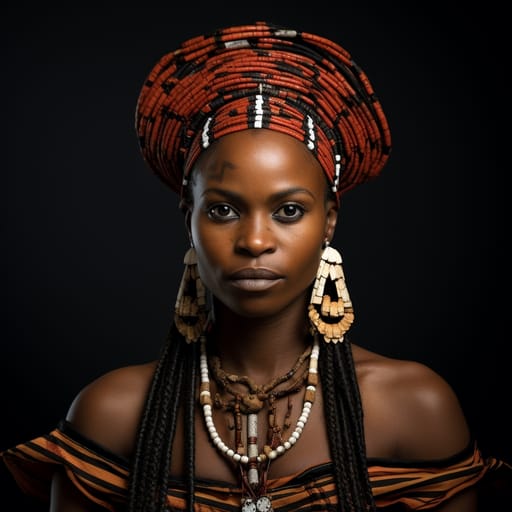
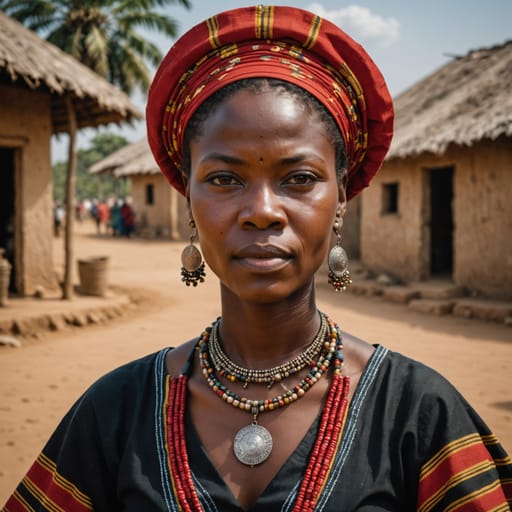
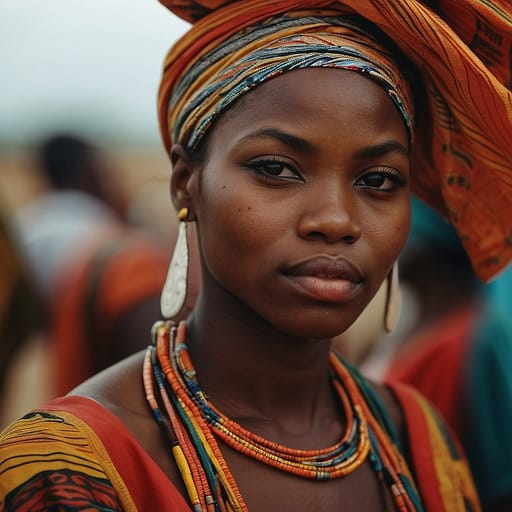
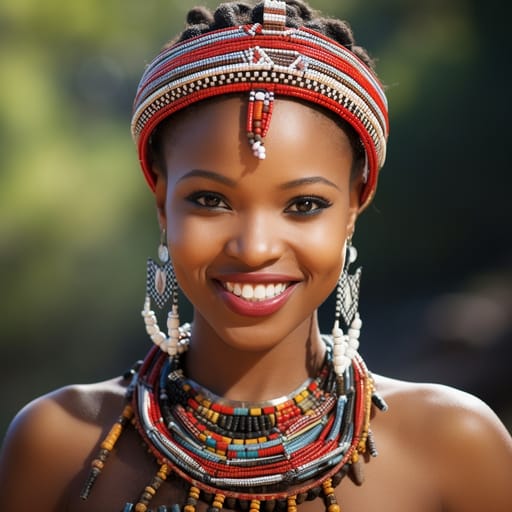
Does this portrait look right for Ambundu?
One tap. It takes a second and it is recorded.
2 say it looks right, 0 say it looks off.
Ambundu Erotic
Christianity
About Ambundu People
The Ambundu — sometimes Mbundu, and in older texts North Mbundu to distinguish them from the unrelated Ovimbundu further south — are the second-largest people of Angola, anchored across the savanna and forest country between the Atlantic coast and the Malanje highlands. Luanda sits in their territory, and that single fact has shaped almost everything about them for the last five hundred years. They were the population the Portuguese met first, traded with first, fought first, and converted first, and the consequences of that early contact still mark the language, the religion, and the political weight Ambundu leaders carry in modern Angola.
Their language, Kimbundu, belongs to the Bantu branch of Niger–Congo and sits between Kikongo to the north and Umbundu to the south, close enough to both that travellers along the old caravan routes learned to slide between them. Kimbundu is also the language that gave Brazilian Portuguese — and through it, English — words like samba, banjo, moleque and quilombo, carried across the Atlantic by people taken from this coast during the slaving centuries. That diaspora is not a footnote here; for many Ambundu it is family history.
The kingdom of Ndongo, whose ruler bore the title ngola — the word from which Angola itself takes its name — was the central Ambundu polity, and its long resistance to Portuguese encroachment under Queen Njinga in the seventeenth century is the historical inflection point most Ambundu still claim with some pride. Njinga's military and diplomatic stubbornness bought decades, and her memory functions in Angola roughly the way a national founder's does elsewhere.
Most Ambundu today are Christian, predominantly Catholic with a substantial Protestant minority and a growing presence of independent African churches, but the older world of kilundu spirits and ancestor veneration has not been displaced so much as folded in: a baptism on Sunday and a consultation with a diviner during the week sit together without much friction for many families. Sub-groups — the Ngola, Mbondo, Ndembu, Hungu, Songo and others — preserve real internal distinctions in dialect and custom, and Ambundu identity has historically been less a single bloc than a federation of related peoples held together by a common language and a shared, hard-edged memory of the colonial encounter.
Related ethnic groups
Groups that share Ambundu's homeland, region, language, or religious tradition. These are likely candidates for comparative phenotype reference.
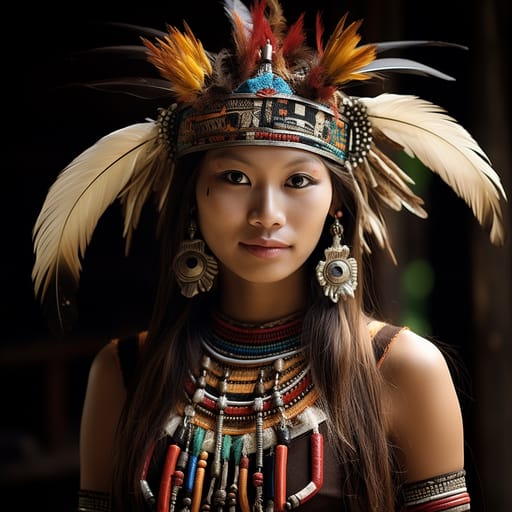
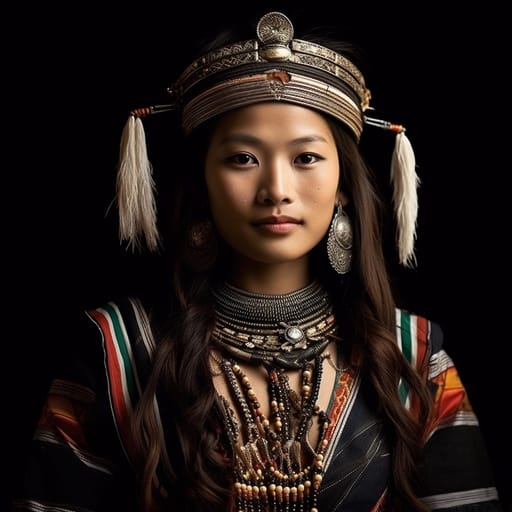
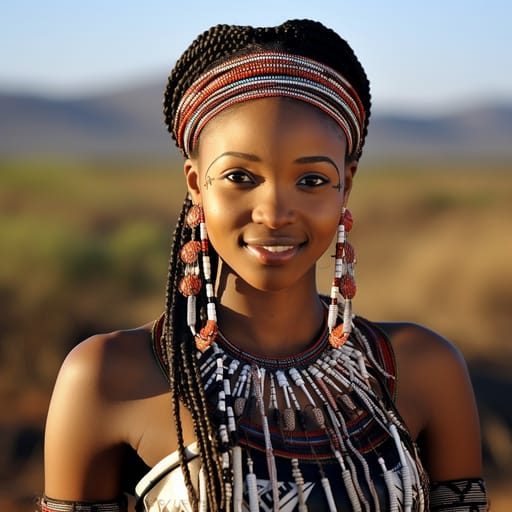
Geographic Distribution: Ambundu populations across 1 country
Each row is ranked by the group's share of that country's population, with the source citation drawn from published census and demographic surveys. Click through for the full per-country phenotype profile.
| Country | Share | Source |
|---|---|---|
| Angola | 25.0% | Estimates; Ambundu / Mbundu (~25%, ~8M+); concentrated in north-central Angola (Luanda, Bengo, Cuanza Norte, Malanje). Bantu / Kimbundu language. Politically prominent including the MPLA ruling-party heritage |
Typical Ambundu Phenotypes
Reference for AI generation: hair, eyes, skin, facial structure, build
The Ambundu of north-central Angola sit at the southwestern edge of the Bantu expansion, and their phenotype reflects that — a fairly uniform Central African base with subtle southern-tier shifts compared to Bantu populations further north. Skin tones run from medium-dark to deep brown, Fitzpatrick V to VI, with warm reddish-brown or umber undertones rather than the cooler near-black tones common in West African coastal groups. Sun-bleached lighter ranges appear among rural agricultural workers but the underlying pigmentation stays firmly in the deep range.
Hair is almost universally Type 4 — tightly coiled, with Type 4B and 4C dominating. Natural color is uniformly black, occasionally reading dark brown in strong light. Childhood hair sometimes shows a reddish-copper cast tied to protein-energy nutrition rather than genetics, and this fades with adulthood. Eyes are dark brown to near-black across the population; lighter eye colors are essentially absent, and the epicanthic fold is not a feature.
Facial structure leans toward broad, low-bridged noses with wide alar bases, full everted lips of roughly even upper-lower proportion, and prominent but not sharply angular cheekbones. Foreheads tend to be moderately rounded, jaws medium-width — less heavy than Nguni or Tsonga jaw patterns to the east, less narrow than typical Bakongo profiles to the north. Dental prognathism is mild and common.
Build is medium-tall by sub-Saharan averages — adult men typically 170–178 cm, women 158–165 cm — with a mesomorphic tendency: long limbs relative to torso, narrow hips on men, fuller gluteal and thigh development on women that is more pronounced than in West African groups but less extreme than among Khoisan-influenced southern Angolan populations. Shoulders read moderately broad, musculature lean rather than bulky.
Sub-group variation is modest. The Ngola and Mbondo branches show the core profile most cleanly, while groups along the Kwanza River corridor occasionally display slightly lighter skin and finer facial features — likely reflecting centuries of contact with Ovimbundu and Portuguese-descended populations.
Ambundu Body & Anatomy Reference
Bantu / Khoisan Southern African phenotype: anatomy reference for AI nude generation
Ambundu Boobs & Breasts
Ambundu tits and boobs run medium cup, full but moderate projection, the classic Bantu / Khoisan Southern African bust profile. Ambundu nipples and areolas show medium-brown to deep-brown areolar pigmentation, with areolar diameter typically in the 30-44mm range and forward-set positioning rather than the heavier West African bust. Ambundu breasts trend moderately full; less projecting than West African norm, a function of the mesomorph; Khoisan-descended sub-populations show distinctive steatopygic fat deposition body habitus and the mean adult female BMI 24-28. For anatomically accurate AI-generated Ambundu nudes the render preserves the medium cup, full but moderate projection shape, 30-44mm areolas with medium-brown to deep-brown pigmentation, and the torso proportions of the Bantu / Khoisan Southern African phenotype.
Ambundu Ass & Hips
Ambundu hips and butt usually read as the distinctive Khoisan-influenced steatopygic profile in some sub-populations (San, Khoekhoe); broader gluteal projection in Bantu-speaking groups. The skeletal base is wide iliac crests with notable lordosis in Khoisan-descended sub-populations, the Bantu / Khoisan Southern African pattern. Set against the slim Cushitic East African profile, the difference is easy to see, and the hip-to-waist ratio is often what identifies Ambundu women in photos.
Ambundu Vagina & Pussy
Expect deep-brown labial pigmentation; the elongated labia minora documented in some Khoisan-descended populations on Ambundu women, in keeping with Bantu / Khoisan Southern African ancestry. The pubic hair is tightly-coiled coarse texture. Coloring should run evenly from the medium-brown to deep-brown skin of the thighs to the labia, and Ambundu nude imagery should keep the hair's tightly-coiled coarse texture.
Ambundu Dicks & Penis
Ambundu dick and penile anatomy in adult AI generation should anchor on the regional reference data: regional mean ~14cm erect, moderate-to-above-average girth, and deep-brown shaft pigmentation. The Ambundu cock profile reflects the Bantu / Khoisan Southern African population's anthropometric measurements. The shaft pigmentation should track the surrounding medium-brown to deep-brown skin tone, and the pubic hair should keep its tightly-coiled coarse texture in the typical inverted-V escutcheon.
Ambundu Body, Curves & Build
Ambundu body type: mesomorph; Khoisan-descended sub-populations show distinctive steatopygic fat deposition, with mean adult female BMI 24-28. This is the typical Bantu / Khoisan Southern African build. Height range, shoulder-to-hip ratio and fat distribution all follow from it, which is what an accurate Ambundu nude body should show.
Ambundu Skin Tone & Hair Texture
Ambundu skin tone falls in the medium-brown to deep-brown (Fitzpatrick V-VI); lighter in Khoisan-descended populations band, the surface signal most often miscalibrated by generic AI nude generators. Ambundu hair texture is typically tightly-coiled 4A-4C; the distinctive 'peppercorn' tight-spiral texture in Khoisan-descended populations, characteristic of the Bantu / Khoisan Southern African phenotype. In Ambundu nude renders the skin should hold that band consistently across the body.
Data depth
0/100Coverage of image-grounded phenotype observations · drives AI generation diversity
- Sample size
- 0/40· 0 images
- Image quality
- 0/30· 0% high
- Confidence
- 0/20
- Source diversity
- 0/10
- ·No image observations yet
Explore phenotype categories
Structured taxonomy with peer-reviewed scales · 22 anatomical categories
Erotic Poses & Sex Positions
From the pose catalog: 219 named positions with reference skeletons
Frequently asked questions about Ambundu people
Where is the Ambundu homeland?
The Ambundu homeland is Angola in Southern Africa.
What countries do Ambundu people live in?
Ambundu populations are documented across 1 country: Angola.
What language do Ambundu people speak?
Ambundu people primarily speak Niger-Congo / Bantu / Kimbundu.
What religion do Ambundu people practice?
The predominant religion among Ambundu people is Christianity.






Make your own Ambundu images
Five a day, free, no credits to buy. The studio starts from this group's phenotype data, so you can set body type, pose and style and keep the traits accurate.
Start with Ambundu