Help us get this right
Does this portrait look right for Mafwe?
Nobody has judged this one yet. You would be the first.
Mafwe Erotic
Zambezi Region (former Caprivi Strip) of northeastern Namibia, centered on Chinchimane and the Kwando and Linyanti river country, with Fwe-speaking communities across the Zambezi in Zambia
Fwe or Sifwe (Bantu, Niger-Congo); Silozi (Bantu, Niger-Congo) as regional lingua franca; English (Germanic, Indo-European)
Mainly Christian, alongside customary authority and ceremony centered on the Mafwe royal house
Bantu-speaking peoples of Namibia's Zambezi Region; the Mafwe chieftaincy historically included Yeyi and other communities, some now under separate traditional authorities
About Mafwe People
What holds the Mafwe together is loyalty to a chieftaincy more than a single line of descent. Their country is the flat, seasonally flooded land along the Kwando and Linyanti rivers in Namibia's Zambezi Region, the panhandle long known as the Caprivi Strip. Their chiefs hold the hereditary title Mamili and keep their seat at Chinchimane. Being Mafwe has largely meant recognizing that seat. Over the past century, that recognition has drawn in neighbors of different origins, and at times it has pushed them out.
At home people speak Fwe, a Bantu language also spoken across the Zambezi in Zambia, but it rarely stands alone. Silozi is the region's common language, left behind by the Lozi kingdom whose rule reached this country in the nineteenth century. English is the language of school and government. Most Mafwe are Christian. Alongside the churches, the khuta, the chief's council and court, still settles land and family disputes. Each year the Lusata festival brings people back to Chinchimane for dancing, ceremony and a public show of loyalty to the royal house.
Borders have been drawn over their heads more than once. In 1890 an Anglo-German treaty handed the strip to Germany so its colony could reach the Zambezi, which cut the area off from Barotseland to the north. South Africa later ran it as a homeland. After independence, the old rivalry with the neighboring Masubia chieftaincy fed into national politics. In 1998 a secessionist movement led by the Mafwe politician Mishake Muyongo came into the open, and the Mafwe chief was among thousands who fled to Botswana. Armed attacks on Katima Mulilo followed in August 1999, and the treason trial that came after ran for more than a decade. That period still shapes how the region talks about itself.
The chieftaincy has also shrunk from within. Yeyi communities around Sangwali pushed for their own recognized traditional authority and won it, and similar claims have come from other parts of the old Mafwe domain. The name was on the map too: the national park in the Linyanti wetlands was called Mamili, after the chiefs, until it was renamed Nkasa Rupara in 2012.
Related ethnic groups
Groups that share Mafwe's homeland, region, language, or religious tradition. These are likely candidates for comparative phenotype reference.
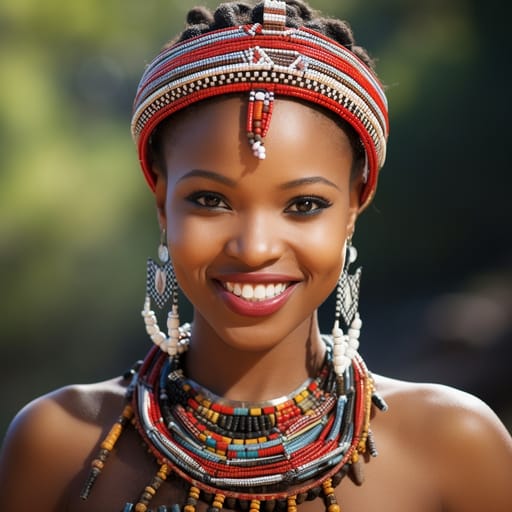
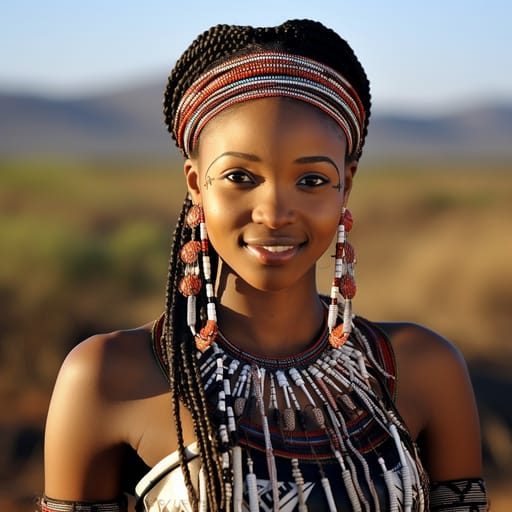
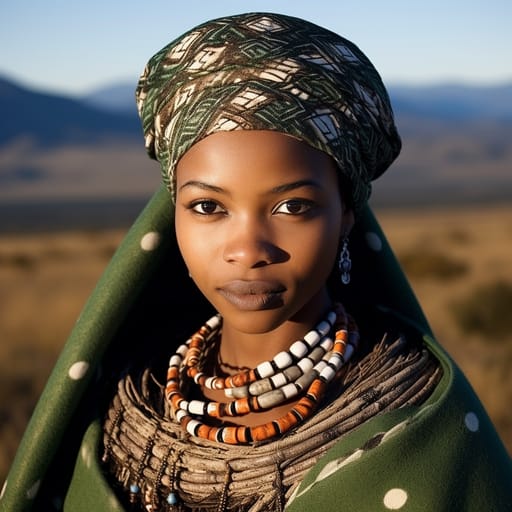
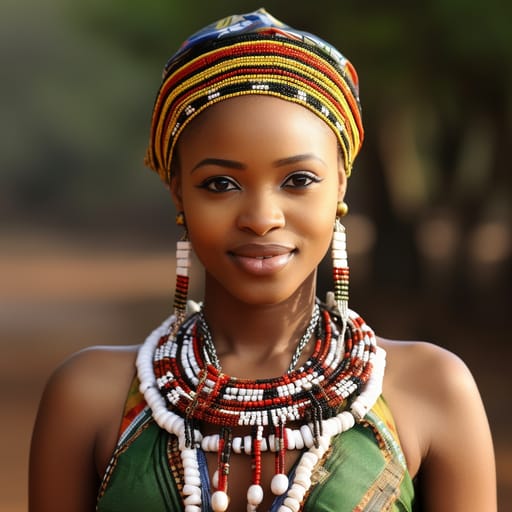
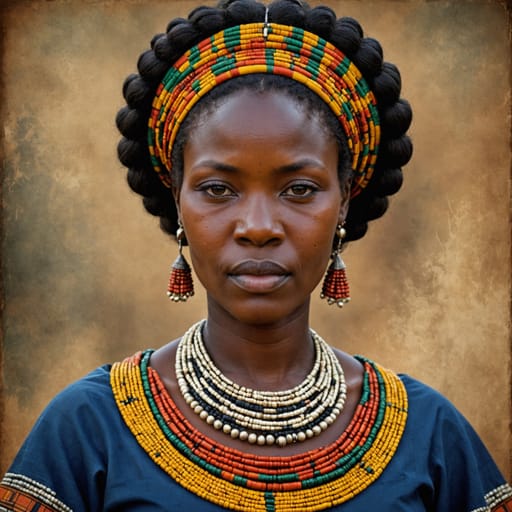
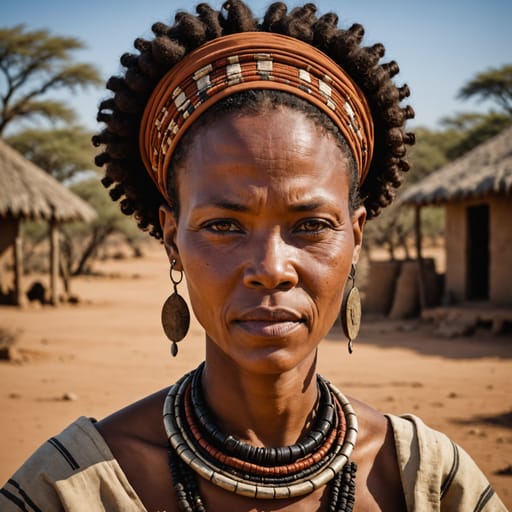
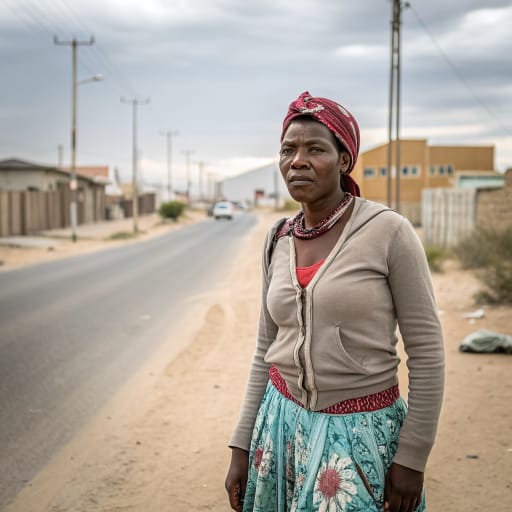
Typical Mafwe Phenotypes
Reference for AI generation: hair, eyes, skin, facial structure, build
Mafwe Body & Anatomy Reference
Anatomy by feature, Bantu / Khoisan Southern African phenotype
Mafwe Boobs & Breasts
Mafwe tits and boobs run medium cup, full but moderate projection, the classic Bantu / Khoisan Southern African bust profile. Mafwe nipples and areolas show medium-brown to deep-brown areolar pigmentation, with areolar diameter typically in the 30-44mm range and forward-set positioning rather than the heavier West African bust. Mafwe breasts trend moderately full; less projecting than West African norm, a function of the mesomorph; Khoisan-descended sub-populations show distinctive steatopygic fat deposition body habitus and the mean adult female BMI 24-28. For anatomically accurate AI-generated Mafwe nudes the render preserves the medium cup, full but moderate projection shape, 30-44mm areolas with medium-brown to deep-brown pigmentation, and the torso proportions of the Bantu / Khoisan Southern African phenotype.
Mafwe Ass & Hips
Mafwe hips and butt usually read as the distinctive Khoisan-influenced steatopygic profile in some sub-populations (San, Khoekhoe); broader gluteal projection in Bantu-speaking groups. The skeletal base is wide iliac crests with notable lordosis in Khoisan-descended sub-populations, the Bantu / Khoisan Southern African pattern. Set against the slim Cushitic East African profile, the difference is easy to see, and the hip-to-waist ratio is often what identifies Mafwe women in photos.
Mafwe Vagina & Pussy
Expect deep-brown labial pigmentation; the elongated labia minora documented in some Khoisan-descended populations on Mafwe women, in keeping with Bantu / Khoisan Southern African ancestry. The pubic hair is tightly-coiled coarse texture. Coloring should run evenly from the medium-brown to deep-brown skin of the thighs to the labia, and Mafwe nude imagery should keep the hair's tightly-coiled coarse texture.
Mafwe Dicks & Penis
Mafwe dick and penile anatomy in adult AI generation should anchor on the regional reference data: regional mean ~14cm erect, moderate-to-above-average girth, and deep-brown shaft pigmentation. The Mafwe cock profile reflects the Bantu / Khoisan Southern African population's anthropometric measurements. The shaft pigmentation should track the surrounding medium-brown to deep-brown skin tone, and the pubic hair should keep its tightly-coiled coarse texture in the typical inverted-V escutcheon.
Mafwe Body, Curves & Build
Mafwe body type: mesomorph; Khoisan-descended sub-populations show distinctive steatopygic fat deposition, with mean adult female BMI 24-28. This is the typical Bantu / Khoisan Southern African build. Height range, shoulder-to-hip ratio and fat distribution all follow from it, which is what an accurate Mafwe nude body should show.
Mafwe Skin Tone & Hair Texture
Mafwe skin tone falls in the medium-brown to deep-brown (Fitzpatrick V-VI); lighter in Khoisan-descended populations band, the surface signal most often miscalibrated by generic AI nude generators. Mafwe hair texture is typically tightly-coiled 4A-4C; the distinctive 'peppercorn' tight-spiral texture in Khoisan-descended populations, characteristic of the Bantu / Khoisan Southern African phenotype. In Mafwe nude renders the skin should hold that band consistently across the body.
Explore phenotype categories
Structured taxonomy with peer-reviewed scales · 22 anatomical categories
Erotic Poses & Sex Positions
From the pose catalog: 219 named positions with reference skeletons
Frequently asked questions about Mafwe people
Where is the Mafwe homeland?
The Mafwe homeland is Zambezi Region (former Caprivi Strip) of northeastern Namibia, centered on Chinchimane and the Kwando and Linyanti river country, with Fwe-speaking communities across the Zambezi in Zambia in Southern Africa.
What language do Mafwe people speak?
Mafwe people primarily speak Fwe or Sifwe (Bantu, Niger-Congo); Silozi (Bantu, Niger-Congo) as regional lingua franca; English (Germanic, Indo-European).
What religion do Mafwe people practice?
The predominant religion among Mafwe people is Mainly Christian, alongside customary authority and ceremony centered on the Mafwe royal house.






Make your own Mafwe images
Five a day, free, no credits to buy. The studio starts from this group's phenotype data, so you can set body type, pose and style and keep the traits accurate.
Start with Mafwe