No portrait yet
Basters Erotic
Rehoboth and the surrounding Rehoboth Gebiet in central Namibia, south of Windhoek; originally the northern Cape frontier of South Africa.
Afrikaans (Indo-European, West Germanic), with historical Khoekhoe influence
Protestant Christianity, mainly Reformed and Lutheran traditions, with church membership central to community life
A Cape 'Bastaard' population of mixed Khoekhoe and European descent. The Rehoboth Basters are the main surviving community, related in origin to the Griqua and to the wider Cape Coloured population.
About Basters People
The name is the first thing to deal with, because the Basters chose it and have refused every invitation to drop it. It comes from the Dutch bastaard, and it began as an insult aimed at the children of Cape Colony farmers and Khoekhoe women, people who belonged fully to neither community that produced them. Others of the same parentage accepted new names when missionaries pressed them, the Griqua being the best known case. The Basters kept theirs and still use it, on letterheads, in court filings, in ordinary conversation. It works as a claim to a specific origin rather than as a wound. The group took shape on the northern edge of the Cape frontier, drifted north as settler farms closed in behind it, crossed the Orange River, and in 1870 a party under Hermanus van Wyk settled at Rehoboth, a place with dependable hot springs in dry highland country roughly ninety kilometers south of Windhoek. What they did on arrival is the part worth knowing. In 1872 they adopted the Vaderlike Wette, the Paternal Laws: a short written constitution providing for an elected Kaptein, a governing Raad, and land held in common by the community rather than by the chief.
The century that followed was largely a fight to keep that arrangement. A protection treaty with Germany in 1885 turned into service alongside German colonial forces, and then into rupture. In May 1915 a Baster commando was surrounded at Sam Khubis and expected to be destroyed. The Germans withdrew instead, and the deliverance is marked every year by a pilgrimage to the site, an occasion at least as religious as it is national. South African administration later filed the Basters into apartheid's racial categories and granted Rehoboth a narrow self-government in the 1970s. Independence in 1990 ended the separate arrangement, and the courts declined to restore communal title over the Rehoboth Gebiet, which remains a live grievance and is still argued over. The Basters today number in the tens of thousands, concentrated in Rehoboth and the farms around it, with many in Windhoek. Afrikaans is the home language, and the reformed Protestant churches set the calendar: Sunday attendance, confirmations, funerals that pull in the whole town. The Kaptein and the Raad persist as a community authority even where the state grants them no standing. Descent is the boundary that matters here, and it is traced carefully.
Related ethnic groups
Groups that share Basters's homeland, region, language, or religious tradition. These are likely candidates for comparative phenotype reference.
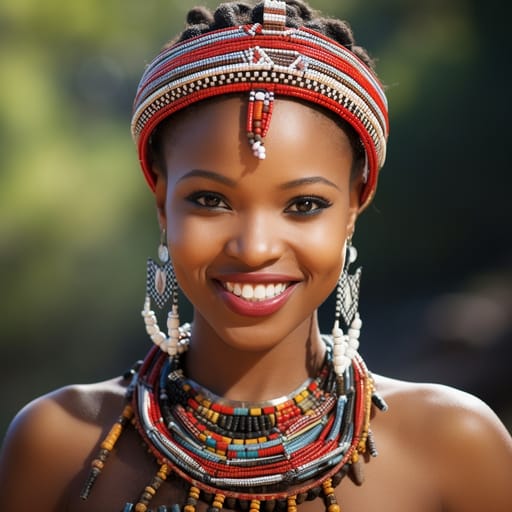
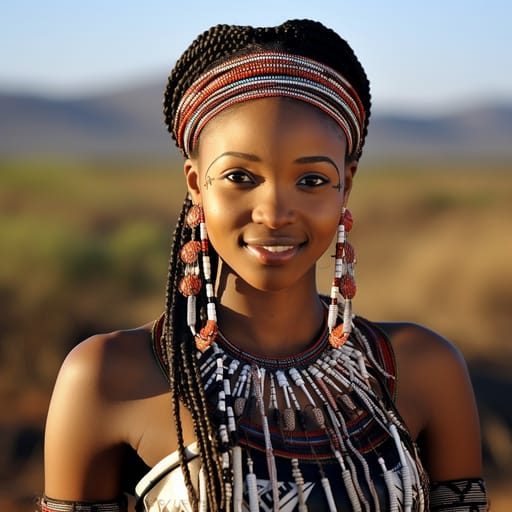
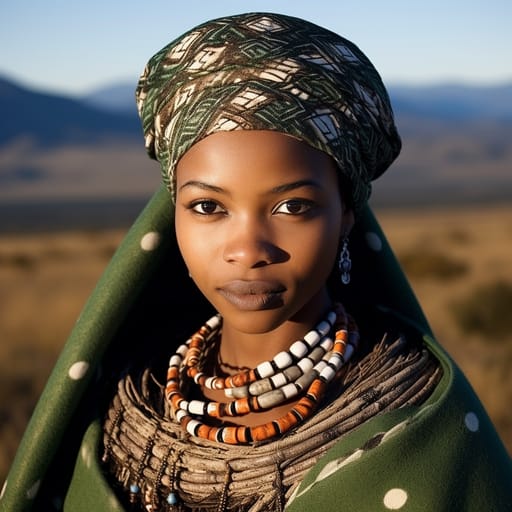
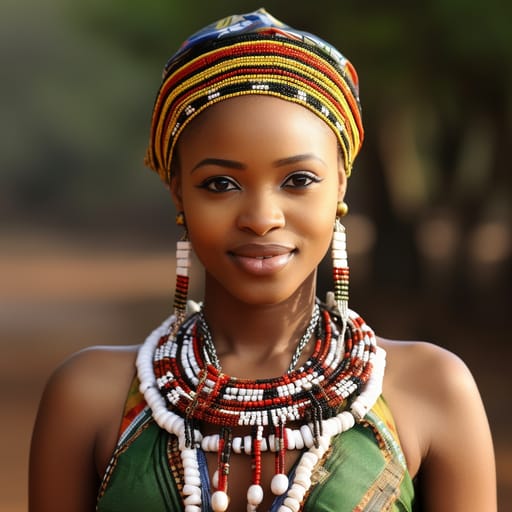
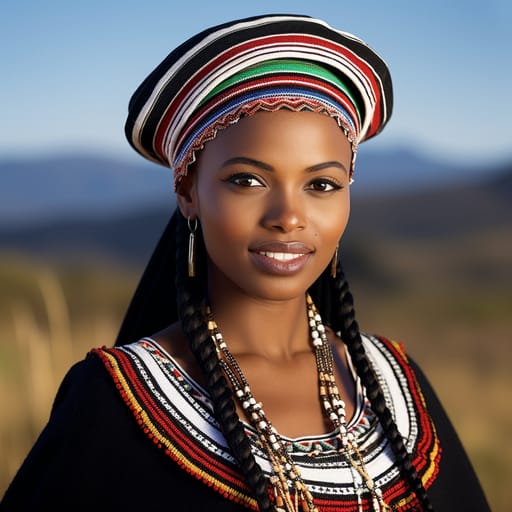

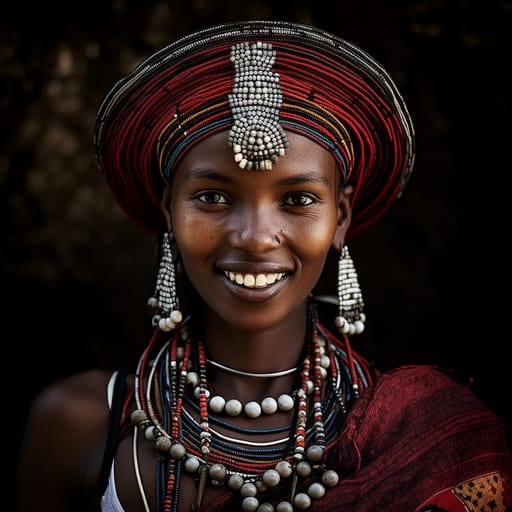
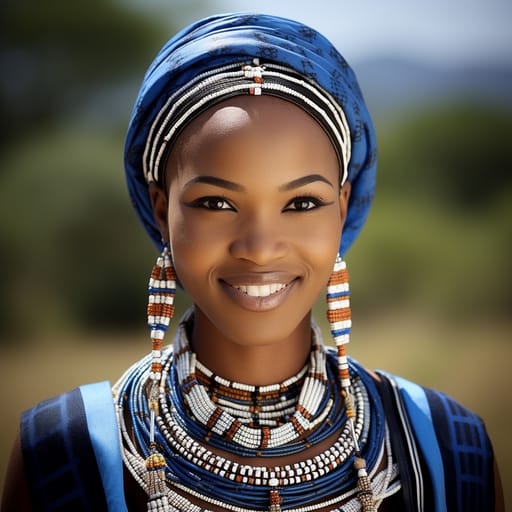
Typical Basters Phenotypes
Reference for AI generation: hair, eyes, skin, facial structure, build
Basters Body & Anatomy Reference
Per-feature anatomical profile for AI nude generation: Bantu / Khoisan Southern African phenotype
Basters Boobs & Breasts
Basters boobs follow the Bantu / Khoisan Southern African profile: medium cup, full but moderate projection. Areolar diameter is usually 30-44mm, and the coloring is medium-brown to deep-brown areolar pigmentation. Breast shape tracks body composition (mesomorph; Khoisan-descended sub-populations show distinctive steatopygic fat deposition, mean adult female BMI 24-28), so Basters breasts tend to be moderately full; less projecting than West African norm. Expect a forward-set shape, not the heavier West African bust.
Basters Ass & Hips
Basters ass and hip morphology presents as the distinctive Khoisan-influenced steatopygic profile in some sub-populations (San, Khoekhoe); broader gluteal projection in Bantu-speaking groups, distinctly different from the slim Cushitic East African profile. The Basters pelvic profile shows wide iliac crests with notable lordosis in Khoisan-descended sub-populations, anchored in the Bantu / Khoisan Southern African skeletal pattern. Basters butt shots in adult AI imagery should render the the distinctive Khoisan-influenced steatopygic profile in some sub-populations (San, Khoekhoe); broader gluteal projection in Bantu-speaking groups silhouette with the overall build (mesomorph; Khoisan-descended sub-populations show distinctive steatopygic fat deposition) and the fat distribution typical of the Bantu / Khoisan Southern African phenotype.
Basters Vagina & Pussy
Basters pussy anatomy typically shows deep-brown labial pigmentation; the elongated labia minora documented in some Khoisan-descended populations. Pubic hair is usually tightly-coiled coarse texture. In AI-generated Basters nudes, labial color should blend into the medium-brown to deep-brown skin with a gradual transition, and the hair should keep its tightly-coiled coarse texture.
Basters Dicks & Penis
Penis reference for Basters men: regional mean ~14cm erect, moderate-to-above-average girth. Coloring: deep-brown shaft pigmentation. An accurate Basters cock in AI imagery matches the surrounding medium-brown to deep-brown skin rather than a generic porn default. Circumcision depends on religion and custom, not ancestry.
Basters Body, Curves & Build
The Basters figure is generally mesomorph; Khoisan-descended sub-populations show distinctive steatopygic fat deposition, with mean adult female BMI 24-28, characteristic of Bantu / Khoisan Southern African ancestry. AI image tools tend to flatten regional body types into a few stock shapes; here the Basters build is kept as its own reference.
Basters Skin Tone & Hair Texture
Skin: medium-brown to deep-brown (Fitzpatrick V-VI); lighter in Khoisan-descended populations. Hair: tightly-coiled 4A-4C; the distinctive 'peppercorn' tight-spiral texture in Khoisan-descended populations. Both are typical of Bantu / Khoisan Southern African ancestry. The most common mistake in AI nudes of Basters women is a body rendered lighter than the face.
Explore phenotype categories
Structured taxonomy with peer-reviewed scales · 22 anatomical categories
Erotic Poses & Sex Positions
From the pose catalog: 219 named positions with reference skeletons
Frequently asked questions about Basters people
Where is the Basters homeland?
The Basters homeland is Rehoboth and the surrounding Rehoboth Gebiet in central Namibia, south of Windhoek; originally the northern Cape frontier of South Africa. in Southern Africa.
What language do Basters people speak?
Basters people primarily speak Afrikaans (Indo-European, West Germanic), with historical Khoekhoe influence.
What religion do Basters people practice?
The predominant religion among Basters people is Protestant Christianity, mainly Reformed and Lutheran traditions, with church membership central to community life.






Make your own Basters images
Five a day, free, no credits to buy. The studio starts from this group's phenotype data, so you can set body type, pose and style and keep the traits accurate.
Start with Basters