Help us get this right
Does this portrait look right for Cape Coloureds?
Nobody has judged this one yet. You would be the first.
Cape Coloureds Erotic
Western Cape and Northern Cape provinces of South Africa, centered on Cape Town, with communities across the rest of the country and in Namibia
Afrikaans, including the Kaaps variety of the Cape Flats, and English (Indo-European, Germanic)
Majority Christian, chiefly Dutch Reformed, Anglican, Catholic and Pentecostal; a long established Sunni Muslim minority, the Cape Malays
Cape Malays, Griqua, Basters, Nama and other Khoesan descended communities; part of South Africa's wider Coloured population
About Cape Coloureds People
Most groups in this catalog trace back to a single line of descent. Cape Coloureds trace back to a confluence. The group formed at the southern tip of Africa after 1652, when the Dutch East India Company put a supply station at Table Bay: Khoekhoe herders and San hunters already there, enslaved people shipped in from Madagascar, Mozambique, Bengal, the Malabar coast and the Indonesian archipelago, Dutch, German and French Huguenot settlers, and later Xhosa neighbors. Geneticists describe the result as one of the most admixed populations documented anywhere. The more useful point is that the mixture stopped being a mixture and became a people, roughly five million strong, the largest population group in both the Western and Northern Cape. Afrikaans is the first language of most, and that is less an inheritance from settlers than a shared authorship: the language creolized in Cape kitchens, docks and slave quarters, and some of its oldest surviving written texts are in Arabic script, religious primers set down for Cape Muslim students in the nineteenth century. Kaaps, the variety spoken on the Cape Flats, spent a century being dismissed as broken Afrikaans and is now written on purpose, in poetry, in hip hop, in a dictionary of its own.
Most Cape Coloureds are Christian: Dutch Reformed, Anglican, Catholic or Pentecostal. The Cape Malay minority is Muslim, descended from enslaved people and political exiles from the Indonesian world. Sheikh Yusuf of Makassar, banished to the Cape in 1694, lies in one of the kramats, the shrines Cape Muslims count as a protective ring around the peninsula. Apartheid did not invent the category, it froze it. The Population Registration Act of 1950 made Coloured a legal status assigned by clerks working from paperwork, appearance and, notoriously, a pencil pushed into the hair. Men who had voted on the Cape's qualified franchise since the 1850s were struck from the common roll in 1956. The Group Areas Act emptied District Six and scattered some sixty thousand people to the sandy townships of the Cape Flats, a dislocation still being paid for. The tricameral parliament of 1983 offered a segregated junior chamber and got a boycott. The line you still hear is that they were not white enough then and are not black enough now. Every January 2, Tweede Nuwe Jaar, the single day of the year enslaved Capetonians were given off, thousands of Klopse marchers take Cape Town in satin and face paint behind the ghoema drums. It reads as a party. It is also a claim on the city.
Related ethnic groups
Groups that share Cape Coloureds's homeland, region, language, or religious tradition. These are likely candidates for comparative phenotype reference.
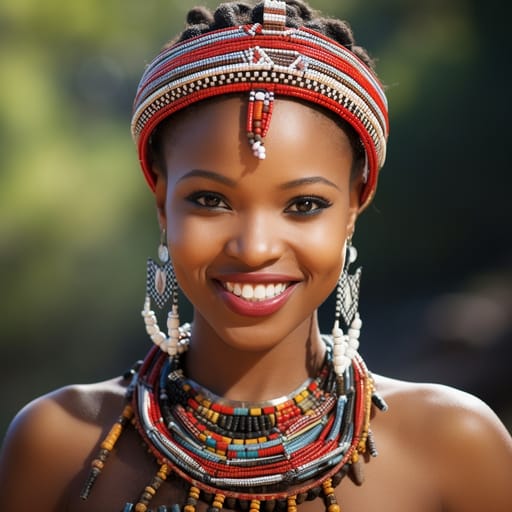
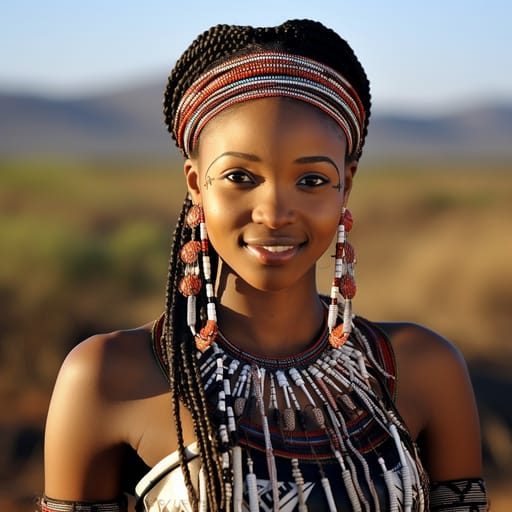
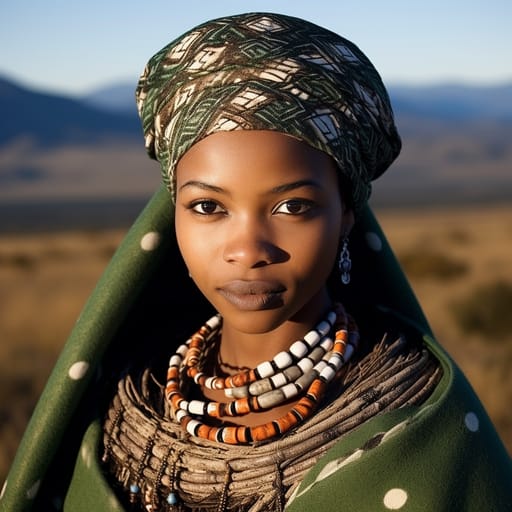
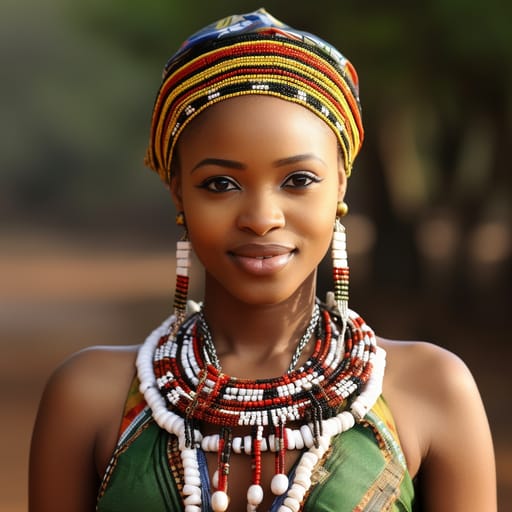
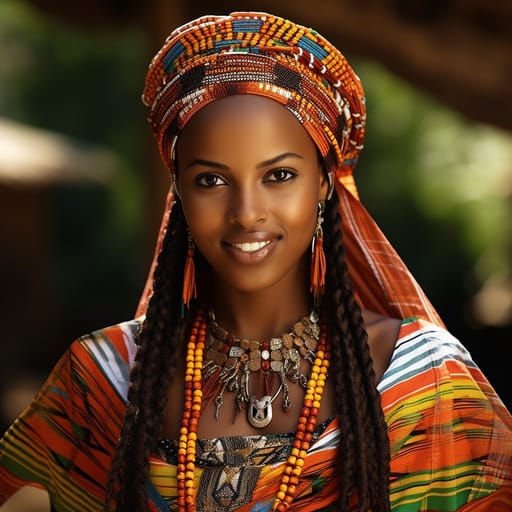
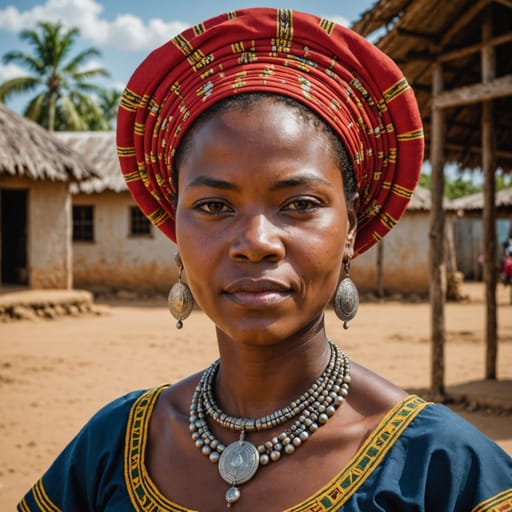
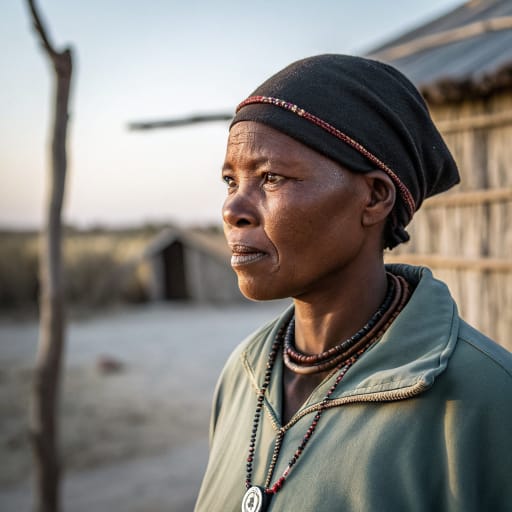
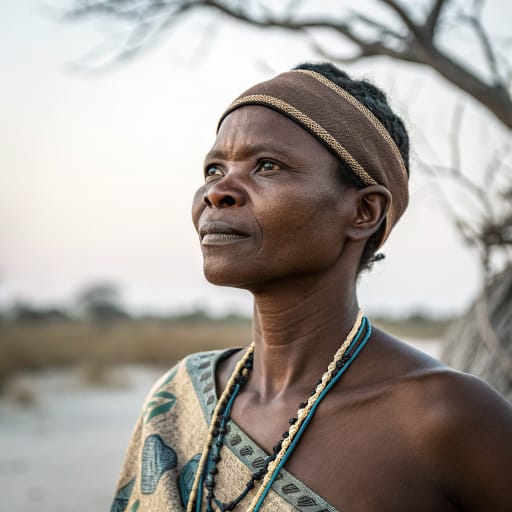
Typical Cape Coloureds Phenotypes
Reference for AI generation: hair, eyes, skin, facial structure, build
Cape Coloureds Body & Anatomy Reference
Bantu / Khoisan Southern African phenotype: anatomy reference for AI nude generation
Cape Coloureds Boobs & Breasts
Bust reference for Cape Coloureds women: medium cup, full but moderate projection, which is typical of Bantu / Khoisan Southern African ancestry. Areolas measure about 30-44mm across, with medium-brown to deep-brown pigmentation. Body type (mesomorph; Khoisan-descended sub-populations show distinctive steatopygic fat deposition) shapes the bust as well, so Cape Coloureds tits are usually moderately full; less projecting than West African norm. In AI imagery, keep the forward-set shape rather than drifting toward the heavier West African bust.
Cape Coloureds Ass & Hips
The Cape Coloureds ass is typically the distinctive Khoisan-influenced steatopygic profile in some sub-populations (San, Khoekhoe); broader gluteal projection in Bantu-speaking groups, which sets it apart from the slim Cushitic East African profile. Underneath, the pelvis shows wide iliac crests with notable lordosis in Khoisan-descended sub-populations, part of the Bantu / Khoisan Southern African skeletal pattern. For Cape Coloureds butt pics and AI renders, match that silhouette and the overall build (mesomorph; Khoisan-descended sub-populations show distinctive steatopygic fat deposition).
Cape Coloureds Vagina & Pussy
Cape Coloureds pussy and vulvar anatomy presents deep-brown labial pigmentation; the elongated labia minora documented in some Khoisan-descended populations, consistent with the Bantu / Khoisan Southern African phenotype's pigmentation pattern. Cape Coloureds pubic hair is typically tightly-coiled coarse texture, in the inverted-triangle pattern. For anatomically accurate Cape Coloureds pussy renders the labial coloration should match the surrounding medium-brown to deep-brown skin tone with a continuous gradient, and the hair should keep its tightly-coiled coarse texture.
Cape Coloureds Dicks & Penis
Cape Coloureds dicks follow the Bantu / Khoisan Southern African reference data: regional mean ~14cm erect; moderate-to-above-average girth; deep-brown shaft pigmentation. Shaft color should track the medium-brown to deep-brown skin tone with a smooth change toward the glans, and Cape Coloureds pubic hair keeps its tightly-coiled coarse texture.
Cape Coloureds Body, Curves & Build
Cape Coloureds body type and overall build presents as mesomorph; Khoisan-descended sub-populations show distinctive steatopygic fat deposition, with mean adult female BMI 24-28: the characteristic Bantu / Khoisan Southern African habitus. Cape Coloureds curves and proportions should keep the regional skeletal frame (height, shoulder-to-hip ratio, limb proportions) rather than a generic mesomorph default.
Cape Coloureds Skin Tone & Hair Texture
Cape Coloureds skin sits in the medium-brown to deep-brown (Fitzpatrick V-VI); lighter in Khoisan-descended populations band. Hair is typically tightly-coiled 4A-4C; the distinctive 'peppercorn' tight-spiral texture in Khoisan-descended populations, in keeping with the Bantu / Khoisan Southern African phenotype. In nude renders the skin should stay one even tone from face to body, and body, pubic and head hair should match.
Explore phenotype categories
Structured taxonomy with peer-reviewed scales · 22 anatomical categories
Erotic Poses & Sex Positions
From the pose catalog: 219 named positions with reference skeletons
Frequently asked questions about Cape Coloureds people
Where is the Cape Coloureds homeland?
The Cape Coloureds homeland is Western Cape and Northern Cape provinces of South Africa, centered on Cape Town, with communities across the rest of the country and in Namibia in Southern Africa.
What language do Cape Coloureds people speak?
Cape Coloureds people primarily speak Afrikaans, including the Kaaps variety of the Cape Flats, and English (Indo-European, Germanic).
What religion do Cape Coloureds people practice?
The predominant religion among Cape Coloureds people is Majority Christian, chiefly Dutch Reformed, Anglican, Catholic and Pentecostal; a long established Sunni Muslim minority, the Cape Malays.






Make your own Cape Coloureds images
Five a day, free, no credits to buy. The studio starts from this group's phenotype data, so you can set body type, pose and style and keep the traits accurate.
Start with Cape Coloureds