No portrait yet
Ndwandwe Erotic
The country between the Black Mfolozi and Pongola rivers in northern KwaZulu-Natal, South Africa, reaching toward the Eswatini border; descendant communities in Mozambique, Eswatini, Zimbabwe, Malawi, Zambia and Tanzania.
Historically a northern Nguni dialect (Niger-Congo, Bantu); descendants today speak isiZulu, siSwati, Xitsonga, and the Ngoni-influenced languages of Malawi, Zambia and Tanzania.
Ancestral veneration of the amadlozi historically; descendants today are largely Christian, often practiced alongside ancestral observance.
Northern Nguni, royal house of the Nxumalo clan. Offshoots include the Gaza and Shangaan under Soshangane, the Jere and Maseko Ngoni under Zwangendaba and others, and lineages absorbed into the Zulu and Swazi.
About Ndwandwe People
The Ndwandwe are remembered for a single decade, and that is not really fair to them. Between roughly 1810 and 1820 they were the strongest power in the country between the Black Mfolozi and the Pongola rivers, in what is now northern KwaZulu-Natal, and their king Zwide kaLanga of the Nxumalo house held ground running up toward the Lubombo hills. Then Shaka broke them, and the history got written by the winners. What is worth knowing is that most of what gets credited to the Zulu as invention, the age regiments, the tribute system, the swallowing of small chiefdoms into one command, the Ndwandwe were doing at the same time or earlier. They were not a backward people overrun by a genius. They were a rival state that lost.
Their speech was northern Nguni, close enough to modern isiZulu and siSwati that the three are better understood as one dialect continuum than as three separate tongues. Standing ran through cattle and through the ancestors: the amadlozi are addressed by the head of the homestead rather than by any priesthood, and that basic shape persists among descendants today underneath a broad Christian affiliation. Oral tradition gives Zwide's mother Ntombazi an outsized and sinister part, keeping the skulls of defeated chiefs in her hut, but that story reached the page through people with reasons to tell it that way, and it should be held loosely.
The defeat matters more than the kingdom, because of what it scattered. Ndwandwe commanders who fled north did not disappear. Soshangane went into southern Mozambique and built the Gaza kingdom, and the Shangaan trace their name to him. Zwangendaba took his followers across the Zambezi in November 1835, during an eclipse still fixed in the oral record, and seeded the Ngoni chiefdoms of Malawi, Zambia and Tanzania, where Nguni clan names, shields and dance survive a very long way from where they started. Others were absorbed into the Swazi or folded back into the Zulu. Sikhunyana, Zwide's son, made a last stand in 1826 and lost it. So the Ndwandwe persist as a clan name, Nxumalo, carried by a great many people, and as the ancestry of at least three peoples who no longer call themselves Ndwandwe at all.
Related ethnic groups
Groups that share Ndwandwe's homeland, region, language, or religious tradition. These are likely candidates for comparative phenotype reference.
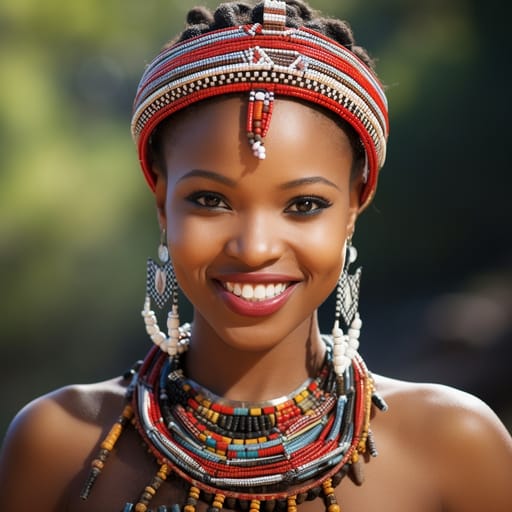
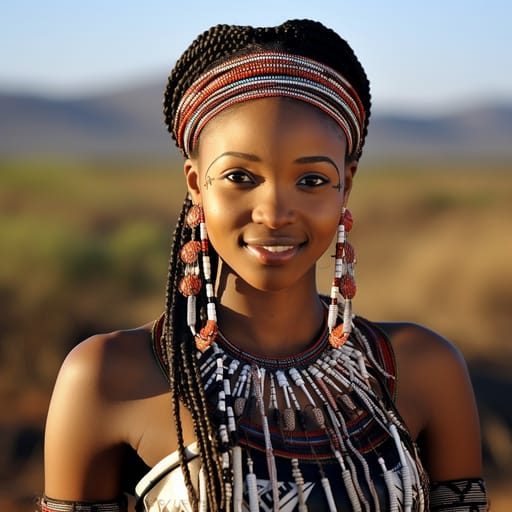
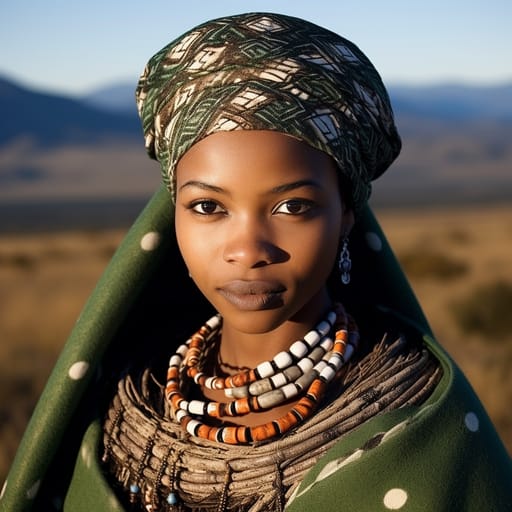
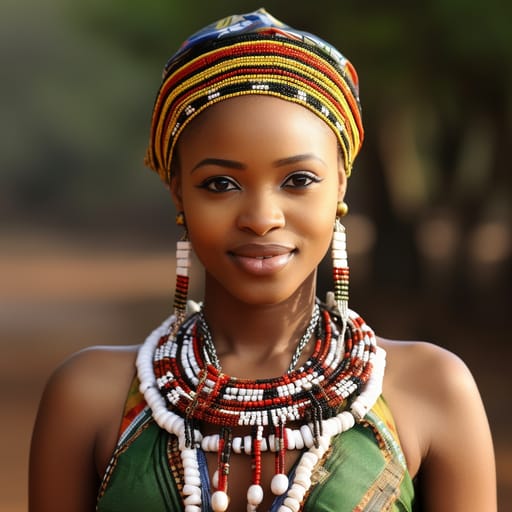
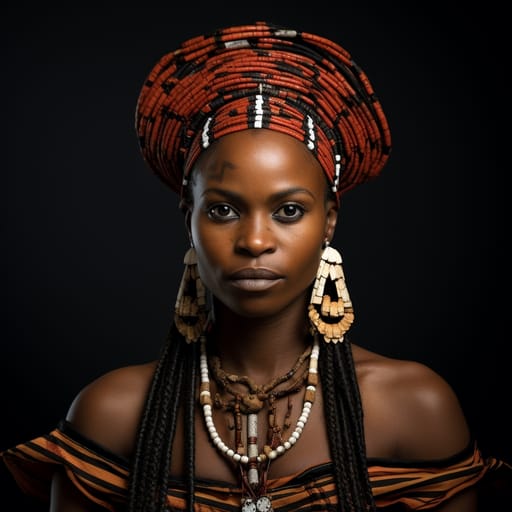
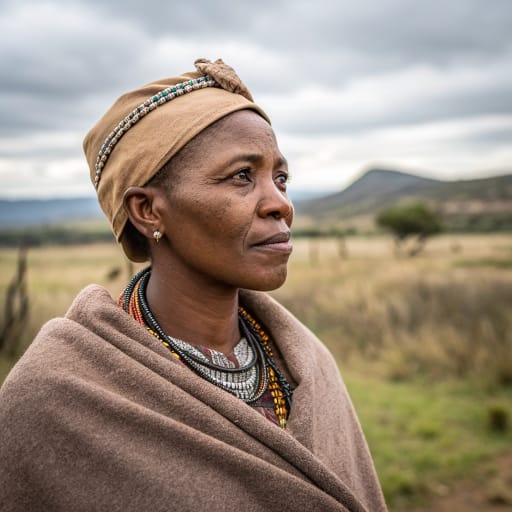
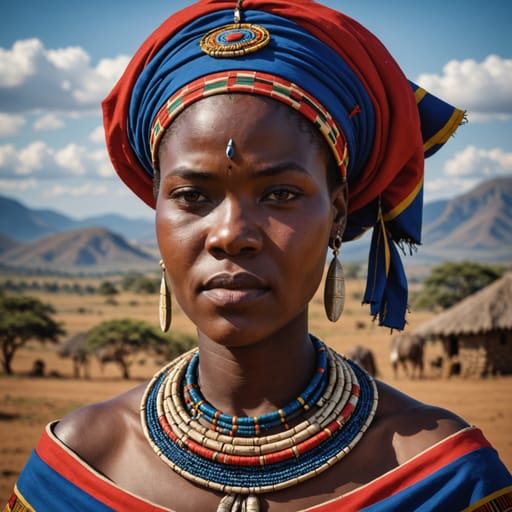
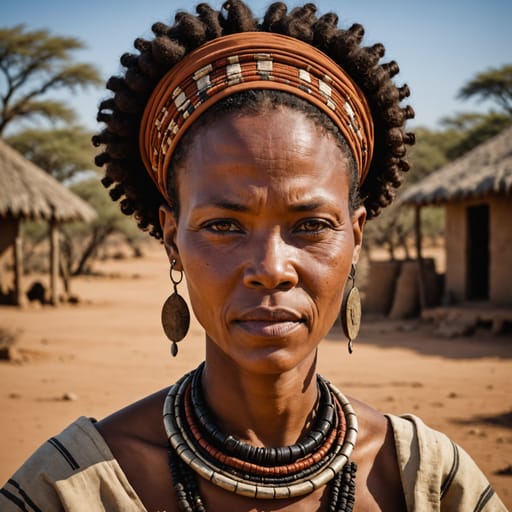
Typical Ndwandwe Phenotypes
Reference for AI generation: hair, eyes, skin, facial structure, build
Ndwandwe Body & Anatomy Reference
Bantu / Khoisan Southern African phenotype: anatomy reference for AI nude generation
Ndwandwe Boobs & Breasts
Ndwandwe boobs follow the Bantu / Khoisan Southern African profile: medium cup, full but moderate projection. Areolar diameter is usually 30-44mm, and the coloring is medium-brown to deep-brown areolar pigmentation. Breast shape tracks body composition (mesomorph; Khoisan-descended sub-populations show distinctive steatopygic fat deposition, mean adult female BMI 24-28), so Ndwandwe breasts tend to be moderately full; less projecting than West African norm. Expect a forward-set shape, not the heavier West African bust.
Ndwandwe Ass & Hips
Ndwandwe ass and hip morphology presents as the distinctive Khoisan-influenced steatopygic profile in some sub-populations (San, Khoekhoe); broader gluteal projection in Bantu-speaking groups, distinctly different from the slim Cushitic East African profile. The Ndwandwe pelvic profile shows wide iliac crests with notable lordosis in Khoisan-descended sub-populations, anchored in the Bantu / Khoisan Southern African skeletal pattern. Ndwandwe butt shots in adult AI imagery should render the the distinctive Khoisan-influenced steatopygic profile in some sub-populations (San, Khoekhoe); broader gluteal projection in Bantu-speaking groups silhouette with the overall build (mesomorph; Khoisan-descended sub-populations show distinctive steatopygic fat deposition) and the fat distribution typical of the Bantu / Khoisan Southern African phenotype.
Ndwandwe Vagina & Pussy
Ndwandwe pussy anatomy typically shows deep-brown labial pigmentation; the elongated labia minora documented in some Khoisan-descended populations. Pubic hair is usually tightly-coiled coarse texture. In AI-generated Ndwandwe nudes, labial color should blend into the medium-brown to deep-brown skin with a gradual transition, and the hair should keep its tightly-coiled coarse texture.
Ndwandwe Dicks & Penis
Penis reference for Ndwandwe men: regional mean ~14cm erect, moderate-to-above-average girth. Coloring: deep-brown shaft pigmentation. An accurate Ndwandwe cock in AI imagery matches the surrounding medium-brown to deep-brown skin rather than a generic porn default. Circumcision depends on religion and custom, not ancestry.
Ndwandwe Body, Curves & Build
The Ndwandwe figure is generally mesomorph; Khoisan-descended sub-populations show distinctive steatopygic fat deposition, with mean adult female BMI 24-28, characteristic of Bantu / Khoisan Southern African ancestry. AI image tools tend to flatten regional body types into a few stock shapes; here the Ndwandwe build is kept as its own reference.
Ndwandwe Skin Tone & Hair Texture
Skin: medium-brown to deep-brown (Fitzpatrick V-VI); lighter in Khoisan-descended populations. Hair: tightly-coiled 4A-4C; the distinctive 'peppercorn' tight-spiral texture in Khoisan-descended populations. Both are typical of Bantu / Khoisan Southern African ancestry. The most common mistake in AI nudes of Ndwandwe women is a body rendered lighter than the face.
Explore phenotype categories
Structured taxonomy with peer-reviewed scales · 22 anatomical categories
Erotic Poses & Sex Positions
From the pose catalog: 219 named positions with reference skeletons
Frequently asked questions about Ndwandwe people
Where is the Ndwandwe homeland?
The Ndwandwe homeland is The country between the Black Mfolozi and Pongola rivers in northern KwaZulu-Natal, South Africa, reaching toward the Eswatini border; descendant communities in Mozambique, Eswatini, Zimbabwe, Malawi, Zambia and Tanzania. in Southern Africa.
What language do Ndwandwe people speak?
Ndwandwe people primarily speak Historically a northern Nguni dialect (Niger-Congo, Bantu); descendants today speak isiZulu, siSwati, Xitsonga, and the Ngoni-influenced languages of Malawi, Zambia and Tanzania..
What religion do Ndwandwe people practice?
The predominant religion among Ndwandwe people is Ancestral veneration of the amadlozi historically; descendants today are largely Christian, often practiced alongside ancestral observance..






Make your own Ndwandwe images
Five a day, free, no credits to buy. The studio starts from this group's phenotype data, so you can set body type, pose and style and keep the traits accurate.
Start with Ndwandwe