No portrait yet
Tlokwa Erotic
Southeastern Botswana around Tlokweng; the Botlokwa area of Limpopo, South Africa; historically the Caledon River valley on the South Africa and Lesotho border
Setswana in Botswana, Northern Sotho (Setlokwa) in Limpopo, Sesotho in Lesotho (Sotho-Tswana, Bantu, Niger-Congo)
Predominantly Christian, with continuing respect for ancestors (badimo)
Sotho-Tswana peoples; Batlokwa of Tlokweng (Botswana), Batlokwa of Botlokwa (Limpopo), and lineages absorbed into the Basotho
About Tlokwa People
The Batlokwa are a Sotho-Tswana people held together less by one territory than by a shared lineage, a chieftaincy and a name. Their communities are spread across Botswana, South Africa and Lesotho. Two of their leaders became better known than the people themselves. One was a woman. In the 1820s, as the wars and forced migrations remembered as the Difaqane swept the highveld, Mmanthatisi ruled the Batlokwa as regent for her young son Sekonyela. She led them through years of flight, raiding and resettlement in the Caledon River valley. Her reputation traveled so far that missionaries and traders turned her name into Mantatees, a catch-all label for highveld raiders, many of whom had never answered to her.
Sekonyela inherited a dangerous neighborhood. In the 1830s the Voortrekker leader Piet Retief tricked him into handcuffs and held him until he handed over cattle that the Zulu king Dingane said had been stolen from him. Sekonyela's long rivalry with Moshoeshoe, founder of the Basotho kingdom, ended in 1853, when Moshoeshoe took his stronghold and scattered his followers. Many were absorbed into the Basotho.
Another branch went a different way. Around 1880, Kgosi Gaborone led a group of Batlokwa out of the Transvaal to settle by the Notwane River in what became the Bechuanaland Protectorate. The colonial settlement that grew up nearby carried his name, and when Botswana became independent in 1966 it was the new national capital, Gaborone. The Batlokwa's own town, Tlokweng, sits just across the river. Batlokwa territory counts among the country's principal tribal areas, and its kgosi sits in Ntlo ya Dikgosi, the House of Chiefs.
Language follows the neighbors: the name and the lineage stay the same. Batlokwa in Botswana speak Setswana. The Batlokwa community around Botlokwa in Limpopo speaks a Setlokwa closely tied to Northern Sotho. Lineages absorbed into Lesotho speak Sesotho. Most Batlokwa today are Christian, but respect for badimo, the ancestors, still shapes funerals, weddings and the weight given to elders. In Tlokweng, public life still runs partly through the kgotla, the open assembly where disputes are heard and community decisions are argued out in the open.
Related ethnic groups
Groups that share Tlokwa's homeland, region, language, or religious tradition. These are likely candidates for comparative phenotype reference.
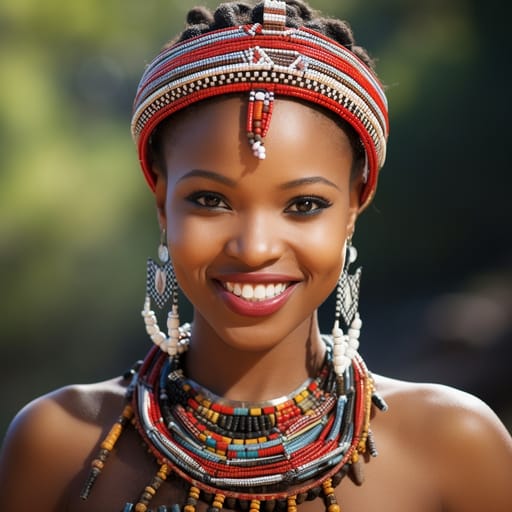
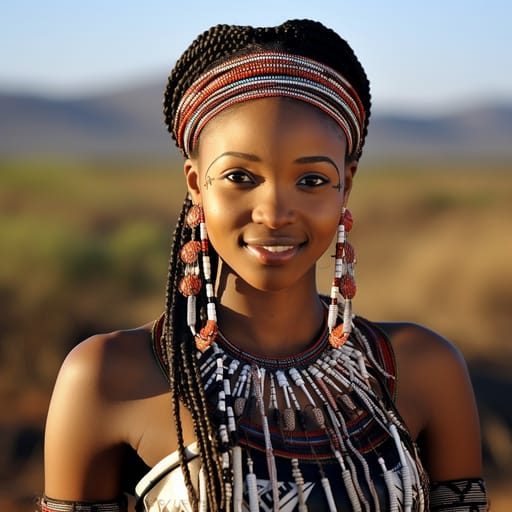
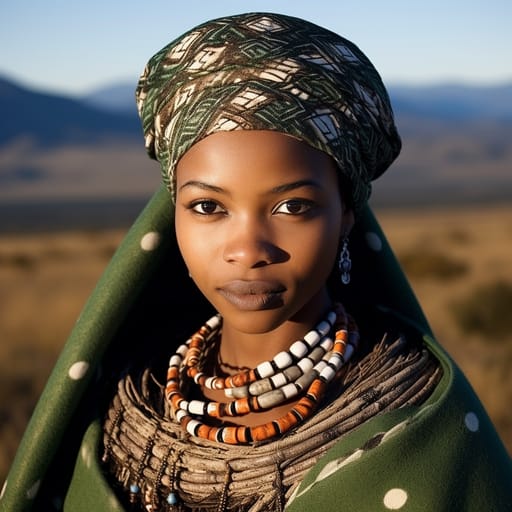
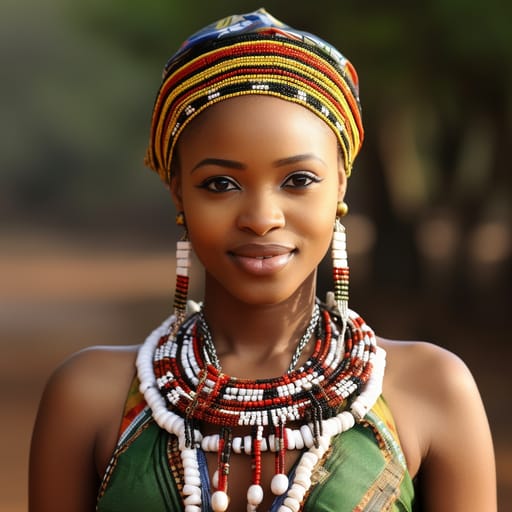
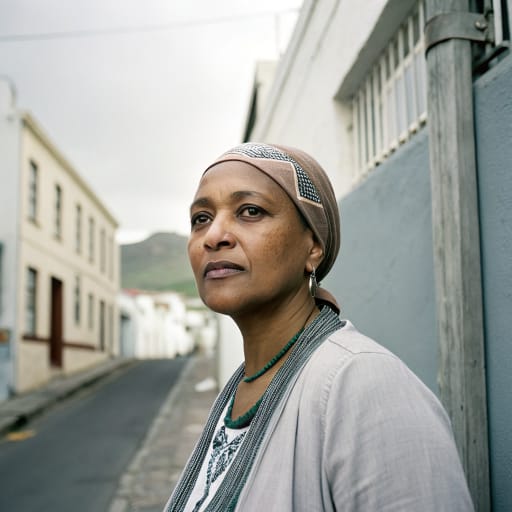

Typical Tlokwa Phenotypes
Reference for AI generation: hair, eyes, skin, facial structure, build
Tlokwa Body & Anatomy Reference
Bantu / Khoisan Southern African phenotype: anatomy reference for AI nude generation
Tlokwa Boobs & Breasts
Tlokwa tits and boobs run medium cup, full but moderate projection, the classic Bantu / Khoisan Southern African bust profile. Tlokwa nipples and areolas show medium-brown to deep-brown areolar pigmentation, with areolar diameter typically in the 30-44mm range and forward-set positioning rather than the heavier West African bust. Tlokwa breasts trend moderately full; less projecting than West African norm, a function of the mesomorph; Khoisan-descended sub-populations show distinctive steatopygic fat deposition body habitus and the mean adult female BMI 24-28. For anatomically accurate AI-generated Tlokwa nudes the render preserves the medium cup, full but moderate projection shape, 30-44mm areolas with medium-brown to deep-brown pigmentation, and the torso proportions of the Bantu / Khoisan Southern African phenotype.
Tlokwa Ass & Hips
Tlokwa hips and butt usually read as the distinctive Khoisan-influenced steatopygic profile in some sub-populations (San, Khoekhoe); broader gluteal projection in Bantu-speaking groups. The skeletal base is wide iliac crests with notable lordosis in Khoisan-descended sub-populations, the Bantu / Khoisan Southern African pattern. Set against the slim Cushitic East African profile, the difference is easy to see, and the hip-to-waist ratio is often what identifies Tlokwa women in photos.
Tlokwa Vagina & Pussy
Expect deep-brown labial pigmentation; the elongated labia minora documented in some Khoisan-descended populations on Tlokwa women, in keeping with Bantu / Khoisan Southern African ancestry. The pubic hair is tightly-coiled coarse texture. Coloring should run evenly from the medium-brown to deep-brown skin of the thighs to the labia, and Tlokwa nude imagery should keep the hair's tightly-coiled coarse texture.
Tlokwa Dicks & Penis
Tlokwa dick and penile anatomy in adult AI generation should anchor on the regional reference data: regional mean ~14cm erect, moderate-to-above-average girth, and deep-brown shaft pigmentation. The Tlokwa cock profile reflects the Bantu / Khoisan Southern African population's anthropometric measurements. The shaft pigmentation should track the surrounding medium-brown to deep-brown skin tone, and the pubic hair should keep its tightly-coiled coarse texture in the typical inverted-V escutcheon.
Tlokwa Body, Curves & Build
Tlokwa body type: mesomorph; Khoisan-descended sub-populations show distinctive steatopygic fat deposition, with mean adult female BMI 24-28. This is the typical Bantu / Khoisan Southern African build. Height range, shoulder-to-hip ratio and fat distribution all follow from it, which is what an accurate Tlokwa nude body should show.
Tlokwa Skin Tone & Hair Texture
Tlokwa skin tone falls in the medium-brown to deep-brown (Fitzpatrick V-VI); lighter in Khoisan-descended populations band, the surface signal most often miscalibrated by generic AI nude generators. Tlokwa hair texture is typically tightly-coiled 4A-4C; the distinctive 'peppercorn' tight-spiral texture in Khoisan-descended populations, characteristic of the Bantu / Khoisan Southern African phenotype. In Tlokwa nude renders the skin should hold that band consistently across the body.
Explore phenotype categories
Structured taxonomy with peer-reviewed scales · 22 anatomical categories
Erotic Poses & Sex Positions
From the pose catalog: 219 named positions with reference skeletons
Frequently asked questions about Tlokwa people
Where is the Tlokwa homeland?
The Tlokwa homeland is Southeastern Botswana around Tlokweng; the Botlokwa area of Limpopo, South Africa; historically the Caledon River valley on the South Africa and Lesotho border in Southern Africa.
What language do Tlokwa people speak?
Tlokwa people primarily speak Setswana in Botswana, Northern Sotho (Setlokwa) in Limpopo, Sesotho in Lesotho (Sotho-Tswana, Bantu, Niger-Congo).
What religion do Tlokwa people practice?
The predominant religion among Tlokwa people is Predominantly Christian, with continuing respect for ancestors (badimo).






Make your own Tlokwa images
Five a day, free, no credits to buy. The studio starts from this group's phenotype data, so you can set body type, pose and style and keep the traits accurate.
Start with Tlokwa