Help us get this right
Does this portrait look right for Cape Malays?
Nobody has judged this one yet. You would be the first.
Cape Malays Erotic
Cape Town and the wider Western Cape, South Africa, historically concentrated in the Bo-Kaap and, until the forced removals, District Six.
Afrikaans and English (Indo-European, Germanic), with Arabic for liturgy; historically bazaar Malay (Austronesian) and a Portuguese-based creole
Sunni Islam, Shafi'i school, with long-standing Sufi practice
A Muslim community within South Africa's Cape Coloured population, with ancestry drawn from Indonesian, Malay, Indian, Sri Lankan, Malagasy, East African, Khoekhoe and European lines
About Cape Malays People
The Cape Malays were assembled by force and then held together by faith. Almost all of them descend from people the Dutch East India Company moved along its shipping lanes: enslaved men and women, convicts, and a smaller number of political exiles, brought to the Cape between the late 1600s and the early 1800s from Java, Sulawesi, Bengal, the Coromandel coast, Sri Lanka, Madagascar and the East African coast. The name is a historical accident. Few of the ancestors came from the Malay Peninsula. Malay was simply the working language of Indian Ocean trade, and the language in which Islam was first taught at the Cape, so the label attached itself to a congregation rather than to an origin. Apartheid then made it official, listing Cape Malay as a subdivision of the Coloured category, which is one reason many people in the community today prefer Cape Muslim.
Islam is the spine of the identity, Sunni and Shafi'i with a durable Sufi grain. Sheikh Yusuf of Macassar arrived as a banished man in 1694. Tuan Guru, a prince from Tidore, was held on Robben Island, is said to have written out the Qur'an from memory, and founded the Auwal Mosque in Dorp Street in 1794, the first mosque in the country. The tombs of such figures, called kramats, sit at intervals around the Cape Peninsula and are visited as a ring of protection over the city. The community also left an underrated linguistic monument: madrasah teachers were writing Afrikaans in Arabic script for their pupils well before Afrikaans had a settled Roman spelling, which makes some of the oldest surviving Afrikaans texts religious primers. Bo-Kaap, on the slope of Signal Hill, is the historic quarter, and it survived the Group Areas Act largely because the state designated it a Malay area while bulldozing District Six a short walk away. Gentrification has since pressed on it in ways removal never managed, and residents have answered with heritage protections and street blockades. The rest of the year runs on a domestic calendar: moulood in the mosque and at home, rampie-sny, where women cut orange leaves and scent them for the sachets handed out afterward, choirs singing Dutch songs nobody in the Netherlands remembers, and a kitchen of bredie, denningvleis and koesisters that Cape Town as a whole has quietly claimed as its own.
Related ethnic groups
Groups that share Cape Malays's homeland, region, language, or religious tradition. These are likely candidates for comparative phenotype reference.
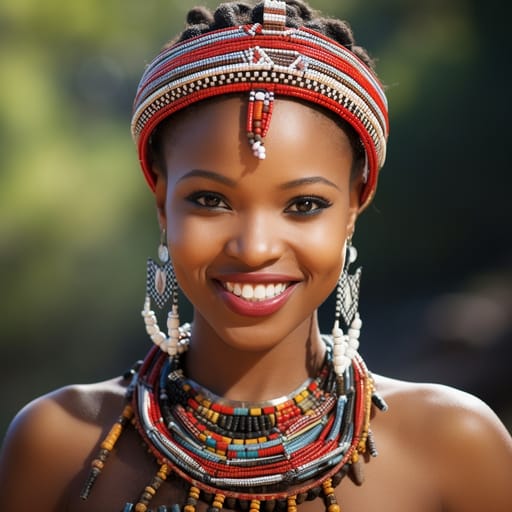
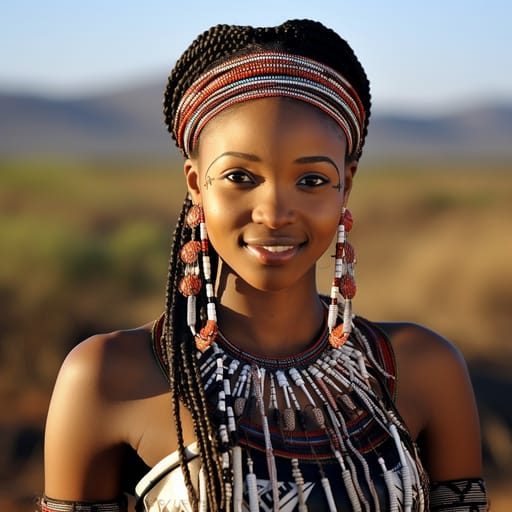
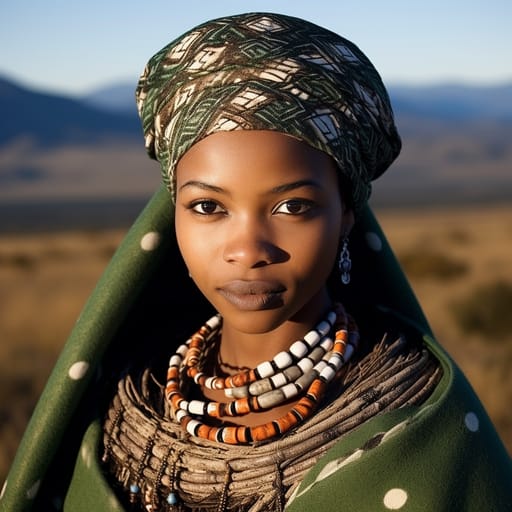
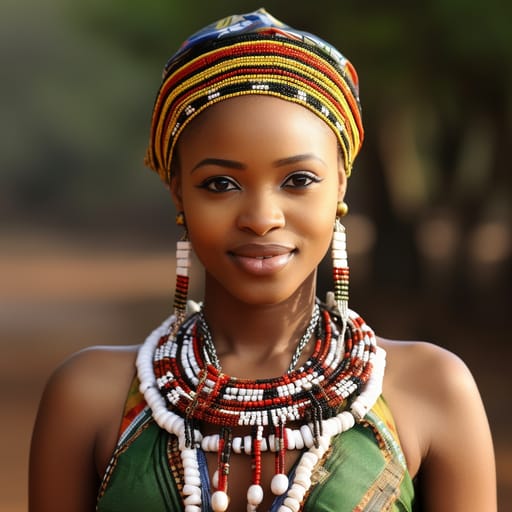
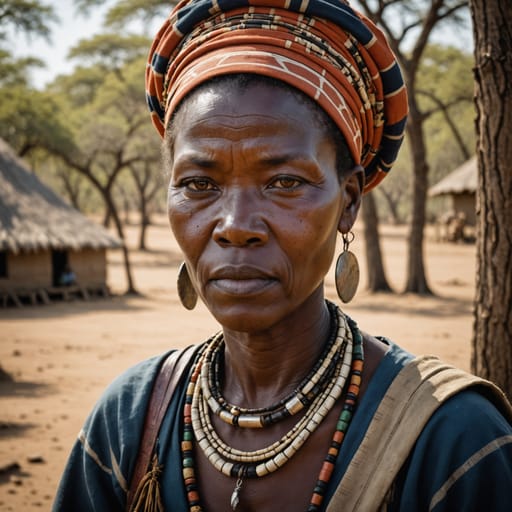
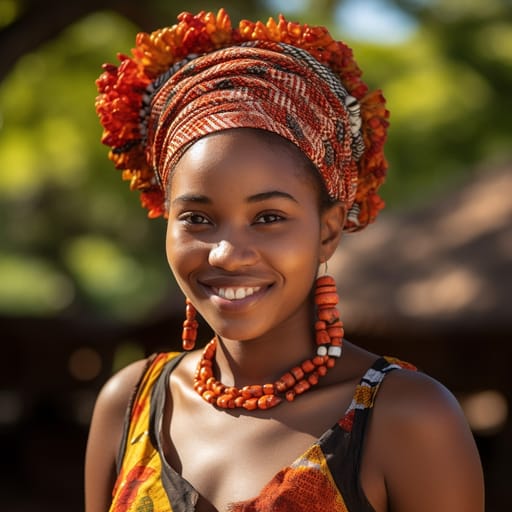
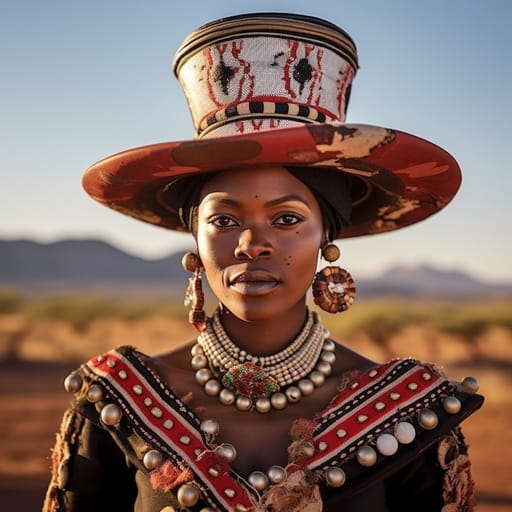
Typical Cape Malays Phenotypes
Reference for AI generation: hair, eyes, skin, facial structure, build
Cape Malays Body & Anatomy Reference
Anatomy by feature, Bantu / Khoisan Southern African phenotype
Cape Malays Boobs & Breasts
Cape Malays tits and boobs run medium cup, full but moderate projection, the classic Bantu / Khoisan Southern African bust profile. Cape Malays nipples and areolas show medium-brown to deep-brown areolar pigmentation, with areolar diameter typically in the 30-44mm range and forward-set positioning rather than the heavier West African bust. Cape Malays breasts trend moderately full; less projecting than West African norm, a function of the mesomorph; Khoisan-descended sub-populations show distinctive steatopygic fat deposition body habitus and the mean adult female BMI 24-28. For anatomically accurate AI-generated Cape Malays nudes the render preserves the medium cup, full but moderate projection shape, 30-44mm areolas with medium-brown to deep-brown pigmentation, and the torso proportions of the Bantu / Khoisan Southern African phenotype.
Cape Malays Ass & Hips
Cape Malays hips and butt usually read as the distinctive Khoisan-influenced steatopygic profile in some sub-populations (San, Khoekhoe); broader gluteal projection in Bantu-speaking groups. The skeletal base is wide iliac crests with notable lordosis in Khoisan-descended sub-populations, the Bantu / Khoisan Southern African pattern. Set against the slim Cushitic East African profile, the difference is easy to see, and the hip-to-waist ratio is often what identifies Cape Malays women in photos.
Cape Malays Vagina & Pussy
Expect deep-brown labial pigmentation; the elongated labia minora documented in some Khoisan-descended populations on Cape Malays women, in keeping with Bantu / Khoisan Southern African ancestry. The pubic hair is tightly-coiled coarse texture. Coloring should run evenly from the medium-brown to deep-brown skin of the thighs to the labia, and Cape Malays nude imagery should keep the hair's tightly-coiled coarse texture.
Cape Malays Dicks & Penis
Cape Malays dick and penile anatomy in adult AI generation should anchor on the regional reference data: regional mean ~14cm erect, moderate-to-above-average girth, and deep-brown shaft pigmentation. The Cape Malays cock profile reflects the Bantu / Khoisan Southern African population's anthropometric measurements. The shaft pigmentation should track the surrounding medium-brown to deep-brown skin tone, and the pubic hair should keep its tightly-coiled coarse texture in the typical inverted-V escutcheon.
Cape Malays Body, Curves & Build
Cape Malays body type: mesomorph; Khoisan-descended sub-populations show distinctive steatopygic fat deposition, with mean adult female BMI 24-28. This is the typical Bantu / Khoisan Southern African build. Height range, shoulder-to-hip ratio and fat distribution all follow from it, which is what an accurate Cape Malays nude body should show.
Cape Malays Skin Tone & Hair Texture
Cape Malays skin tone falls in the medium-brown to deep-brown (Fitzpatrick V-VI); lighter in Khoisan-descended populations band, the surface signal most often miscalibrated by generic AI nude generators. Cape Malays hair texture is typically tightly-coiled 4A-4C; the distinctive 'peppercorn' tight-spiral texture in Khoisan-descended populations, characteristic of the Bantu / Khoisan Southern African phenotype. In Cape Malays nude renders the skin should hold that band consistently across the body.
Explore phenotype categories
Structured taxonomy with peer-reviewed scales · 22 anatomical categories
Erotic Poses & Sex Positions
From the pose catalog: 219 named positions with reference skeletons
Frequently asked questions about Cape Malays people
Where is the Cape Malays homeland?
The Cape Malays homeland is Cape Town and the wider Western Cape, South Africa, historically concentrated in the Bo-Kaap and, until the forced removals, District Six. in Southern Africa.
What language do Cape Malays people speak?
Cape Malays people primarily speak Afrikaans and English (Indo-European, Germanic), with Arabic for liturgy; historically bazaar Malay (Austronesian) and a Portuguese-based creole.
What religion do Cape Malays people practice?
The predominant religion among Cape Malays people is Sunni Islam, Shafi'i school, with long-standing Sufi practice.






Make your own Cape Malays images
Five a day, free, no credits to buy. The studio starts from this group's phenotype data, so you can set body type, pose and style and keep the traits accurate.
Start with Cape Malays