No portrait yet
Tonga Erotic
Southern Province of Zambia and the Zambezi valley, including Binga District in Matabeleland North, Zimbabwe.
Chitonga, also called Zambezi Tonga (Bantu, Niger-Congo; Bantu Botatwe cluster)
Predominantly Christian, with an unusually strong Seventh-day Adventist presence in Zambia; traditional practice continues through rain shrines, ancestral spirits and basangu spirit mediums.
Plateau Tonga and Valley (Gwembe) Tonga; part of the Bantu Botatwe cluster alongside Ila, Lenje, Toka-Leya, Totela and Subiya.
About Tonga People
The Tonga are a Zambezi people, which is both a geographic statement and the source of their central grievance. They farm the plateau of southern Zambia and the hot valley floor on both banks of the river, and in the late 1950s the river was taken from them. The closing of the Kariba Dam flooded the Gwembe Valley and moved roughly 57,000 Tonga off ground their families had worked for generations. Compensation was promised and largely not delivered; at Chipepo in 1958, colonial police fired on Tonga who refused to leave and killed eight of them. Nearly seventy years later the resettlement is still the hinge of Tonga self-understanding, and Nyaminyami, the river spirit held to have been separated from his wife by the dam wall, has become an emblem well beyond the valley. They speak Chitonga, a Bantu language in the group Zambians call Bantu Botatwe, the three peoples, which binds Tonga closely to Ila and Lenje and more loosely to Toka-Leya, Totela and Subiya. It should not be confused with the unrelated Tonga of northern Malawi, or with Polynesian Tongan. There are two broad branches: Plateau Tonga around Monze, Choma and Mazabuka, and Valley or Gwembe Tonga in the trough of the river and across the border in Binga.
Descent runs through the mother's clan, the mukowa, and before the British arrived there were effectively no chiefs. Authority sat with rain shrine keepers and with mediums through whom the basangu spirits spoke about drought and calamity, an arrangement that left the Tonga exposed to Ndebele and Chikunda raiding in the nineteenth century and frustrated administrators who wanted someone to sign things. Chiefs were duly appointed. On the plateau, cattle and maize built a genuine commercial farming economy, Tonga growers having taken up the ox plow early. Most Tonga are Christian, with a notably deep Seventh-day Adventist presence in Zambia, and church life sits alongside the annual Lwiindi rain and harvest ceremonies rather than having erased them. Two things rarely make the summaries: ngoma buntibe, the funeral and procession music in which dozens of antelope horn players each sound a single note in interlocking patterns over drums, and the coiled ilala palm baskets woven by Binga women, now the district's best known product. The two halves of the people have had different luck. Southern Province is politically central in Zambia, and Zambia's president since 2021 is Tonga. Binga, in Zimbabwe, remains one of that country's poorest districts, sitting beside the lake whose power it went without for decades. Tonga was recognized as an official Zimbabwean language only in the 2013 constitution.
Related ethnic groups
Groups that share Tonga's homeland, region, language, or religious tradition. These are likely candidates for comparative phenotype reference.
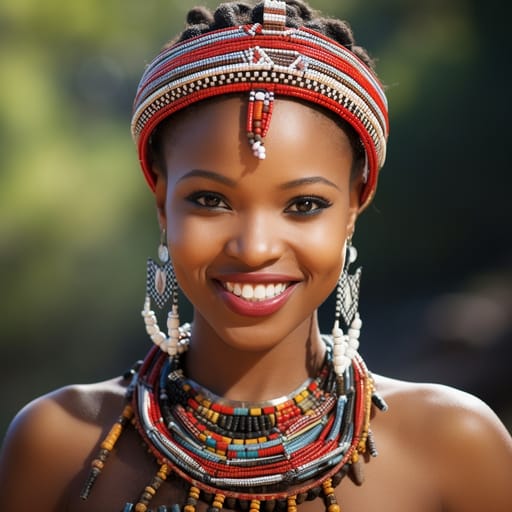
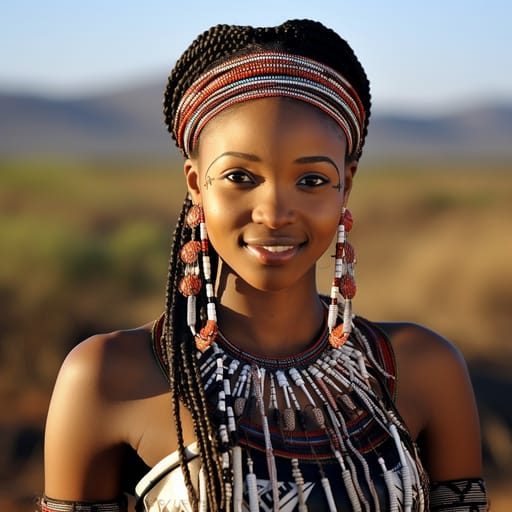
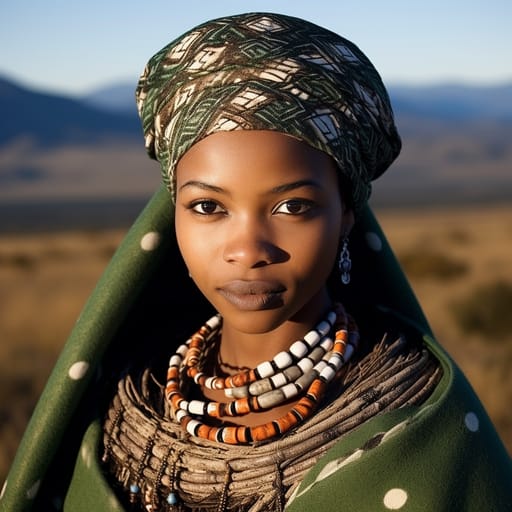
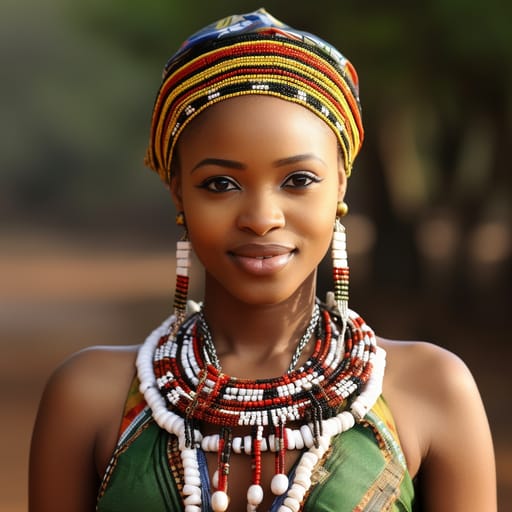
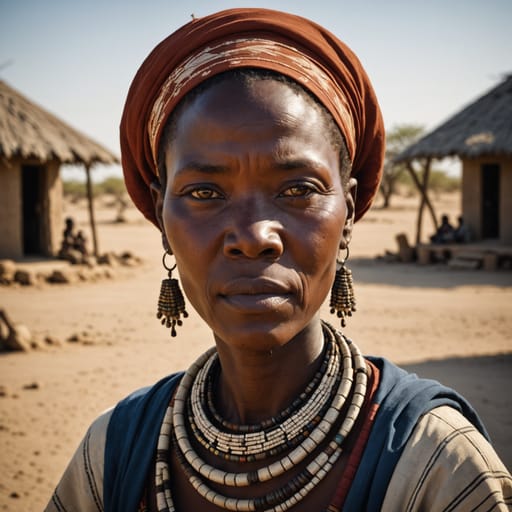
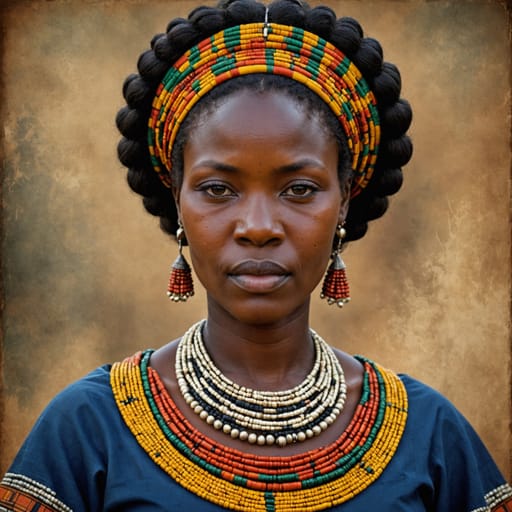
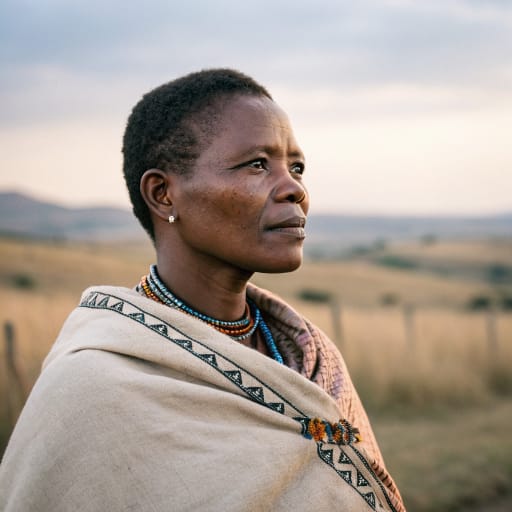
Typical Tonga Phenotypes
Reference for AI generation: hair, eyes, skin, facial structure, build
Tonga Body & Anatomy Reference
Anatomy by feature, Bantu / Khoisan Southern African phenotype
Tonga Boobs & Breasts
The typical Tonga bust is medium cup, full but moderate projection, in line with the wider Bantu / Khoisan Southern African pattern. Areolas usually fall in the 30-44mm range, with medium-brown to deep-brown areolar pigmentation. Compared with the heavier West African bust, Tonga breasts sit forward and are generally moderately full; less projecting than West African norm. A faithful AI render of Tonga tits keeps that shape and areola size.
Tonga Ass & Hips
Butt shape among Tonga women: the distinctive Khoisan-influenced steatopygic profile in some sub-populations (San, Khoekhoe); broader gluteal projection in Bantu-speaking groups, over wide iliac crests with notable lordosis in Khoisan-descended sub-populations. This follows Bantu / Khoisan Southern African ancestry and looks quite unlike the slim Cushitic East African profile. An accurate Tonga ass in adult AI imagery keeps both the silhouette and the overall build (mesomorph; Khoisan-descended sub-populations show distinctive steatopygic fat deposition) instead of a generic average.
Tonga Vagina & Pussy
Vulvar anatomy among Tonga women: deep-brown labial pigmentation; the elongated labia minora documented in some Khoisan-descended populations. Pubic hair tends to be tightly-coiled coarse texture, in the usual inverted-triangle pattern. Both follow Bantu / Khoisan Southern African pigmentation, which is why Tonga pussy renders should not fall back on a pale, sparse Western template.
Tonga Dicks & Penis
The Tonga cock profile, from Bantu / Khoisan Southern African anthropometric data: regional mean ~14cm erect; moderate-to-above-average girth; deep-brown shaft pigmentation. Pubic hair has a tightly-coiled coarse texture and forms the usual inverted-V pattern. Whether Tonga men are circumcised follows religious and cultural practice rather than phenotype.
Tonga Body, Curves & Build
Build and curves among Tonga women follow the Bantu / Khoisan Southern African pattern: mesomorph; Khoisan-descended sub-populations show distinctive steatopygic fat deposition, mean adult female BMI 24-28. Proportions matter as much as skin tone, so Tonga figures should keep their regional height and limb ratios.
Tonga Skin Tone & Hair Texture
The Tonga skin range is medium-brown to deep-brown (Fitzpatrick V-VI); lighter in Khoisan-descended populations, and hair tends to be tightly-coiled 4A-4C; the distinctive 'peppercorn' tight-spiral texture in Khoisan-descended populations. That combination marks the Bantu / Khoisan Southern African phenotype, and skin tone is the trait AI generators most often get wrong for Tonga women.
Explore phenotype categories
Structured taxonomy with peer-reviewed scales · 22 anatomical categories
Erotic Poses & Sex Positions
From the pose catalog: 219 named positions with reference skeletons
Frequently asked questions about Tonga people
Where is the Tonga homeland?
The Tonga homeland is Southern Province of Zambia and the Zambezi valley, including Binga District in Matabeleland North, Zimbabwe. in Southern Africa.
What language do Tonga people speak?
Tonga people primarily speak Chitonga, also called Zambezi Tonga (Bantu, Niger-Congo; Bantu Botatwe cluster).
What religion do Tonga people practice?
The predominant religion among Tonga people is Predominantly Christian, with an unusually strong Seventh-day Adventist presence in Zambia; traditional practice continues through rain shrines, ancestral spirits and basangu spirit mediums..






Make your own Tonga images
Five a day, free, no credits to buy. The studio starts from this group's phenotype data, so you can set body type, pose and style and keep the traits accurate.
Start with Tonga