No portrait yet
Northern Ndebele Erotic
Matabeleland, southwestern Zimbabwe, centered on Bulawayo; smaller communities in Botswana and South Africa
isiNdebele, or Northern Ndebele (Bantu, Nguni branch; closely related to Zulu), with English and Shona widely used alongside it
Mostly Christian (Anglican, Catholic, Adventist, Pentecostal and apostolic churches), alongside ancestor veneration and the Mwali rain shrine cult of the Matobo Hills
Nguni family; historical Zansi, Enhla and Hole strata; Khumalo royal house; distinct from the Southern Ndebele (Ndzundza, Manala) of South Africa
About Northern Ndebele People
The Northern Ndebele are a people built by a march. In the 1820s a Khumalo chief named Mzilikazi fell out with Shaka and led a few hundred followers out of Zululand, north across the Highveld, absorbing Sotho and Tswana communities along the way, and finally over the Limpopo in the late 1830s into the granite hill country of what is now southwestern Zimbabwe. What arrived there was not a tribe but a state: a Zulu-style kingdom with regiments, royal towns and, under his son, a capital at Bulawayo. Ndebele identity has been layered ever since. The old order ranked people as Zansi (families from the Zulu heartland), Enhla (those taken in on the Highveld) and Hole (Kalanga, Rozvi and Shona speakers folded in on arrival), and while those labels have faded, the habit of absorbing neighbors has not. A Kalanga or Venda family in Matabeleland today may call itself Ndebele without contradiction. Roughly two million people speak isiNdebele, a Nguni language close enough to Zulu that speakers of each follow the other with little effort, though it has picked up Kalanga and Shona vocabulary that Zulu lacks. It is not the same language as the Southern Ndebele of South Africa, whose painted houses and geometric beadwork are often wrongly credited to Zimbabwe.
The kingdom lasted two generations. Lobengula, Mzilikazi's son, signed away mineral rights in the Rudd Concession of 1888, fought the British South Africa Company in 1893, and died in flight the following year. The 1896 rising, coordinated partly through the Mwali shrine priests of the Matobo Hills, ended in negotiated peace and full colonial rule. Cecil Rhodes had himself buried on a Matobo summit, a fact Ndebele activists still bring up. The deepest modern wound is Gukurahundi, the campaign of 1983 to 1987 in which the Zimbabwean army's Fifth Brigade killed thousands of civilians across Matabeleland and the Midlands in a purge aimed at Joshua Nkomo's ZAPU. It has never been formally reckoned with, and it shapes how Ndebele people talk about Harare, about the name Mthwakazi for their nation, and about Bulawayo's economic decline. Most Ndebele are Christian, spread across Anglican, Catholic, Adventist and fast-growing Pentecostal and apostolic churches, but ancestor observance runs alongside church: the umbuyiso ceremony brings a dead relative's spirit home about a year after burial, and rain petitions still go to Njelele, the Matobo shrine the Ndebele inherited from the Kalanga. September brings the annual Mzilikazi commemoration at his grave near Bulawayo, the one occasion when skin aprons, shields and praise poets appear in numbers.
Related ethnic groups
Groups that share Northern Ndebele's homeland, region, language, or religious tradition. These are likely candidates for comparative phenotype reference.
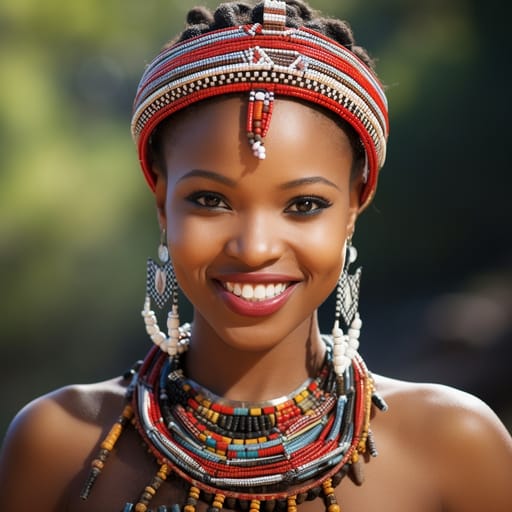
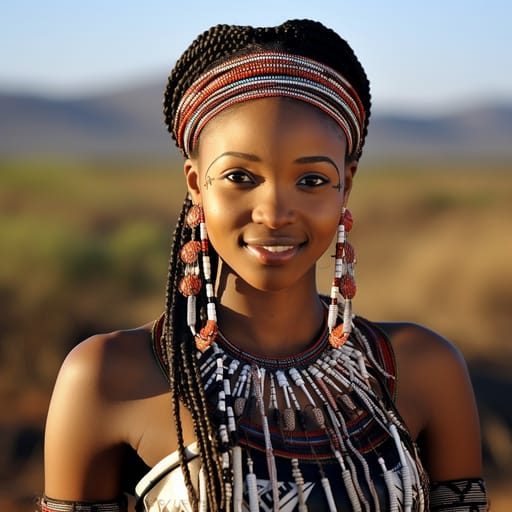
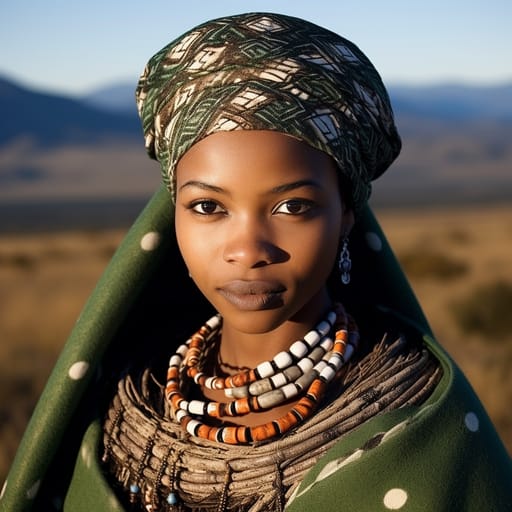
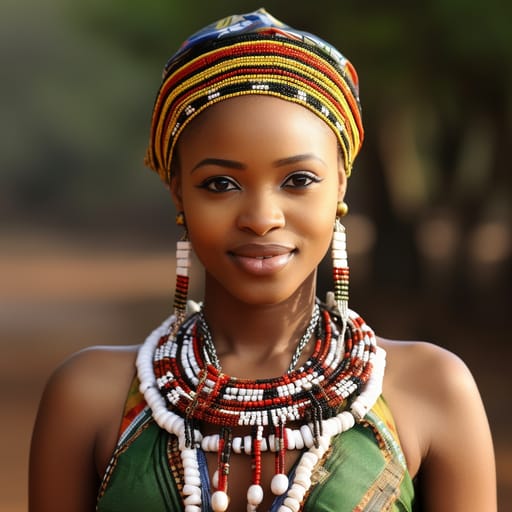
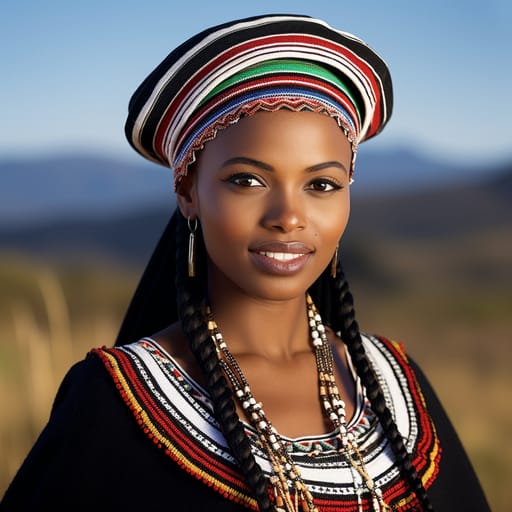

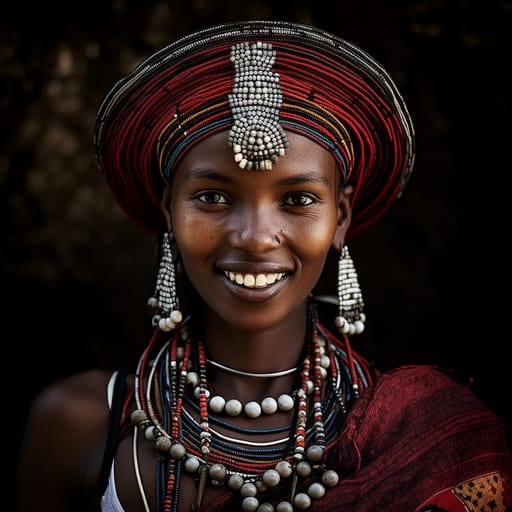
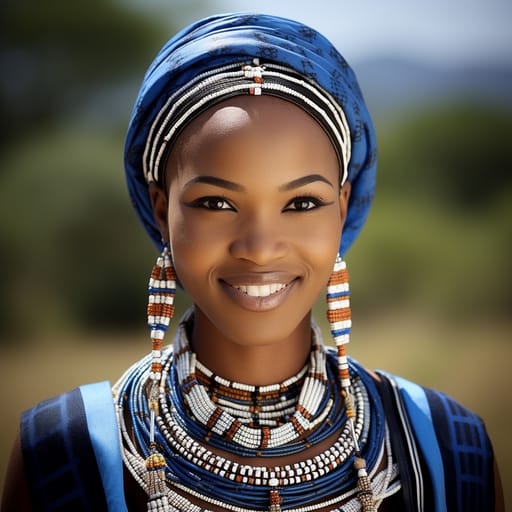
Typical Northern Ndebele Phenotypes
Reference for AI generation: hair, eyes, skin, facial structure, build
Northern Ndebele Body & Anatomy Reference
Per-feature anatomical profile for AI nude generation: Bantu / Khoisan Southern African phenotype
Northern Ndebele Boobs & Breasts
Bust reference for Northern Ndebele women: medium cup, full but moderate projection, which is typical of Bantu / Khoisan Southern African ancestry. Areolas measure about 30-44mm across, with medium-brown to deep-brown pigmentation. Body type (mesomorph; Khoisan-descended sub-populations show distinctive steatopygic fat deposition) shapes the bust as well, so Northern Ndebele tits are usually moderately full; less projecting than West African norm. In AI imagery, keep the forward-set shape rather than drifting toward the heavier West African bust.
Northern Ndebele Ass & Hips
The Northern Ndebele ass is typically the distinctive Khoisan-influenced steatopygic profile in some sub-populations (San, Khoekhoe); broader gluteal projection in Bantu-speaking groups, which sets it apart from the slim Cushitic East African profile. Underneath, the pelvis shows wide iliac crests with notable lordosis in Khoisan-descended sub-populations, part of the Bantu / Khoisan Southern African skeletal pattern. For Northern Ndebele butt pics and AI renders, match that silhouette and the overall build (mesomorph; Khoisan-descended sub-populations show distinctive steatopygic fat deposition).
Northern Ndebele Vagina & Pussy
Northern Ndebele pussy and vulvar anatomy presents deep-brown labial pigmentation; the elongated labia minora documented in some Khoisan-descended populations, consistent with the Bantu / Khoisan Southern African phenotype's pigmentation pattern. Northern Ndebele pubic hair is typically tightly-coiled coarse texture, in the inverted-triangle pattern. For anatomically accurate Northern Ndebele pussy renders the labial coloration should match the surrounding medium-brown to deep-brown skin tone with a continuous gradient, and the hair should keep its tightly-coiled coarse texture.
Northern Ndebele Dicks & Penis
Northern Ndebele dicks follow the Bantu / Khoisan Southern African reference data: regional mean ~14cm erect; moderate-to-above-average girth; deep-brown shaft pigmentation. Shaft color should track the medium-brown to deep-brown skin tone with a smooth change toward the glans, and Northern Ndebele pubic hair keeps its tightly-coiled coarse texture.
Northern Ndebele Body, Curves & Build
Northern Ndebele body type and overall build presents as mesomorph; Khoisan-descended sub-populations show distinctive steatopygic fat deposition, with mean adult female BMI 24-28: the characteristic Bantu / Khoisan Southern African habitus. Northern Ndebele curves and proportions should keep the regional skeletal frame (height, shoulder-to-hip ratio, limb proportions) rather than a generic mesomorph default.
Northern Ndebele Skin Tone & Hair Texture
Northern Ndebele skin sits in the medium-brown to deep-brown (Fitzpatrick V-VI); lighter in Khoisan-descended populations band. Hair is typically tightly-coiled 4A-4C; the distinctive 'peppercorn' tight-spiral texture in Khoisan-descended populations, in keeping with the Bantu / Khoisan Southern African phenotype. In nude renders the skin should stay one even tone from face to body, and body, pubic and head hair should match.
Explore phenotype categories
Structured taxonomy with peer-reviewed scales · 22 anatomical categories
Erotic Poses & Sex Positions
From the pose catalog: 219 named positions with reference skeletons
Frequently asked questions about Northern Ndebele people
Where is the Northern Ndebele homeland?
The Northern Ndebele homeland is Matabeleland, southwestern Zimbabwe, centered on Bulawayo; smaller communities in Botswana and South Africa in Southern Africa.
What language do Northern Ndebele people speak?
Northern Ndebele people primarily speak isiNdebele, or Northern Ndebele (Bantu, Nguni branch; closely related to Zulu), with English and Shona widely used alongside it.
What religion do Northern Ndebele people practice?
The predominant religion among Northern Ndebele people is Mostly Christian (Anglican, Catholic, Adventist, Pentecostal and apostolic churches), alongside ancestor veneration and the Mwali rain shrine cult of the Matobo Hills.






Make your own Northern Ndebele images
Five a day, free, no credits to buy. The studio starts from this group's phenotype data, so you can set body type, pose and style and keep the traits accurate.
Start with Northern Ndebele