Help us get this right
Does this portrait look right for Griqua?
Nobody has judged this one yet. You would be the first.
Griqua Erotic
Northern Cape, Free State, Eastern Cape and KwaZulu-Natal, South Africa, with historical settlements in Namibia
Afrikaans, including a distinct Griqua Afrikaans dialect (Indo-European, Germanic); historically Xiri or Griqua Khoekhoe (Khoe-Kwadi), now extinct or nearly so
Christian, chiefly the Griqua Independent Church, alongside Dutch Reformed and other Protestant congregations
Khoekhoe-descended Cape peoples recognized among South Africa's Khoi-San; historical branches under the Kok and Waterboer captaincies and the later Le Fleur movement; related to the Rehoboth Basters of Namibia
About Griqua People
The Griqua are a people who built themselves on the frontier. They took shape in the eighteenth century on the edges of the Dutch Cape Colony, where Khoekhoe herders, European settlers, freed and runaway slaves, and San hunters met, married, and moved on together. Outsiders called them Bastaards. In 1813, at the urging of London Missionary Society clergy, they chose the name Griqua, taken from an old Khoekhoe clan, and set about behaving like a nation: they followed elected leaders called kapteins, wrote their own laws, and at Griquatown issued their own coinage in 1815, among the earliest in South Africa. Two families, the Koks and the Waterboers, supplied their captains for most of a century. Adam Kok I, founder of the first line, was a freed slave whose surname records the cook's trade.
Griqua history is a history of treks. Pushed north over the Orange River, they founded Griquatown and Philippolis, then lost both to Boer expansion and British ambition. In 1861 Adam Kok III led his people over the Drakensberg into Nomansland, founding Kokstad and Griqualand East. Diamonds at Kimberley cost them Griqualand West, annexed by Britain in 1871, and Griqualand East followed within a decade. What the state builders lost, a prophet recovered in another form. Andrew Abraham Stockenström le Fleur, revered as Die Kneg, the Servant, gathered scattered Griqua into new settlements in the early twentieth century and founded the Griqua Independent Church in 1920. His grave at Ratelgat, in dry Namaqualand country near Vanrhynsdorp, is a place of pilgrimage, and the church remains the institution that most reliably holds Griqua identity together.
Griqua today speak Afrikaans, and their older Khoekhoe tongue, Xiri, is extinct or very nearly so. Apartheid filed them under the label Coloured, which many Griqua rejected then and reject now. Since 1994 they have pressed for recognition as an indigenous nation, and the 2019 Traditional and Khoi-San Leadership Act lists them among South Africa's Khoi-San. Communities cluster at Kokstad, at Kranshoek near Plettenberg Bay, at Griekwastad and Campbell in the Northern Cape, and around Kimberley and Philippolis, with several rival councils each claiming the line of Kok or Le Fleur. The Griqua call themselves South Africa's first multiracial nation, and the claim is less a boast than a plain reading of their family trees.
Related ethnic groups
Groups that share Griqua's homeland, region, language, or religious tradition. These are likely candidates for comparative phenotype reference.
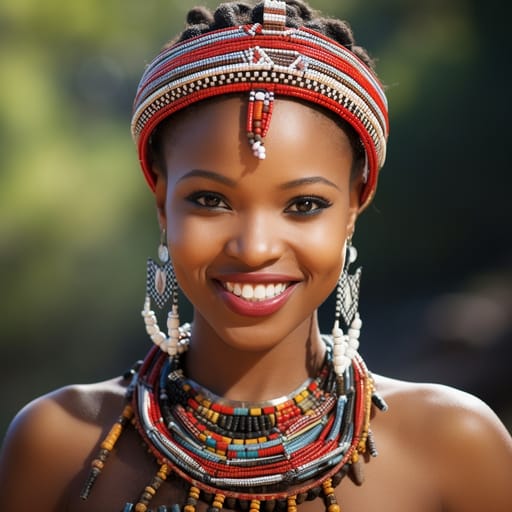
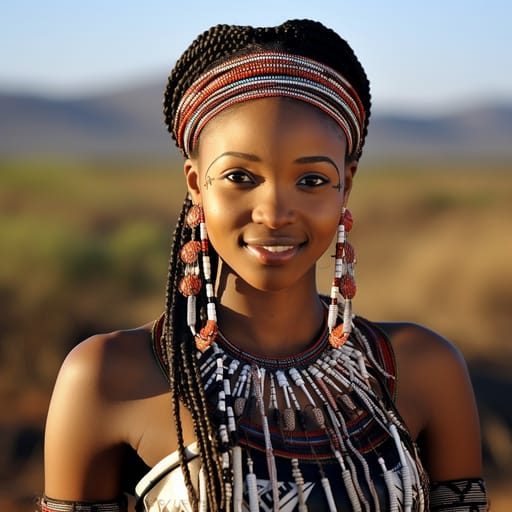
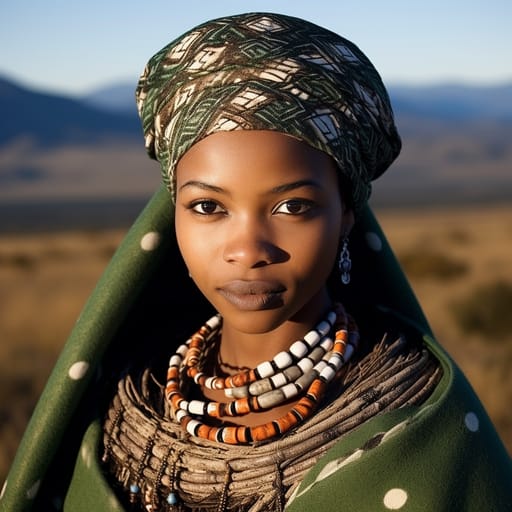
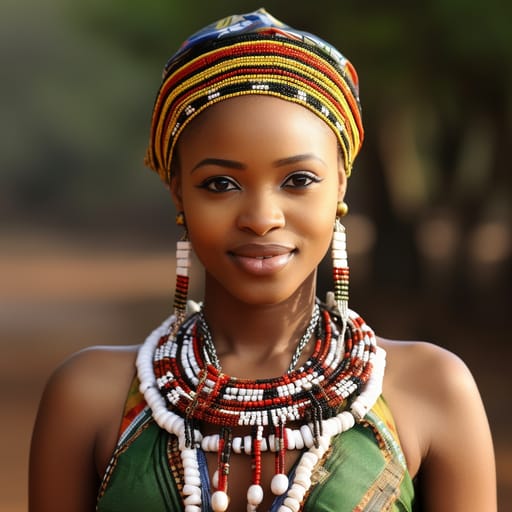
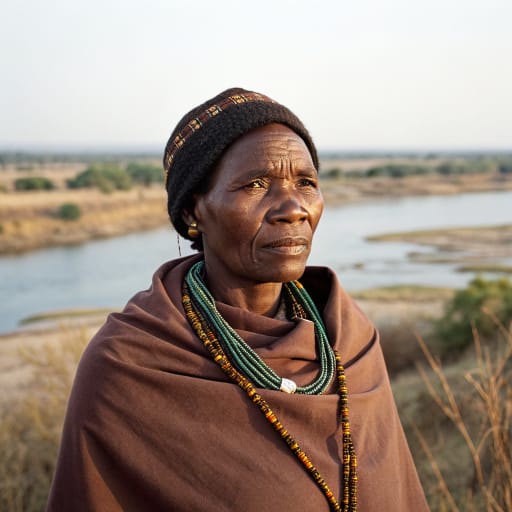
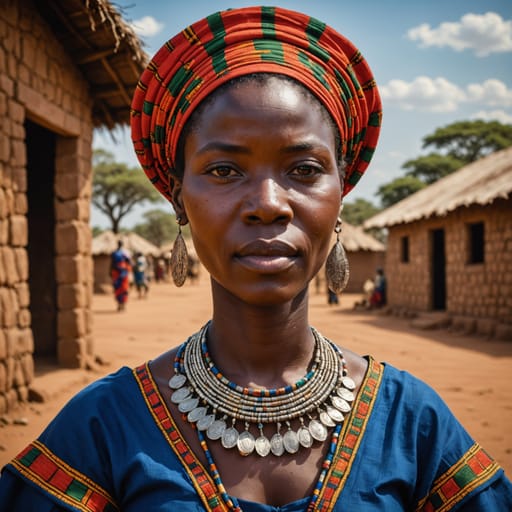
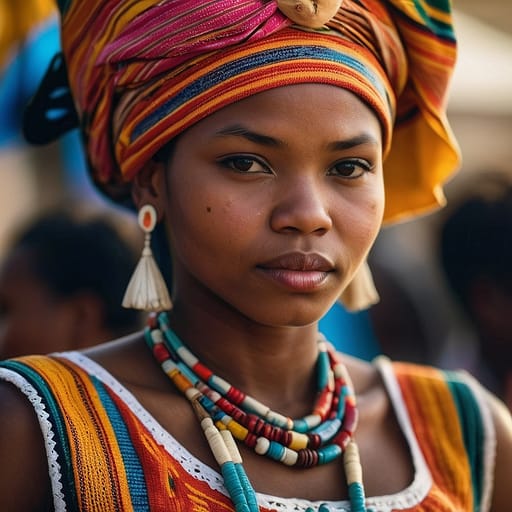
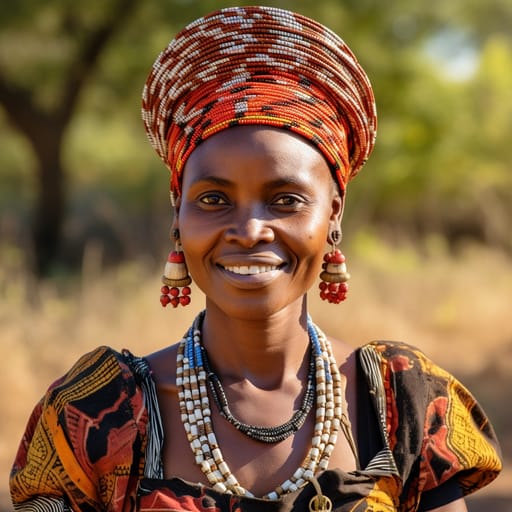
Typical Griqua Phenotypes
Reference for AI generation: hair, eyes, skin, facial structure, build
Griqua Body & Anatomy Reference
Per-feature anatomical profile for AI nude generation: Bantu / Khoisan Southern African phenotype
Griqua Boobs & Breasts
Bust reference for Griqua women: medium cup, full but moderate projection, which is typical of Bantu / Khoisan Southern African ancestry. Areolas measure about 30-44mm across, with medium-brown to deep-brown pigmentation. Body type (mesomorph; Khoisan-descended sub-populations show distinctive steatopygic fat deposition) shapes the bust as well, so Griqua tits are usually moderately full; less projecting than West African norm. In AI imagery, keep the forward-set shape rather than drifting toward the heavier West African bust.
Griqua Ass & Hips
The Griqua ass is typically the distinctive Khoisan-influenced steatopygic profile in some sub-populations (San, Khoekhoe); broader gluteal projection in Bantu-speaking groups, which sets it apart from the slim Cushitic East African profile. Underneath, the pelvis shows wide iliac crests with notable lordosis in Khoisan-descended sub-populations, part of the Bantu / Khoisan Southern African skeletal pattern. For Griqua butt pics and AI renders, match that silhouette and the overall build (mesomorph; Khoisan-descended sub-populations show distinctive steatopygic fat deposition).
Griqua Vagina & Pussy
Griqua pussy and vulvar anatomy presents deep-brown labial pigmentation; the elongated labia minora documented in some Khoisan-descended populations, consistent with the Bantu / Khoisan Southern African phenotype's pigmentation pattern. Griqua pubic hair is typically tightly-coiled coarse texture, in the inverted-triangle pattern. For anatomically accurate Griqua pussy renders the labial coloration should match the surrounding medium-brown to deep-brown skin tone with a continuous gradient, and the hair should keep its tightly-coiled coarse texture.
Griqua Dicks & Penis
Griqua dicks follow the Bantu / Khoisan Southern African reference data: regional mean ~14cm erect; moderate-to-above-average girth; deep-brown shaft pigmentation. Shaft color should track the medium-brown to deep-brown skin tone with a smooth change toward the glans, and Griqua pubic hair keeps its tightly-coiled coarse texture.
Griqua Body, Curves & Build
Griqua body type and overall build presents as mesomorph; Khoisan-descended sub-populations show distinctive steatopygic fat deposition, with mean adult female BMI 24-28: the characteristic Bantu / Khoisan Southern African habitus. Griqua curves and proportions should keep the regional skeletal frame (height, shoulder-to-hip ratio, limb proportions) rather than a generic mesomorph default.
Griqua Skin Tone & Hair Texture
Griqua skin sits in the medium-brown to deep-brown (Fitzpatrick V-VI); lighter in Khoisan-descended populations band. Hair is typically tightly-coiled 4A-4C; the distinctive 'peppercorn' tight-spiral texture in Khoisan-descended populations, in keeping with the Bantu / Khoisan Southern African phenotype. In nude renders the skin should stay one even tone from face to body, and body, pubic and head hair should match.
Explore phenotype categories
Structured taxonomy with peer-reviewed scales · 22 anatomical categories
Erotic Poses & Sex Positions
From the pose catalog: 219 named positions with reference skeletons
Frequently asked questions about Griqua people
Where is the Griqua homeland?
The Griqua homeland is Northern Cape, Free State, Eastern Cape and KwaZulu-Natal, South Africa, with historical settlements in Namibia in Southern Africa.
What language do Griqua people speak?
Griqua people primarily speak Afrikaans, including a distinct Griqua Afrikaans dialect (Indo-European, Germanic); historically Xiri or Griqua Khoekhoe (Khoe-Kwadi), now extinct or nearly so.
What religion do Griqua people practice?
The predominant religion among Griqua people is Christian, chiefly the Griqua Independent Church, alongside Dutch Reformed and other Protestant congregations.






Make your own Griqua images
Five a day, free, no credits to buy. The studio starts from this group's phenotype data, so you can set body type, pose and style and keep the traits accurate.
Start with Griqua