Help us get this right
Does this portrait look right for Nyaneka?
One tap. It takes a second and it is recorded.
1 says it looks right, 0 say it looks off.
Nyaneka Erotic
Huíla Plateau near Lubango, Huíla Province, Angola
Nyaneka (Olunyaneka), a Bantu language (Niger-Congo)
Traditional animism and Christianity
Mwila (Mumuhuila), Handa, Ngambwe
About Nyaneka People
The Nyaneka (also written Nhaneca; endonym Ovanyaneka) are a Bantu agropastoralist people of the Huíla plateau in southwestern Angola, concentrated in the highlands around the city of Lubango. Together with the neighbouring Nkhumbi they are often classed as the Nyaneka-Nkhumbi grouping, and their several subdivisions include the Mwila (Mumuhuila), Handa and Ngambwe. They are far more numerous than the small Herero-speaking herding peoples to their south and west, with a population estimated in the low hundreds of thousands.
Society and subsistence
Nyaneka communities combine cultivation with herding, a mixed economy suited to the temperate uplands. Fields of millet, sorghum, maize, beans and squash provide the staple diet, while cattle serve as the principal store of wealth and the medium of bridewealth, sacrifice and social standing. Villages are built around extended-family homesteads, and society is ordered through clans and lineages under the authority of headmen and elders, with cattle-related ritual marking the major passages of life. Historically the Nyaneka maintained sacred cattle and rainmaking observances, and youth passed through age-graded initiation. Proximity to Lubango, a colonial-era railway and mission centre, has drawn many Nyaneka into markets, schooling, Christianity and wage labour, so that traditional and modern livelihoods now coexist.
Appearance and adornment
The Nyaneka are internationally recognised through the women of the Mwila subgroup, whose hairstyle is among the most distinctive in Africa. Thick locks of hair are coated with oncula, a red paste made from crushed stone, oil, tree bark, herbs and dung, then shaped into heavy strands that frame the face; the number and arrangement of locks signal a woman's age and status. At the neck, Mwila women stack broad coiled necklaces known as vilanda, sometimes caked with the same reddish paste, alongside beadwork and metal ornaments. Everyday dress historically combined hide and cloth wraps with abundant beadwork, and both ochre and body ornament carry clear social meaning. Men's dress is plainer, though ornaments and cattle remain markers of prestige.
Despite generations of contact with colonial and national institutions, many Nyaneka retain the visual traditions that make them a widely photographed and studied people of southwestern Angola. Their combination of highland farming, cattle wealth and elaborate female adornment marks them as one of the most culturally prominent groups of the Huíla region.
Related ethnic groups
Groups that share Nyaneka's homeland, region, language, or religious tradition. These are likely candidates for comparative phenotype reference.
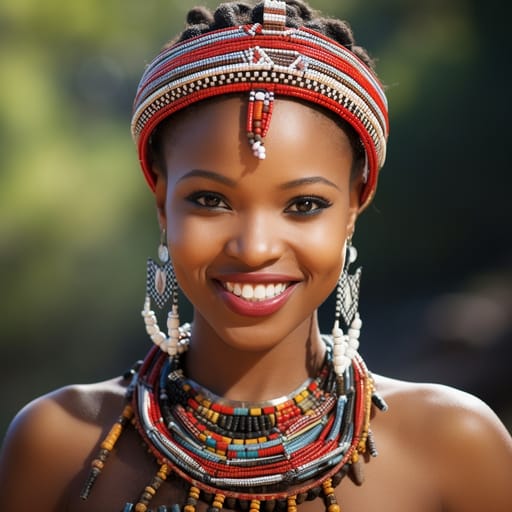
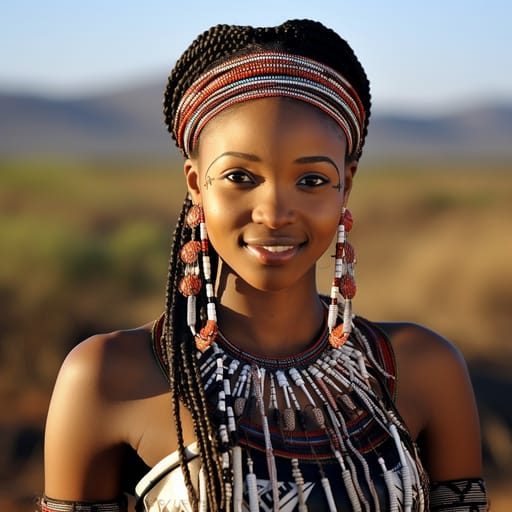
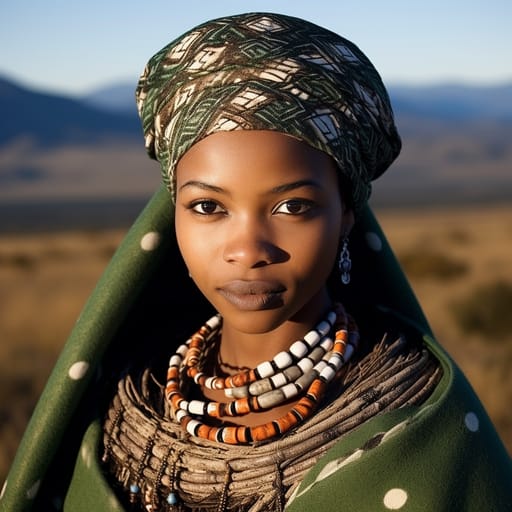
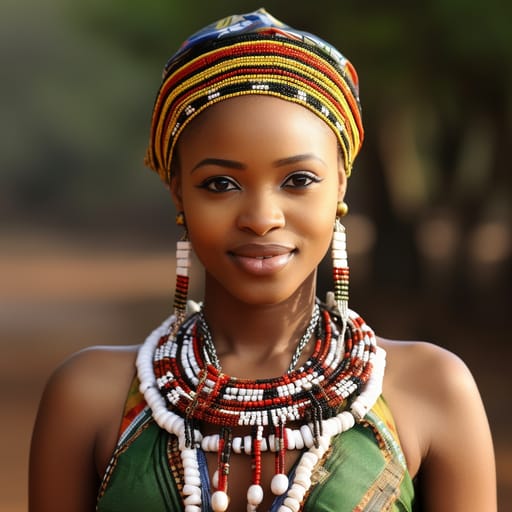
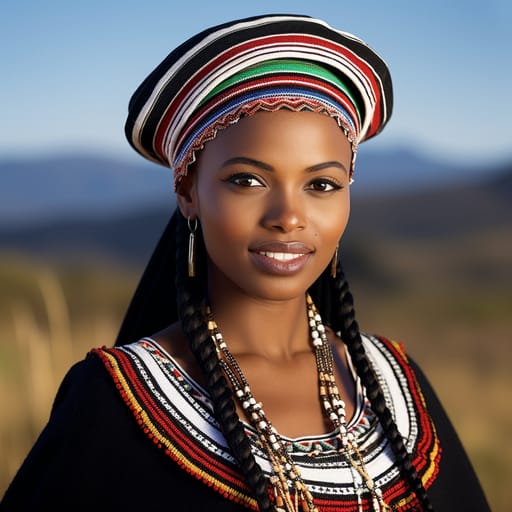

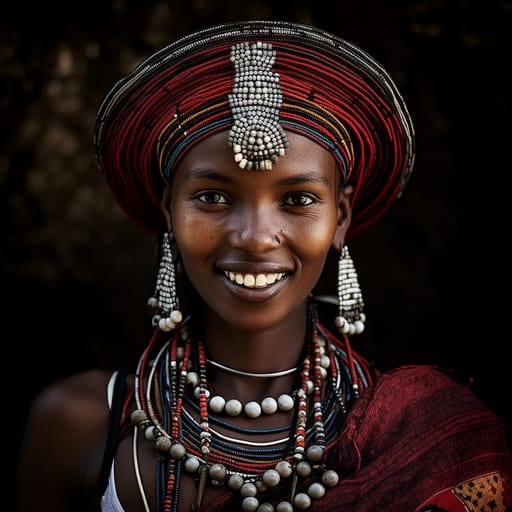
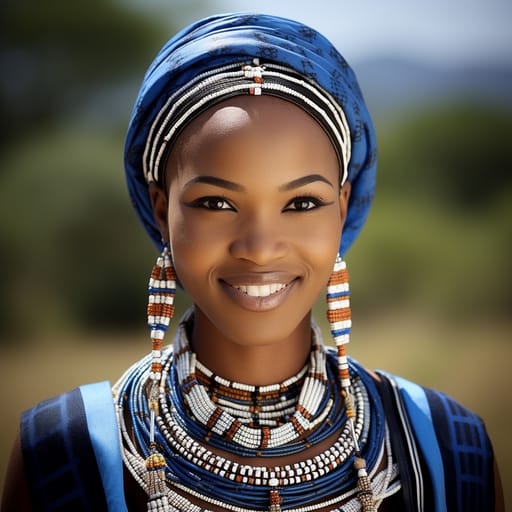
Typical Nyaneka Phenotypes
Reference for AI generation: hair, eyes, skin, facial structure, build
Nyaneka Body & Anatomy Reference
Bantu / Khoisan Southern African phenotype: anatomy reference for AI nude generation
Nyaneka Boobs & Breasts
The typical Nyaneka bust is medium cup, full but moderate projection, in line with the wider Bantu / Khoisan Southern African pattern. Areolas usually fall in the 30-44mm range, with medium-brown to deep-brown areolar pigmentation. Compared with the heavier West African bust, Nyaneka breasts sit forward and are generally moderately full; less projecting than West African norm. A faithful AI render of Nyaneka tits keeps that shape and areola size.
Nyaneka Ass & Hips
Butt shape among Nyaneka women: the distinctive Khoisan-influenced steatopygic profile in some sub-populations (San, Khoekhoe); broader gluteal projection in Bantu-speaking groups, over wide iliac crests with notable lordosis in Khoisan-descended sub-populations. This follows Bantu / Khoisan Southern African ancestry and looks quite unlike the slim Cushitic East African profile. An accurate Nyaneka ass in adult AI imagery keeps both the silhouette and the overall build (mesomorph; Khoisan-descended sub-populations show distinctive steatopygic fat deposition) instead of a generic average.
Nyaneka Vagina & Pussy
Vulvar anatomy among Nyaneka women: deep-brown labial pigmentation; the elongated labia minora documented in some Khoisan-descended populations. Pubic hair tends to be tightly-coiled coarse texture, in the usual inverted-triangle pattern. Both follow Bantu / Khoisan Southern African pigmentation, which is why Nyaneka pussy renders should not fall back on a pale, sparse Western template.
Nyaneka Dicks & Penis
The Nyaneka cock profile, from Bantu / Khoisan Southern African anthropometric data: regional mean ~14cm erect; moderate-to-above-average girth; deep-brown shaft pigmentation. Pubic hair has a tightly-coiled coarse texture and forms the usual inverted-V pattern. Whether Nyaneka men are circumcised follows religious and cultural practice rather than phenotype.
Nyaneka Body, Curves & Build
Build and curves among Nyaneka women follow the Bantu / Khoisan Southern African pattern: mesomorph; Khoisan-descended sub-populations show distinctive steatopygic fat deposition, mean adult female BMI 24-28. Proportions matter as much as skin tone, so Nyaneka figures should keep their regional height and limb ratios.
Nyaneka Skin Tone & Hair Texture
The Nyaneka skin range is medium-brown to deep-brown (Fitzpatrick V-VI); lighter in Khoisan-descended populations, and hair tends to be tightly-coiled 4A-4C; the distinctive 'peppercorn' tight-spiral texture in Khoisan-descended populations. That combination marks the Bantu / Khoisan Southern African phenotype, and skin tone is the trait AI generators most often get wrong for Nyaneka women.
Explore phenotype categories
Structured taxonomy with peer-reviewed scales · 22 anatomical categories
Erotic Poses & Sex Positions
From the pose catalog: 219 named positions with reference skeletons
Frequently asked questions about Nyaneka people
Where is the Nyaneka homeland?
The Nyaneka homeland is Huíla Plateau near Lubango, Huíla Province, Angola in Southern Africa.
What language do Nyaneka people speak?
Nyaneka people primarily speak Nyaneka (Olunyaneka), a Bantu language (Niger-Congo).
What religion do Nyaneka people practice?
The predominant religion among Nyaneka people is Traditional animism and Christianity.






Make your own Nyaneka images
Five a day, free, no credits to buy. The studio starts from this group's phenotype data, so you can set body type, pose and style and keep the traits accurate.
Start with Nyaneka