No portrait yet
Zemba Erotic
Both banks of the Kunene River: southwestern Angola and the Kunene Region of northwestern Namibia
Zemba, also Dhimba (Bantu, Niger-Congo; Herero group), with Portuguese in Angola and English or Afrikaans in Namibia
Christianity alongside traditional ancestral practice
Part of the Herero-speaking cluster of southwestern Angola and northwestern Namibia; closely related to the Himba and Herero
About Zemba People
The Zemba are easy to overlook but hard to confuse with anyone else once you know them. They are a Herero-speaking people of the rough, dry country on both sides of the Kunene River, in southwestern Angola and the northwest corner of Namibia. Outsiders often lump them in with the better-known Himba who live alongside them. The Zemba draw the line themselves. Their name, their speech and their family histories mark them as a separate people, even where they share valleys, towns and grazing land with Himba neighbors.
Their language, Zemba, also written Dhimba, belongs to the Herero branch of the Bantu family, and speakers of Herero and Himba can follow much of it. Linguists disagree on whether it is a language in its own right or a dialect of Herero. For the people who speak it, the distinction that matters is social rather than grammatical: it turns on who your people are, not on how closely your speech matches a neighbor's. Portuguese is the language of school and government on the Angolan side of the river, and English and Afrikaans fill that role in Namibia.
Rural life follows the long pattern of the region. Cattle and goats are the center of household wealth and family obligation, and families plant gardens when the rains are good enough to make it worth the effort. Drought can wipe out a herd in a single bad stretch here, so keeping animals and planting crops at the same time is less a matter of tradition than of good sense.
The border itself is a colonial creation. In the late nineteenth century Portugal and Germany made the Kunene the boundary between Angola and German South West Africa, cutting through a region whose people had never treated the river as a wall. The wars of the late twentieth century, Namibia's fight for independence and Angola's long civil war, made that line far harder to ignore, and at times crossing it was a matter of safety. Zemba communities now live under two flags, and family ties still run across the water.
Christianity, brought in by missions, has a real presence. For many families, though, it sits beside older ancestral practice rather than replacing it, especially around the major passages of birth, marriage and death.
Related ethnic groups
Groups that share Zemba's homeland, region, language, or religious tradition. These are likely candidates for comparative phenotype reference.
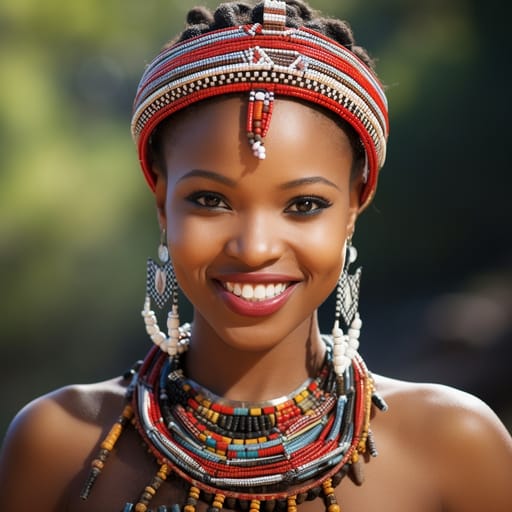
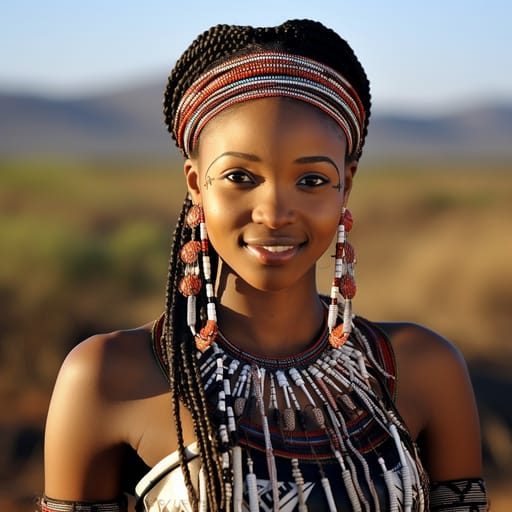
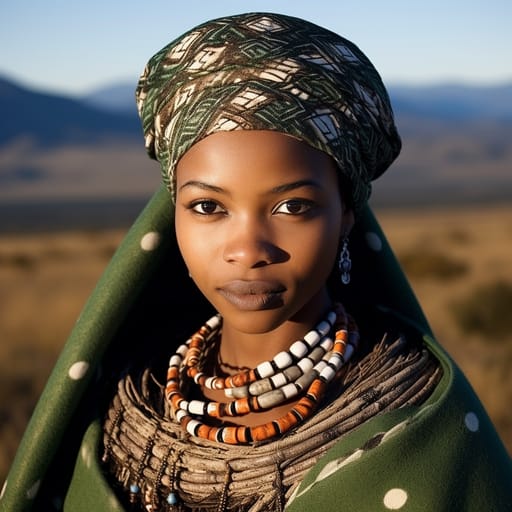
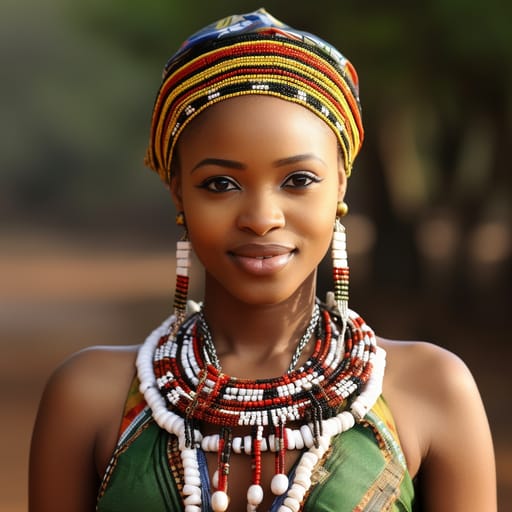
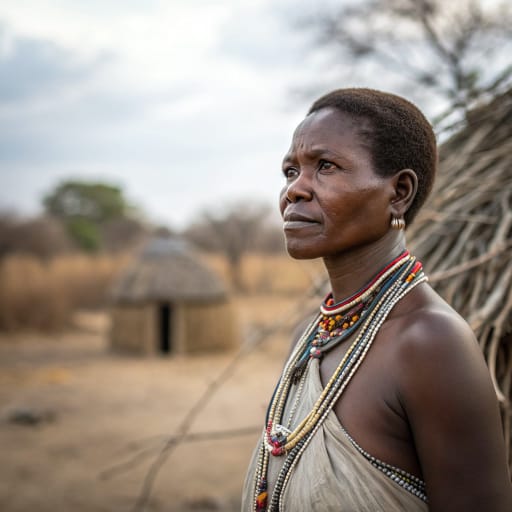
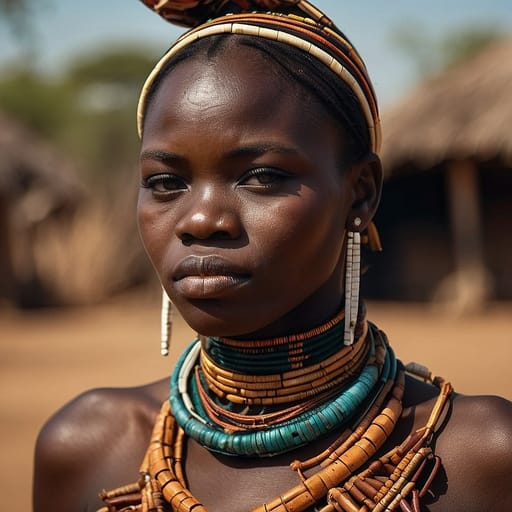
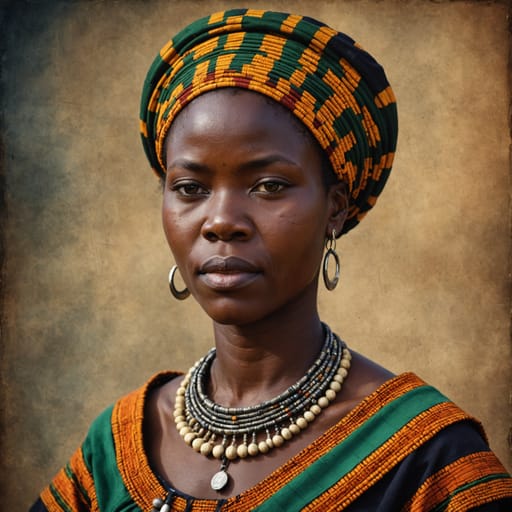
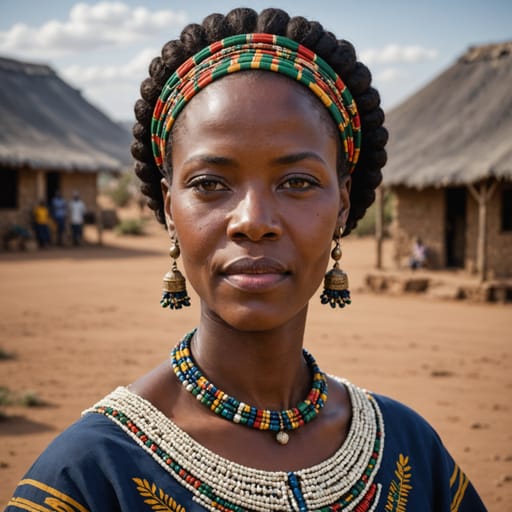
Typical Zemba Phenotypes
Reference for AI generation: hair, eyes, skin, facial structure, build
Zemba Body & Anatomy Reference
Bantu / Khoisan Southern African phenotype: anatomy reference for AI nude generation
Zemba Boobs & Breasts
The typical Zemba bust is medium cup, full but moderate projection, in line with the wider Bantu / Khoisan Southern African pattern. Areolas usually fall in the 30-44mm range, with medium-brown to deep-brown areolar pigmentation. Compared with the heavier West African bust, Zemba breasts sit forward and are generally moderately full; less projecting than West African norm. A faithful AI render of Zemba tits keeps that shape and areola size.
Zemba Ass & Hips
Butt shape among Zemba women: the distinctive Khoisan-influenced steatopygic profile in some sub-populations (San, Khoekhoe); broader gluteal projection in Bantu-speaking groups, over wide iliac crests with notable lordosis in Khoisan-descended sub-populations. This follows Bantu / Khoisan Southern African ancestry and looks quite unlike the slim Cushitic East African profile. An accurate Zemba ass in adult AI imagery keeps both the silhouette and the overall build (mesomorph; Khoisan-descended sub-populations show distinctive steatopygic fat deposition) instead of a generic average.
Zemba Vagina & Pussy
Vulvar anatomy among Zemba women: deep-brown labial pigmentation; the elongated labia minora documented in some Khoisan-descended populations. Pubic hair tends to be tightly-coiled coarse texture, in the usual inverted-triangle pattern. Both follow Bantu / Khoisan Southern African pigmentation, which is why Zemba pussy renders should not fall back on a pale, sparse Western template.
Zemba Dicks & Penis
The Zemba cock profile, from Bantu / Khoisan Southern African anthropometric data: regional mean ~14cm erect; moderate-to-above-average girth; deep-brown shaft pigmentation. Pubic hair has a tightly-coiled coarse texture and forms the usual inverted-V pattern. Whether Zemba men are circumcised follows religious and cultural practice rather than phenotype.
Zemba Body, Curves & Build
Build and curves among Zemba women follow the Bantu / Khoisan Southern African pattern: mesomorph; Khoisan-descended sub-populations show distinctive steatopygic fat deposition, mean adult female BMI 24-28. Proportions matter as much as skin tone, so Zemba figures should keep their regional height and limb ratios.
Zemba Skin Tone & Hair Texture
The Zemba skin range is medium-brown to deep-brown (Fitzpatrick V-VI); lighter in Khoisan-descended populations, and hair tends to be tightly-coiled 4A-4C; the distinctive 'peppercorn' tight-spiral texture in Khoisan-descended populations. That combination marks the Bantu / Khoisan Southern African phenotype, and skin tone is the trait AI generators most often get wrong for Zemba women.
Explore phenotype categories
Structured taxonomy with peer-reviewed scales · 22 anatomical categories
Erotic Poses & Sex Positions
From the pose catalog: 219 named positions with reference skeletons
Frequently asked questions about Zemba people
Where is the Zemba homeland?
The Zemba homeland is Both banks of the Kunene River: southwestern Angola and the Kunene Region of northwestern Namibia in Southern Africa.
What language do Zemba people speak?
Zemba people primarily speak Zemba, also Dhimba (Bantu, Niger-Congo; Herero group), with Portuguese in Angola and English or Afrikaans in Namibia.
What religion do Zemba people practice?
The predominant religion among Zemba people is Christianity alongside traditional ancestral practice.






Make your own Zemba images
Five a day, free, no credits to buy. The studio starts from this group's phenotype data, so you can set body type, pose and style and keep the traits accurate.
Start with Zemba