Help us get this right
Does this portrait look right for Hakaona?
One tap. It takes a second and it is recorded.
1 says it looks right, 1 says it looks off.
Hakaona Erotic
Kunene basin, Namibe and Cunene provinces, Angola
Otjihakaona, a Herero-cluster Bantu language (Niger-Congo)
Traditional animism (ancestor veneration)
About Hakaona People
The Hakaona (also written Hakawona) are a semi-nomadic pastoralist people of the Kunene basin in southwestern Angola, ranging across the dry interior of Namibe and Cunene provinces toward the Namibian border. They form part of the cluster of Herero-speaking herders that also includes the Himba, Dhimba, Zemba and Tjimba, sharing with them a common language, a reliance on cattle, and a striking tradition of personal adornment. Outsiders often group all of these peoples together, but the Hakaona maintain a distinct identity expressed above all through hairstyle and dress.
Society and subsistence
The Hakaona economy rests on herds of cattle, goats and sheep, supplemented by small-scale cultivation of millet and maize where seasonal water permits. In a landscape of low and erratic rainfall, families move livestock between a home settlement and outlying cattle posts, a transhumant rhythm that shapes the year. Descent follows the double pattern common to Herero peoples, combining a patrilineal line responsible for the ancestral fire and ritual cattle with a matrilineal line through which movable wealth is inherited. A sacred fire kept at the centre of the homestead links the living to their forebears, and social authority is vested in lineage elders and senior herd-owners rather than in kings. Bridewealth paid in cattle formalises marriage and ties families together across the grazing lands.
Appearance and adornment
The Hakaona are best known for the elaborate hairstyles worn by girls and young women, among the most sculptural in the region. Hair is extended with plant fibre and bound with otjize, the butterfat-and-ochre paste, then built into long ochred strands or raised, crown-like forms that signal age and marital status. Skin is dressed with the same red paste, giving the characteristic warm sheen, and women layer iron and copper bangles, beaded necklaces, shell ornaments and anklets over softened hide skirts. Married women often add a leather or cloth headdress. Men traditionally wore hide wraps and carried herding sticks, though manufactured cloth is now widespread.
The Hakaona are thought to number only several thousand people, and their isolation in the semi-desert has helped preserve older forms of pastoral life. As boreholes, roads and schooling reach further into the Kunene interior, the Hakaona remain a documented example of the region's Herero-speaking cattle cultures and of the distinctive body and hair aesthetics associated with them.
Related ethnic groups
Groups that share Hakaona's homeland, region, language, or religious tradition. These are likely candidates for comparative phenotype reference.
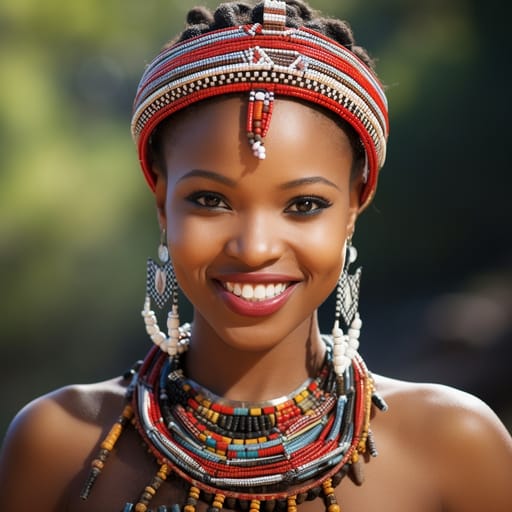
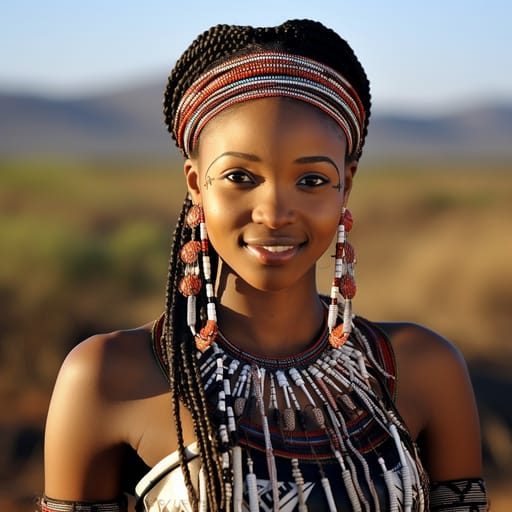
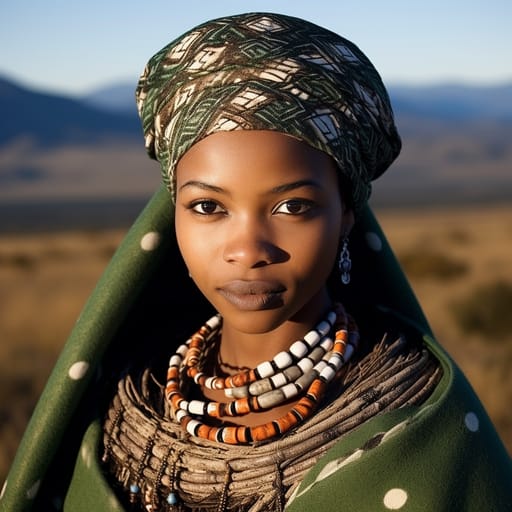
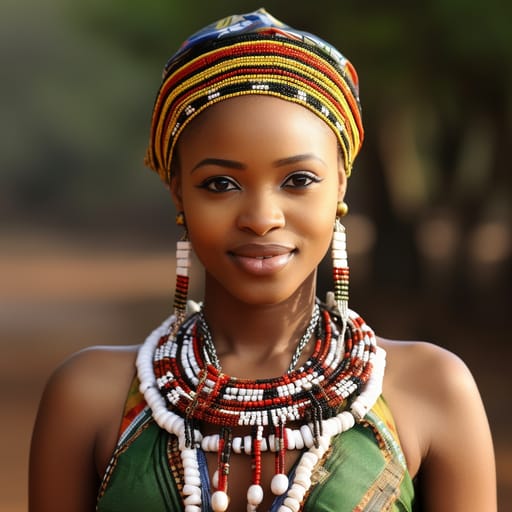
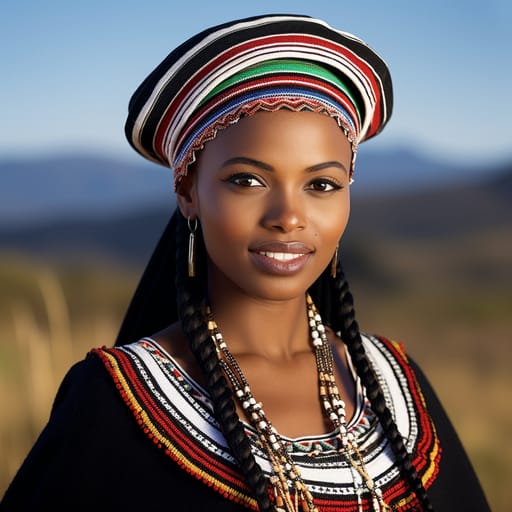

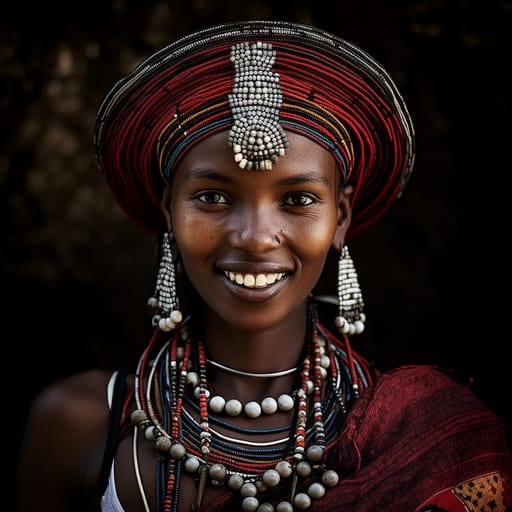
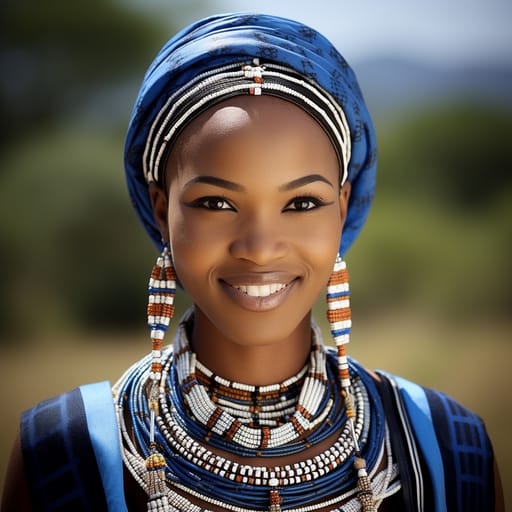
Typical Hakaona Phenotypes
Reference for AI generation: hair, eyes, skin, facial structure, build
Hakaona Body & Anatomy Reference
Anatomy by feature, Bantu / Khoisan Southern African phenotype
Hakaona Boobs & Breasts
The typical Hakaona bust is medium cup, full but moderate projection, in line with the wider Bantu / Khoisan Southern African pattern. Areolas usually fall in the 30-44mm range, with medium-brown to deep-brown areolar pigmentation. Compared with the heavier West African bust, Hakaona breasts sit forward and are generally moderately full; less projecting than West African norm. A faithful AI render of Hakaona tits keeps that shape and areola size.
Hakaona Ass & Hips
Butt shape among Hakaona women: the distinctive Khoisan-influenced steatopygic profile in some sub-populations (San, Khoekhoe); broader gluteal projection in Bantu-speaking groups, over wide iliac crests with notable lordosis in Khoisan-descended sub-populations. This follows Bantu / Khoisan Southern African ancestry and looks quite unlike the slim Cushitic East African profile. An accurate Hakaona ass in adult AI imagery keeps both the silhouette and the overall build (mesomorph; Khoisan-descended sub-populations show distinctive steatopygic fat deposition) instead of a generic average.
Hakaona Vagina & Pussy
Vulvar anatomy among Hakaona women: deep-brown labial pigmentation; the elongated labia minora documented in some Khoisan-descended populations. Pubic hair tends to be tightly-coiled coarse texture, in the usual inverted-triangle pattern. Both follow Bantu / Khoisan Southern African pigmentation, which is why Hakaona pussy renders should not fall back on a pale, sparse Western template.
Hakaona Dicks & Penis
The Hakaona cock profile, from Bantu / Khoisan Southern African anthropometric data: regional mean ~14cm erect; moderate-to-above-average girth; deep-brown shaft pigmentation. Pubic hair has a tightly-coiled coarse texture and forms the usual inverted-V pattern. Whether Hakaona men are circumcised follows religious and cultural practice rather than phenotype.
Hakaona Body, Curves & Build
Build and curves among Hakaona women follow the Bantu / Khoisan Southern African pattern: mesomorph; Khoisan-descended sub-populations show distinctive steatopygic fat deposition, mean adult female BMI 24-28. Proportions matter as much as skin tone, so Hakaona figures should keep their regional height and limb ratios.
Hakaona Skin Tone & Hair Texture
The Hakaona skin range is medium-brown to deep-brown (Fitzpatrick V-VI); lighter in Khoisan-descended populations, and hair tends to be tightly-coiled 4A-4C; the distinctive 'peppercorn' tight-spiral texture in Khoisan-descended populations. That combination marks the Bantu / Khoisan Southern African phenotype, and skin tone is the trait AI generators most often get wrong for Hakaona women.
Explore phenotype categories
Structured taxonomy with peer-reviewed scales · 22 anatomical categories
Erotic Poses & Sex Positions
From the pose catalog: 219 named positions with reference skeletons
Frequently asked questions about Hakaona people
Where is the Hakaona homeland?
The Hakaona homeland is Kunene basin, Namibe and Cunene provinces, Angola in Southern Africa.
What language do Hakaona people speak?
Hakaona people primarily speak Otjihakaona, a Herero-cluster Bantu language (Niger-Congo).
What religion do Hakaona people practice?
The predominant religion among Hakaona people is Traditional animism (ancestor veneration).






Make your own Hakaona images
Five a day, free, no credits to buy. The studio starts from this group's phenotype data, so you can set body type, pose and style and keep the traits accurate.
Start with Hakaona