Help us get this right
Does this portrait look right for Nama?
Nobody has judged this one yet. You would be the first.
Nama Erotic
About Nama People
The Nama are the largest surviving Khoekhoe-speaking people, the southern branch of a population that once stretched across much of what is now South Africa, Namibia, and Botswana before Dutch settlement and later wars hollowed it out. Their homeland today is the dry country on either side of the Orange River — Namaqualand on the South African side, Namaland in southern Namibia — a landscape of stone, succulent, and seasonal flower bloom that imposes its rhythms on anyone who lives by herding there. Cattle and fat-tailed sheep, not crops, anchored the older economy; the modern Nama still keep livestock, but most live in towns, on resettled farms, or in the working districts of Windhoek, Cape Town, and the mining belts.
Khoekhoe, sometimes written Khoekhoegowab or Nama-Damara, belongs to the Khoe family and is one of the click languages that gave Afrikaans its q sounds and a small but stubborn vocabulary. It is shared across ethnic lines: the Damara, who are physically and historically distinct, speak it as a first language, as do the Haiǁom San. Within Nama itself there are recognised sub-groups — the Red Nation (ǃGami-ǂnun), the Bondelswarts, the Topnaars of the Kuiseb riverbed, the Witboois of Gibeon — each tracing descent from a particular captaincy and each, in the colonial era, signing its own treaties and fighting its own wars.
The defining historical inflection is the German colonial campaign of 1904–1908, which followed the Herero uprising and turned on the Nama after Hendrik Witbooi joined the resistance. The genocide that followed killed roughly half the Nama population in concentration camps at Shark Island and Lüderitz; the Bondelswarts uprising against South African rule in 1922 was a bloody coda. Germany formally acknowledged the genocide in 2021, though Nama leaders have generally rejected the reparations framework as negotiated over their heads.
Christianity arrived through Rhenish and Wesleyan missionaries in the early nineteenth century and is now near-universal, but it sits on top of older practice rather than erasing it. Praise poetry, the riel dance, and the matrilineal threads in inheritance and naming all persist. So does a particular kind of dry, understated humour and a respect for oratory — the Nama captaincies still meet, still issue statements, and still argue, publicly and at length, about land, language schooling, and what the post-genocide settlement should actually look like.
Related ethnic groups
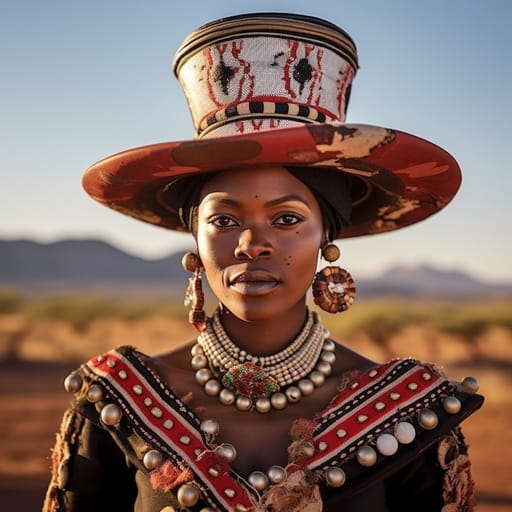
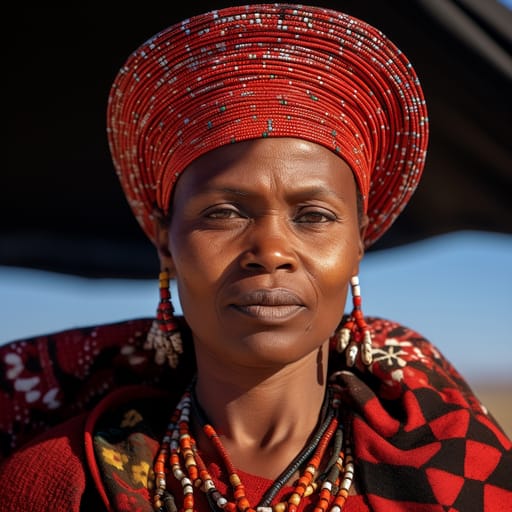
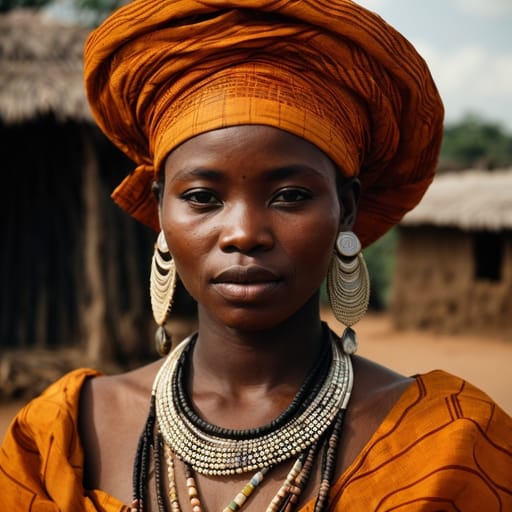
Groups that share Nama's homeland, region, language, or religious tradition. These are likely candidates for comparative phenotype reference.
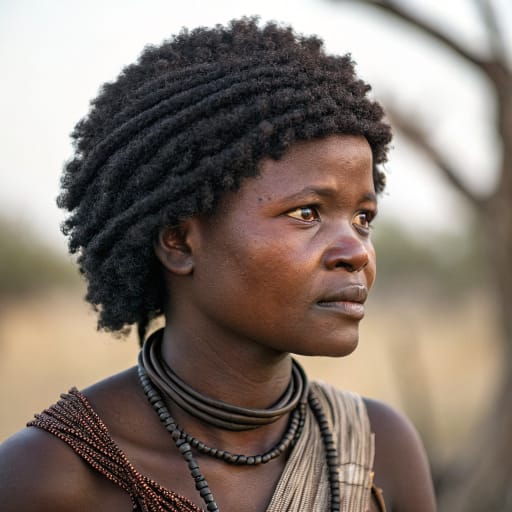
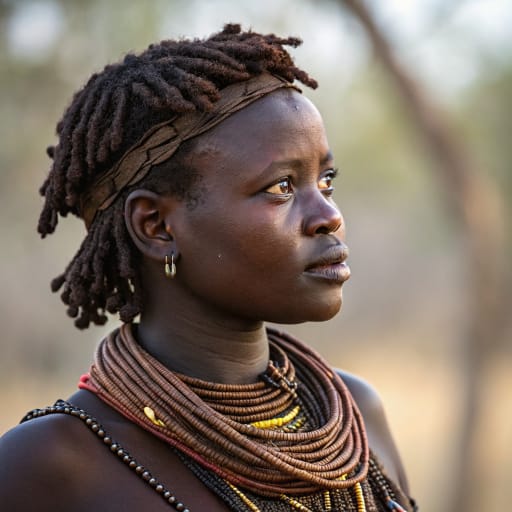
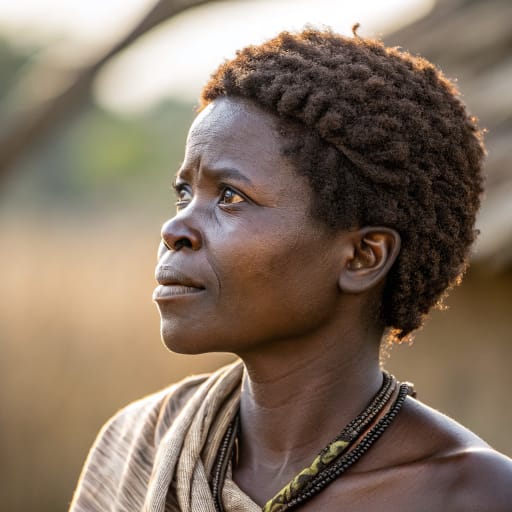
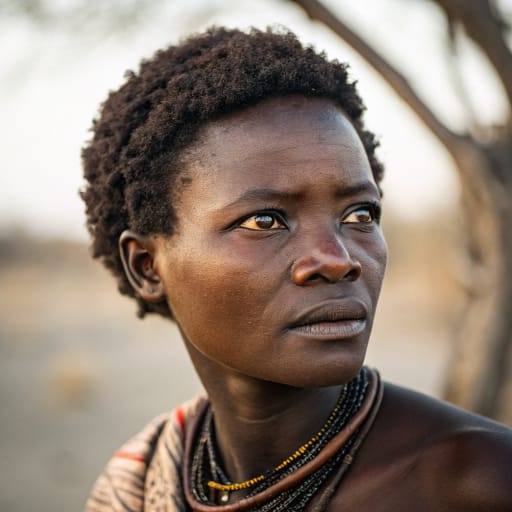

Geographic Distribution: Nama populations across 1 country
Each row is ranked by the group's share of that country's population, with the source citation drawn from published census and demographic surveys. Click through for the full per-country phenotype profile.
| Country | Share | Source |
|---|---|---|
| Namibia | 5.0% | Namibia 2023 Census; Nama (~5%); the historic Khoisan-language pastoral population |
Typical Nama Phenotypes
Reference for AI generation: hair, eyes, skin, facial structure, build
The Nama belong to the Khoekhoe branch of southern Africa's Khoe-San peoples, and their phenotype is one of the most structurally distinctive on the continent — quite different from the Bantu populations that surround them in Namibia and the Northern Cape. Skin tone runs from light yellow-brown to a warm amber-tan, often Fitzpatrick III–IV rather than the deeper V–VI typical of neighbouring Herero or Xhosa groups, with a faintly golden or olive undertone. Sun-exposed skin tends to develop a characteristic crepey, finely-lined texture earlier than in surrounding populations.
Hair is almost always black and grows in tightly coiled peppercorn tufts — small, separated spirals that cluster across the scalp rather than forming a continuous mass. Beard and body hair are sparse. Eyes are typically dark brown, set within a soft epicanthic fold that gives the upper lid a smooth, slightly almond shape; this Khoe-San fold is structurally distinct from East Asian morphology but visually echoes it, and is one of the group's most recognisable features.
Facial structure tends toward a flat, broad mid-face with high, wide-set cheekbones, a short and low-bridged nose with a rounded tip and moderately wide alae, and a small, often pointed chin. Lips are present but generally less full and everted than in Bantu neighbours. The forehead is high and rounded, the overall face shorter than it is wide.
Build is the trait outsiders notice first: Nama adults are among the shorter populations in Africa, with men commonly 1.55–1.65 m and women 1.45–1.55 m. Steatopygia — pronounced fat deposition across the buttocks and upper thighs — occurs at high frequency in women, alongside slim limbs and a narrow waist, producing a distinctive silhouette. Men carry similarly lean limbs over a compact, wiry frame. Sub-group variation between the Red Nation, Topnaar, Bondelswarts and other clans is minor; centuries of contact with Orlam, Baster and Afrikaner populations have introduced lighter eyes and looser hair textures in some lineages, particularly along the Orange River.
Data depth
0/100Coverage of image-grounded phenotype observations · drives AI generation diversity
- Sample size
- 0/40· 0 images
- Image quality
- 0/30· 0% high
- Confidence
- 0/20
- Source diversity
- 0/10
- ·No image observations yet
Explore phenotype categories
Structured taxonomy with peer-reviewed scales · 22 anatomical categories
Erotic Poses & Sex Positions
From the pose catalog: 219 named positions with reference skeletons
Frequently asked questions about Nama people
Where is the Nama homeland?
The Nama homeland is Namaland (Namibia), South Africa in Southern Africa.
What countries do Nama people live in?
Nama populations are documented across 1 country: Namibia.
What language do Nama people speak?
Nama people primarily speak Khoe / Khoekhoe.
What religion do Nama people practice?
The predominant religion among Nama people is Christianity.






Make your own Nama images
Five a day, free, no credits to buy. The studio starts from this group's phenotype data, so you can set body type, pose and style and keep the traits accurate.
Start with Nama