Help us get this right
Does this portrait look right for Cuvale?
One tap. It takes a second and it is recorded.
1 says it looks right, 0 say it looks off.
Cuvale Erotic
Namibe Province (eastern Namib desert margins), Angola
Otjikuvale, a Herero-cluster Bantu language (Niger-Congo)
Traditional animism (ancestor veneration)
About Cuvale People
The Cuvale (also spelled Kuvale, self-designation Ovakuvale) are a Herero-speaking pastoralist people of Namibe Province in southwestern Angola. They herd cattle, goats and fat-tailed sheep along the eastern margins of the Namib Desert and the valleys of the Giraul and Bentiaba rivers, in one of the driest inhabited regions of the country. The Cuvale belong to the same broad Herero-language family as the Himba, and are sometimes grouped with other Namibe herders under the label Mucubal, though they keep a distinct identity and name.
Society and subsistence
Cattle stand at the centre of Cuvale life as food, wealth and the medium of bridewealth and ritual, with milk a dietary staple and slaughter reserved largely for ceremony. The harsh desert environment demands constant movement of stock between wells and seasonal pasture, and the Cuvale have long been known as tenacious, independent herders who resisted external control of their herds during the colonial and post-independence periods. Society is organised through the double descent typical of Herero peoples: a patrilineal line linked to the ancestral fire and sacred cattle, and a matrilineal line carrying inheritable wealth. Homesteads centre on a holy fire tended for the ancestors, and authority lies with senior herd-owners and lineage elders. Knowledge of water sources, cattle bloodlines and grazing rights is passed down as a vital inheritance.
Appearance and adornment
Cuvale women are recognisable by an abundance of metal ornament: heavy iron and copper rings and coils worn at the neck, arms and ankles, accumulated through life and marriage, together with beaded necklaces and leather aprons or skirts of softened hide. Skin and hair are often dressed with red ochre and fat, and married women may wear a shaped leather or fibre headdress. Body ornament communicates a woman's status, wealth and stage of life. Men traditionally wore hide loincloths and carried staffs and weapons for herding and defence, though manufactured cloth is now common in everyday wear.
The Cuvale are estimated to number in the tens of thousands, concentrated in rural Namibe. Drought, cattle loss and the pressures of a changing national economy have periodically strained their pastoral system, yet cattle-keeping and its associated customs remain central to Cuvale identity. They stand as a well-documented example of the arid-land Herero herding cultures of southwestern Angola.
Related ethnic groups
Groups that share Cuvale's homeland, region, language, or religious tradition. These are likely candidates for comparative phenotype reference.
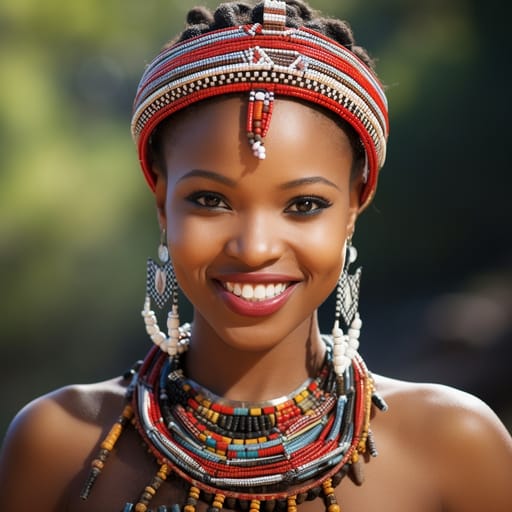
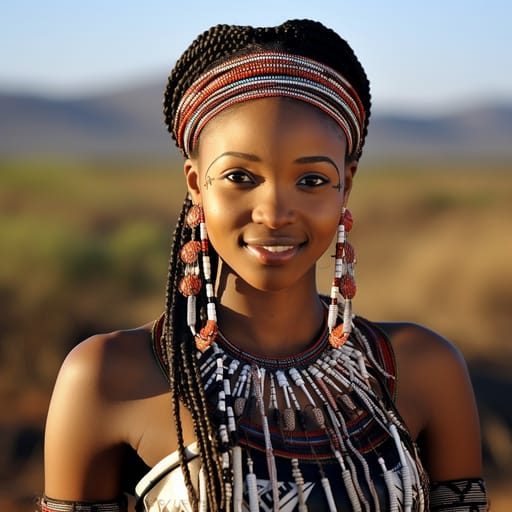
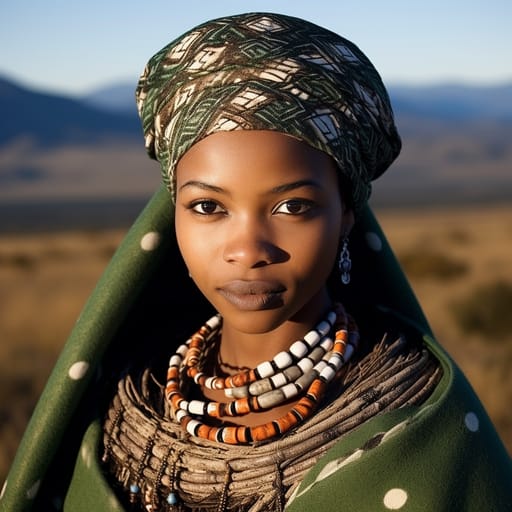
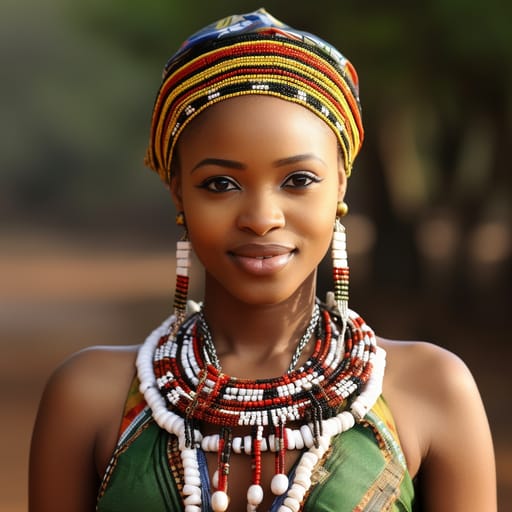
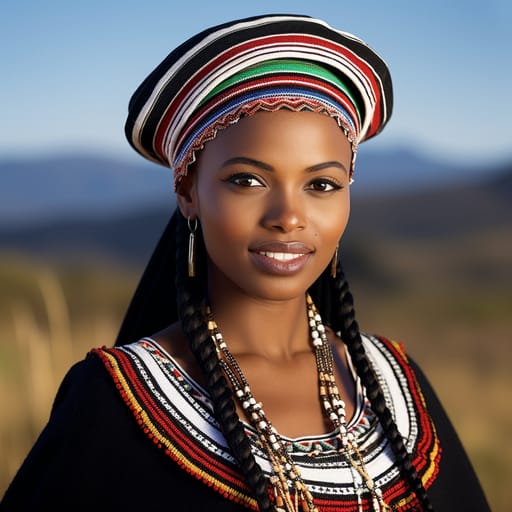

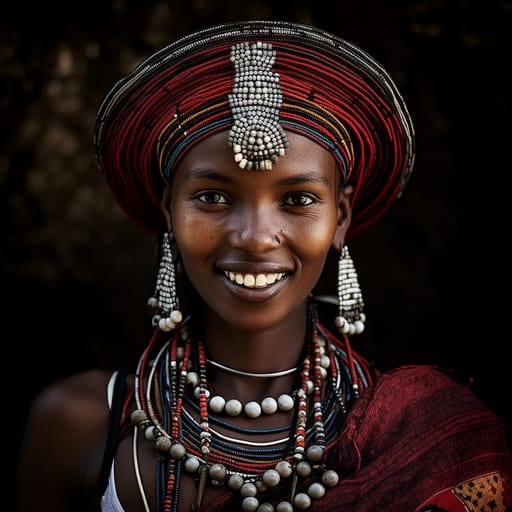
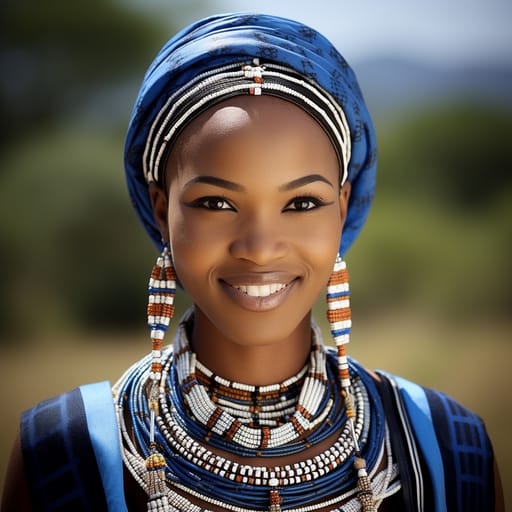
Typical Cuvale Phenotypes
Reference for AI generation: hair, eyes, skin, facial structure, build
Cuvale Body & Anatomy Reference
Anatomy by feature, Bantu / Khoisan Southern African phenotype
Cuvale Boobs & Breasts
Cuvale tits and boobs run medium cup, full but moderate projection, the classic Bantu / Khoisan Southern African bust profile. Cuvale nipples and areolas show medium-brown to deep-brown areolar pigmentation, with areolar diameter typically in the 30-44mm range and forward-set positioning rather than the heavier West African bust. Cuvale breasts trend moderately full; less projecting than West African norm, a function of the mesomorph; Khoisan-descended sub-populations show distinctive steatopygic fat deposition body habitus and the mean adult female BMI 24-28. For anatomically accurate AI-generated Cuvale nudes the render preserves the medium cup, full but moderate projection shape, 30-44mm areolas with medium-brown to deep-brown pigmentation, and the torso proportions of the Bantu / Khoisan Southern African phenotype.
Cuvale Ass & Hips
Cuvale hips and butt usually read as the distinctive Khoisan-influenced steatopygic profile in some sub-populations (San, Khoekhoe); broader gluteal projection in Bantu-speaking groups. The skeletal base is wide iliac crests with notable lordosis in Khoisan-descended sub-populations, the Bantu / Khoisan Southern African pattern. Set against the slim Cushitic East African profile, the difference is easy to see, and the hip-to-waist ratio is often what identifies Cuvale women in photos.
Cuvale Vagina & Pussy
Expect deep-brown labial pigmentation; the elongated labia minora documented in some Khoisan-descended populations on Cuvale women, in keeping with Bantu / Khoisan Southern African ancestry. The pubic hair is tightly-coiled coarse texture. Coloring should run evenly from the medium-brown to deep-brown skin of the thighs to the labia, and Cuvale nude imagery should keep the hair's tightly-coiled coarse texture.
Cuvale Dicks & Penis
Cuvale dick and penile anatomy in adult AI generation should anchor on the regional reference data: regional mean ~14cm erect, moderate-to-above-average girth, and deep-brown shaft pigmentation. The Cuvale cock profile reflects the Bantu / Khoisan Southern African population's anthropometric measurements. The shaft pigmentation should track the surrounding medium-brown to deep-brown skin tone, and the pubic hair should keep its tightly-coiled coarse texture in the typical inverted-V escutcheon.
Cuvale Body, Curves & Build
Cuvale body type: mesomorph; Khoisan-descended sub-populations show distinctive steatopygic fat deposition, with mean adult female BMI 24-28. This is the typical Bantu / Khoisan Southern African build. Height range, shoulder-to-hip ratio and fat distribution all follow from it, which is what an accurate Cuvale nude body should show.
Cuvale Skin Tone & Hair Texture
Cuvale skin tone falls in the medium-brown to deep-brown (Fitzpatrick V-VI); lighter in Khoisan-descended populations band, the surface signal most often miscalibrated by generic AI nude generators. Cuvale hair texture is typically tightly-coiled 4A-4C; the distinctive 'peppercorn' tight-spiral texture in Khoisan-descended populations, characteristic of the Bantu / Khoisan Southern African phenotype. In Cuvale nude renders the skin should hold that band consistently across the body.
Explore phenotype categories
Structured taxonomy with peer-reviewed scales · 22 anatomical categories
Erotic Poses & Sex Positions
From the pose catalog: 219 named positions with reference skeletons
Frequently asked questions about Cuvale people
Where is the Cuvale homeland?
The Cuvale homeland is Namibe Province (eastern Namib desert margins), Angola in Southern Africa.
What language do Cuvale people speak?
Cuvale people primarily speak Otjikuvale, a Herero-cluster Bantu language (Niger-Congo).
What religion do Cuvale people practice?
The predominant religion among Cuvale people is Traditional animism (ancestor veneration).






Make your own Cuvale images
Five a day, free, no credits to buy. The studio starts from this group's phenotype data, so you can set body type, pose and style and keep the traits accurate.
Start with Cuvale