Help us get this right
Does this portrait look right for Hlubi?
Nobody has judged this one yet. You would be the first.
Hlubi Erotic
Originally the upper Mzinyathi (Buffalo) River country of northern KwaZulu-Natal, South Africa; now mainly KwaZulu-Natal and the Eastern Cape, with communities elsewhere in South Africa.
isiHlubi (Nguni, Bantu), usually classed as a dialect of Xhosa; Xhosa, Zulu and English are also widely spoken.
Mostly Christian, in mission and independent churches, with ancestor veneration still common in family life.
Nguni people; royal clan Radebe; in the Eastern Cape counted among the Mfengu (Fingo) with other refugee clans of the Mfecane era.
About Hlubi People
The Hlubi are a Nguni people whose identity was shaped as much by being scattered as by staying put. In the early 1800s they held the country near the headwaters of the Mzinyathi, or Buffalo, River in what is now northern KwaZulu-Natal. They lived under a royal house whose clan name, Radebe, still turns up in surnames across South Africa. Then the wars of the Mfecane broke them apart. Matiwane's amaNgwane killed the Hlubi chief Mthimkhulu, and the survivors went in several directions. Some crossed the Drakensberg onto the highveld, some lived in the shadow of the Zulu kingdom, and many went south into Xhosa country. There they were counted with other refugee clans under the name Mfengu, or Fingo.
That split still shapes Hlubi life. In the Eastern Cape, Hlubi families have lived beside Xhosa speakers for nearly two centuries and share much of their ritual life. The Mfengu were also among the first communities in the region to take up mission schooling. In KwaZulu-Natal the story runs through Langalibalele, a chief famed as a rainmaker whose name means roughly the sun is blazing. He brought his people into colonial Natal in 1848, and they were settled in the Drakensberg foothills near present-day Estcourt. In 1873 a quarrel over unregistered guns, many of them earned as wages on the Kimberley diamond fields, turned into a colonial punitive campaign. The Hlubi location was broken up and its cattle seized, and Langalibalele was tried and banished to Robben Island. Bishop John Colenso took up his cause at real cost to his standing among settlers. The episode is still central to how Hlubi tell their own history.
The language, isiHlubi, is close enough to Xhosa and Zulu that it is usually filed as a dialect of Xhosa. It keeps its own features, though, and some speakers want it recognized as a language in its own right. Most Hlubi today are Christian, in mission-founded and independent churches alike, and church life runs alongside ancestral observance. Slaughtering an animal to tell the ancestors about a birth, a marriage or a return home is still ordinary family business. Clan praises recited at weddings and funerals keep old royal names like Mthimkhulu and Bhungane alive, and Hlubi leaders have pressed for years for official recognition of their kingship.
Related ethnic groups
Groups that share Hlubi's homeland, region, language, or religious tradition. These are likely candidates for comparative phenotype reference.
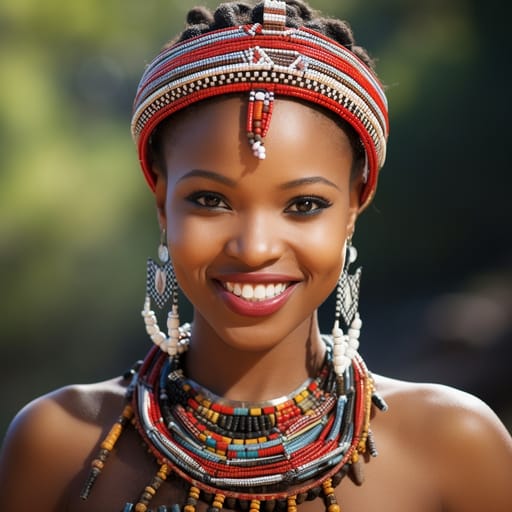
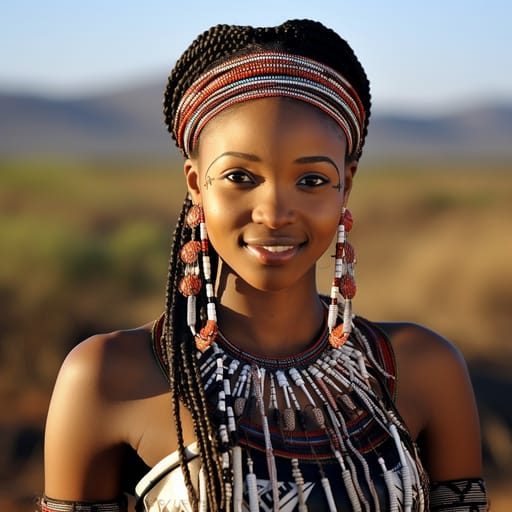
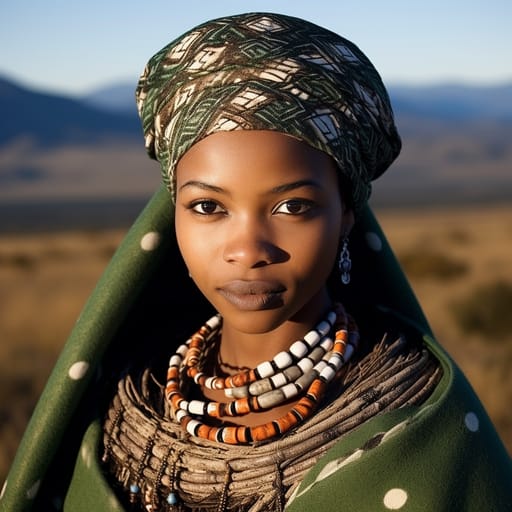
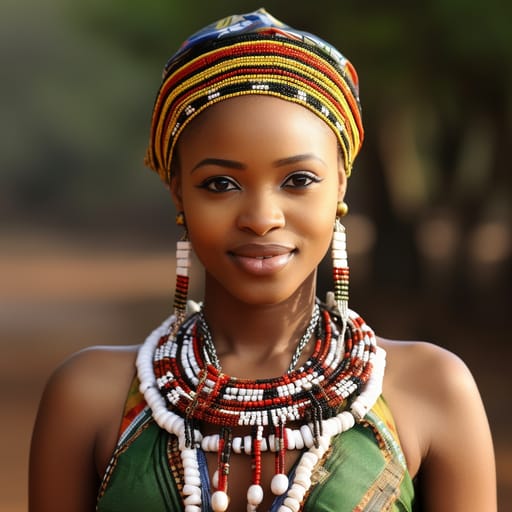
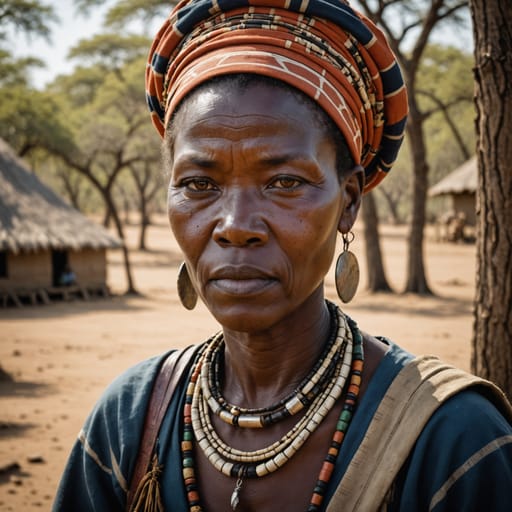
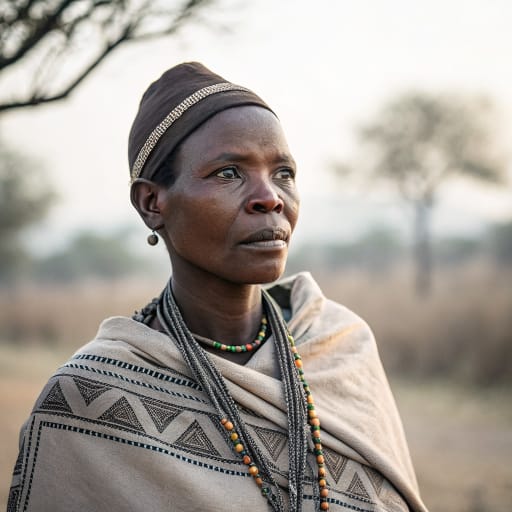
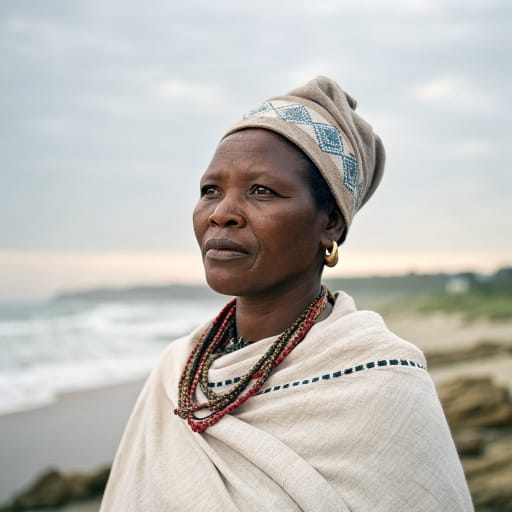
Typical Hlubi Phenotypes
Reference for AI generation: hair, eyes, skin, facial structure, build
Hlubi Body & Anatomy Reference
Anatomy by feature, Bantu / Khoisan Southern African phenotype
Hlubi Boobs & Breasts
Hlubi boobs follow the Bantu / Khoisan Southern African profile: medium cup, full but moderate projection. Areolar diameter is usually 30-44mm, and the coloring is medium-brown to deep-brown areolar pigmentation. Breast shape tracks body composition (mesomorph; Khoisan-descended sub-populations show distinctive steatopygic fat deposition, mean adult female BMI 24-28), so Hlubi breasts tend to be moderately full; less projecting than West African norm. Expect a forward-set shape, not the heavier West African bust.
Hlubi Ass & Hips
Hlubi ass and hip morphology presents as the distinctive Khoisan-influenced steatopygic profile in some sub-populations (San, Khoekhoe); broader gluteal projection in Bantu-speaking groups, distinctly different from the slim Cushitic East African profile. The Hlubi pelvic profile shows wide iliac crests with notable lordosis in Khoisan-descended sub-populations, anchored in the Bantu / Khoisan Southern African skeletal pattern. Hlubi butt shots in adult AI imagery should render the the distinctive Khoisan-influenced steatopygic profile in some sub-populations (San, Khoekhoe); broader gluteal projection in Bantu-speaking groups silhouette with the overall build (mesomorph; Khoisan-descended sub-populations show distinctive steatopygic fat deposition) and the fat distribution typical of the Bantu / Khoisan Southern African phenotype.
Hlubi Vagina & Pussy
Hlubi pussy anatomy typically shows deep-brown labial pigmentation; the elongated labia minora documented in some Khoisan-descended populations. Pubic hair is usually tightly-coiled coarse texture. In AI-generated Hlubi nudes, labial color should blend into the medium-brown to deep-brown skin with a gradual transition, and the hair should keep its tightly-coiled coarse texture.
Hlubi Dicks & Penis
Penis reference for Hlubi men: regional mean ~14cm erect, moderate-to-above-average girth. Coloring: deep-brown shaft pigmentation. An accurate Hlubi cock in AI imagery matches the surrounding medium-brown to deep-brown skin rather than a generic porn default. Circumcision depends on religion and custom, not ancestry.
Hlubi Body, Curves & Build
The Hlubi figure is generally mesomorph; Khoisan-descended sub-populations show distinctive steatopygic fat deposition, with mean adult female BMI 24-28, characteristic of Bantu / Khoisan Southern African ancestry. AI image tools tend to flatten regional body types into a few stock shapes; here the Hlubi build is kept as its own reference.
Hlubi Skin Tone & Hair Texture
Skin: medium-brown to deep-brown (Fitzpatrick V-VI); lighter in Khoisan-descended populations. Hair: tightly-coiled 4A-4C; the distinctive 'peppercorn' tight-spiral texture in Khoisan-descended populations. Both are typical of Bantu / Khoisan Southern African ancestry. The most common mistake in AI nudes of Hlubi women is a body rendered lighter than the face.
Explore phenotype categories
Structured taxonomy with peer-reviewed scales · 22 anatomical categories
Erotic Poses & Sex Positions
From the pose catalog: 219 named positions with reference skeletons
Frequently asked questions about Hlubi people
Where is the Hlubi homeland?
The Hlubi homeland is Originally the upper Mzinyathi (Buffalo) River country of northern KwaZulu-Natal, South Africa; now mainly KwaZulu-Natal and the Eastern Cape, with communities elsewhere in South Africa. in Southern Africa.
What language do Hlubi people speak?
Hlubi people primarily speak isiHlubi (Nguni, Bantu), usually classed as a dialect of Xhosa; Xhosa, Zulu and English are also widely spoken..
What religion do Hlubi people practice?
The predominant religion among Hlubi people is Mostly Christian, in mission and independent churches, with ancestor veneration still common in family life..






Make your own Hlubi images
Five a day, free, no credits to buy. The studio starts from this group's phenotype data, so you can set body type, pose and style and keep the traits accurate.
Start with Hlubi