No portrait yet
Subiya Erotic
Chobe and Zambezi floodplains: the eastern Zambezi Region (former Caprivi Strip) of Namibia, the Chobe District of northern Botswana, and the Sesheke area of Zambia's Western Province.
Subiya, also called Chikuhane or Ikuhane (Bantu, Botatwe group, related to Tonga), with Silozi widely spoken as a second language.
Predominantly Christian (Lutheran, Catholic, Seventh-day Adventist, Pentecostal), with ancestral observance and traditional healing alongside.
Bantu people of the Botatwe (Tonga-related) group on the upper Zambezi. Communities in Namibia (Masubia), Botswana (Basubiya) and Zambia, historically subjects of the Lozi (Barotse) kingdom.
About Subiya People
The Subiya are a river people, and the river explains most of what makes them a group. Their country is the wedge of floodplain where the Chobe runs into the Zambezi, which three borders now carve up: the eastern end of Namibia's Zambezi Region (formerly the Caprivi Strip), the Chobe District of northern Botswana around Kasane, and the Sesheke side of Zambia's Western Province. They call themselves Vekuhane, after a founding ancestor named Ikuhane, and their language Chikuhane. Subiya, Subia, Masubia and Basubiya are what neighbors and the three governments call them. Under any of those names, daily life is organized around water. Men fish from dugout canoes, cattle are walked between floodplain grazing and higher ground as the annual flood rises and falls, and gardens go in on the wet soil the water leaves behind. Reed cutting, fish drying and the timing of the flood still set the village calendar, even where tarmac and phone signal have arrived.
Chikuhane is a Bantu language of the Botatwe group, which makes it a cousin of Tonga and Ila in Zambia and of the smaller Totela and Fwe languages nearby, rather than of Lozi, which outsiders often assume is the language here. Lozi is nonetheless everywhere. It was the language of the Barotse court that held the Subiya as tributaries, and it remains the language of early schooling, church and radio in the Zambezi Region, so most Subiya are bilingual and younger people increasingly reach for it first. The political inheritance is the kingdom of Itenge, whose ruler, the Munitenge, still leads the Masubia Traditional Authority from Bukalo in Namibia and presides over the khuta, the customary court that settles disputes and allocates land along the river. Botswana's Subiya have their own chief in the Chobe District, and Zambia's sit inside the Barotse system. The nineteenth century was hard on them. Sebitwane's Kololo, a Sotho-speaking army pushed north by the wars in South Africa, took the upper Zambezi around 1840 and made Linyanti, in Subiya country, the capital of their state. That is where David Livingstone arrived in 1851. The Lozi restoration of 1864 returned the Subiya to Barotse overlordship, and in 1890 a treaty signed in Europe handed the strip to Germany without consulting anyone who lived on it. Most Subiya today are Christian, spread across Lutheran, Catholic, Seventh-day Adventist and newer Pentecostal congregations, while ancestral observance and traditional healers keep a place alongside the churches. They are not numerous, but the canoe, the khuta and the Munitenge give them a clearer sense of who they are than their numbers would suggest.
Related ethnic groups
Groups that share Subiya's homeland, region, language, or religious tradition. These are likely candidates for comparative phenotype reference.
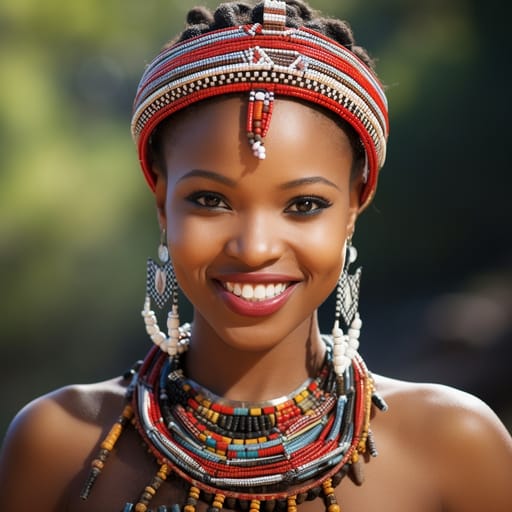
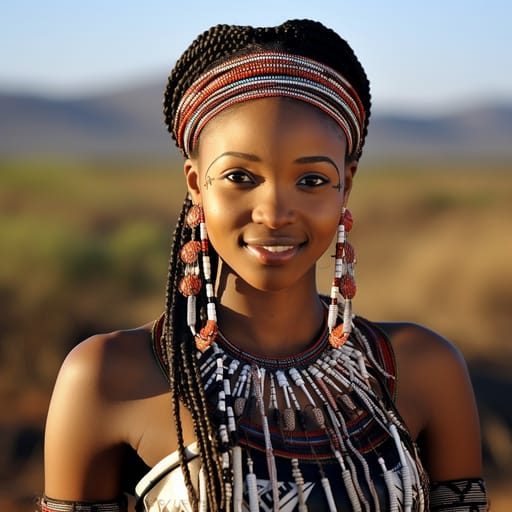
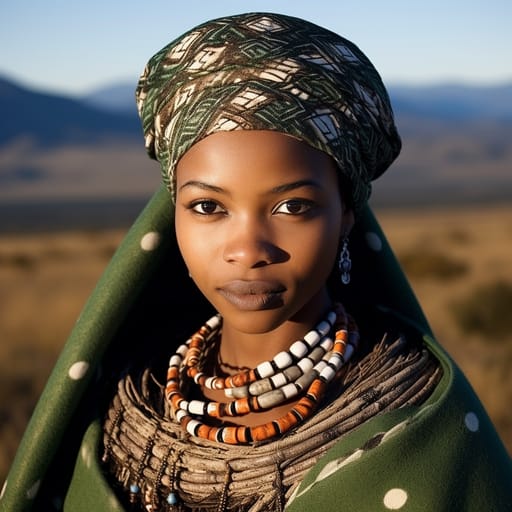
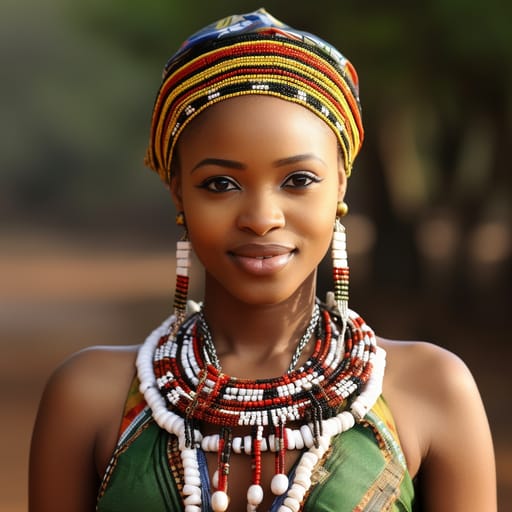
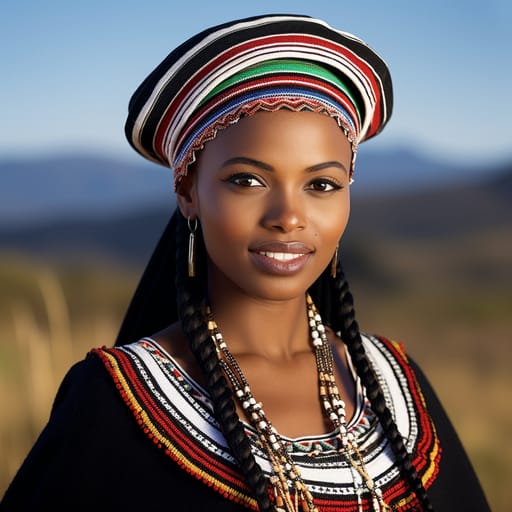

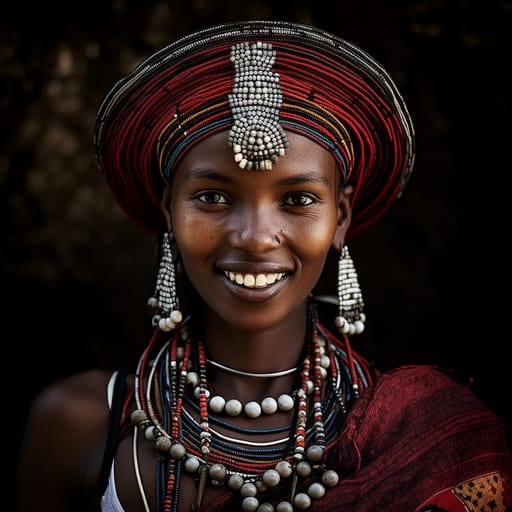
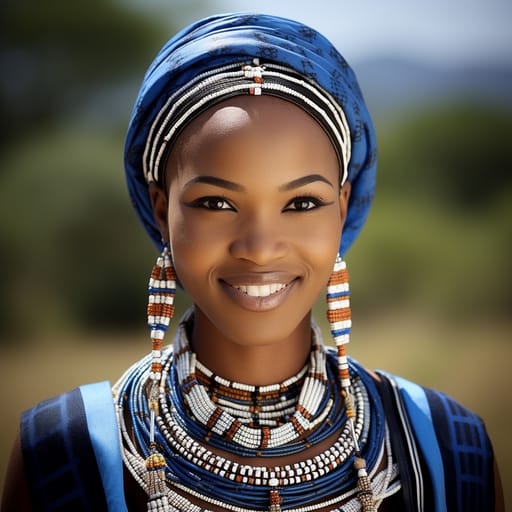
Typical Subiya Phenotypes
Reference for AI generation: hair, eyes, skin, facial structure, build
Subiya Body & Anatomy Reference
Bantu / Khoisan Southern African phenotype: anatomy reference for AI nude generation
Subiya Boobs & Breasts
The typical Subiya bust is medium cup, full but moderate projection, in line with the wider Bantu / Khoisan Southern African pattern. Areolas usually fall in the 30-44mm range, with medium-brown to deep-brown areolar pigmentation. Compared with the heavier West African bust, Subiya breasts sit forward and are generally moderately full; less projecting than West African norm. A faithful AI render of Subiya tits keeps that shape and areola size.
Subiya Ass & Hips
Butt shape among Subiya women: the distinctive Khoisan-influenced steatopygic profile in some sub-populations (San, Khoekhoe); broader gluteal projection in Bantu-speaking groups, over wide iliac crests with notable lordosis in Khoisan-descended sub-populations. This follows Bantu / Khoisan Southern African ancestry and looks quite unlike the slim Cushitic East African profile. An accurate Subiya ass in adult AI imagery keeps both the silhouette and the overall build (mesomorph; Khoisan-descended sub-populations show distinctive steatopygic fat deposition) instead of a generic average.
Subiya Vagina & Pussy
Vulvar anatomy among Subiya women: deep-brown labial pigmentation; the elongated labia minora documented in some Khoisan-descended populations. Pubic hair tends to be tightly-coiled coarse texture, in the usual inverted-triangle pattern. Both follow Bantu / Khoisan Southern African pigmentation, which is why Subiya pussy renders should not fall back on a pale, sparse Western template.
Subiya Dicks & Penis
The Subiya cock profile, from Bantu / Khoisan Southern African anthropometric data: regional mean ~14cm erect; moderate-to-above-average girth; deep-brown shaft pigmentation. Pubic hair has a tightly-coiled coarse texture and forms the usual inverted-V pattern. Whether Subiya men are circumcised follows religious and cultural practice rather than phenotype.
Subiya Body, Curves & Build
Build and curves among Subiya women follow the Bantu / Khoisan Southern African pattern: mesomorph; Khoisan-descended sub-populations show distinctive steatopygic fat deposition, mean adult female BMI 24-28. Proportions matter as much as skin tone, so Subiya figures should keep their regional height and limb ratios.
Subiya Skin Tone & Hair Texture
The Subiya skin range is medium-brown to deep-brown (Fitzpatrick V-VI); lighter in Khoisan-descended populations, and hair tends to be tightly-coiled 4A-4C; the distinctive 'peppercorn' tight-spiral texture in Khoisan-descended populations. That combination marks the Bantu / Khoisan Southern African phenotype, and skin tone is the trait AI generators most often get wrong for Subiya women.
Explore phenotype categories
Structured taxonomy with peer-reviewed scales · 22 anatomical categories
Erotic Poses & Sex Positions
From the pose catalog: 219 named positions with reference skeletons
Frequently asked questions about Subiya people
Where is the Subiya homeland?
The Subiya homeland is Chobe and Zambezi floodplains: the eastern Zambezi Region (former Caprivi Strip) of Namibia, the Chobe District of northern Botswana, and the Sesheke area of Zambia's Western Province. in Southern Africa.
What language do Subiya people speak?
Subiya people primarily speak Subiya, also called Chikuhane or Ikuhane (Bantu, Botatwe group, related to Tonga), with Silozi widely spoken as a second language..
What religion do Subiya people practice?
The predominant religion among Subiya people is Predominantly Christian (Lutheran, Catholic, Seventh-day Adventist, Pentecostal), with ancestral observance and traditional healing alongside..






Make your own Subiya images
Five a day, free, no credits to buy. The studio starts from this group's phenotype data, so you can set body type, pose and style and keep the traits accurate.
Start with Subiya