Help us get this right
Does this portrait look right for Chewa?
One tap. It takes a second and it is recorded.
0 say it looks right, 1 says it looks off.
Chewa Erotic
Christianity
About Chewa People
The Chewa are the largest ethnic group in Malawi and one of the principal Bantu-speaking peoples of south-central Africa, with substantial populations also rooted in eastern Zambia, western Mozambique, and parts of Zimbabwe. They trace a shared origin to the Maravi confederation, which by the sixteenth and seventeenth centuries had organised much of the Lake Malawi basin under a paramount chief known as the Kalonga. The name "Malawi" itself descends from Maravi, and the Chewa carry that political memory as something close to a charter — they think of themselves as a founding people of the region rather than as one community among many.
Their language, Chichewa (also called Nyanja in Zambia and parts of Mozambique), belongs to the wider Bantu family and serves as Malawi's national language. It is mutually intelligible across borders with several neighbouring tongues, which has made it a working lingua franca in markets, mission churches, and on the radio long before any formal policy made it official. Most Chewa today are Christian — Catholic and Presbyterian traditions arrived first and dug in deepest through the mission stations of the colonial era — though the older cosmology has not been displaced so much as folded underneath. Belief in ancestral intercession, in the moral weight of the village dead, in misfortune as something traceable to a cause, runs steadily under the surface of Sunday observance.
The most distinctive Chewa institution is the Nyau, the secret society of masked dancers whose performances — the Gule Wamkulu, or Great Dance — appear at funerals, initiations, and the installation of chiefs. The masked figures are not costumes in any theatrical sense; they are understood as visitations from the world of the spirits and animals, and the men who wear them are sworn to a separate moral order while they do. UNESCO has recognised Gule Wamkulu as intangible cultural heritage, but inside Chewa villages it remains what it has long been: a way of policing the boundary between the living and the dead, and between proper conduct and its opposite.
Chewa society is matrilineal. Lineage, land rights, and clan identity pass through the mother, and a husband traditionally moves to his wife's village rather than the reverse — a pattern called chikamwini. This shapes inheritance disputes, marriage negotiations, and the everyday authority of maternal uncles in ways that visiting outsiders, accustomed to patrilineal assumptions, routinely misread.
Related ethnic groups
Groups that share Chewa's homeland, region, language, or religious tradition. These are likely candidates for comparative phenotype reference.
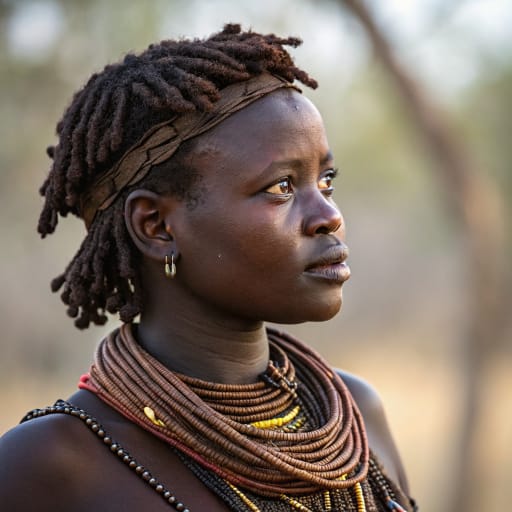
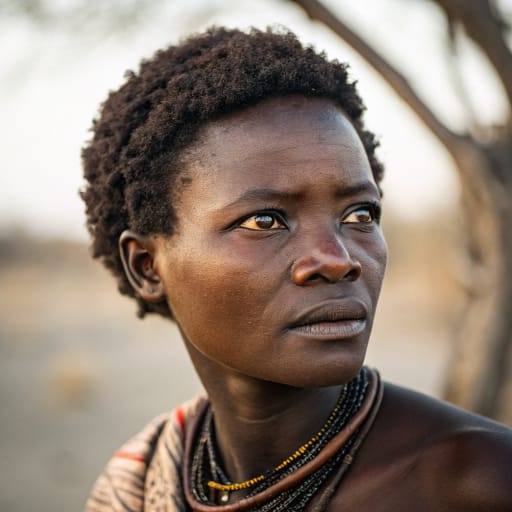
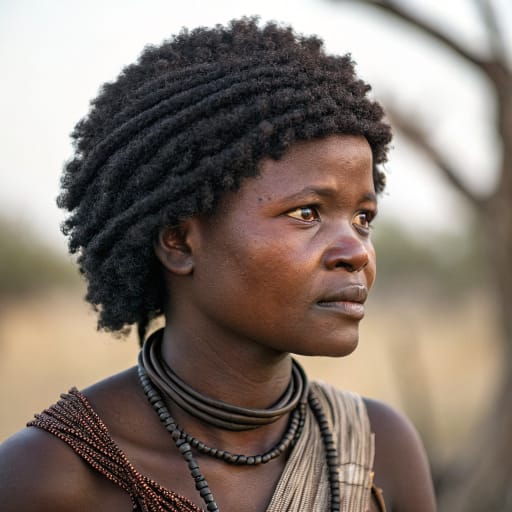
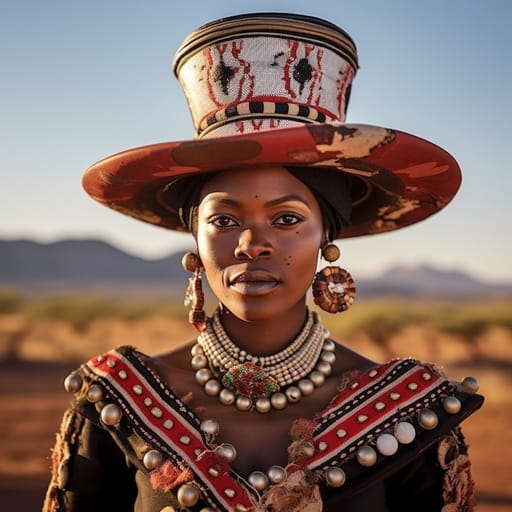
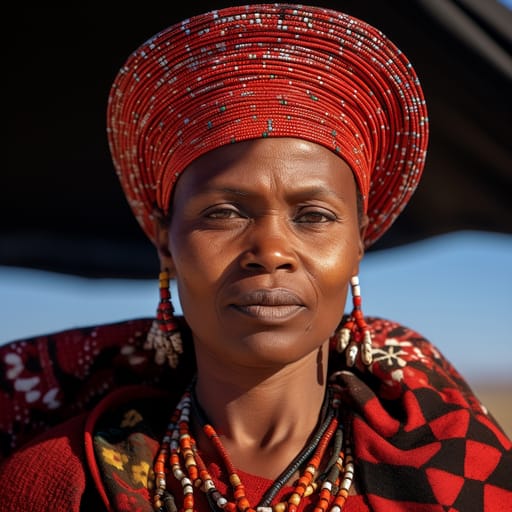
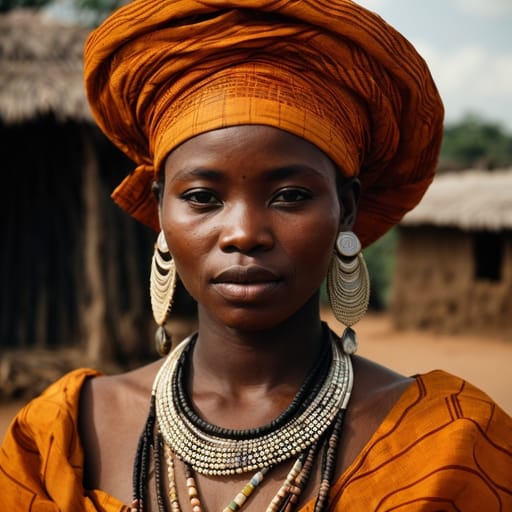
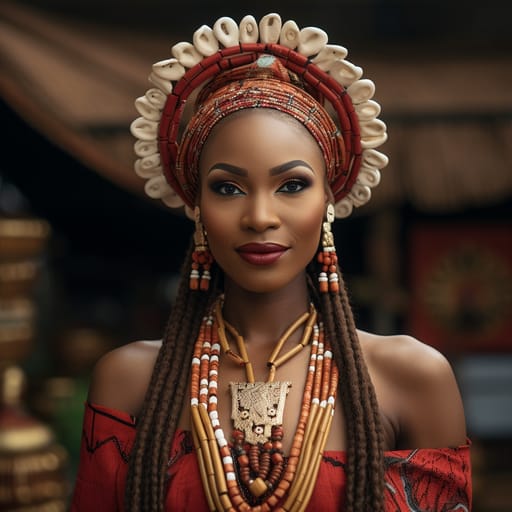
Geographic Distribution: Chewa populations across 1 country
Each row is ranked by the group's share of that country's population, with the source citation drawn from published census and demographic surveys. Click through for the full per-country phenotype profile.
| Country | Share | Source |
|---|---|---|
| Malawi | 34.9% | Malawi 2018 Census; Chewa (~34.9%, ~7M+ of ~20M+ total). Bantu / Chichewa language, the dominant ethnic group. Cross-border with Zambian and Mozambican Chewa |
Typical Chewa Phenotypes
Reference for AI generation: hair, eyes, skin, facial structure, build
The Chewa are a Bantu agricultural people of the Maravi cluster, and their phenotype sits squarely within the southern-Bantu range — distinct from both the taller Nilotic groups of East Africa and the lighter, more gracile Khoisan-influenced populations further south. The defining structural signature is a balanced, mid-height build with broad facial features and consistently deep skin tone, without the extreme variation seen in more admixed populations on the same latitude.
Hair is almost universally Type 4 — tightly coiled, often Type 4B to 4C, dense and capable of holding sculpted shape, which is why traditional Chewa hairstyles historically relied on threading and clay rather than oils. Color is uniformly black, with age-related greying the only real departure. Eyes are dark brown to near-black; epicanthic folds are absent, and the eye shape tends toward an almond opening with a moderately heavy upper lid. Skin tone runs Fitzpatrick V to VI, concentrated in the deep-brown to dark-brown range with warm red-mahogany undertones rather than the cooler blue-black undertone common in West African groups like the Yoruba or Igbo.
Facial structure is the clearest marker: a broad nasal base with a low-to-medium bridge and rounded tip, full but not everted lips, and a wide bizygomatic span that gives the face a softer, rounder outline than the more angular East African profile. Jaws are moderate, chins often recessed slightly relative to the lip plane.
Build is medium — adult male stature typically clusters around 168–172 cm, female around 158–162 cm — with mesomorphic shoulders, relatively short lower legs, and a tendency toward gluteal and thigh adiposity in women that becomes more pronounced post-childbirth. Sub-group variation is modest; Chewa in northern Mozambique and the Zambezi valley show slightly lighter average tone and occasional finer features from centuries of contact with Yao and Swahili-coast populations, while the Malawian heartland Chewa hold the most consistent phenotype.
Chewa Body & Anatomy Reference
Bantu / Khoisan Southern African phenotype: anatomy reference for AI nude generation
Chewa Boobs & Breasts
Chewa boobs follow the Bantu / Khoisan Southern African profile: medium cup, full but moderate projection. Areolar diameter is usually 30-44mm, and the coloring is medium-brown to deep-brown areolar pigmentation. Breast shape tracks body composition (mesomorph; Khoisan-descended sub-populations show distinctive steatopygic fat deposition, mean adult female BMI 24-28), so Chewa breasts tend to be moderately full; less projecting than West African norm. Expect a forward-set shape, not the heavier West African bust.
Chewa Ass & Hips
Chewa ass and hip morphology presents as the distinctive Khoisan-influenced steatopygic profile in some sub-populations (San, Khoekhoe); broader gluteal projection in Bantu-speaking groups, distinctly different from the slim Cushitic East African profile. The Chewa pelvic profile shows wide iliac crests with notable lordosis in Khoisan-descended sub-populations, anchored in the Bantu / Khoisan Southern African skeletal pattern. Chewa butt shots in adult AI imagery should render the the distinctive Khoisan-influenced steatopygic profile in some sub-populations (San, Khoekhoe); broader gluteal projection in Bantu-speaking groups silhouette with the overall build (mesomorph; Khoisan-descended sub-populations show distinctive steatopygic fat deposition) and the fat distribution typical of the Bantu / Khoisan Southern African phenotype.
Chewa Vagina & Pussy
Chewa pussy anatomy typically shows deep-brown labial pigmentation; the elongated labia minora documented in some Khoisan-descended populations. Pubic hair is usually tightly-coiled coarse texture. In AI-generated Chewa nudes, labial color should blend into the medium-brown to deep-brown skin with a gradual transition, and the hair should keep its tightly-coiled coarse texture.
Chewa Dicks & Penis
Penis reference for Chewa men: regional mean ~14cm erect, moderate-to-above-average girth. Coloring: deep-brown shaft pigmentation. An accurate Chewa cock in AI imagery matches the surrounding medium-brown to deep-brown skin rather than a generic porn default. Circumcision depends on religion and custom, not ancestry.
Chewa Body, Curves & Build
The Chewa figure is generally mesomorph; Khoisan-descended sub-populations show distinctive steatopygic fat deposition, with mean adult female BMI 24-28, characteristic of Bantu / Khoisan Southern African ancestry. AI image tools tend to flatten regional body types into a few stock shapes; here the Chewa build is kept as its own reference.
Chewa Skin Tone & Hair Texture
Skin: medium-brown to deep-brown (Fitzpatrick V-VI); lighter in Khoisan-descended populations. Hair: tightly-coiled 4A-4C; the distinctive 'peppercorn' tight-spiral texture in Khoisan-descended populations. Both are typical of Bantu / Khoisan Southern African ancestry. The most common mistake in AI nudes of Chewa women is a body rendered lighter than the face.
Data depth
0/100Coverage of image-grounded phenotype observations · drives AI generation diversity
- Sample size
- 0/40· 0 images
- Image quality
- 0/30· 0% high
- Confidence
- 0/20
- Source diversity
- 0/10
- ·No image observations yet
Explore phenotype categories
Structured taxonomy with peer-reviewed scales · 22 anatomical categories
Erotic Poses & Sex Positions
From the pose catalog: 219 named positions with reference skeletons
Frequently asked questions about Chewa people
Where is the Chewa homeland?
The Chewa homeland is Malawi, Zambia, Zimbabwe, Mozambique in Southern Africa.
What countries do Chewa people live in?
Chewa populations are documented across 1 country: Malawi.
What language do Chewa people speak?
Chewa people primarily speak Niger-Congo / Bantu / Chewa.
What religion do Chewa people practice?
The predominant religion among Chewa people is Christianity.






Make your own Chewa images
Five a day, free, no credits to buy. The studio starts from this group's phenotype data, so you can set body type, pose and style and keep the traits accurate.
Start with Chewa