Help us get this right
Does this portrait look right for Xhosa?
One tap. It takes a second and it is recorded.
2 say it looks right, 0 say it looks off.
Xhosa Erotic
Xhosaland (South Africa)
Christianity
About Xhosa People
The Xhosa are the second-largest of South Africa's Nguni peoples, settled across the Eastern Cape from the Kei River down to the coast and inland into the highveld. Their territory historically butts up against Zulu country to the northeast and the old Cape Colony frontier to the west, and that western boundary mattered: between 1779 and 1879 the Xhosa fought nine wars against Dutch and then British settlers, the longest sustained African resistance to European expansion anywhere on the continent. Names that traveled well beyond Xhosaland — Mandela, Tutu, Biko, Sisulu — come from this stretch of country, and the political weight of the group inside modern South Africa is hard to overstate.
IsiXhosa belongs to the Nguni branch of Bantu and is mutually intelligible to a large degree with Zulu, though the two have diverged in vocabulary and register. What sets it apart audibly is the click consonants — the c, q, and x of the orthography — borrowed centuries ago from Khoisan neighbors during a long period of intermarriage and absorption that also left its mark on Xhosa physiognomy and pastoral practice. The clicks are not ornament; they're load-bearing phonemes, and a learner who softens them is unintelligible.
The group is internally federated rather than unitary: the Gcaleka, Rharhabe, Thembu, Mpondo, Mpondomise, Bhaca and Xesibe each carry their own chiefly lines, and the distinction between, say, a Thembu and a Gcaleka is felt locally in a way outsiders often miss. Christianity arrived early via 19th-century mission stations and is now nearly universal in profession, but it sits on top of an older substrate — ancestor veneration (amadlozi), the diviner-healer (igqirha), and initiation rites that remain socially mandatory. Male initiation, ulwaluko, involves a period of seclusion in the bush and is the threshold a Xhosa boy crosses to be addressed as a man; skipping it carries lifelong stigma regardless of education or wealth.
One historical wound still shapes the cultural memory: the 1856–57 cattle-killing, when the prophetess Nongqawuse's vision instructed the nation to slaughter its herds and destroy its grain in expectation of an ancestral resurrection that would sweep the colonizers into the sea. Tens of thousands starved, and the Xhosa polity never recovered its pre-colonial autonomy. It is referenced in Xhosa literature and political speech the way few peoples reference their own catastrophes — clearly, repeatedly, and without flinching.
Related ethnic groups
Groups that share Xhosa's homeland, region, language, or religious tradition. These are likely candidates for comparative phenotype reference.
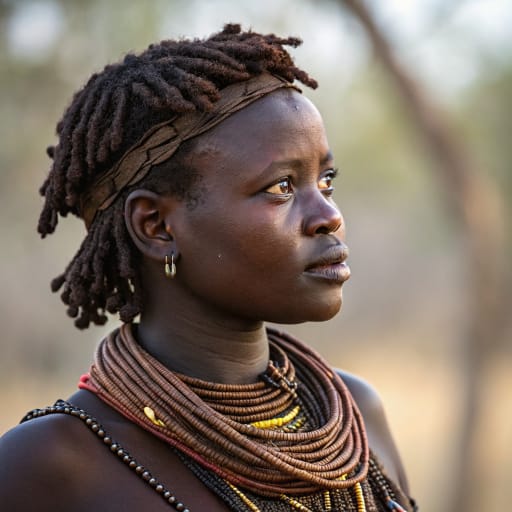
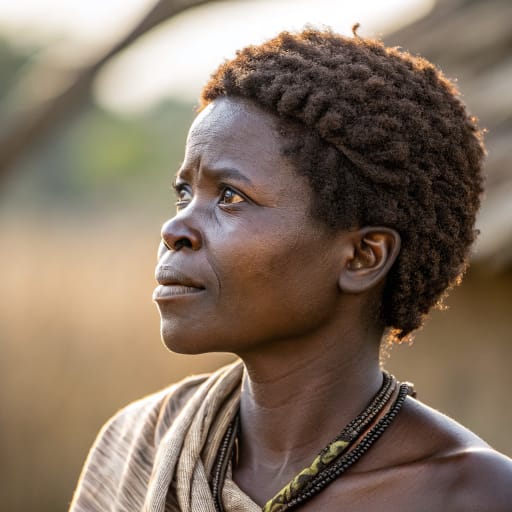
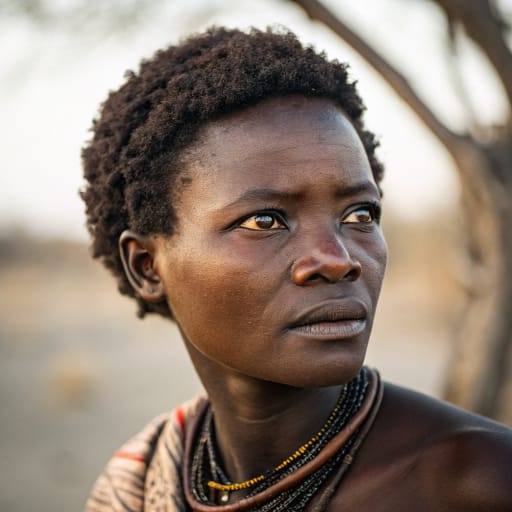
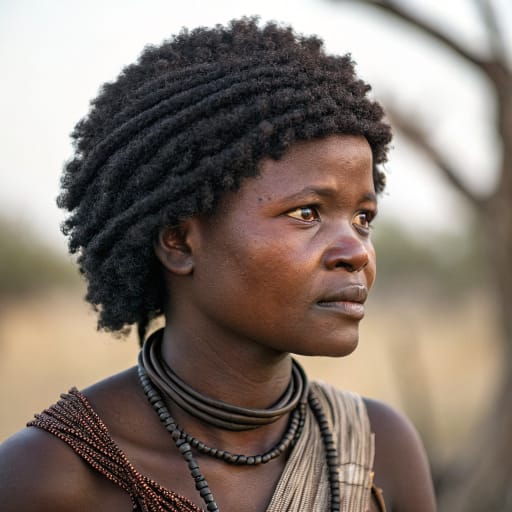
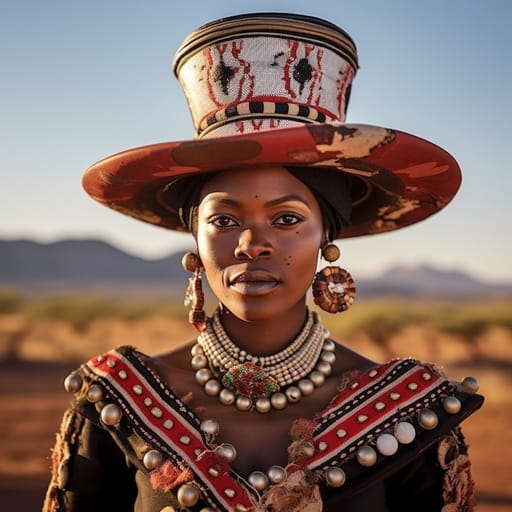
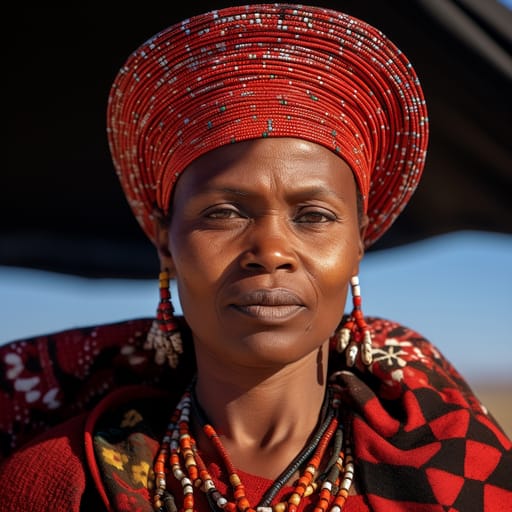
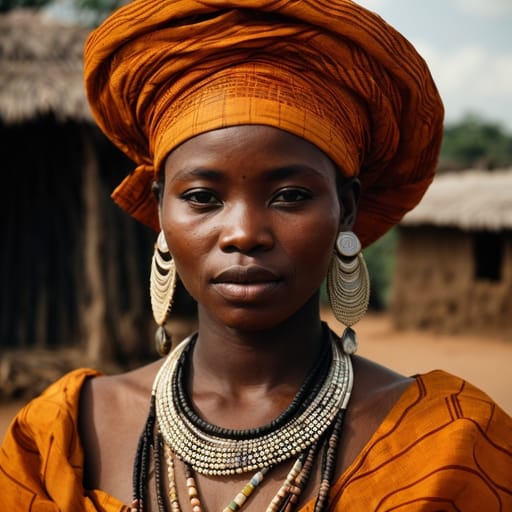
Geographic Distribution: Xhosa populations across 1 country
Each row is ranked by the group's share of that country's population, with the source citation drawn from published census and demographic surveys. Click through for the full per-country phenotype profile.
| Country | Share | Source |
|---|---|---|
| South Africa | 16.0% | South Africa 2022 Census; Xhosa / amaXhosa (~16%, ~10M+); Bantu / isiXhosa language, predominantly Eastern Cape. Nelson Mandela was Xhosa (Thembu sub-group) |
Typical Xhosa Phenotypes
Reference for AI generation: hair, eyes, skin, facial structure, build
Xhosa phenotype sits within the broader Southern Bantu cluster but carries distinct markers from centuries of contact and admixture with Khoisan peoples on the Eastern Cape frontier — a history visible in slightly lighter skin averages, occasional lighter eye tones, and sometimes more delicate facial structure than further-north Bantu groups. Skin tone ranges across Fitzpatrick V to VI, most commonly a warm medium-to-deep brown with red or olive undertones rather than the blue-black common in West African phenotypes. Nelson Mandela's complexion — a softer cocoa-brown — is closer to the Xhosa median than the deeper tones often shorthanded as "African".
Hair is almost universally Type 4 (tightly coiled to kinky), worn cropped or shaved on most men and natural, braided, or covered for women, with jet-black being standard. Eyes are dark brown to near-black; epicanthic folds are absent, and eye shape tends toward almond with a level set. Lighter brown or hazel eyes do appear at low frequency, generally traced to Khoisan ancestry rather than European admixture.
Facial structure is the giveaway. Xhosa faces often show a relatively narrow nose with a moderate bridge and less alar flare than is typical for West or Central African phenotypes — again, a Khoisan signature. Lips are full but proportioned, cheekbones high and broad, and the jaw frequently squared in men, softer and more oval in women. The forehead is often prominent.
Build runs tall and lean — adult men commonly 175–185 cm, women 160–170 cm — with long limbs, narrow hips relative to West African averages, and naturally low body-fat distribution that reads as athletic rather than heavily muscled. Women carry weight in the gluteal-femoral region (steatopygia at low frequency, again a Khoisan trait) more than in the bust or torso.
Sub-group variation is modest. AbaThembu, amaRharhabe, and amaGcaleka are phenotypically near-identical; the strongest visible gradient is geographic, with frontier-zone communities showing slightly higher Khoisan-derived features than those further inland.
Xhosa Body & Anatomy Reference
Bantu / Khoisan Southern African phenotype: anatomy reference for AI nude generation
Xhosa Boobs & Breasts
The typical Xhosa bust is medium cup, full but moderate projection, in line with the wider Bantu / Khoisan Southern African pattern. Areolas usually fall in the 30-44mm range, with medium-brown to deep-brown areolar pigmentation. Compared with the heavier West African bust, Xhosa breasts sit forward and are generally moderately full; less projecting than West African norm. A faithful AI render of Xhosa tits keeps that shape and areola size.
Xhosa Ass & Hips
Butt shape among Xhosa women: the distinctive Khoisan-influenced steatopygic profile in some sub-populations (San, Khoekhoe); broader gluteal projection in Bantu-speaking groups, over wide iliac crests with notable lordosis in Khoisan-descended sub-populations. This follows Bantu / Khoisan Southern African ancestry and looks quite unlike the slim Cushitic East African profile. An accurate Xhosa ass in adult AI imagery keeps both the silhouette and the overall build (mesomorph; Khoisan-descended sub-populations show distinctive steatopygic fat deposition) instead of a generic average.
Xhosa Vagina & Pussy
Vulvar anatomy among Xhosa women: deep-brown labial pigmentation; the elongated labia minora documented in some Khoisan-descended populations. Pubic hair tends to be tightly-coiled coarse texture, in the usual inverted-triangle pattern. Both follow Bantu / Khoisan Southern African pigmentation, which is why Xhosa pussy renders should not fall back on a pale, sparse Western template.
Xhosa Dicks & Penis
The Xhosa cock profile, from Bantu / Khoisan Southern African anthropometric data: regional mean ~14cm erect; moderate-to-above-average girth; deep-brown shaft pigmentation. Pubic hair has a tightly-coiled coarse texture and forms the usual inverted-V pattern. Whether Xhosa men are circumcised follows religious and cultural practice rather than phenotype.
Xhosa Body, Curves & Build
Build and curves among Xhosa women follow the Bantu / Khoisan Southern African pattern: mesomorph; Khoisan-descended sub-populations show distinctive steatopygic fat deposition, mean adult female BMI 24-28. Proportions matter as much as skin tone, so Xhosa figures should keep their regional height and limb ratios.
Xhosa Skin Tone & Hair Texture
The Xhosa skin range is medium-brown to deep-brown (Fitzpatrick V-VI); lighter in Khoisan-descended populations, and hair tends to be tightly-coiled 4A-4C; the distinctive 'peppercorn' tight-spiral texture in Khoisan-descended populations. That combination marks the Bantu / Khoisan Southern African phenotype, and skin tone is the trait AI generators most often get wrong for Xhosa women.
Data depth
59/100Coverage of image-grounded phenotype observations · drives AI generation diversity
- Sample size
- 15/40· 7 images
- Image quality
- 29/30· 57% high
- Confidence
- 15/20· mean 0.78
- Source diversity
- 0/10· wikipedia
- ·Small sample (n<10)
- ·Wikipedia-only source, not population-representative
Observed Distribution: Image Sample
Empirical observations from analyzed photographs · supplementary signal, not population truth
Sample: 7 images analyzed (7 wikipedia). Quality: 4 high, 1 medium, 2 low, 0 very_low. Avg analyzer confidence: 0.78.
Skin tone (Fitzpatrick): V (43%), VI (57%)
Hair color: black (71%), gray/white (29%)
Hair texture: coily (86%), covered (14%)
Eye color: dark brown (86%), unclear (14%)
Epicanthic fold: 0% present, 100% absent, 0% unclear
Caveats: Sample size 7 is small, so the observed distribution should be treated as suggestive, not definitive. Sample is 100% Wikipedia notable people, which skews toward male, public-life, and modern figures, not population-representative.
Last aggregated: May 7, 2026
Explore phenotype categories
Structured taxonomy with peer-reviewed scales · 22 anatomical categories
Notable Xhosa People
14 reference figures, sourced from Wikipedia
- Zolile Burns-Ncamashe, AmaGwali Prince
- Emma Sandile, AmaRharhabe Princess
- Cecilia Makiwane
- Zindzi Mandela
- Abigail Mbalo-Mokoena, chef and restaurateur
- Nelson Mandela, first president of South Africa
- Govan Mbeki, father of Thabo Mbeki
- Thabo Mbeki, second president of South Africa
- Raymond Mhlaba, first premier of the Eastern Cape
- Mlungisi Bali
- Sinethemba Jantjie
- Cecil Lolo
- Anele Ngcongca
- Akhumzi Jezile
Erotic Poses & Sex Positions
From the pose catalog: 219 named positions with reference skeletons
Frequently asked questions about Xhosa people
Where is the Xhosa homeland?
The Xhosa homeland is Xhosaland (South Africa) in Southern Africa.
What countries do Xhosa people live in?
Xhosa populations are documented across 1 country: South Africa.
What language do Xhosa people speak?
Xhosa people primarily speak Niger-Congo / Bantu / Nguni / Xhosa.
What religion do Xhosa people practice?
The predominant religion among Xhosa people is Christianity.






Make your own Xhosa images
Five a day, free, no credits to buy. The studio starts from this group's phenotype data, so you can set body type, pose and style and keep the traits accurate.
Start with Xhosa