Help us get this right
Does this portrait look right for Hawaiians?
One tap. It takes a second and it is recorded.
1 says it looks right, 0 say it looks off.
Hawaiians Erotic
Hawaii (United States)
Austronesian / Polynesian / Hawaiian
Part of the Austronesian language family · Polynesian peoples
Christianity
About Hawaiians People
Hawaiians — Kānaka Maoli, "the real people" — are the Polynesian population of the Hawaiian archipelago, the most isolated inhabited island chain on Earth. Their ancestors arrived by voyaging canoe sometime between the 4th and 10th centuries, almost certainly from the Marquesas and later Tahiti, navigating thousands of miles of open Pacific by stars, swells, and bird flight. That voyaging inheritance is not a museum piece: the Hōkūleʻa, a reconstructed double-hulled canoe, has circumnavigated the globe under traditional non-instrument navigation since 1976, and a generation of younger Hawaiians has trained in the practice.
The Hawaiian language sits within the Eastern Polynesian branch and is closely related to Marquesan, Tahitian, and Māori — close enough that a fluent speaker can pick out cognates across the family. It nearly died. After the 1893 overthrow of the Kingdom of Hawaiʻi and the 1896 ban on Hawaiian-medium schooling, fluent speakers dwindled to the low thousands. The 1980s brought the Pūnana Leo immersion preschools and a revival movement that has since seeded immersion programs from kindergarten through university; it remains one of the more closely watched indigenous-language recoveries in the world.
Most Hawaiians today identify as Christian — Protestant denominations took deep root after missionary arrival in 1820, and the Catholic and Latter-day Saint communities are also substantial — but Christianity coexists with older practice rather than replacing it cleanly. The land is read as ancestor: specific volcanoes, valleys, and reefs are kupuna, with names, lineages, and obligations attached. The hula, which survived a missionary-era suppression, is liturgy as much as performance — chant, genealogy, and place-knowledge encoded in motion. Aloha ʻāina, love of the land, has functioned for two centuries as both a spiritual posture and a political one, most visibly in the long Mauna Kea telescope standoff and in ongoing fights over water rights on Maui and Oʻahu.
Internally, the population is layered: Native Hawaiians of unbroken island lineage, the broader part-Hawaiian community that emerged from a century and a half of intermarriage with Asian plantation labor and haole settlers, and a sizable diaspora — more Native Hawaiians live on the U.S. mainland today than in the islands themselves. Sovereignty politics, federal recognition debates, and the question of who speaks for the lāhui remain live, unresolved, and central to how Hawaiians talk about themselves.
Related ethnic groups
Groups that share Hawaiians's homeland, region, language, or religious tradition. These are likely candidates for comparative phenotype reference.
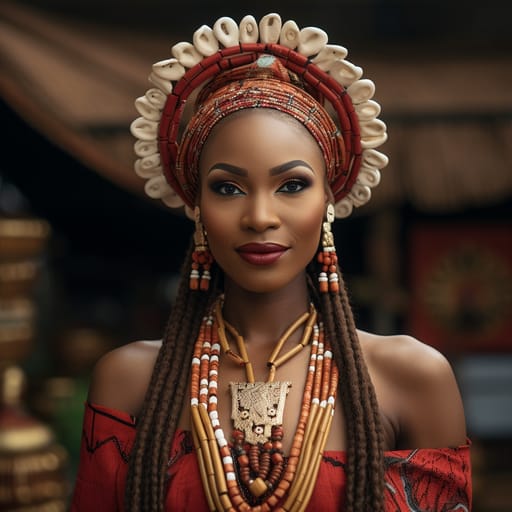
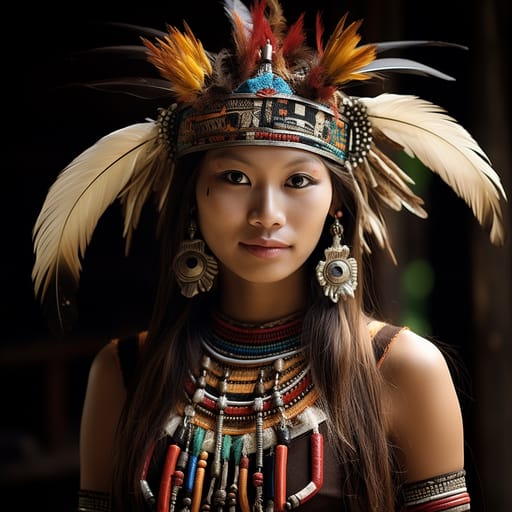
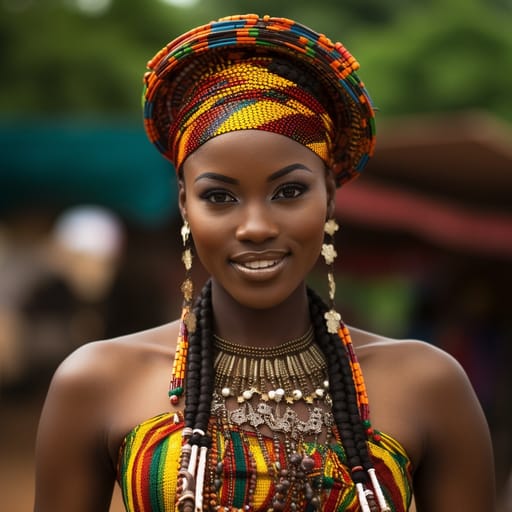
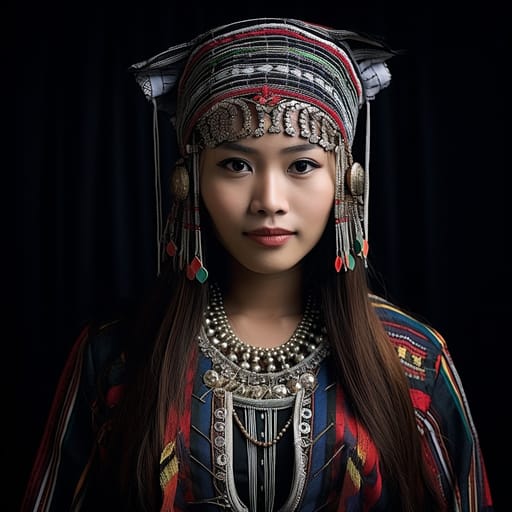
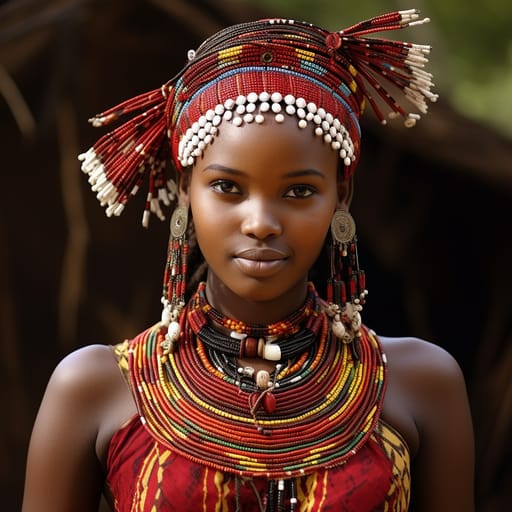
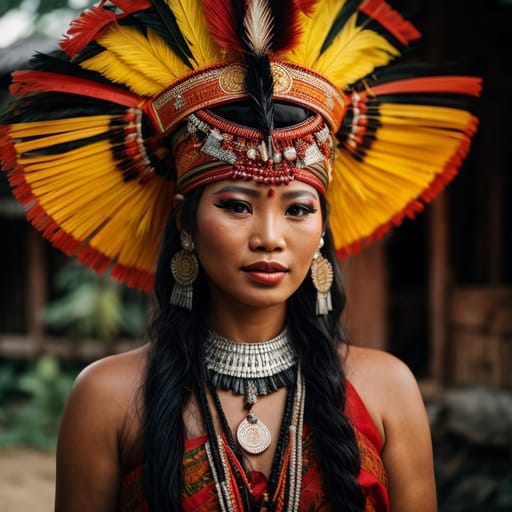
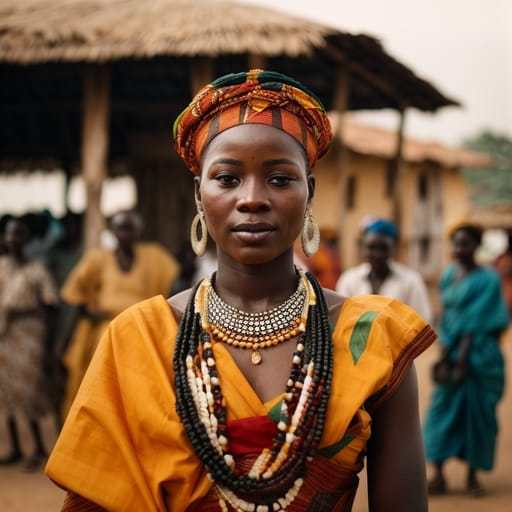
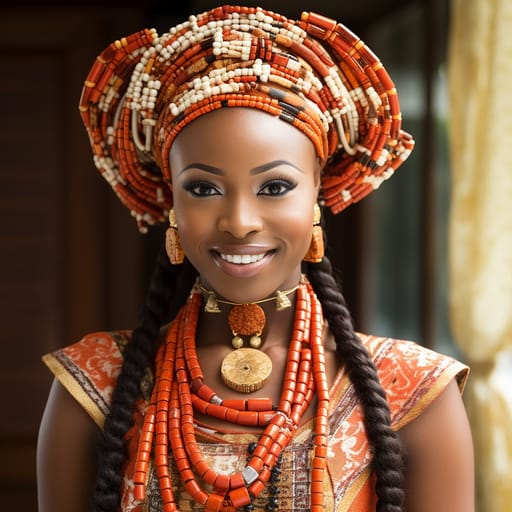
Typical Hawaiians Phenotypes
Reference for AI generation: hair, eyes, skin, facial structure, build
Native Hawaiians sit within the Eastern Polynesian phenotype cluster, and the structural signature is scale: broad facial bone architecture, heavy mandibles, wide cheekbones, and a tendency toward large, robust frames. The features read as substantial rather than delicate — a broad nasal root, a strong alar base, full lips often with a defined philtrum, and deep-set eyes under prominent brow ridges. The face tends to be broad and rounded in younger subjects, squaring with age as the jaw fills out.
Hair is almost universally black or very dark brown, thick-shafted, and ranges from straight to loosely wavy. Tight curl is uncommon in unmixed lineages but appears more often in modern Hawaiians with Filipino, Black, or other Pacific Islander admixture, which is now the demographic norm. Eyes are typically brown to dark brown, almond-shaped, with a partial or subtle epicanthic fold — present more often than in Europeans, less defined than in East Asians. Lighter eye colors occur almost exclusively through admixture.
Skin tone spans Fitzpatrick III to V, centered on a warm golden-brown with olive or copper undertones. Unmixed Native Hawaiians tend toward the deeper end of that range; the islands' sun exposure deepens the baseline further. The complexion takes tan readily and rarely burns severely.
Build is the most anthropometrically distinctive trait. Native Hawaiians are among the larger-framed populations on earth — tall stature is common in men (commonly 5'10"–6'2" and frequently above), with broad shoulders, thick torsos, dense bone structure, and a tendency toward muscular mass that carries weight well. Women share the broad-shouldered, full-hipped frame with substantial bust and thigh development. The combination of robust skeleton, full soft tissue, and warm brown skin is the defining visual marker.
Modern Hawaiians are overwhelmingly multiracial — Hapa features, lighter skin, mixed eye shapes, and varied hair textures are now more common on the islands than the unmixed Polynesian phenotype described above.
Hawaiians Body & Anatomy Reference
Anatomy by feature, Polynesian Pacific Islander phenotype
Hawaiians Boobs & Breasts
Bust reference for Hawaiians women: medium-to-large cup, full, high projection, which is typical of Polynesian Pacific Islander ancestry. Areolas measure about 34-50mm across, with medium-brown to dark-brown pigmentation. Body type (endomorph-to-mesomorph with larger overall frame; the classic Polynesian taller-broader-build phenotype) shapes the bust as well, so Hawaiians tits are usually full and projecting, classic Polynesian build. In AI imagery, keep the forward-set shape rather than drifting toward the smaller Southeast Asian bust.
Hawaiians Ass & Hips
The Hawaiians ass is typically very full, high projection, the famous Polynesian curvy hip profile, which sets it apart from the slim Southeast Asian narrow-hip profile. Underneath, the pelvis shows wide iliac crests, very full gluteal-femoral fat deposition, part of the Polynesian Pacific Islander skeletal pattern. For Hawaiians butt pics and AI renders, match that silhouette and the overall build (endomorph-to-mesomorph with larger overall frame; the classic Polynesian taller-broader-build phenotype).
Hawaiians Vagina & Pussy
Hawaiians pussy and vulvar anatomy presents medium-brown to dark-brown labial pigmentation, consistent with the Polynesian Pacific Islander phenotype's pigmentation pattern. Hawaiians pubic hair is typically wavy-to-curly medium-coarse texture, in the inverted-triangle pattern. For anatomically accurate Hawaiians pussy renders the labial coloration should match the surrounding tan to medium-brown skin tone with a continuous gradient, and the hair should keep its wavy-to-curly medium-coarse texture.
Hawaiians Dicks & Penis
Hawaiians dicks follow the Polynesian Pacific Islander reference data: regional mean ~14cm erect; moderate-to-above-average girth; medium-brown shaft pigmentation. Shaft color should track the tan to medium-brown skin tone with a smooth change toward the glans, and Hawaiians pubic hair keeps its wavy-to-curly medium-coarse texture.
Hawaiians Body, Curves & Build
Hawaiians body type and overall build presents as endomorph-to-mesomorph with larger overall frame; the classic Polynesian taller-broader-build phenotype, with mean adult female BMI 28-32 (the highest regional mean globally; thrifty-gene phenotype documented): the characteristic Polynesian Pacific Islander habitus. Hawaiians curves and proportions should keep the regional skeletal frame (height, shoulder-to-hip ratio, limb proportions) rather than a generic mesomorph default.
Hawaiians Skin Tone & Hair Texture
Hawaiians skin sits in the tan to medium-brown (Fitzpatrick IV-V) band. Hair is typically wavy-to-curly 2B-3B, dark-brown to black, in keeping with the Polynesian Pacific Islander phenotype. In nude renders the skin should stay one even tone from face to body, and body, pubic and head hair should match.
Data depth
0/100Coverage of image-grounded phenotype observations · drives AI generation diversity
- Sample size
- 0/40· 0 images
- Image quality
- 0/30· 0% high
- Confidence
- 0/20
- Source diversity
- 0/10
- ·No image observations yet
Explore phenotype categories
Structured taxonomy with peer-reviewed scales · 22 anatomical categories
Erotic Poses & Sex Positions
From the pose catalog: 219 named positions with reference skeletons
Frequently asked questions about Hawaiians people
Where is the Hawaiians homeland?
The Hawaiians homeland is Hawaii (United States) in Polynesia.
What language do Hawaiians people speak?
Hawaiians people primarily speak Austronesian / Polynesian / Hawaiian.
What religion do Hawaiians people practice?
The predominant religion among Hawaiians people is Christianity.






Make your own Hawaiians images
Five a day, free, no credits to buy. The studio starts from this group's phenotype data, so you can set body type, pose and style and keep the traits accurate.
Start with Hawaiians